The property owner who defines the end goal before making early improvement decisions consistently makes those early decisions at the design standard, location, and scope that the end goal requires rather than at the generic standard that improvement without end goal context applies. The access route developed before the end goal is defined receives the design that current management vehicle weights and widths require. The access route developed after the end goal identifies that construction equipment will eventually use the route receives the design that construction vehicle weights and widths require. The first route may adequately serve current management use. It may inadequately serve the construction traffic that the end goal will eventually require through the same route, creating the upgrade cost that end-goal-informed initial design would have prevented by designing the route once to the standard the end goal requires rather than twice at the current standard and again at the end-goal standard that the second design provides after the first design proves inadequate for the end use it was not designed for because the end goal that would have specified the adequate standard had not been defined before the first design was committed.
For property owners across Cherokee County, Ball Ground, and Canton planning improvements on residential and rural properties where the long-term goals that the property’s intended use, intended development, and intended management program eventually require from the improvements that early decisions create as the foundation for those goals, understanding why defining the end goal before making early improvement decisions specifically matters for the design quality, location accuracy, and cost efficiency that end-goal-informed decisions produce relative to the uninformed decisions that generic improvement standards without end goal context create, and how to apply the end goal definition to the specific early decisions that each improvement type most critically requires given its connection to the end goal, gives the practical planning discipline that property improvements on North Georgia residential and rural lots specifically benefit from when the end goal is defined before the early decisions that create the improvements that the end goal will eventually require to have been made correctly.
Why End Goal Definition Specifically Matters for Early Property Improvement Decisions
End goal definition matters for early property improvement decisions specifically because early decisions create the physical conditions that subsequent decisions must work with rather than around, making the design quality of early decisions determinative for the subsequent decisions’ achievability and cost at the standard the end goal requires from all the decisions in the improvement program’s sequence. This forward-determination relationship means that the early decision’s design quality affects not just the early improvement’s performance but the subsequent improvements’ achievability and cost through the full improvement program’s sequence, which is why end goal information that would have changed an early decision’s design is more valuable before the early decision than after it when the change that the end goal information would have caused can only be made as the costly revision of the committed early decision rather than the costless design adjustment that pre-commitment end goal information would have produced before the design was committed to the standard that needed to be different for the end goal the information revealed.
The types of early decisions that end goal definition most critically affects are the decisions that create the infrastructure the end goal’s subsequent improvements will use rather than the improvements that are self-contained without serving the subsequent improvements that the end goal requires. Access routes that construction, agricultural, or management equipment must use. Drainage infrastructure whose sizing must accommodate the impervious area that development will eventually create above its design capacity. Building site locations whose selection affects every subsequent structure and improvement the development program includes. Utility corridor routes whose installation during early earthwork phases saves the separate-trench cost that post-construction utility installation requires as the alternative to early open-earthwork installation. These infrastructure decisions are the decisions that end goal definition most specifically changes from the generic standard that no end goal context applies to the end-goal-specific standard that the intended future use of each infrastructure element requires from its initial design rather than from the upgrade that discovering its inadequacy for the end goal use that late definition reveals would impose on the already-committed design.
How Building and Development Goals Shape Early Improvement Decisions
Properties intended for building development have end goals that produce the most specifically consequential requirements for early improvement decisions of any common North Georgia property improvement program type, because the structural performance requirements that buildings impose on their foundation subgrades, the access requirements that construction traffic imposes on the routes that construction uses, and the utility connection requirements that buildings impose on the site preparation that precedes construction each create specific early decision requirements that uninformed generic improvement standards specifically fail to meet at the standard the building end goal requires.
Building Site Selection as the Most Consequential Early Decision
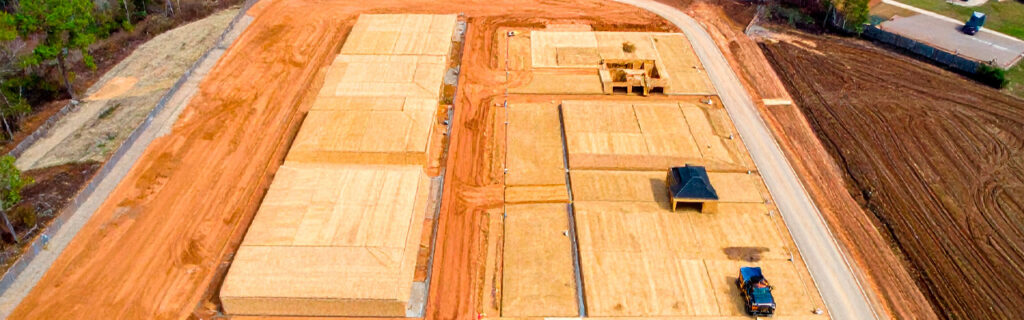
Building site selection is the most consequential early decision that building and development end goals require to be specifically informed by the end goal before any other improvement is committed to the design and location that the building site’s position determines should be oriented toward. Every other improvement’s appropriate location, design, and scope is determined in part by where the building site is, because driveways should route toward it, drainage corrections should address the drainage conditions at and around it, clearing should open the operational space that construction requires adjacent to it, and utility routes should connect from the road to it. If the building site location is not established before these other improvements are committed to their designs and locations, those improvements will be designed without reference to the building site’s position, and some of them may subsequently need to be revised, extended, or worked around when the building site is eventually identified at a position whose relationship to the prior improvements requires revisions that identifying the building site before those improvements would have prevented from being necessary.
Building site selection requires the terrain walk, soil probing, and drainage assessment that the terrain’s actual conditions at the candidate sites reveal rather than the accessible observation that consistently misrepresents those conditions at the accuracy that building site selection requires. The terrain walk that reveals the actual elevation differential at each candidate reveals the earthwork scope that each candidate’s terrain requires. The soil probing that reveals the organic depth at each candidate reveals the stripping scope that each candidate’s organic layer requires for the structural subgrade that foundation preparation demands. The drainage assessment that reveals the contributing watershed at each candidate reveals the foundation drainage infrastructure that each candidate’s watershed position requires. Together these assessments allow building site selection to specifically choose the candidate that most favorably serves the building end goal rather than the candidate that appeared most favorable from accessible observation without the ground-level assessment that the end goal’s structural requirements specifically need from the assessment that informs the selection that those requirements will be held accountable to across the building’s full service life.
Access Routes to Construction-Capable Standards From the Beginning
Properties intended for building development must have access routes from the public road to the building site developed to the construction-capable standard that concrete trucks, lumber delivery vehicles, and construction equipment require from the access they will use rather than the management-vehicle standard that current property use alone would justify without the construction traffic weight and dimension requirements that the building end goal specifically imposes on the access route that construction will use. Developing the access route to the management-vehicle standard before the building end goal is defined, then upgrading it to the construction-capable standard that the building end goal requires before construction begins, generates the upgrade cost that defining the building end goal before the access route’s initial development would have prevented by designing the route to the construction-capable standard the first time rather than to the management-vehicle standard the first time and the construction-capable standard the second time. End goal definition that specifically identifies building development before any access route is developed produces the construction-capable initial design that serves both the current management use and the future construction traffic without the upgrade that building end goal definition after access route commitment requires before the committed route can serve the construction traffic the building end goal generates.
How Hunting and Recreation Goals Shape Early Improvement Decisions
Properties intended for hunting and wildlife management have end goals that produce specific requirements for early clearing, trail development, and food plot location decisions that uninformed generic clearing and access development approaches specifically fail to meet at the standard the hunting and recreation end goal requires.
Clearing That Preserves Hunting Habitat Rather Than Eliminating It
The clearing approach that hunting and wildlife management end goals require is the selective approach that removes invasive understory while preserving native canopy rather than the comprehensive approach that removes all vegetation regardless of each plant’s contribution to the hunting habitat quality the end goal specifically depends on. Property owners who clear wooded sections for hunting land access without the hunting end goal specifically guiding the clearing approach selection may choose comprehensive clearing because it is simpler to execute or because the contractor offering it did not specifically discuss the hunting habitat requirements that the end goal creates for the clearing approach that serves it. Comprehensive clearing of a wooded section intended for hunting land habitat produces the cleared field without the native canopy that open native woodland hunting habitat requires, and this habitat type loss is permanent at the timescale that decades of canopy development represents, making the end goal information that would have specified selective clearing over comprehensive clearing the most consequential early decision guidance for hunting property improvements where the clearing approach determines whether the habitat type the hunting end goal requires is created or eliminated by the clearing that was supposed to serve the hunting use.
Trail Network Design From All Intended Stand and Food Plot Locations
Trail network development for hunting properties should be designed from the full intended stand and food plot location inventory that the hunting program end goal establishes rather than from the accessible starting points that trail development without end goal context routes toward whatever interior destinations seem convenient from those starting points. Trails designed from the accessible starting points without reference to the intended stand and food plot locations that the hunting program requires the trail network to connect may not reach all of those intended locations, and adding the missing connections after the initial trail network is established requires either additional mobilization costs for the trail connections that the initial development would have included if the stand and food plot locations had been specifically identified before the trail network design was committed or continued inaccessibility of the intended locations that the incomplete trail network does not reach. End goal definition that specifically maps all intended stand and food plot locations before any trail development begins produces the trail network design that connects all intended locations in the most efficient connected network from the beginning of the trail development rather than the incomplete network that trail development without location mapping produces and that subsequent additions must supplement at additional cost to complete.
How Large Acreage Management Goals Shape Early Improvement Decisions
Properties whose end goal is maintaining large acreage in functional, managed condition for agricultural production, timber management, wildlife habitat, or the combination of these uses that most large rural acreage serves have early improvement decision requirements that specifically prioritize the management efficiency improvements that will reduce the recurring management cost and effort across the full ownership period rather than the single-event improvements that produce the most impressive visible change without the management efficiency implications that large acreage maintenance end goals specifically require from the improvements that serve them most effectively.
Drainage corrections that convert chronically wet sections from the management inefficiency that wet conditions impose on routine maintenance equipment to the accessible, manageable conditions that the corrected drainage specifically enables reduce the management cost at every subsequent maintenance event rather than only at the correction event. Access route improvements that provide year-round reliable equipment access to interior managed sections eliminate the preliminary access preparation cost that inadequate access was imposing before each management event at the sections that inadequate access was making each management event more expensive to execute than adequate access would have allowed. Invasive species management programs that progressively deplete root energy across successive combined mechanical and chemical treatment seasons reduce the treatment intensity required from each subsequent treatment season as root energy depletion advances rather than maintaining the high-intensity restoration treatment intensity that mechanical clearing alone without root energy depletion requires indefinitely. These management efficiency improvements should receive priority in large acreage management planning because the large acreage maintenance end goal specifically benefits most from the improvements that reduce the recurring management cost that large acreage maintenance imposes across every season of the ownership period rather than the single-event improvements whose benefits are concentrated at the improvement event without the recurring management cost reduction that the management efficiency improvements provide at every subsequent management event.
How to Define the End Goal With Enough Specificity to Guide Early Decisions
End goal definition that is specific enough to guide early improvement decisions requires the specificity that allows each early decision to be evaluated against the end goal’s requirements rather than against a generic improvement standard that applies without the end goal reference that distinguishes the adequate design from the inadequate design for the specific end goal the improvement program is advancing toward. End goal definition that is too vague to guide early decisions is the definition that describes the intended condition in terms that could apply to any property improvement without the use-type specificity that creates the specific requirements that the end goal imposes on each early decision. End goal definition that is too specific for the planning stage at which it is established forces premature commitment to implementation details that site conditions and revealed information will require to be revised as the improvement program advances and the information that accurate implementation detail specification requires becomes available from the site conditions that improvements reveal rather than from the pre-improvement assessment that can estimate but not confirm what the site will present after clearing reveals the terrain and conditions that the vegetation currently conceals.
Adequate end goal specificity for early improvement decisions describes the intended property condition at the use-type level that creates the requirements that early decisions must meet, without requiring the implementation-detail level that site condition confirmation must determine rather than pre-improvement estimation. A hunting property end goal description that specifies open native woodland throughout the primary hunting areas, productive food plots in the most suitable available locations, and connected trail access to all intended stand positions is specific enough to establish that selective clearing over comprehensive clearing is the required approach, that food plot locations must be assessed for terrain and drainage suitability rather than selected arbitrarily, and that the trail network must be designed to connect all stand positions rather than any convenient subset of them. The implementation-detail specificity of exactly which trees to preserve, exactly where each food plot is located, and exactly how the trail routes are aligned appropriately defers to the site conditions that clearing reveals and the stand position assessment that actual terrain observation after clearing enables rather than requiring pre-improvement specification at the detail level that revealed conditions will determine more accurately than pre-clearing estimation allows.
How to Communicate the End Goal to Contractors to Improve Early Improvement Outcomes
Communicating the end goal to contractors before improvement discussion begins converts the contractor’s project-specific expertise into end-goal-informed advice that specifically evaluates the project against what the property’s intended end condition requires from it rather than against the generic standards that project-specific advice without end goal context applies to all projects of the same type regardless of the specific end condition each project ultimately serves. A contractor who knows that the property being cleared is intended as hunting land with native woodland character will recommend selective understory clearing that preserves the native canopy the hunting habitat requires. A contractor who knows that the property is intended for eventual residential development will recommend construction-capable access design that anticipates the concrete trucks and heavy equipment delivery vehicles that construction will require through the access route that the current development phase is establishing for construction’s eventual use.
End goal communication to contractors should include both the intended property use type and the timeline over which the property is expected to develop toward the end condition, because the timeline affects which early decisions must be made to end-goal standards now versus which can appropriately defer to standards that the end goal will eventually require when the timeline reaches the decision point for those standards. A construction-capable access route standard that will be needed in fifteen years is still the appropriate design standard for the access route that is being developed now, because the fifteen-year interval between the initial development and the construction traffic use does not change the construction standard requirement but does change the urgency of other end-goal-standard decisions whose timelines are shorter and whose improvement to end-goal standards is more immediately consequential for the improvement program’s next steps than the construction-standard access design whose fifteen-year timeline creates less immediate pressure on the current development’s design decisions.
Frequently Asked Questions
What should I do if my property has multiple intended uses that may conflict with each other in the design standards they require from shared improvements?
Properties with multiple intended uses that impose different design standards on shared improvements should design the shared improvements to the most demanding standard among all the uses that the improvement will eventually serve, because the most demanding standard’s requirements are met at that standard while all less demanding uses are adequately served by the design that meets the most demanding requirement. An access route that will eventually serve both ATV hunting access and construction equipment delivery should be designed to the construction equipment standard from the initial development, because the construction standard serves the ATV use adequately at the same construction-capable bearing capacity and width while the ATV standard would not serve the construction use at the lighter bearing capacity and narrower width that ATV-only design would justify. Designing the shared improvement to the most demanding use’s standard may cost more per linear foot or per acre than the least demanding use’s standard would require, but it prevents the upgrade cost that designing to the least demanding standard and subsequently upgrading to the most demanding standard when that use’s requirements reveal the initial standard’s inadequacy would generate, and it ensures that each use the improvement serves receives the design that adequately serves it rather than the design that adequately serves only the least demanding use and inadequately serves the most demanding use that the improvement will eventually be required to support.
How does end goal definition affect the sequencing of improvements when multiple improvements are needed?
End goal definition affects improvement sequencing by establishing the dependency relationships among improvements that the end goal’s requirements reveal, specifically which improvements must be completed before subsequent improvements can proceed at the quality the end goal requires rather than which improvements the budget or scheduling convenience happens to suggest for the next execution slot without the end goal dependency context that reveals whether the convenience-suggested sequence serves or conflicts with the end goal’s requirements. Building site selection before any other improvements are committed to the designs and locations that the building site’s position should orient is an end-goal-determined sequence requirement. Access route development before the interior improvements that the access must reach is an end-goal-determined sequence requirement. Clearing before grading that requires the terrain clearing reveals to be accurately designed is an end-goal-determined sequence requirement. These sequence requirements are specifically knowable from the end goal definition that establishes the dependency relationships among improvements before the improvement program’s execution sequence is committed, and they produce the improvement sequences that serve the end goal most efficiently rather than the sequences that convenience or budget availability suggests without the end goal dependency context that efficient end-goal-serving sequencing requires.
How far in the future should the end goal look to be most useful for guiding early improvement decisions?
The end goal should look as far into the future as the property owner’s current understanding of the property’s intended eventual condition extends, without being artificially constrained to a shorter planning horizon that excludes end goal information that would change early decisions if it were included in the planning horizon that guides them. End goals that are twenty or more years away from the current improvement program’s earliest decisions are still appropriately included in the planning that guides those early decisions, because the early decisions’ design standards are determined by the end condition requirements rather than by the time interval between the early decision and the end condition’s realization. A building site access route designed to construction-capable standards for a building development that is fifteen years away costs the same additional investment over management-vehicle standards whether the building development is fifteen years away or five years away, and both the fifteen-year and the five-year timelines create the same design standard requirement for the access route that will serve the construction regardless of when within the ownership period the construction occurs. The planning horizon constraint that is appropriate to apply is not a time limit that excludes long-term end goals but a development probability threshold that excludes highly speculative end conditions that have no current planning basis from the goal definition that guides early decisions, while including the reasonably foreseeable end conditions that the property owner’s current development intentions, intended use, and planned improvement program establish as the intended eventual property condition that early decisions should serve.
What is the most common early improvement decision error that end goal definition most specifically prevents?
The most common early improvement decision error that end goal definition most specifically prevents is the clearing approach mismatch where the clearing method selected for an early clearing project produces a cleared condition that the intended end use cannot effectively work with, requiring either the revisional work that the mismatch generates when the inadequately cleared condition is discovered to be inadequate for the end use it was supposed to serve, or the permanent acceptance of the inadequate cleared condition that the mismatch produced as the starting condition for the end use that would have benefited from a different cleared condition that the clearing approach mismatch specifically prevented from being created. The most common version of this mismatch on Cherokee County properties is the comprehensive clearing of a wooded section that the hunting and wildlife management end goal required selective clearing for, producing the open field without native canopy where the open native woodland with preserved canopy was specifically needed for the hunting habitat that the comprehensive clearing eliminated along with the invasive understory that was the actual clearing target rather than the native canopy that selective clearing would have preserved while addressing the invasive understory that comprehensive clearing eliminated indiscriminately. End goal definition before clearing approach selection specifically prevents this clearing approach mismatch by establishing the hunting and wildlife management use type that requires selective clearing before the clearing approach selection that the end goal’s requirements specifically determine rather than the clearing approach selection that occurs without the end goal context that distinguishes selective from comprehensive clearing as the approach the use type requires.
Ready to Define Your End Goal Before Your Next Property Improvement?
The early improvement decisions that define what a North Georgia residential or rural property will be able to become, and what it will cost to get there, are most productively made with the end goal that they are supposed to be advancing toward clearly established before those decisions are committed to the designs and standards that end goal context would have specifically changed if the end goal had been defined before the commitment rather than after it when the design is already determined and the change that the end goal information requires can only be made as the more costly revision of the committed decision rather than the costless design adjustment that pre-commitment end goal definition would have produced at the planning stage before commitment locked in the design that needed to be different for the end goal the late-defined information reveals. The building development end goal that specifies construction-capable access routes, the hunting property end goal that specifies selective clearing over comprehensive clearing, and the large acreage management end goal that specifies management efficiency improvements over single-event visible-change improvements each produce specific early decision requirements that the end goal information specifically establishes as the requirements that early decisions must meet rather than the generic standards that those decisions apply without the end goal context that the specific requirements require to be known before the specific design standards that meet them can be selected over the generic standards that do not.
Bardin Outdoors works with homeowners and landowners across Ball Ground, Canton, Cherokee County, and North Georgia on clearing, forestry mulching, and grading and excavation projects planned from the end goal that each property’s improvement program is specifically advancing toward, applying the regional experience that connects intended use requirements to the design standards, improvement sequences, and contractor advice that most efficiently advance each property toward the end condition that adequate end goal definition established as the intended destination before the early decisions that create the foundation for reaching it were committed to the standards that the end goal specifically requires. To learn more about how Bardin Outdoors approaches end-goal-informed improvement planning for North Georgia properties, contact us.