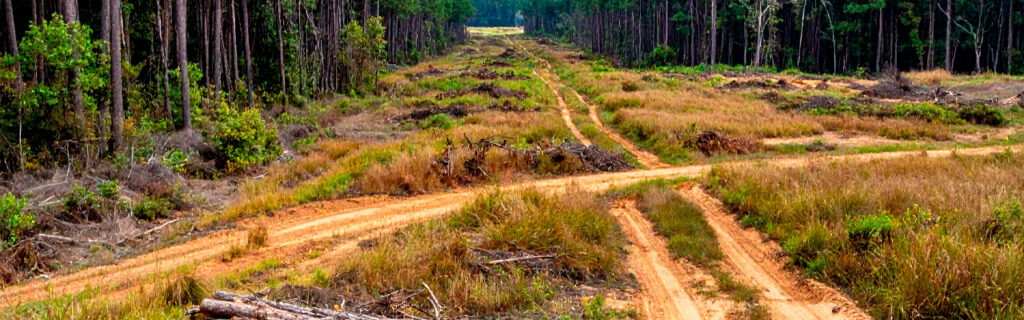
Forestry mulching reclaims this category of overgrown acreage specifically because it addresses what the overgrowth actually is, which is invasive species established above the native canopy and alongside the natural features that the overgrowth has been concealing rather than replacing, and because it addresses it with the in-place processing approach that converts the invasive density to the mulch layer at the soil surface without the topsoil removal, soil compaction, and debris management that conventional clearing approaches impose on the site that in-place processing specifically avoids. For property owners across Ball Ground, Canton, Cherokee County, and North Georgia whose rural and residential properties include overgrown sections that dense brush, young invasive trees, and thicket vegetation have made difficult to access and impractical to use, understanding how forestry mulching specifically reclaims overgrown acreage while preserving the natural character that makes the land worth reclaiming, what the reclaimed condition looks and functions like immediately after treatment and across the subsequent management seasons, and what the management program that sustains the reclaimed condition involves gives the complete picture that overgrown acreage reclamation planning requires.
What Forestry Mulching Specifically Does to Overgrown Acreage
Forestry mulching addresses overgrown acreage through a processing approach that is fundamentally different from the clearing approaches most commonly associated with the visual before-and-after transformation that overgrown land clearing produces, and the differences in the processing approach produce differences in the site condition after treatment that matter for both the natural character that the reclaimed land provides and the soil conditions that subsequent planting, revegetation, and land management requires from the cleared surface.
The forestry mulching machine cuts the overgrown vegetation at or near the soil surface with a rotating drum of cutting and processing teeth that chip and grind the cut material into wood chip and organic fiber mulch in the same pass that the cutting occurs, depositing the processed mulch back onto the soil surface at the cleared position rather than pushing it to piles as a conventional bulldozer or brush cutter would do. This in-place processing means that the organic material from the overgrown vegetation remains on the site as the mulch layer that provides immediate soil surface cover after treatment rather than the bare clay that conventional clearing exposes by removing the vegetation mass from the site along with the topsoil that pushes with it. The topsoil remains in place beneath the mulch layer that in-place processing deposits above it, preserving the soil biology, organic matter, and nutrient content that conventional clearing removes when it pushes the topsoil with the vegetation above it and leaves the mineral subsoil as the site’s surface after clearing.
The selective processing capability that the forestry mulching operator has through the directed cutting head also means that the treatment can specifically navigate around native trees, native understory species, and natural rock features within the overgrown area that the reclamation should preserve and reveal rather than eliminate along with the invasive species that the reclamation is specifically intended to address. This selective navigation around preservation targets is what makes forestry mulching reclamation of overgrown acreage preserve the natural character that makes the reclaimed land valuable rather than simply clearing the overgrowth without regard for what the overgrowth was concealing that deserves to be preserved when the clearing specifically reveals it as the natural character that the property owner’s intended use of the reclaimed acreage specifically benefits from having been preserved rather than eliminated.
What Forestry Mulching Reveals When It Reclaims Overgrown Acreage
The transformation that forestry mulching reclamation produces in overgrown Cherokee County acreage is often described by property owners who see it for the first time after treatment as more dramatic than any prior description of the process had prepared them to expect, because the revealed condition that clearing the overgrown invasive understory creates is not simply the absence of the invasive vegetation that was there before but the presence of the natural character that the invasive vegetation was concealing throughout the seasons of its accumulation.
Native Canopy Revealed and Released
On overgrown Cherokee County acreage where mature native canopy trees have been growing above the invasive understory that accumulated beneath them, forestry mulching reclamation reveals the native canopy for the first time since the invasive understory grew tall enough to screen the canopy from observation at the ground level that entering the section requires. The mature oaks, hickories, and tulip poplars whose canopy has been developing above the invasive understory become visible from within the section as the standing trees that define the open woodland floor that reclamation creates beneath them, and the sixty or eighty feet of clear sight lines that the open woodland provides in all directions replace the ten or twelve feet of visibility that the dense invasive understory limited every observer to before reclamation removed the understory that was preventing the open woodland experience the native canopy has always been capable of providing. The native canopy trees themselves experience competitive release from the reclamation that removes the invasive species that were competing with their root systems for soil moisture and nutrients at the ground level below the canopy that the trees were producing above the invasive competition, and this competitive release frequently produces measurable growth response in the canopy trees during the growing seasons following reclamation that the absence of the invasive root competition specifically enables.
Suppressed Native Understory Species Released
Below the native canopy and within the invasive overgrowth that reclamation addresses, suppressed native understory species including flowering dogwood, serviceberry, native viburnums, native azaleas, and other native shrubs and small trees that have been persisting in heavily suppressed condition beneath the invasive competition experience the competitive release that reclamation provides as the most significant improvement in their growing conditions since the invasive species established around them and began competing for the light, moisture, and nutrients that the invasive species’ aggressive growth captures disproportionately in the mixed native-and-invasive conditions that unmanaged overgrowth creates. These native understory species, though suppressed to a fraction of their potential size and vitality by years of invasive competition, retain intact root systems that the competitive release of forestry mulching reclamation immediately provides with the growing conditions that their recovery requires to begin advancing toward the flowering, fruiting, and ecological function that their species’ characteristics support at full vitality. The first growing season following reclamation typically shows measurably increased growth rates from the native understory species that competitive release has specifically energized, and the flowering and fruiting that full vitality enables at these species begins reestablishing the ecological character and seasonal interest that the native understory provides when it is not competitively suppressed by the invasive species that reclamation has removed from its position of competitive dominance in the understory below the native canopy.
Terrain Features and Natural Character Elements Revealed
The terrain beneath the overgrown invasive understory contains rock outcrops, drainage features, terrain irregularities, and natural site character elements that the overgrowth has been concealing from observation and blocking from access throughout the seasons of its accumulation. These natural features become accessible to observation and use for the first time after reclamation removes the invasive overgrowth that was concealing them, and the specific natural character elements that each parcel of overgrown Cherokee County acreage reveals through reclamation are among the most rewarding discoveries that property owners describe from their first walk through the reclaimed sections after treatment. Rock outcrops that provide the natural seating and visual interest that the overgrowth had buried, drainage channels that reveal themselves as the natural drainage infrastructure that the terrain created independently of any engineered improvement, and small elevation changes that the overgrowth was concealing from the accessible observation that could not reach through the vegetative density to the terrain surface below are all revealed as the natural site characteristics that the reclaimed sections contain beneath and behind the overgrowth that was preventing them from being seen and accessed.
How to Plan Forestry Mulching Reclamation to Preserve Natural Character
Preserving the natural character that overgrown acreage contains beneath and within the invasive overgrowth during forestry mulching reclamation requires the pre-treatment planning that specifically identifies what should be preserved and communicates that preservation guidance to the operator in the field-marking format that active equipment operation can follow rather than the verbal instruction format that active processing speed makes too imprecise to reliably translate into the specific navigation decisions at each preservation target’s location during active treatment.
The Pre-Treatment Preservation Walk
The preservation walk that physically enters the overgrown section before treatment equipment arrives, identifies every native tree, native understory species, and natural feature that the treatment should navigate around, and marks each preservation target with bright flagging tape at approximately five to six feet of height at every stem and trunk at the target’s specific location is the planning activity whose completion before treatment equipment arrives is the single most important preparation step for ensuring that the reclamation preserves the natural character the property owner intends to retain. Without this physical marking, the operator’s preservation decisions during active processing must be made from general instructions and personal judgment at each encountered element rather than from the specific physical marking at each preservation target’s location that converts preservation intent into unambiguous field instruction. The difference between operator judgment without marking and physical marking at each preservation target is the difference between the inconsistent preservation outcomes that judgment produces when active processing speed reduces the deliberation available at each encountered element and the consistent preservation accuracy that specific physical marking produces by removing the judgment uncertainty at each preservation target’s position during the active treatment that cannot pause for the deliberation that pre-treatment marking provides at each target’s position before treatment begins.
Treatment Boundary Marking
Treatment boundaries that define where the reclamation area ends and the adjacent preserved vegetation begins should be physically marked in the field before treatment begins using boundary flagging, marking paint, or physical stakes that provide the boundary guidance the operator needs to end treatment at the intended position rather than at the operator’s interpretation of a verbal boundary description that active processing makes imprecise at the positions where the treatment boundary requires the operator to stop processing while approaching the boundary from the treatment area’s interior. Boundary marking that is physically present at the boundary position in the field during active treatment provides the unambiguous stop position that treatment boundaries require rather than the approximate stop position that verbal description without physical marking allows during active operation.
Pre-Treatment Contractor Walkthrough
A walkthrough of the marked treatment area with the forestry mulching contractor before treatment equipment arrives converts the preservation marking and boundary marking from the property owner’s solo field preparation into a shared understanding between the property owner and the contractor about what the treatment should accomplish, what it should specifically avoid, and what operational adjustments the terrain, vegetation density, or preservation target positions at specific treatment area positions require for the operator to navigate the equipment around the marked elements during the active processing that the walkthrough has specifically prepared both parties to conduct with the shared understanding that the walkthrough creates rather than the independent interpretations that treatment without a shared walkthrough allows to diverge from each other at the treatment decisions the operator makes without the property owner’s presence during active processing.
Managing the Reclaimed Condition Across Subsequent Growing Seasons
The reclaimed condition that forestry mulching produces in overgrown acreage is the starting condition for the management program that prevents the invasive root systems that mechanical clearing did not remove from driving vigorous resprout back to the density that the reclamation treated. The management program that sustains the reclaimed condition is not optional additional work beyond the reclamation event. It is the necessary continuation of the reclamation investment that root energy persistence from intact invasive root systems makes specifically necessary to prevent the resprout from returning the reclaimed acreage to the overgrown condition that required professional clearing in the first place.
Invasive root systems that have been accumulating carbohydrate energy across multiple growing seasons of unmanaged establishment retain that energy after mechanical clearing removes the above-ground expression of the root system’s energy, and the resprout growth that the retained energy drives from the intact root systems appears in the reclaimed treatment area within four to eight weeks of the mechanical clearing under active growing season conditions at the vigor and density that the root energy reserves support. This resprout is not a treatment failure. It is the biological response that the management program’s herbicide component specifically targets at the six to twelve inch stem height when the plant’s vascular transport is most actively moving carbohydrates from the resprout foliage downward to the root reserves, making herbicide applied to the actively growing resprout at this height most effective for reaching the root reserves that the herbicide must deplete to prevent the resprout from returning to professional clearing density. Scheduling herbicide treatment of first-season resprout at the six to twelve inch height before its appearance triggers reactive scheduling that misses the optimal treatment timing is the management program discipline that most consistently determines whether the reclamation investment produces progressive lasting improvement or temporary clearance followed by vigorous reversion.
Forestry Mulching Reclamation for Specific Overgrown Acreage Types
The specific overgrown acreage types that forestry mulching reclamation most commonly addresses on Cherokee County properties each benefit from the reclamation in ways that the property owner’s intended use of the reclaimed acreage specifically determines, and understanding how forestry mulching serves each of these common overgrown acreage types helps property owners identify which of their specific overgrown sections the reclamation most specifically serves relative to their property’s intended uses and improvement priorities.
Overgrown Wooded Sections for Hunting and Wildlife Management
Wooded sections where invasive understory has accumulated to the density that makes the section impenetrable and reduces sight lines to below hunting effectiveness thresholds are among the highest-value forestry mulching reclamation targets on Cherokee County hunting properties because the open native woodland habitat type that reclamation produces is specifically the habitat that hunting effectiveness and wildlife management depend on rather than the cleared field that comprehensive clearing of the same wooded section would produce without the native canopy that selective understory reclamation specifically preserves. The hunting habitat quality that reclaimed open woodland provides, with adequate sight lines for stand hunting and the native canopy that deer and other wildlife use for the overhead cover that open woodland provides without the confinement that fully canopied dense understory creates, is directly produced by the selective forestry mulching that removes the invasive understory while preserving the native canopy rather than the comprehensive clearing that produces the open field without the canopy structure that hunting habitat quality specifically requires.
Former Open Areas That Invasive Succession Has Reclaimed
Food plots, managed meadows, and other formerly open areas that invasive vegetation has progressively colonized and closed through the management gaps that allowed invasive succession to advance from the woodland edges into the previously managed open area benefit from forestry mulching reclamation that restores the accessible, open surface that the food plot management, meadow maintenance, and other productive uses of open land require from the cleared surface that reclamation specifically creates. The soil conditions that the in-place processing approach preserves, specifically the topsoil and soil biology that conventional clearing would remove with the vegetation it pushes, support the productive planting establishment that restored food plots and meadow seedings require from the cleared surface without the soil preparation investment that correcting conventional clearing’s topsoil removal and compaction would require before productive establishment could proceed on the disturbed subsoil that conventional clearing would leave as the planting surface rather than the intact topsoil that forestry mulching’s in-place processing preserves beneath the mulch layer it deposits above it.
Overgrown Trail Corridors and Property Access Routes
Trail corridors and property access routes that invasive resprout or initial invasive establishment has closed to below functional passable width for foot traffic, ATV access, or equipment navigation benefit from forestry mulching reclamation that processes only the corridor width the access requires while leaving the woodland character on both sides of the corridor intact rather than the comprehensive clearing that would address the corridor width by removing all vegetation throughout the corridor zone without the selective corridor-width processing that forestry mulching provides. The trail through the woods that selective corridor reclamation creates is a trail that maintains the woodland character on both sides of the corridor’s navigable width, providing the access that the corridor was intended to enable while preserving the natural setting that makes walking, ATV riding, or equipment navigation through the wooded property feel like movement through natural woodland rather than through a utility clearcut that comprehensive clearing would substitute for the selective corridor treatment that forestry mulching provides at the corridor width that access specifically requires without the beyond-corridor clearing that the access objective does not require.
Frequently Asked Questions
How soon after forestry mulching reclamation can the reclaimed acreage be used for the intended purposes?
The reclaimed acreage is available for use immediately after the forestry mulching equipment completes treatment without any waiting period for establishment, surface stabilization, or access development before the intended use can begin. Hunting stands can be installed in the reclaimed wooded sections during the same week the treatment was completed, with the sight lines and access the hunting use requires immediately available from the treatment’s completion rather than from a future date when establishment or development creates the usable condition that the mulching immediately produces. ATV and foot access through reclaimed trail corridors is immediately available at treatment completion, with the navigable width the access requires immediately present rather than requiring any additional development before the access use the corridor was reclaimed for can proceed. Food plot soil preparation and seed bed management can begin in the reclaimed food plot area within days of treatment completion, with the cleared soil surface that soil testing, lime and fertilizer application, and seed bed preparation require available from the treatment’s cleared surface without the debris removal or surface development that other clearing approaches would require before these soil management activities could begin on the cleared surface that forestry mulching specifically provides at treatment completion.
How large an area of overgrown acreage can forestry mulching realistically reclaim in a single treatment season?
The acreage that forestry mulching can realistically reclaim in a single treatment season depends on the vegetation density and stem development of the overgrown sections, the terrain conditions that affect equipment operating speed across the treatment area, the available budget for the treatment season’s reclamation scope, and the contractor scheduling availability that the desired treatment timing requires. Professional forestry mulching equipment treating established overgrown acreage at the multi-inch diameter privet density that multi-season Cherokee County establishment produces typically processes at rates that allow one to three acres per operating day, making a five-acre reclamation project a two to four day treatment event at typical established overgrowth densities rather than a single day at the lighter vegetation density that less established conditions would allow at higher per-day production rates. Properties with more overgrown acreage than a single season’s budget can address through complete reclamation should approach the reclamation as a phased program that prioritizes the sections whose reclamation produces the most immediate functional improvements for the property’s highest-priority intended uses, treating those sections in the first season while planning the subsequent seasons’ treatment of additional sections as the budget and the management program established in prior-season reclaimed sections allow the sequential program to advance toward the property’s full reclamation vision.
What happens to the mulch layer that forestry mulching deposits on the reclaimed surface?
The wood chip and organic fiber mulch layer that forestry mulching deposits on the reclaimed surface serves several specific functions in the immediate post-treatment period before progressively decomposing and incorporating into the soil organic matter layer that it transitions into across the growing seasons following treatment. Immediately after treatment, the mulch layer provides erosion protection for the cleared soil surface against the raindrop impact energy and surface flow that bare clay exposed by conventional clearing would experience without cover during the weeks before new vegetative growth develops the ground-level cover that replaces the mulch layer’s protective function. The mulch layer also moderates soil surface temperature and moisture retention during the germination and establishment period for the native seed bank species whose germination the competitive release from invasive removal enables. As the growing seasons following treatment advance, the mulch layer progressively decomposes through the soil biology that breaks down the wood chip material into the organic matter that soil fertility benefits from as the decomposition products incorporate into the soil layer below the mulch. The decomposition rate depends on the mulch layer depth, the wood species composition of the processed material, and the moisture conditions that microbial decomposition requires, with most of the mulch layer substantially decomposed within two to three growing seasons of treatment completion. By the time the mulch layer has decomposed and incorporated into the soil, the vegetative cover from native seed bank species, competitive release of native understory plants, and the management program’s effects on invasive resprout have developed the ground-level conditions that provide the erosion protection and soil cover function that the decomposed mulch layer no longer provides, completing the transition from the post-treatment mulch surface condition to the established vegetation surface condition that the reclamation program’s combined mechanical and chemical treatment specifically produces.
How does forestry mulching reclamation of overgrown acreage compare in cost to conventional clearing with debris removal for the same acreage?
Forestry mulching reclamation of overgrown acreage is generally comparable to or less expensive than conventional clearing with debris removal for the same acreage when the total project cost that each approach generates is compared across all scope components rather than only the primary clearing treatment that each approach involves as its primary scope. The primary clearing treatment cost per acre for forestry mulching is in the same general range as the primary clearing equipment cost for conventional clearing, but the debris management cost that conventional clearing generates as an additional scope component beyond the primary clearing is eliminated by forestry mulching’s in-place processing that converts the cleared vegetation to the mulch layer deposited on the cleared surface rather than the debris pile that hauling or burning management must address as additional scope beyond the primary clearing. For overgrown acreage at the established density that multi-season Cherokee County invasive accumulation produces, the debris volume that conventional clearing generates from an acre of dense privet at multi-inch diameter stems is substantial, and the hauling, burning, or on-site management cost for that debris volume is a significant project scope addition that forestry mulching eliminates entirely through in-place processing that makes the debris removal requirement nonexistent rather than expensive. This total cost comparison favors forestry mulching most strongly for overgrown acreage at high establishment density where the debris volume from conventional clearing would be largest and therefore the debris management cost that forestry mulching eliminates would be most significant relative to the primary clearing cost that both approaches share at approximately equivalent per-acre rates for comparable vegetation densities.
Ready to Reclaim Overgrown Acreage on Your North Georgia Property?
The overgrown acreage on Cherokee County rural and residential properties that dense invasive brush, young invasive trees, and thicket vegetation have made difficult to access and impractical to use for the hunting, recreation, agricultural production, and property management that the land was intended to provide is acreage that forestry mulching reclamation is specifically equipped to convert from the currently inaccessible condition to the accessible, natural-character-preserving condition that the property owner’s intended use of the reclaimed sections requires. The reclamation that forestry mulching provides is immediate in the accessible, open condition that treatment completion creates, selective in its preservation of the native canopy, native understory species, and natural features that the overgrowth was concealing rather than replacing, and initiatory of the combined management program that root energy depletion from the intact invasive root systems requires to prevent the resprout from returning the reclaimed acreage to the overgrown condition over the growing seasons that follow the mechanical reclamation without the herbicide follow-up that the combined program makes the necessary continuation of the mechanical reclamation investment that lasting reclaimed condition requires.
Bardin Outdoors works with property owners across Ball Ground, Canton, Cherokee County, and North Georgia on forestry mulching reclamation projects that convert overgrown sections to the accessible, natural-character-preserving conditions that the land’s terrain, ecology, and intended use support, with the pre-treatment preservation walking, boundary marking, and contractor walkthrough that ensure the reclamation produces the selective treatment outcomes that preserving natural character while addressing invasive overgrowth specifically requires. To learn more about how Bardin Outdoors can help reclaim overgrown acreage on your North Georgia property, contact us.