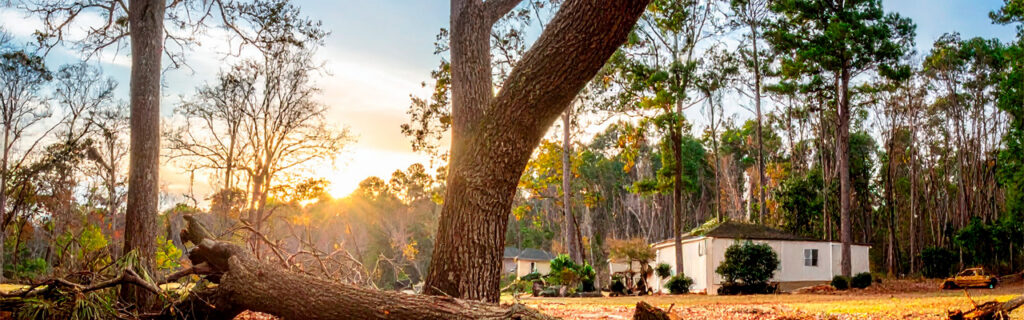
For property owners across Cherokee County, Ball Ground, and Canton who are considering tree removal on their residential or rural properties, whether for safety reasons, for improvement projects, or for management objectives, understanding the specific questions that should be asked and answered before any removal is executed, and why each question’s answer should inform the removal decision rather than simply precede it, gives the practical framework for approaching tree removal as the deliberate, informed decision that its irreversibility specifically requires rather than as the default response to any tree-related concern that a more considered approach would sometimes replace with preservation, management, or targeted treatment rather than full removal.
Is the Tree Actually Hazardous or Simply Declining?
The most consequential question to ask before removing any tree near a structure or occupied area is whether the tree presents a genuine structural hazard that makes its continued presence an unacceptable safety risk, or whether it is showing signs of decline, age, or condition that are concerning but that do not yet constitute the structural inadequacy that removal specifically addresses. This distinction matters because it determines whether removal is the appropriate management response or whether professional assessment, targeted dead branch removal, or monitored observation is the appropriate response that allows the tree to continue contributing to the property’s character and ecological value while the concerning condition is specifically managed.
A tree with dead branches in the outer crown or primary scaffold positions is a tree with a specific manageable condition whose appropriate response is dead branch removal rather than full tree removal unless the dead branch pattern is part of a broader structural decline that professional assessment specifically evaluates and determines warrants removal. A tree with modest inner crown deadwood from normal self-pruning, some bark roughening from aging, and a slightly asymmetric canopy from directional light adaptation is a tree showing normal mature tree characteristics that do not constitute hazardous structural conditions requiring removal. A tree with significant basal decay confirmed by fungal fruiting at the root flare, advancing crown dieback across multiple successive seasons, or visible trunk cavities that compromise the structural cross-section at a height that the crown’s loading forces act through is a tree whose structural conditions warrant professional assessment that may specifically recommend removal as the appropriate response to the assessed structural inadequacy.
The assessment question that most reliably informs this hazard versus decline distinction for trees in priority fall zones near structures is the professional structural evaluation that assesses internal wood condition, root system integrity, and crown loading geometry from the observable external indicators combined with the professional assessment techniques that evaluate structural adequacy more specifically than external observation alone allows. Property owners who request professional assessment before removal of trees that appear concerning but whose actual structural condition is not clearly established by external observation alone consistently make better removal decisions than those who make removal decisions from external appearance assessment without the professional structural evaluation that confirms or refutes the hazard concern that external appearance suggested.
What Does This Tree Contribute That Removal Would Permanently Eliminate?
Before removing any tree whose contribution to the property’s character, ecology, or function is potentially significant, specifically asking what that contribution is and whether it would be permanently eliminated or substantially diminished by removal provides the context for evaluating whether the reason for removal justifies the permanent loss of the contribution. This question is most consequential for significant mature trees whose individual contributions are irreplaceable at any practical cost within any realistic ownership timeline, and less consequential for small-diameter volunteer trees in positions where their species identity, individual condition, or position-specific contribution is modest relative to the reason for considering removal.
A mature white oak with a thirty-inch trunk diameter and well-developed canopy contributes canopy character that no nursery planting at any cost can replicate within the current property owner’s likely ownership period, mast production that represents one of the most significant wildlife food sources the property contains, root system stabilization for the slope it is anchoring, and the specific sense of established natural place that mature hardwoods create in the landscape that defines Cherokee County’s most distinctive rural property character. Removing this tree for a convenience that could be achieved through a modest design adjustment that preserves it creates a permanent loss that no subsequent investment can recover, while the design adjustment that avoids the removal is a one-time planning accommodation whose cost is modest relative to the ongoing loss that removal would create. Understanding the specific contribution of significant trees before removal is the question that most frequently reveals that preservation through design accommodation is the more sensible decision than the removal that seemed simpler before the contribution’s full value was specifically considered.
Does the Tree’s Position Actually Conflict With the Intended Improvement or Use?
Many tree removal decisions associated with improvement projects are made on the assumption that the tree’s position conflicts with the intended improvement when a specific evaluation of whether a design adjustment could accommodate both the improvement and the tree would reveal that the conflict is not as fundamental as the assumption suggested. The tree that appears to be in the building footprint may be outside it if the footprint is shifted ten feet in a direction that the site’s terrain and drainage conditions support equally well. The tree that appears to be in the clearing path may be outside the functional clearing area if the clearing boundary is drawn at its appropriate functional extent rather than extended to the property line for the convenience of a simpler boundary. The tree that appears to require removal for driveway alignment may be avoidable through an alignment adjustment that routes the driveway around the tree at modest additional length or curvature.
Asking whether the intended improvement can be achieved with a design adjustment that preserves the tree before committing to removal that the unadjusted design requires is the question that most consistently reveals the preservation options that the initial improvement design did not specifically explore. A contractor who is given the tree’s preservation as a design objective alongside the improvement objective will evaluate whether the improvement can achieve its functional objectives with the tree in place through design adjustments, rather than simply designing the improvement for maximum efficiency without the preservation constraint. The design adjustment cost that preserves a significant tree is almost always less than the permanent loss that removing the tree creates, and asking the question before committing to the removal that the unadjusted design requires is the decision point at which the more satisfying outcome is still available through the planning accommodation that preservation requires.
What Are the Future Property Plans and How Does This Tree Relate to Them?
Trees that are candidates for removal because of their current relationship to a specific improvement or management objective should be evaluated against the property’s full future use plans rather than only against the immediate improvement or management context that prompted the removal consideration. A tree that creates a modest inconvenience for the current improvement project may be an important future asset for a subsequent project that the current planning does not directly address but that the property owner’s full improvement vision would have accounted for if the removal decision had been evaluated against the full vision rather than only the immediate project.
A mature oak that is in the approximate location where a future outdoor living area or deck might be positioned becomes the shade and canopy feature that would make the outdoor living area pleasant to use in summer rather than the exposed and overly sunny condition that an uncovered structure in a cleared area presents, and removing it during the current improvement project because it is adjacent to the project area eliminates the specific asset that the future outdoor living area would have depended on for the livability that makes outdoor spaces in North Georgia’s summer heat genuinely enjoyable. Evaluating the tree’s relationship to future property plans, specifically asking whether the property’s intended future uses create value from this tree’s presence that removal would permanently eliminate from those future uses, is the question that most frequently reveals why preserving the tree through the current project is the decision that serves the full property vision rather than only the immediate project convenience.
Has the Tree Been Evaluated for the Specific Condition Prompting the Removal Consideration?
Tree removal considerations that are prompted by a specific health or structural concern deserve specific evaluation of that concern before removal is executed, because the concern that appears alarming from property-owner ground-level observation may or may not represent the structural hazard that its appearance suggests once a professional evaluation assesses it against the actual internal wood condition and structural geometry that external appearance alone cannot fully characterize. The large dead branch over the primary entry to the house that appears to represent an immediate structural hazard may, on professional assessment, represent a dead branch removal task rather than a full tree removal indication because the tree’s structural condition below the dead branch is sound and the dead branch removal specifically addresses the hazard without requiring the removal of the structurally adequate trunk and remaining crown above and below the dead branch’s position.
Conversely, the tree that shows only modest external symptoms whose concerning appearance seems manageable through continued observation may on professional assessment reveal internal decay advancing through the structural wood at a rate that makes the tree’s continued retention in its current position an unacceptable risk that the modest external appearance understated. In both directions, professional assessment of the specific condition prompting the removal consideration produces a more accurate basis for the removal decision than the external appearance evaluation that professional assessment supplements with internal condition knowledge. The investment in professional assessment before removal of trees whose removal is prompted by specific health or structural concerns consistently produces better removal decisions because it brings the assessment accuracy to the decision point where accuracy most matters rather than after the decision has been made from the less accurate external observation that professional assessment would have improved.
What Is the Tree’s Species and How Does That Affect the Removal Decision?
A tree’s species identity is relevant to the removal decision through several mechanisms that each independently affect whether removal serves the property’s long-term interests or compromises them. Native species of high ecological value including white oak, red oak, hickory, flowering dogwood, and serviceberry represent irreplaceable contributions to the property’s native plant community that removal eliminates from the ecological diversity the property supports. Invasive non-native species including tree-of-heaven, princess tree, and Chinese tallow are candidates for removal regardless of their size or visual appeal because their continued presence sustains the seed source pressure on adjacent managed areas and provides no native ecological value that their removal would compromise. And certain species have species-specific structural characteristics, including the internal decay susceptibility that water oak presents without external warning signs, that affect how the tree’s observable condition should be interpreted relative to the structural risk it may represent in its current position near structures.
Knowing the species identity of trees being considered for removal allows these species-specific factors to be incorporated into the removal decision rather than treating all trees as equivalent candidates for removal assessment regardless of their specific ecological contribution, structural risk profile, and long-term landscape value. The species question is most consequential for trees of modest external condition concern whose removal might be justified for some species but whose species-specific contribution value makes preservation through non-removal management the better decision for other species in equivalent external condition. Identifying the species before removal rather than after ensures that the species-specific factors that should inform the decision are available to inform it.
Are There Alternative Management Options Between Preservation and Full Removal?
Tree removal decisions framed as a binary choice between full preservation and full removal sometimes overlook the intermediate management options that address the specific concern prompting removal consideration without requiring the full removal that eliminates the tree’s positive contributions along with the specific problem its removal was intended to solve. These intermediate options are most relevant for trees whose removal is prompted by specific manageable conditions rather than by structural inadequacy that professional assessment has confirmed makes the tree’s continued retention genuinely unsafe regardless of partial management measures.
Dead branch removal by a professional tree service that specifically removes the dead branches creating the hazard concern without removing the structurally adequate trunk and remaining living crown below and around them is the intermediate option most frequently applicable to trees where the removal consideration was prompted by canopy condition concerns rather than by structural inadequacy at the trunk and root system level. Crown reduction that removes the highest-risk structural portions of an asymmetric or over-extended crown while preserving the structurally sound main trunk and inner scaffold branches is an intermediate option that professional tree services can assess for trees where the crown loading geometry creates wind loading risk that crown reduction specifically reduces without requiring full removal. And professional assessment that confirms the concerning condition is less severe than external appearance suggested and recommends monitored observation at scheduled intervals is an intermediate outcome that converts the removal consideration into a monitoring program that preserves the tree while tracking the condition that prompted the removal consideration with the professional attention that accurate condition trending requires.
What Will the Property Look and Function Like After the Removal?
Visualizing the property’s specific condition after the removal is completed, before the removal is executed, grounds the decision in the realistic post-removal outcome rather than in the abstract relief from the current concern that the removal represents. This post-removal visualization is most productive when it specifically addresses the character and functional changes that the removal will create rather than only the resolution of the concern that prompted the removal consideration. Will the removal create a significant gap in the canopy that was previously continuous, and will that gap affect the character of the cleared area’s relationship to the surrounding woodland in ways that matter for the property’s intended use? Will the removal expose the structure to increased wind loading that the removed tree was previously buffering? Will the removal eliminate the shade that was making the outdoor space adjacent to the structure comfortable during summer afternoons, and will that exposure affect how the outdoor space is actually used after the removal? And will the removal stump require grinding to prevent the trip hazard and the organic decomposition settlement that an unground stump creates in the area that subsequent use will occupy?
These post-removal condition questions do not necessarily argue against removal when the removal decision is correctly made for sound reasons. But they do ensure that the decision is made with accurate expectations about what the property will be after the removal rather than only with relief about what the property will no longer have to concern the owner. The removal decision made with accurate post-removal condition expectations is a fully informed decision. The removal decision made with only the concern-relief expectation may produce surprise at the character and functional changes that the removal created alongside the concern resolution that motivated it, which adequate pre-removal post-removal visualization would have incorporated into the decision’s full context before execution.
Frequently Asked Questions
How do I know when a tree removal decision is clearly correct versus when it needs more evaluation?
Tree removal decisions are most clearly correct without requiring extended evaluation in three specific situations. First, when a professional structural assessment has specifically confirmed that the tree’s structural condition makes continued retention in its current position an unacceptable safety risk that no intermediate management measure adequately reduces, the professional assessment has provided the evaluation basis that makes the removal decision clearly supported by the most accurate condition characterization available. Second, when the tree is an invasive non-native species whose presence provides no native ecological value and whose removal serves the property’s management objectives without eliminating any native character contribution, the species identity evaluation alone supports the removal decision without requiring extended individual assessment of the specific tree’s condition or contribution. Third, when the tree is directly within an improvement footprint that has been specifically designed without the ability to accommodate the tree’s position through any practical design adjustment, and the improvement cannot be executed to its intended standard with the tree in place, the positional incompatibility that design adjustment cannot resolve makes the removal decision clearly connected to the improvement objective that justifies it. Outside these three situations, removal decisions benefit from the specific questions described in this article before execution.
Should I get multiple opinions before removing a significant mature tree?
For significant mature trees whose removal would create substantial and irreversible character loss, seeking a second professional opinion when the first opinion recommends removal based on structural condition assessment is a reasonable step that the irreversibility of the removal decision specifically justifies. Professional structural assessments of mature trees involve both objective findings, the observable external conditions that any competent assessor would identify consistently, and professional judgment about the structural adequacy implications of those findings, which can legitimately vary among experienced professionals depending on their specific training, experience, and risk tolerance calibration. A second opinion on a significant tree’s removal recommendation that confirms the first assessment’s conclusion provides the additional confidence that the irreversibility of the removal decision warrants. A second opinion that significantly differs from the first assessment’s conclusion indicates that the structural condition assessment involves professional judgment variation that warrants a conversation with both assessors to understand the basis for the difference before the removal decision is made from the assessment with the conclusion most aligned with the property owner’s preference rather than most aligned with the actual condition the assessments evaluated.
How does the tree’s proximity to my property boundary affect the removal decision?
Trees near property boundaries create removal decision considerations that trees well within the property interior do not, because boundary trees may have roots, canopy, or fall zones extending onto adjacent properties in ways that affect both the legal considerations surrounding removal and the neighboring property’s interests in the tree’s continued presence. The general legal principle that property owners can remove trees entirely within their property is clear, but trees whose trunks are on or near the property line may have shared ownership implications under Georgia law that affect the removal decision’s legal dimensions. Trees whose canopy overhangs adjacent property and provides character or shade benefits to that property are trees whose removal may affect the neighbor’s property in ways that neighborly communication before removal serves better than removal without prior notification that the neighbor might have appreciated receiving before the character or functional change the removal created. And trees in priority fall zones near adjacent structures create both the safety management consideration for the property owner and the neighbor’s interest in whether the tree’s structural condition warrants the safety response that removal provides.
What should I do with the wood after a tree is removed from my North Georgia property?
The wood from a removed tree on a Cherokee County rural or residential property has several disposal and use options whose appropriateness depends on the wood volume, the species, the wood condition, and the property owner’s priorities for the removal site’s condition after the tree is gone. Native hardwood species including oak, hickory, and other valuable timber species removed in sound condition can sometimes be salvaged for lumber, firewood, or milling if the trunk diameter and clear length are adequate for the intended purpose and if a buyer or processor can be identified before the removal is executed. Smaller wood volumes from any species are efficiently managed as firewood for property owners with fireplaces or fire pits, providing useful fuel from material that would otherwise require disposal. Wood chip processing of the full tree through a chipper attachment or chipper truck converts the wood to the mulch that can be spread across managed garden and landscape areas as weed suppression and moisture retention material. And complete site clearing that includes wood removal by the tree service contractor converts the removal to a single contracted event that leaves the site clear of all material but requires the disposal or transport cost that on-site wood use or processing avoids.
Considering Tree Removal on Your North Georgia Property?
The questions described in this article are not meant to make tree removal more complicated than it needs to be when the removal decision is clearly correct and the specific questions produce answers that consistently support it. They are meant to ensure that the permanence of tree removal receives the evaluative attention that the decision warrants before execution, so that the trees that should be removed are removed with confidence that the evaluation supported the decision, and the trees that should be preserved are identified as preservation candidates before they become removal events that no subsequent evaluation can reverse. Asking these questions before any removal, documenting the answers with enough specificity to explain the decision to a future property owner if the property is ever sold, and seeking professional assessment for the questions whose answers require professional structural evaluation rather than property-owner observation alone produces tree removal decisions that the property’s long-term condition and character will justify rather than mourn.
Bardin Outdoors works with homeowners and landowners across Ball Ground, Canton, Cherokee County, and North Georgia on tree removal projects where the specific removal need has been evaluated against the questions that informed removal decisions require, executing the removals that those evaluations confirm are appropriate while providing the site-specific input that helps property owners recognize when alternative management options serve the property better than removal for the specific conditions and trees involved. To learn more about how Bardin Outdoors approaches tree removal decisions on North Georgia properties, contact us.