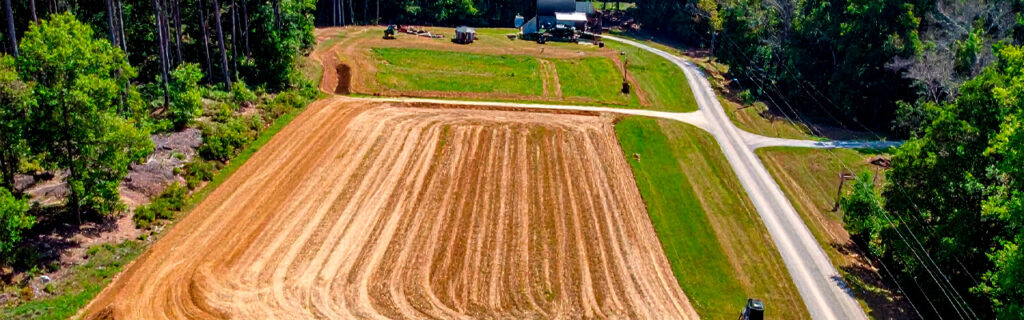
For property owners across Cherokee County, Ball Ground, and Canton managing rural acreage with improvement objectives that span multiple seasons and competing budget claims from multiple improvement categories, understanding the specific prioritization criteria that consistently produce better long-term property management outcomes than arbitrary or preference-based sequencing, how those criteria apply to the specific improvement categories that rural North Georgia properties most commonly require, and what the practical process for applying them to a specific property’s specific improvement inventory looks like gives the framework for approaching rural acreage improvement as the managed program that produces genuine property advancement rather than the series of reactive responses to the most recently pressing conditions that produces improvement investment without accumulated destination progress.
Why Improvement Prioritization Matters More on Rural Acreage Than on Smaller Lots
The improvement prioritization challenge on rural acreage is qualitatively different from the maintenance and improvement sequencing that smaller residential lots present, for two reasons that each make the prioritization framework that works for residential lots inadequate for the rural acreage context that most Cherokee County rural property owners manage.
The first reason is the dependency relationships among improvements that rural acreage’s larger scale and more complex infrastructure create. On a quarter-acre residential lot, most improvements are relatively independent of each other and can be sequenced in any order without one improvement’s quality affecting another’s efficiency or outcome quality significantly. On rural acreage with access infrastructure, drainage systems, managed vegetation areas, and proposed future development sites, the dependency relationships among improvements are both numerous and consequential. Clearing that reveals the terrain before building site grading is committed. Access development that enables equipment to reach work areas for all subsequent improvements. Drainage correction that prevents subsequent improvements from being compromised by the moisture conditions inadequate drainage creates. Each of these dependency relationships creates a logical sequence that produces better outcomes when honored and produces expensive inter-phase complications when ignored in favor of the sequence that preferences or reactive urgency would select.
The second reason is the compounding consequence of deferred maintenance on rural acreage that residential lots rarely experience at the same scale. Deferred improvements on a residential lot typically affect the specific area or function they would have improved, without cascading effects on other property functions. Deferred access development on rural acreage limits the efficiency of every subsequent improvement that requires equipment access to reach the work area. Deferred drainage correction allows chronic moisture conditions to progressively damage the infrastructure and compromise the site conditions for every subsequent improvement that the uncorrected drainage affects. Deferred invasive species management allows the root energy that unchecked growing seasons accumulate to drive increasingly vigorous regrowth that each subsequent management season must address at higher treatment intensity than the prior deferral allowed the situation to advance to. These compounding consequences of deferred rural acreage improvements make prioritization decisions more consequential for long-term management efficiency and cost than equivalent residential lot prioritization decisions, because the rural acreage context amplifies the consequences of priority sequencing errors in ways that smaller lots with simpler improvement relationships do not.
The Four Prioritization Criteria That Consistently Produce the Best Sequences
Four specific prioritization criteria, applied in sequence to the full inventory of improvements a rural property requires, produce the improvement sequence that most efficiently advances the property toward its intended destination while specifically preventing the deferred-consequence compounding that unsequenced improvement investment consistently produces. These criteria are not equally applicable to every improvement decision, and knowing which criterion applies most directly to each specific improvement helps the property owner apply the framework correctly rather than forcing every improvement through all four criteria regardless of which criterion is most relevant to its specific situation.
Criterion One: Safety Conditions Take Unconditional Priority
Any improvement that addresses an identified safety condition takes unconditional priority over all other improvements regardless of how those other improvements rank against each other on the remaining three criteria. Hazardous trees near structures and occupied areas, drainage conditions creating structural hazards or emergency access problems, fence breaches allowing livestock into dangerous terrain, and access conditions preventing emergency vehicles from reaching the property are all safety improvement categories that belong in the earliest executable improvement phase without reference to their relative position in the dependency, enabling, or compounding-consequence rankings that determine the sequence among non-safety improvements. The property owner who defers a known safety improvement to execute a lower-ranked improvement that seemed more urgent in the moment is accepting ongoing safety risk for the duration of the deferral that no subsequent improvement efficiency justifies. Safety conditions identified during the improvement inventory assessment should receive scheduled professional response within the current season rather than deferral to a future season when the safety condition continues posing its identified risk.
Criterion Two: Access Infrastructure That Enables Everything Else
After safety conditions, access infrastructure that enables subsequent improvements to reach work areas and proceed at the quality and efficiency that adequate access provides belongs in the earliest improvement phases because every subsequent improvement in every category depends on equipment and personnel being able to reach the work area through access conditions that support the work without preliminary access preparation that adds cost and delays primary scope. A primary driveway that cannot support the excavation equipment required for building site development must be improved before that development can proceed efficiently. Interior trail and road conditions that prevent forestry mulching equipment from reaching the food plot margins that need restoration must be improved before that restoration can be executed without the preliminary access clearing that inadequate trail conditions would otherwise require. Access improvements executed in early phases create the conditions that every subsequent phase benefits from, making their early-phase placement an investment that reduces the cost and increases the efficiency of every subsequent phase rather than only addressing the access problem that the current improvement’s work area presents.
Criterion Three: Improvements With the Highest Enabling Value for Subsequent Phases
Among improvements that are neither safety conditions nor access infrastructure, the improvements that create the most enabling value for subsequent phases by revealing site conditions that subsequent planning requires, establishing the infrastructure that subsequent improvements depend on, or creating the cleared and prepared site conditions that subsequent improvements use as their starting point belong before the improvements that do not create enabling value for subsequent phases at the same level. Clearing that reveals the actual terrain beneath vegetative cover enables more accurate building site design than attempting that design without the terrain knowledge that clearing produces. Drainage corrections that eliminate the chronic moisture conditions affecting a proposed improvement site enable subsequent improvements at that site to perform as designed rather than being compromised by the moisture conditions they are built into. Site preparation phases that achieve adequate organic removal, compaction, and drainage infrastructure enable the construction phases above them to perform at their intended quality standard.
The enabling value criterion specifically asks whether executing this improvement now makes the next most important improvements more efficient or better quality than they would be without this improvement preceding them. The improvement that most significantly improves subsequent phase efficiency or quality at the lowest cost relative to that improvement belongs above improvements that do not produce the same enabling effect at the same cost efficiency. This criterion consistently places foundational improvements, including clearing, site preparation, and drainage infrastructure, earlier in the improvement sequence than the more visible and immediately satisfying improvements that would not be as efficiently or as successfully executed without the foundational improvements that should precede them.
Criterion Four: Compounding Consequences of Continued Deferral
Among improvements that are similarly ranked on the first three criteria, the improvement whose deferral produces the most significant compounding consequences for subsequent seasons of use and management belongs before improvements whose deferral produces more modest or more slowly developing consequences. Fence line vegetation that is actively integrating with fence infrastructure compounds its damage with each additional growing week of contact, making the fence line restoration that addresses the integration more expensive with each additional season of deferral than the restoration that addresses it at the current integration level would have required. Invasive species populations that are accumulating root energy across unchecked growing seasons produce increasingly vigorous regrowth that requires increasingly intensive treatment with each additional season of unchecked accumulation, making the management investment required to produce equivalent restoration results higher with each subsequent season of deferral. Drainage conditions that are actively eroding the infrastructure and site conditions they affect create restoration costs that increase with each storm season that passes without the correction that would have prevented the progressive damage.
The compounding-consequence criterion specifically asks how much more expensive or more difficult the deferred improvement becomes with each additional season of deferral, and ranks improvements by that rate of compounding rather than by their apparent urgency in any given season. This criterion consistently elevates improvements whose current cost of address is significantly lower than their future cost of address over improvements that do not become significantly more expensive with additional deferral, because the cost difference between addressing the high-compounding improvement now versus later represents a genuine financial return on the early investment that exceeds what alternative improvement investments would have produced from the same budget.
How the Prioritization Criteria Apply to Common Rural Acreage Improvement Categories
The four prioritization criteria produce consistent relative rankings for the improvement categories that Cherokee County rural acreage most commonly requires, which gives property owners a practical starting point for applying the framework to their specific improvement inventory rather than needing to evaluate every improvement from scratch against the criteria without any regional context for how those criteria typically resolve among the specific improvements that local rural properties most frequently require.
Primary driveway drainage and surface maintenance consistently rank early in the prioritization sequence because primary driveway access enables every subsequent improvement and maintenance activity that requires equipment or personnel to reach the property interior, and because primary driveway drainage failure creates the access limitation that prevents every subsequent improvement from proceeding on schedule and at planned cost. A single season of primary driveway failure during the wet season can delay an entire season’s improvement program for every project that requires equipment access through the failed driveway, making the cost of primary driveway maintenance substantially lower than the cost of the program delays that deferred primary driveway maintenance creates.
Interior access trail development and maintenance rank immediately after primary driveway improvements in the prioritization sequence for properties with interior management areas including food plots, stand locations, and managed vegetation sections that require periodic equipment access for maintenance. Interior access improvements that enable maintenance equipment to reach managed areas without preliminary clearing at each maintenance event produce recurring cost savings across every maintenance cycle that the improved interior access serves, making the initial interior access improvement investment an amortized efficiency investment rather than a single-season cost.
Invasive vegetation management that addresses established populations with high root energy accumulation rates ranks above management of lower-urgency vegetation conditions based on the compounding-consequence criterion that places high-accumulation invasive populations above lower-urgency vegetation conditions that do not compound their management cost at the same rate. The privet population that is actively advancing into a food plot at the rate that each growing season produces represents compounding food plot area loss and management cost increase that the compounding-consequence criterion specifically elevates above improvements that do not compound at the same rate.
Building site clearing and grading improvements rank based on their specific position in the property’s improvement sequence as determined by the enabling-value criterion. If the clearing reveals terrain that subsequent building site design requires for accurate design, the clearing ranks before the design commitment. If the building site development enables subsequent improvements including utility installation and barn construction that the building’s presence enables, the building site development ranks before those subsequent improvements. And if the building site improvement is independent of the most compounding-consequence improvements in the inventory, the compounding-consequence criterion places those more urgently compounding improvements before the building site improvement until the compounding consequences are addressed.
How to Build a Practical Prioritization List for Your Specific Property
Building a practical prioritization list for a specific rural property’s improvement inventory requires applying the four criteria to the specific improvements that property requires rather than to the generic improvement categories that the criteria consistently resolve at a regional level. This property-specific application produces the sequence that most efficiently advances the specific property rather than the sequence that most efficiently advances a generic Cherokee County rural property without the specific characteristics that make each property’s sequence somewhat different from the regional pattern.
Begin by listing all identified improvement needs across the full property without reference to priority, specifically including every safety condition, infrastructure need, vegetation management requirement, and development objective that the property currently presents or that the intended improvement program will require. This complete improvement inventory is the raw material that the prioritization framework organizes rather than a pre-prioritized list that the criteria confirm. Apply the safety criterion first, identifying any improvements that address identified safety conditions and placing them at the top of the sequence regardless of any other priority consideration. Apply the access criterion second, identifying the improvements that create or restore the access conditions that subsequent improvements require and placing them immediately after the safety improvements in the sequence. Apply the enabling-value criterion third, ranking the remaining improvements by the enabling value they create for subsequent improvements and placing higher enabling-value improvements before lower enabling-value improvements in the sequence. Apply the compounding-consequence criterion to resolve any remaining ties or close rankings in the sequence, specifically elevating improvements whose cost increases significantly with each additional season of deferral above improvements that do not compound at the same rate.
The sequence that results from this application is the prioritized improvement list that the available annual budget should be allocated against, with improvements at the top of the list receiving the first budget allocation at the quality standard they require and subsequent improvements receiving allocation in sequence until the annual budget is exhausted. Improvements not reached in the current season’s budget allocation retain their position in the sequence for the following season’s allocation, so that the program consistently advances from the top of the prioritized sequence rather than dispersing the available budget across the full sequence at partial quality for every improvement simultaneously.
Frequently Asked Questions
How do I handle a situation where a low-priority improvement has a specific seasonal deadline that conflicts with the prioritization sequence?
Seasonal deadlines create legitimate adjustments to the prioritization sequence when the deadline is real and the consequence of missing it is significant enough to justify advancing the time-sensitive improvement over higher-ranked improvements that can tolerate one additional season of deferral without the compounding consequences that justify their higher priority rank. Fall food plot seeding deadlines that require soil preparation, lime application, and seed bed establishment within specific planting windows are legitimate seasonal deadline adjustments that advance the food plot preparation above improvements with higher priority ranks if those higher-ranked improvements can tolerate the current season’s deferral without advancing their compounding consequences significantly. Hunting season opening dates that create trail corridor access requirements by a specific date are legitimate seasonal deadline adjustments that advance trail corridor management above improvements with higher priority ranks if the deferral of those improvements is tolerable for the current season. The test for whether a seasonal deadline justifies the prioritization adjustment is whether the deadline is genuinely fixed and whether missing it produces consequences that are more significant than the consequences of deferring the higher-ranked improvement for one additional season.
How often should the prioritization list be reviewed and updated?
The prioritization list should be reviewed and updated at least annually, ideally in late summer or early fall before the next improvement season’s contractor scheduling and budget allocation decisions are made. Annual review should specifically incorporate what the prior season’s completed improvements revealed about conditions for subsequent improvements that the completion exposed, whether any new safety conditions or high-compounding-consequence conditions have developed since the prior review that should be elevated in the sequence, and whether cost estimates for upcoming improvements should be updated from current contractor input that reflects current material and labor costs rather than estimates made in prior seasons. The program-level sequence of improvement categories typically remains stable between annual reviews because the physical dependency relationships that determine the sequence change slowly. The specific improvements within each category and the specific cost estimates for each improvement should be updated annually from the most current site condition knowledge and contractor pricing available.
Should I involve a contractor in building my prioritization list or can I develop it independently?
Developing the prioritization list independently from the property owner’s own knowledge of the property’s conditions, improvement needs, and improvement objectives is a productive starting point that the property owner’s direct familiarity with the property specifically enables. Contractor input adds the most value to the prioritization list at two specific points in its development. First, when the enabling-value and compounding-consequence criteria require assessments of how specific site conditions will affect subsequent improvement quality and how quickly specific conditions will compound with deferral, an experienced local contractor’s knowledge of how Cherokee County terrain, soil, and vegetation conditions behave in specific improvement contexts provides the regional calibration that the property owner’s direct observation cannot provide with the same accuracy. Second, when the prioritization list has been developed and the upcoming season’s priority improvements are identified, contractor input on whether the identified improvements can be executed in the planned sequence within the available seasonal window and whether any operational considerations should adjust the sequence for practical execution efficiency produces the final sequencing adjustments that make the prioritized plan executable rather than conceptually sound but operationally problematic.
What should I do when available budget is insufficient to complete even the highest-priority improvement at adequate quality?
When the available budget is insufficient to complete the highest-priority improvement at the quality standard that adequate performance requires, the productive responses are either to defer lower-priority improvements entirely and concentrate the full available budget on the highest-priority improvement at adequate quality, or to defer the highest-priority improvement entirely to the following season when the accumulated budget from both seasons may provide adequate funding for adequate-quality execution. The response that is not productive is to execute the highest-priority improvement at reduced quality to fit within the current season’s budget, because improvements executed at below-adequate quality for their specific performance requirements consistently generate the remediation costs that exceed the cost savings from reduced initial quality, making the reduced-quality execution of the same total investment that adequate-quality execution would have required produce a worse outcome at an equivalent or higher total cost than deferral to the following season’s adequate budget would have produced. The discipline of executing fewer improvements at adequate quality rather than more improvements at inadequate quality is the improvement program management discipline that produces the best long-term property outcomes from the accumulated improvement investment across multiple seasons.
Ready to Prioritize Your Rural Acreage Improvement Program?
Rural acreage improvement programs that are organized around the four prioritization criteria described in this article consistently produce more satisfying long-term property conditions from the same total improvement investment than programs that sequence improvements by preference, reactive urgency, or arbitrary decision without reference to the dependency relationships, access infrastructure requirements, enabling values, and compounding consequences that the criteria specifically account for. The property whose improvements were sequenced by these criteria advances systematically toward a defined destination through improvements that each build on the prior phase’s conditions and enable the subsequent phase’s efficiency and quality. The property whose improvements were sequenced without these criteria accumulates individually executed investments that may each be well-executed while collectively failing to compound toward any coherent destination at the efficiency that the same investment organized by the criteria would have produced. The prioritization framework described here is the organizational tool that converts a rural acreage improvement investment from the latter trajectory to the former.
Bardin Outdoors works with landowners across Ball Ground, Canton, Cherokee County, and North Georgia on clearing, forestry mulching, grading and excavation, and access development projects planned and sequenced as coordinated improvement programs that advance each property toward its intended destination through improvements executed in the order that each property’s specific dependency relationships, access infrastructure requirements, enabling values, and compounding consequences most efficiently support. To learn more about how Bardin Outdoors can help prioritize and execute your rural acreage improvement program, contact us.