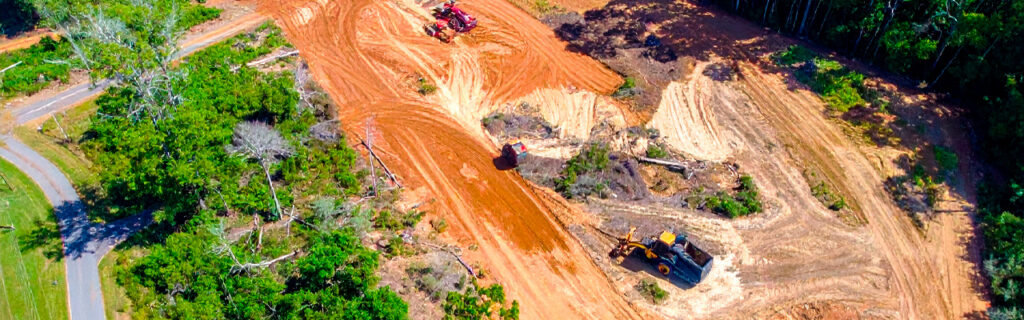
For property owners across Cherokee County, Ball Ground, and Canton approaching the clearing of overgrown residential or rural properties where the vegetation that has accumulated over years or decades of inadequate management has produced the impenetrable density that makes the property’s current condition frustrating and its full potential unrealized, understanding what strategic clearing planning specifically considers before any clearing equipment is scheduled, why each planning consideration affects the clearing’s outcome in ways that the clearing’s execution alone cannot compensate for without the planning that should have preceded it, and how to translate a property owner’s vision for the cleared property into the specific clearing instructions and preservation priorities that produce the post-clearing condition the vision describes gives the practical foundation for approaching overgrown property clearing as the deliberate first step of a considered improvement program rather than the reactive removal of everything that has accumulated without the planning that distinguishes improvement from simply making the property look different temporarily.
Why Overgrown Properties Require More Planning Than Typical Clearing Projects
Overgrown properties that have been accumulating invasive vegetation without consistent management for years or decades present clearing planning challenges that more recently managed properties rarely generate at the same scale or with the same consequences for inadequate planning. The vegetation density that multi-year accumulation produces conceals the terrain, drainage, and site conditions that clearing will reveal, making clearing of heavily overgrown properties the planning situation where the most consequential decisions must be made about conditions that cannot be fully characterized until clearing exposes them. The native trees that may exist in suppressed but preserved condition beneath the invasive canopy cannot be identified from outside the dense section without entering it and specifically looking for them. The terrain that clearing will reveal for the first time in years may present drainage features, rock outcrops, or terrain characteristics that should influence both the clearing approach and the subsequent improvement planning that the cleared terrain will support. And the root energy that years of undisturbed invasive establishment has accumulated in the root systems beneath the dense overgrowth cannot be adequately managed by mechanical clearing alone without the herbicide follow-up that root energy depletion requires to prevent the vigorous resprout that intact root systems with full energy reserves produce following the mechanical removal of their above-ground expression.
Each of these overgrown-property-specific planning considerations requires advance attention before the clearing is executed, because each one affects either what the clearing equipment is specifically instructed to do, what it is specifically instructed to avoid doing, or what should be planned for immediately after the clearing based on what the clearing reveals. The planning that addresses these considerations before clearing begins produces a clearing project that serves the property owner’s improvement vision with the accuracy that advance planning enables. The clearing that proceeds without this planning produces conditions that may or may not resemble the intended outcome depending on how closely the clearing’s general execution aligned with the specific property conditions and improvement vision that specific planning would have accounted for deliberately.
Identifying Trees Worth Preserving Before Clearing Begins
The most irreversible clearing decision is the removal of significant native trees that adequate planning would have preserved and that the clearing’s intended outcome did not specifically require to be removed. Identifying the trees that should be preserved, and specifically marking those trees in the field before clearing equipment arrives, is the planning activity whose omission produces the most permanently regretted clearing outcomes on North Georgia overgrown properties where significant native trees are present within the overgrowth that clearing is intended to address.
Physically Entering the Overgrown Section to Find Preservation Candidates
Significant native trees including mature oaks, hickories, dogwoods, serviceberries, and native viburnums that have persisted in suppressed condition beneath dense invasive overgrowth cannot be identified from accessible observation positions outside the overgrown section, because the same vegetative density that makes the section functionally unusable also prevents observation from outside the density of the tree species present within it. The preservation planning that identifies these trees before clearing requires physical entry into the overgrown section specifically for the purpose of identifying the native species within it that clearing should preserve while removing the invasive species around them. This preservation walk should be conducted with the property owner or their representative who can make the specific preservation judgment about which trees and natural features the clearing should navigate around rather than processing, because the clearing contractor and operator cannot make preservation decisions on behalf of the property owner for elements whose contribution to the property’s intended post-clearing condition only the property owner can fully assess.
Every preservation candidate identified during the walk should receive bright flagging tape at approximately five to six feet of height on every stem and trunk at the candidate’s position, providing the unambiguous field marking that the clearing operator can observe from the equipment cab during active treatment to navigate around marked preservation targets rather than processing them with the adjacent invasive vegetation. The flagging tape is the physical translation of the preservation planning decision into the field instruction that active equipment operation requires because verbal description of preservation target positions is not reliably actionable from within the equipment cab during active clearing at the efficient operating speed that equipment treatment requires. Without physical marking, the clearing operator makes preservation decisions based on general instruction and personal judgment for each specific plant encountered, which is the approach that produces the inconsistent preservation outcomes that specific physical marking prevents by removing the judgment requirement at each preservation target position during active treatment.
Special Consideration for Native Species in Suppressed Condition
Native understory species that have persisted in severely suppressed condition beneath dense invasive overgrowth are among the most valuable clearing preservation targets because their release from invasive competition through clearing allows them to recover and expand into the cleared space, contributing the ecological diversity and seasonal character that native species provide without the establishment investment that planting native species in the cleared area would require. A native flowering dogwood that has been suppressed to a weak, sparsely leafed condition beneath dense privet will recover substantially in the growing seasons following clearing that removes the competitive pressure the privet was applying, producing the flowering and fruiting character in the first two to three post-clearing seasons that the suppression had prevented from developing for however many seasons the privet dominance had suppressed it. Identifying and preserving these suppressed native species during the preservation walk requires recognizing their native species identity despite the poor condition that suppression has produced, which may require experience with native species in suppressed form that differs from their healthy form, and specifically marking them for preservation rather than assuming that the poor condition eliminates their recovery potential that release from competition will specifically restore.
Considering Access Conditions Before Defining Clearing Scope
The access conditions that clearing equipment must navigate to reach the treatment area, and that subsequent equipment must navigate to conduct the management activities the cleared area will require, should specifically influence the clearing scope definition before that scope is committed to the boundaries that may not account for the access conditions that equipment movement to and through the treatment area requires.
Clearing equipment must be able to reach the treatment area from the public road through access conditions that the equipment’s dimensional envelope and ground bearing requirements can navigate. Dense overgrowth that blocks the only access route to the interior treatment area may require preliminary corridor clearing before the primary treatment equipment can reach the interior sections, and this preliminary corridor clearing should be specifically planned as the first component of the clearing project rather than discovered as the access limitation that prevents the primary treatment equipment from proceeding on mobilization day without the corridor clearing that should have been addressed in advance. Identifying the access route from the road to each treatment area, specifically assessing the width, overhead clearance, and bearing conditions that the treatment equipment requires to navigate, and incorporating any necessary access corridor clearing into the project scope before the mobilization date that the access corridor must be passable for the primary equipment to proceed is the access planning that prevents the mobilization-day access discoveries that inadequate pre-project access assessment consistently produces.
Post-clearing management access should also influence the clearing scope definition, because cleared areas that cannot be reached by the management equipment that post-clearing herbicide application, invasive resprout mowing, and subsequent improvement development will require are cleared areas whose management program will be hampered by the same access limitations that clearing the area established without addressing. Specifically including access corridor development within the clearing scope, establishing the equipment-capable routes into the cleared area that post-clearing management requires to proceed efficiently, converts the cleared area from an accessible appearance to a genuinely accessible condition that the management activities the cleared area requires can reach and execute in without the preliminary access work that each management event would otherwise require before the management activity itself can begin.
Understanding the Terrain That Clearing Will Reveal
Overgrown sections on Cherokee County rural properties conceal the terrain conditions beneath the vegetation that clearing will expose, and those revealed terrain conditions may significantly differ from what the pre-clearing accessible-observation assumption suggested about the terrain beneath the overgrowth. Planning for what the clearing may reveal, and specifically designing the clearing’s approach to account for terrain characteristics that concealment has prevented from being accurately characterized, allows the clearing to proceed as the informed activity it should be rather than as the terrain condition discovery exercise it becomes when pre-clearing terrain assessment does not precede the clearing commitment.
Topographic maps that show the terrain pattern across the overgrown section provide the watershed context that reveals whether the section occupies a drainage collection position that the clearing will make more susceptible to erosion by removing the vegetative cover that was protecting the collection position’s soil from the concentrated flow it receives, or whether it occupies a ridge or shoulder position where natural positive drainage will manage the cleared surface’s rainfall without the erosion risk that collection positions experience. Understanding the topographic position before clearing allows the clearing scope to account for the erosion control needs that the terrain position creates, specifically including erosion control mat placement, seeding timing, and surface protection measures in the clearing project scope rather than discovering their necessity as reactive additions when the cleared surface experiences the erosion that the terrain position was always going to make likely once the vegetative protection was removed.
Physical terrain walking of the overgrown section before clearing, despite the difficulty that the dense vegetation creates for this walking, produces the ground-level terrain knowledge that the post-clearing terrain condition will reflect and that subsequent improvement planning must account for. Specifically noting the slope direction and magnitude, the presence of rock outcrops or surface indicators of shallow subsurface rock, the drainage channel positions and drainage collection areas, and the terrain variation across the proposed clearing footprint allows the clearing scope and subsequent improvement planning to account for these terrain characteristics from knowledge rather than discovering them from the post-clearing terrain revelation that inadequate pre-clearing terrain assessment allowed to remain unknown until clearing exposed them.
Defining Clearing Boundaries That Serve Future Property Plans
The clearing boundaries that define which areas the clearing will treat and which it will leave in their current vegetated condition should specifically reflect the property owner’s intended subsequent uses of the cleared and retained areas rather than defaulting to either the property boundary as the clearing limit or the minimum clearing that removes the most obviously problematic overgrowth without considering what the intended uses require from the clearing boundary positions.
Future building sites, food plots, pasture development, and other improvement objectives that the property owner intends for the cleared areas should specifically influence where the clearing boundaries are positioned, ensuring that the clearing creates the open conditions those intended uses require rather than clearing areas that the intended uses do not need while leaving areas that the intended uses do need in overgrown condition that another clearing project must address before those uses can be established. The food plot intended for the most productive available location should have a clearing boundary that includes the full intended food plot footprint plus the margin clearing that food plot management requires around the productive area, rather than clearing to a boundary that falls short of the intended food plot extent and leaves the margin areas in the overgrown condition that will immediately begin encroaching on the productive area. The building site intended for the most suitable available terrain position should have a clearing boundary that includes the full building footprint plus the perimeter drainage zone and equipment operating buffer that site preparation will require, rather than clearing only the minimum footprint that reveals the building site without the context that site preparation grading, drainage infrastructure, and construction access will need from the cleared surroundings.
At the same time, clearing boundaries should specifically stop at positions where the overgrown section transitions to natural features, native vegetation communities, or terrain characteristics that the intended subsequent uses benefit from retaining rather than clearing. Clearing to the property boundary when the intended use would be better served by clearing to a functionally appropriate boundary that preserves the vegetated edge as the windbreak, wildlife corridor, or natural character element that the intended use specifically benefits from having adjacent to the cleared area creates the cleared-everything condition that required removing features that the intended use needed rather than needed cleared. The clearing boundary that serves the intended subsequent uses is not the boundary that clears the most area or the boundary that clears the least. It is the boundary that positions each cleared area at the size and location that the intended use requires, with the adjacent retained vegetation at the positions where the intended use benefits from that retention rather than from clearing it.
Planning for the Management Program That Follows Clearing
The most commonly inadequate component of overgrown property clearing planning is the post-clearing management program that mechanical clearing alone cannot substitute for in the management of the root energy reserves that established invasive populations accumulate over the years of unchecked growth that overgrown property conditions represent. Property owners who approach overgrown property clearing as a one-time project whose completion permanently resolves the invasive vegetation problem consistently discover that the vigorous resprout growth that intact root energy reserves fuel in the weeks following mechanical clearing returns the cleared areas toward pre-clearing density within one to two growing seasons unless the herbicide follow-up treatment that root energy depletion requires is specifically planned and executed as the mechanical clearing’s necessary complement rather than an optional supplement to a treatment that was not designed to be adequate without it.
Planning the post-clearing management program before the clearing is executed allows the clearing to be specifically positioned as the first step of a combined mechanical and chemical management program whose subsequent steps are already calendared rather than as a standalone project whose successor management is improvised when the resprout growth that realistic expectations would have anticipated appears on schedule. The herbicide treatment of invasive resprout at six to twelve inch stem height, conducted four to eight weeks after the mechanical clearing during active growing season conditions when the herbicide’s movement to root reserves is most efficient, should be specifically scheduled before the mechanical clearing rather than after the resprout’s appearance reminds the property owner that the mechanical clearing’s root energy management limitation requires the chemical complement that planning should have scheduled before it became urgent.
The post-clearing management program that produces progressive improvement toward sustainable maintenance condition across three to five seasons of combined mechanical and chemical treatment is the realistic expectation for what overgrown property clearing investment should be understood as initiating, and property owners whose expectations are set to this realistic program duration before the clearing commitment produce better satisfaction with the clearing investment than those who expect permanent resolution from the mechanical clearing and are disappointed when the resprout that adequate management planning would have specifically anticipated appears on schedule and requires the management response that adequate post-clearing program planning would have already had scheduled rather than requiring reactive scheduling in response to the resprout’s appearance.
Frequently Asked Questions
How do I prioritize which sections of a heavily overgrown property to clear first when the full clearing scope exceeds my available budget?
Clearing priority on a heavily overgrown property with a budget that cannot address the full clearing scope in a single season should be determined by which cleared sections produce the most significant functional improvement for the property’s highest-priority intended uses and which cleared sections enable access to and management of other sections that cannot be adequately managed without the access that clearing specific sections first would establish. Sections that provide equipment access to interior areas that subsequent clearing seasons must treat are higher priority than sections that are self-contained clearing objectives without the access-enabling value that some clearing creates for the sections that follow it. Sections that contain the highest-priority intended uses, specifically the food plot with the most productive location, the building site with the most suitable terrain, and the trail network that connects the most important interior destinations, are higher priority than sections with lower-priority intended uses. And sections where invasive root energy accumulation is most advanced and whose clearing positions the combined mechanical and chemical treatment most urgently for the root energy depletion that prevents the highest-root-energy sections from compounding their management intensity with each additional unmanaged season are higher priority than sections where root energy accumulation is less advanced and whose management deferral compounds less severely with additional seasons of delay.
Should I clear an overgrown property before or after establishing the specific improvement plans that the cleared areas will support?
Clearing before improvement plans are fully established is appropriate when the clearing’s purpose is to reveal the terrain and site conditions that improvement planning requires to be accurate, specifically when the overgrowth is concealing the terrain variation, drainage features, and site characteristics that improvement planning must account for but cannot accurately characterize without the terrain exposure that clearing provides. In this case, the clearing should be executed with enough boundary specificity to open the sections where improvements are most likely while preserving flexibility in the specific improvement location and design that post-clearing terrain assessment will inform more accurately than pre-clearing planning can establish. Clearing after improvement plans are established is appropriate when the clearing’s purpose is to prepare specific identified improvement locations for the improvements that are already specifically designed and ready to proceed as the next step after clearing, allowing the clearing boundaries to be precisely defined by the improvement footprints and buffer zones that the established plans specify. Most overgrown property clearing situations benefit from the intermediate approach that clears the general areas where improvements are intended while deferring the specific improvement design commitment until after clearing reveals the actual terrain and site conditions that the improvement design should reflect, establishing approximate clearing boundaries from the improvement vision while retaining the design flexibility that revealed conditions may require to produce the most appropriate improvement locations from the options the cleared terrain presents.
What documentation should I create before, during, and after clearing an overgrown property to support future management and improvement decisions?
Pre-clearing documentation should include aerial imagery or map marking of the proposed clearing boundaries, photographs of the pre-clearing condition from accessible positions around the overgrown section’s perimeter, and written notes describing the preservation targets marked in the field and the specific instructions the clearing contractor received for each treatment area. During-clearing documentation should capture photographs from inside the treatment area as clearing progresses, specifically recording the conditions revealed during clearing that differ from pre-clearing assessment, the preservation targets successfully maintained around, and any terrain features or site conditions that the clearing reveals as significant for subsequent improvement planning. Post-clearing documentation should include a systematic walk-through assessment of the revealed conditions captured in dated photographs and written notes, specifically documenting the current terrain condition, drainage features, soil conditions at accessible exposure points, and any conditions requiring follow-up management or improvement attention that the post-clearing assessment reveals. This documentation archive provides the before-and-after comparison reference that subsequent management decisions can use to evaluate how the management program is producing the improvements it was intended to achieve across successive seasons, the communication record that contractor scheduling and professional assessment discussions can reference for current condition context, and the property management history that demonstrates the systematic approach to overgrown property restoration that consistent documentation and planned management represents.
How do I set realistic expectations for what the property will look like immediately after clearing versus what it will look like after the full management program matures?
Immediately after clearing, the property will show the accessible, open ground condition that mechanical clearing produces, with the preserved native trees and natural features visible for the first time since the overgrowth concealed them, the terrain surface accessible for the walk-through assessment that reveals current conditions, and the mulch layer that forestry mulching deposits over the cleared surface providing immediate soil protection and the managed appearance that distinguishes the cleared condition from the prior overgrown condition. Within four to eight weeks under active growing season conditions, vigorous resprout from intact invasive root systems will appear at densities that may be surprising to property owners whose expectations were not calibrated to this resprout timeline. This resprout is not a treatment failure. It is the biological response that the management program’s herbicide follow-up component specifically addresses, and its appearance on schedule should trigger the herbicide treatment that was planned for this timing rather than alarm about the clearing’s effectiveness. After the first season of combined mechanical and herbicide treatment and through successive seasons of consistent combined treatment, the resprout vigor and density decline progressively as root energy depletion advances, and the intervals between professional mechanical treatment extend while the post-clearing management increasingly resembles the sustainable maintenance program that the initial clearing investment specifically initiated toward rather than the intensive restoration that the initial conditions required and that the combined treatment program progressively makes less intensive with each treatment season that advances the root energy depletion toward the sustainable management condition.
Ready to Approach Your Overgrown Property Clearing Strategically?
Overgrown property clearing that is approached with the strategic planning that trees worth preserving, access conditions, terrain characteristics, future property plans, and post-clearing management programs each require to be addressed before clearing begins consistently produces better outcomes from the clearing investment than clearing that proceeds without this planning. The native trees that planning preserves are preserved permanently. The access that planning establishes enables the management that the cleared property requires through every subsequent management season. The terrain knowledge that planning develops informs the improvement designs that the cleared property will support. The clearing boundaries that planning defines create the conditions the intended uses need. And the post-clearing management program that planning schedules produces the progressive improvement toward sustainable maintenance that the mechanical clearing specifically initiates but cannot independently sustain without the chemical complement that adequate planning already has calendared before the resprout growth that the mechanical clearing’s root energy limitation makes inevitable appears on the schedule that adequate planning anticipated rather than the timeline that inadequate planning discovers with surprise.
Bardin Outdoors works with property owners across Ball Ground, Canton, Cherokee County, and North Georgia on strategically planned land clearing and forestry mulching projects that specifically account for preservation priorities, access requirements, terrain conditions, future improvement plans, and post-clearing management programs before clearing begins, producing clearing outcomes that serve the property owner’s improvement vision with the accuracy that advance planning enables. To learn more about how Bardin Outdoors approaches strategic clearing planning for overgrown North Georgia properties, contact us.