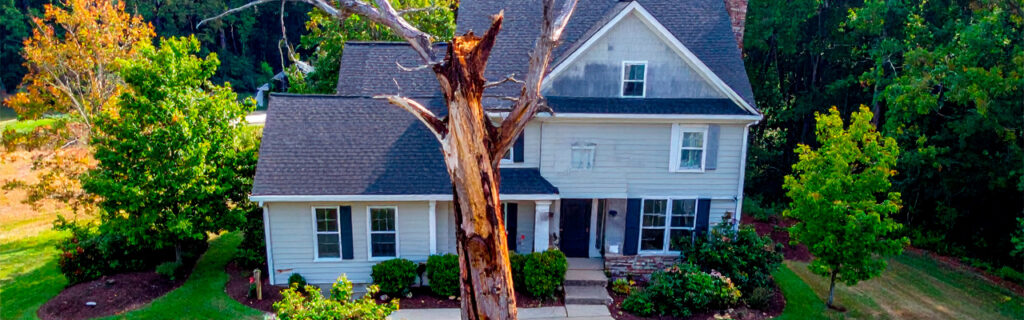
For property owners across Cherokee County, Ball Ground, and Canton with standing dead trees or significantly declining trees near their homes, outbuildings, driveways, and regularly occupied outdoor areas, understanding specifically what happens to a property as dead trees progress through their decomposition and failure trajectory, how the consequences of that progression extend beyond the immediate safety risk to affect usable space, property function, and the surrounding living trees and vegetation, and what the management response options are at different stages of the dead tree’s progression gives the practical knowledge for approaching dead tree management as the time-sensitive property safety and function issue that the progressive nature of dead tree decomposition makes it rather than as the deferrable maintenance item that the continued standing condition of the dead tree allows it to superficially resemble before the failure that undivided attention would have prevented occurs without the warning that an earlier management response would have provided.
How Dead Trees Progress From Structural Concern to Structural Failure
Understanding the progression that standing dead trees follow from their initial death through the structural failure that decomposition eventually produces gives property owners the context for assessing where in this progression any specific dead tree currently stands and what the remaining timeline to structural failure might be given the decomposition evidence the tree’s current condition reveals.
A tree that has recently died retains most of the structural strength that the living tree had, because the wood’s structural integrity derives from its cellulose and lignin composition rather than from the biological processes of the living tree, and those structural components persist after death until decay organisms progressively consume them. The recently dead tree’s structural strength is therefore not dramatically different from what it was when living, and the failure risk from a recently dead tree near a structure is primarily from the dead branches that the loss of transpiration and carbohydrate flow rapidly kills and that fall individually as their attachment at the branch union dries and weakens before the main trunk’s structural wood has been significantly compromised by decay. This early-phase dead tree condition is the condition where tree removal is most straightforwardly executed, most cost-effectively priced, and most productively responded to before the decay progression that will follow makes the removal more complex and the failure risk more imminent.
As years of decomposition progress through the standing dead tree’s structural wood, the decay organisms that entered through bark wounds, branch stubs, and the exposed wood surfaces that bark loss creates progressively consume the cellulose and lignin that the wood’s structural integrity depended on, converting solid structural wood to the friable, soft, structurally compromised material that advanced decay produces. The tree’s structural capacity to resist the bending and torsional forces that storm loading applies declines with each year’s additional decay consumption of structural wood, while the tree’s mass loading on the progressively weakened structural wood remains essentially constant until the bark and outer wood shells begin falling from the decomposing trunk in the advanced decay stages that reduce the tree’s profile. The progressive divergence between declining structural capacity and constant structural loading is the mechanical basis for the eventual failure that every standing dead tree’s decomposition trajectory produces when the residual structural capacity declines below the loading that the next significant storm applies.
How Dead Trees Affect Homes and Structures Directly Beneath Their Fall Zone
The most immediately consequential effect of a standing dead tree on a property is the structural damage risk that the tree’s fall zone creates for any home, outbuilding, or other structure positioned within the distance that the tree’s height could reach in any direction that the tree’s mass distribution, lean geometry, and prevailing storm approach angle make probable for the failure that the decomposition trajectory will eventually produce. This fall zone risk is not a theoretical concern that prudent management reduces for peace of mind without practical consequence. It is the specific mechanism by which the property damage, personal injury risk, and financial loss that standing dead tree failures produce in North Georgia create the actual outcomes that removal before failure specifically prevents.
A standing dead tree whose height places any portion of a structure within its potential fall zone creates a condition where every storm event during the deferral period tests the tree’s residual structural capacity against the storm’s loading without the removal that adequate management would have completed before the storm that tests it. The summer and fall storm season that Cherokee County experiences at peak frequency during July through September delivers this structural test to every priority fall zone tree on every property in the region multiple times each month, and the tree whose structural wood decomposition has progressed to the threshold of failure during the deferral period is the tree that one of these tests eventually moves past that threshold rather than below it. The structure beneath the tree’s fall zone at the moment of that failure receives whatever physical impact the tree’s mass and fall path deliver, at the full consequence that the tree’s size and fall trajectory produce without any warning interval between the structural failure initiation and the impact that follows it.
Beyond the catastrophic whole-tree failure, standing dead trees contribute to structures beneath their canopy through the progressive individual branch and bark slab failures that decomposition produces continuously in the years between the tree’s death and its eventual whole-tree failure. Bark slabs separating from the decomposing trunk, individual dead branches failing from their increasingly brittle and decaying attachments, and the wood debris that the tree’s continuous decomposition produces fall on structures below with the frequency and volume that active decomposition in the canopy and on the trunk generates regardless of whether storm events provide the loading that the tree’s structural failure eventually requires. Accumulated branch and bark debris on roofing creates the moisture retention and biological growth conditions that accelerate the roofing material’s deterioration, gutters blocked by dead tree debris overflow during rain events and deliver water to the foundation perimeter that adequate drainage would have shed, and the continuous debris fall from the decomposing tree creates the maintenance obligation and structure deterioration contribution that removal specifically eliminates.
How Dead Trees Affect Driveways and Access Infrastructure
Dead trees adjacent to driveways and access routes affect the infrastructure they overhang through the same progressive failure and debris fall mechanisms that affect structures, but with the additional consideration that driveway and access route blockage from dead tree failure affects the property’s accessibility in ways that can prevent emergency vehicle access at the most consequential possible timing.
A driveway blocked by a fallen dead tree during the storm event that produced the failure is a driveway that cannot be cleared and restored to passability without the chainsaw work and debris removal that the full tree across the driveway requires before any vehicle can navigate through the obstruction. For residential properties where the driveway is the only vehicle access route to the residence, this blockage prevents the emergency service vehicle access that fire, medical, and law enforcement emergencies require to respond at the property during the blockage duration. The timing relationship between severe storm events that produce dead tree failures and the emergency situations that severe storms simultaneously create on properties with structural damage, electrical hazards, and injury risk makes the combination of storm-produced tree failure across the driveway and storm-produced emergency requiring immediate vehicle access both plausible and specifically consequential in the way that driveway tree management for emergency access specifically prevents.
Beyond the emergency access concern, dead trees adjacent to driveways contribute continuously to the driveway surface and drainage infrastructure through the debris fall that decomposition produces, the root system decomposition beneath the driveway surface that root death creates as the tree’s root system dies after the tree’s death, and the surface disruption from root system decomposition that produces the driveway surface depressions and drainage collection points that functional driveway drainage design should prevent. Root systems beneath driveways that decompose after the tree’s death create the settlement voids that the driveway surface subsides into progressively as the organic material that the root system represented converts to the void space that organic decomposition eventually produces beneath the surface that was placed above it assuming the root-occupied soil below it would provide the structural subgrade support that decomposing roots progressively withdraw.
How Dead Trees Affect Usable Space and Land Function
Standing dead trees affect the usable space and functional potential of the property areas they occupy and overhang in ways that extend beyond the immediate safety concern to include the land use limitations that the dead tree’s presence and fall zone create for the areas beneath and around it.
Areas beneath dead trees’ fall zones that would otherwise be suitable for outdoor living, recreational use, gardening, or landscape development cannot be developed or comfortably used for these purposes while the safety risk of the dead tree’s eventual failure makes the fall zone an area that appropriate caution should keep clear of improvements that the failure would damage and activities that the failure could injure. The outdoor space that a dead tree’s fall zone encompasses is functionally reserved for the dead tree’s eventual failure rather than available for the productive uses that the space’s terrain, soil, and position within the property would otherwise support. Removing the dead tree restores this space to the productive use availability that the dead tree’s presence had been consuming without productive contribution for the duration of its standing dead condition.
Food plots, managed open areas, and planted landscape areas beneath dead tree canopy experience the debris accumulation, shade continuation from the dead tree’s structure, and root competition from the decomposing root system that the dead tree contributes to the growing conditions in those areas. Dead trees do not provide the photosynthesis, transpiration, and biological soil contributions that living trees make to the surrounding growing conditions, but they do maintain the shade canopy structure and root mass that influence the growing conditions for the surrounding vegetation and planted areas, continuing to affect productivity and growing conditions without contributing the ecological functions that justified those influences when the tree was living.
How Dead Trees Affect Surrounding Living Trees
Standing dead trees affect the surrounding living trees through the pest and disease transmission that a dead tree’s decomposing wood hosts at levels that healthy living trees can resist when isolated from the concentrated infestation that dead wood provides but that become more challenging to resist when adjacent dead wood provides the continuous high-pressure infestation source that proximity creates.
Bark beetles and wood boring insects that colonize dead wood in large numbers during the decomposition process create population densities in dead tree wood that produce the adjacent living tree infestation pressure that stressed or weakened living trees near the dead tree source may not resist as effectively as healthy living trees under lower infestation pressure from distributed sources rather than the concentrated adjacent source that a nearby standing dead tree represents. The dead tree that becomes a high-density bark beetle colony source adjacent to a property’s desirable living trees creates the living tree infestation risk that removing the dead tree before the beetle population peaks specifically reduces by eliminating the concentrated infestation source rather than allowing the dead tree to reach peak infestation levels before its eventual physical failure removes the source through collapse rather than through managed removal.
Fungal decay organisms that colonize dead wood and produce fruiting bodies on dead trees release spores that can colonize adjacent living trees through the wounds and bark entry points that storms, insects, and mechanical damage create, establishing the decay organisms in adjacent living trees that the dead tree’s high-density spore production increases the probability of infecting. The dead tree that serves as a continuous high-density spore source adjacent to desirable living trees increases those trees’ exposure to the decay organisms that the dead tree hosts relative to the lower exposure that a removed dead tree would have left the living trees subject to from the more distributed environmental spore load that exists without the adjacent concentrated source that the standing dead tree represents.
How Dead Tree Removal Cost Changes as Decomposition Advances
Dead tree removal cost on North Georgia properties is influenced by the decomposition stage the tree has reached at the time of removal, because advanced decomposition changes the wood’s structural properties in ways that affect the rigging, sectioning, and safety techniques that professional removal requires for the specific decomposition stage that any particular dead tree presents at its removal timing.
Recently dead trees whose wood structural properties remain close to those of the living tree can be removed using the standard cutting, rigging, and sectioning techniques that living tree removal uses, because the wood’s fiber structure remains intact enough to predict the cut response and load-bearing behavior that the rigging system uses to control the removal sequence. Advanced decomposition that has converted the structural wood to the soft, friable material that many years of decay produces changes the wood’s behavior during cutting and rigging in ways that increase the unpredictability of the cut response and the load-bearing reliability of the wood that rigging attachment points depend on for the controlled removal sequence. This unpredictability and load-bearing reduction in advanced decomposition wood increases the rigging complexity, the safety margin requirements, and the technique specialization that advanced-decomposition dead tree removal requires relative to recently dead tree removal, which translates into higher professional removal cost for the more complex and higher-risk removal that advanced decomposition creates relative to the lower-complexity, lower-risk removal that removing the same tree at an earlier decomposition stage would have required. Removing dead priority fall zone trees before decomposition advances from the early stages to the advanced stages produces the lower removal cost as well as the eliminated safety risk that earlier removal specifically provides.
Frequently Asked Questions
How quickly do standing dead trees become structurally dangerous on North Georgia properties?
The rate at which standing dead trees progress from death to structurally dangerous condition varies significantly with the species involved, the specific decay organisms that colonize the dead wood, the tree’s size and position relative to moisture sources that accelerate or retard decay, and the site’s temperature and moisture conditions that regulate decay organism activity rates. Water oak, which is particularly susceptible to the heart rot decay fungi that progress rapidly through the basal structural wood, can develop significant structural compromise within three to five years of death under Cherokee County’s warm, moist conditions that favor rapid fungal activity. Other native hardwoods including hickory and white oak generally progress more slowly through the decay stages that produce structural compromise, with meaningful structural risk developing over five to ten years under typical site conditions rather than the shorter timeline that water oak’s specific susceptibility produces. These timelines are approximations that individual trees can significantly depart from based on their specific decay organism colonization, site moisture, and initial health at the time of death, which is why professional assessment of specific dead trees rather than timeline-based deferral assumptions produces more accurate structural risk evaluation than generic species-based timelines alone can provide.
Are there circumstances where leaving a dead tree standing is acceptable on a North Georgia property?
Dead trees standing well outside any structure, driveway, utility line, or regularly occupied outdoor area’s fall zone, on properties where the fall zone determination can be confidently made, provide the wildlife habitat that standing dead wood, sometimes called snags, creates for cavity-nesting birds, foraging woodpeckers, and the invertebrate populations that dead wood supports and that contribute to the property’s ecological diversity. This snag habitat value is genuine and worth preserving where it can be preserved without the safety risk that priority fall zone dead trees create, which makes the appropriate management approach for dead trees a position-specific decision rather than a universal removal policy. Dead trees far from structures, driveways, and regularly occupied areas where their failure creates no safety risk or property damage risk can remain in place as snag habitat contributors without the concern that priority fall zone dead trees warrant. Dead trees whose fall zone encompasses any structure, driveway, utility line, or regularly occupied outdoor area warrant professional assessment and management response regardless of their potential snag habitat value, because the safety risk that their position creates is not appropriately balanced against the habitat value that an alternative snag location well outside any fall zone could provide without the safety consequence that this tree’s position creates.
How do I identify which of my property’s trees are dead versus severely declining but still living?
The most reliable field distinction between dead and severely declining living trees is the presence or absence of any current-season leaf development, because a tree that produces no leaves during the growing season when all living trees of the same species in the area are fully leafed has no functional vascular system delivering water and nutrients from the root system to the canopy, which confirms death rather than severe decline that retains some functional vascular capacity. Trees with sparse but present current-season foliage are declining but living trees whose management response may differ from the removal-indicated response for definitively dead trees, because declining living trees that show some vascular function may respond to the conditions producing their decline or may continue declining toward death at a rate that professional assessment can help estimate. The scratch test that reveals green cambium tissue beneath the bark on living trees and brown or absent cambium tissue on dead trees provides a ground-level dead-versus-living confirmation at positions on the trunk where physical access allows the bark to be gently scratched to expose the cambium layer beneath, though this test at a single trunk position does not confirm full-tree death on a declining tree where some trunk sections may retain vascular function while others have lost it. Professional assessment provides the most accurate dead-versus-declining determination for trees whose status is ambiguous from property-owner observation alone, and this determination is most consequential for priority fall zone trees where the management response differs between dead trees warranting prompt removal and declining living trees warranting the monitored management or intermediate treatment that professional assessment may recommend for specific declining condition categories.
What should I do with the wood after a dead tree is removed from my property?
The wood from a removed dead tree’s management options depend on the decomposition stage the wood has reached at removal timing, because early-stage dead wood that has not yet been significantly compromised by decay retains the density and fiber structure that makes it useful for firewood and in some species for lumber or other wood applications, while advanced-stage dead wood that has been significantly consumed by decay organisms may not retain the density and structural integrity that practical wood use requires. Recently dead native hardwoods including oak and hickory removed from Cherokee County properties at early decomposition stages can be cut to firewood length and split for seasoned firewood that provides useful fuel for fireplaces and fire pits, converting the removed dead tree to a practical resource rather than a disposal obligation. Advanced decomposition wood that no longer has the density for practical firewood applications is most efficiently managed through chipping to the wood chip material that can be spread as landscape mulch or deposited in areas where organic material contribution to the soil profile serves a productive purpose rather than requiring disposal through burning or hauling that the decomposed wood’s practical uselessness as structural material would otherwise make the default management approach.
Ready to Address Dead Trees on Your North Georgia Property?
Standing dead trees on North Georgia residential and rural properties are not stable conditions waiting for eventual management attention. They are progressive conditions whose direction of progression is toward the structural failure that every dead tree’s decomposition trajectory produces, at the rate and timing that the specific tree’s species, size, decomposition stage, and fall zone position combine to determine. The property that addresses its priority fall zone dead trees when they are first identified rather than deferring that management while hoping the failure does not occur during the deferral period consistently experiences the lower removal cost, the eliminated structure damage risk, the restored usable space, and the absence of the debris accumulation and pest transmission consequences that standing dead trees contribute to the surrounding property condition throughout the years of deferral that the lower removal cost at the earlier identification stage would have specifically prevented from accumulating.
Bardin Outdoors works with homeowners and landowners across Ball Ground, Canton, Cherokee County, and North Georgia to evaluate and remove dead and significantly declining trees from priority fall zones near homes, outbuildings, driveways, and occupied outdoor areas before their progressive decomposition advances to the failure that adequate management response at the earlier identification stage specifically prevents. To learn more about how Bardin Outdoors can help address dead trees on your North Georgia property, contact us.