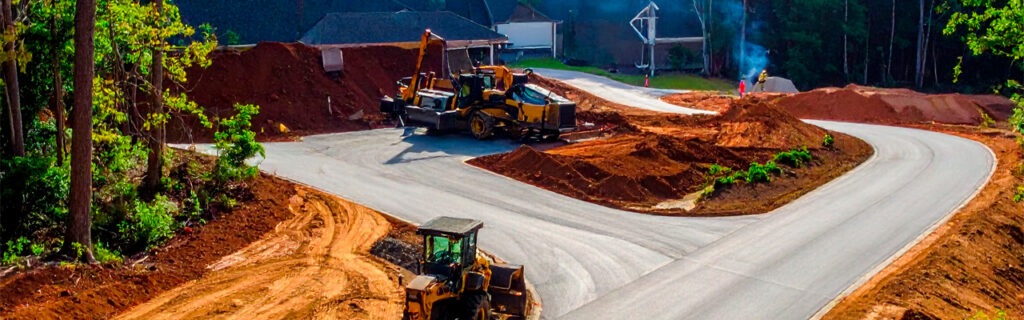
For property owners across Cherokee County, Ball Ground, and Canton planning new driveways or access roads through wooded or vegetated sections of their residential and rural properties, understanding why land clearing is the foundational first step that driveway and access road development specifically requires before earthwork can proceed at the quality and efficiency that the finished route’s performance depends on, what the clearing scope for a new driveway or access road specifically involves beyond the immediate alignment footprint, and how clearing quality affects the finished route’s long-term performance gives the practical knowledge for approaching new access route development as the sequenced process that clearing-first, then grading produces the most durable and most efficiently developed outcome rather than the combined clearing-and-grading approach that attempting to accomplish both simultaneously with equipment optimized for only one of those tasks consistently produces at lower quality and higher cost than the properly sequenced approach.
Why Clearing Must Precede Grading for New Access Route Development
The sequencing requirement that places clearing before grading in new driveway and access road development is not a preference for a particular workflow order but a physical necessity imposed by what each piece of equipment is designed to do and what it is specifically not designed to do when the other task’s work has not been completed before the equipment arrives at the site.
Grading equipment including bulldozers, motor graders, and excavators is designed to reshape soil grades, establish drainage profiles, and compact fill material at the soil surface level. This equipment can push through light brush and small-diameter vegetation without significant operational difficulty, but it encounters the damage, inefficiency, and quality reduction conditions that larger-diameter trees, established root masses, and dense invasive vegetation create for equipment optimized for soil handling rather than vegetation processing. A bulldozer pushing through established privet to grade a driveway alignment is simultaneously trying to do two things that the blade’s pushing contact with vegetation accomplishes poorly: remove the vegetation from the alignment and shape the soil grade beneath it. The vegetation pushes back against the blade, tangles around the undercarriage, and mixes with the soil material that the blade is trying to grade, producing an organic-contaminated graded surface that needs additional organic removal before it can be compacted to structural density standards. This organic contamination is the most consequential clearing-before-grading quality consequence, because organic material incorporated into graded driveway subgrade decomposes after placement and creates the settlement depressions that surface maintenance must repeatedly address rather than allowing the properly organic-free subgrade to maintain its design grade through the driveway’s service life without the settlement that inadequate organic removal creates.
Forestry mulching equipment is designed to process above-ground vegetation at or near the soil surface level, converting it to the mulch material that is deposited back onto the cleared surface. This equipment processes the vegetation efficiently and completely within its design capability range, leaving the soil surface beneath the cleared vegetation accessible and clean for the grading equipment that can then perform its soil shaping and compaction functions on the organic-free, vegetation-free surface that clearing specifically prepared for grading rather than on the vegetation-contaminated surface that attempting to grade without prior clearing produces. The sequencing that allows each piece of equipment to do what it is designed to do, in the order that allows each step’s output to be the input that the next step requires, produces the finished driveway at lower combined cost and higher quality than the sequence that asks equipment to simultaneously accomplish tasks that the combined approach executes at reduced quality for both tasks.
What the Clearing Scope for a New Driveway or Access Road Involves
The clearing scope for a new driveway or access road extends beyond the immediate alignment footprint that the finished driveway surface will occupy to include the buffer zones, drainage areas, and overhead clearance corridors that a functional, maintainable access route requires to perform adequately over its service life rather than only at the day of its completion.
The Alignment Footprint and Its Grading Requirements
The alignment footprint that the finished driveway surface will occupy must be cleared to the mineral soil surface, with all above-ground vegetation removed and all stumps and root masses within the grading disturbance zone addressed to the level that the grading approach requires. For driveways whose subgrade will be structurally compacted fill, stump removal and root raking within the fill zone is required to eliminate the organic material that would decompose beneath the fill and create the settlement that adequate organic removal prevents. For driveways whose route follows existing grade without significant fill placement, stump grinding to below the grading elevation may be adequate to allow the grading equipment to establish the design grade without the settlement risk that intact stumps decomposing in the fill zone creates. The clearing approach for the alignment footprint should be specifically matched to the grading approach that follows it, which requires the clearing scope decision to be made in coordination with the grading design rather than independently, because the clearing adequacy that adequate grading requires varies with whether significant fill placement will follow the clearing or whether the grading will follow existing grade without the fill placement that organic material beneath it would compromise.
The Shoulder Buffer and Side Ditch Zones
The shoulder buffer zone on both sides of the driveway alignment that accommodates the side ditches, driveway crown drainage runoff, and the equipment operating clearance that both construction and ongoing maintenance require must be cleared to a width that allows these functions without the vegetation contact and root mass complications that inadequately wide clearing leaves for the grading and maintenance activities that the shoulders must accommodate. Side ditches that are graded into the shoulder zone require vegetation clearing at least to the outer edge of the side ditch section and ideally several feet beyond to allow the ditch grading and maintenance equipment to operate without contact with standing vegetation at the ditch edge. Vegetation standing immediately at the edge of uncleared shoulders adjacent to the side ditch creates the root mass that stabilizes the ditch bank but also the shade and moisture conditions that accelerate the vegetation regrowth that will close the ditch section from above if the initial clearing does not establish the shoulder buffer adequate for ongoing ditch maintenance access. Clearing the shoulder buffer to adequate width initially establishes the maintenance access corridor that keeps the side ditches functional through successive seasons without requiring repeated professional clearing to restore the maintenance access that inadequate initial buffer width allows to close progressively through regrowth.
The Overhead Clearance Corridor
The overhead clearance corridor above the driveway alignment must be cleared to the height that the vehicles and equipment using the driveway require for safe navigation without canopy contact, including the contractor equipment during construction, the delivery and utility vehicles that serve the property, and any agricultural or recreational equipment that the property’s use pattern may require to navigate the driveway. Canopy that extends into the clearance corridor above the driveway alignment creates the contact conditions that produce vehicle damage, debris deposit on vehicle roofs, and the progressive branch loss from sustained contact that eventually brings the damaged branch sections down onto the vehicles below rather than allowing the canopy to persist above the clearance corridor with sustained contact indefinitely. Trees adjacent to the driveway alignment whose crowns extend into the clearance corridor must have the offending limbs removed to the clearance height rather than necessarily removing the full tree, allowing trunk-level preservation of trees that contribute to the driveway’s canopy character while eliminating the canopy sections that clearance requirements cannot accommodate at the positions where they overhang the driveway alignment.
Drainage Crossing Clearing and Preparation
Every drainage crossing along the proposed driveway alignment where a natural drainage channel crosses beneath the proposed route requires clearing of the channel section and both banks at the crossing position adequate for the culvert installation and the approach earthwork that the crossing’s drainage infrastructure requires. The channel clearing at crossing positions must allow the culvert to be positioned at the channel invert elevation that provides both adequate cover above the culvert for the driveway surface and adequate hydraulic continuity through the culvert without the backwater condition that culvert positioning above the natural channel invert creates. Vegetation within the drainage channel at crossing positions that is not cleared before culvert installation can become the debris source that partially blocks the culvert inlet during rain events, reducing the culvert’s hydraulic capacity below its design standard and creating the driveway overtop condition that the culvert was installed to prevent. Clearing the drainage channel at each crossing position as part of the initial clearing scope, rather than leaving channel vegetation in place and managing the debris accumulation it creates at the culvert inlet as an ongoing maintenance obligation, eliminates this inlet debris source from the culvert’s service life beginning rather than from the point when the accumulated maintenance burden of inlet clearing at vegetation-surrounded culvert inlets prompts the deferred clearing that the initial scope should have addressed.
How Clearing Quality Affects Driveway Long-Term Performance
The clearing quality established before driveway grading begins determines several long-term performance characteristics of the finished driveway that the grading quality and surface material alone cannot compensate for if the clearing quality that the grading depends on was inadequate for the grading to achieve the performance standards that the finished driveway requires.
Subgrade settlement from organic material decomposition is the most common and most consequential long-term performance failure that inadequate clearing before grading produces. Stumps and root masses left in place within fill zones decompose progressively after the driveway surface is placed above them, creating the voids that the decomposing organic material occupied before its conversion to the gases and liquids that decomposition produces. The driveway surface above these decomposition voids settles into them progressively as the voids develop, creating the surface depressions that collect water, accelerate the subgrade softening at the depression positions, and create the rutting and surface degradation that begins at the settlement depression and expands from it as each subsequent rain event’s drainage concentrates at the depression and softens the subgrade beneath the surface at the lowest drainage collection point that the depression creates. Adequate clearing before grading that removes the organic material from the fill zone before fill is placed eliminates these settlement void sources from the driveway’s service life rather than creating them beneath the surface that must be repeatedly maintained and eventually reconstructed at sections where the settlement from inadequate clearing has advanced the surface deterioration to the point that maintenance can no longer restore the design grade.
Root system regrowth from stumps and root masses left in place within and adjacent to the driveway corridor creates the surface disruption that resprout root growth beneath the driveway surface produces as the root systems that clearing did not remove continue growing beneath the placed surface. Invasive species with the root energy reserves that Cherokee County’s privet, wisteria, and other established invasive populations develop produce resprout growth from intact root systems that mechanical clearing without stump removal leaves in the driveway corridor, and this resprout growth from beneath the driveway surface can create surface disruption and drainage interference at driveway shoulder and subgrade positions where the regrowing roots reach densities that physically disturb the surface and drainage structures above them. Adequate stump and root management within the driveway corridor during initial clearing eliminates this resprout disruption source before the driveway surface is placed rather than managing the surface disruption that deferred root management creates after the surface is in place and root removal requires excavating through completed work.
Clearing Approach Selection for New Driveway Development
The clearing approach selected for new driveway corridor preparation should match the specific vegetation conditions, fill placement requirements, and adjacent preservation priorities that the specific driveway alignment presents rather than applying a universal approach that may be adequate for some conditions while inadequate or unnecessarily comprehensive for others.
Forestry mulching is the appropriate clearing approach for new driveway alignments where the alignment passes through invasive understory beneath preserved canopy trees that the clearing should specifically navigate around, where the alignment does not require significant fill placement that complete organic removal would need to precede, and where the mulch layer that forestry mulching deposits can serve as an erosion control layer during the driveway’s construction phase before the final surface is placed. Forestry mulching on driveway alignments that will not receive structural fill can clear the invasive understory and smaller-diameter trees along the alignment while specifically navigating around the significant canopy trees adjacent to the alignment that the clearing design should preserve, establishing the corridor character that the preserved canopy defines from the driveway’s initial construction rather than from the replanting that would be required to restore canopy character that full-clearing approaches eliminated during construction.
Traditional clearing with stump removal is the appropriate clearing approach for new driveway alignments where significant fill placement will be required to achieve the design grade from the existing terrain, where the vegetation within the alignment footprint includes large-diameter trees that exceed forestry mulching equipment’s processing capacity, and where the complete organic removal that structural subgrade performance requires cannot be achieved through forestry mulching’s in-place processing approach that leaves root systems in place beneath the cleared surface. The clearing approach decision for any specific driveway alignment should be made in coordination with the grading design that follows it, ensuring that the clearing’s organic removal scope matches what the grading’s fill placement and compaction requirements need rather than defaulting to either approach universally without the fill placement assessment that the appropriate clearing approach selection requires.
How Clearing Reveals Alignment Conditions That Influence Driveway Design
Initial clearing along a proposed driveway alignment often reveals terrain and soil conditions at the alignment positions that vegetation concealment prevented from being accurately characterized during the planning phase, and these revealed conditions frequently inform adjustments to the driveway design that the revealed information makes possible and appropriate before the grading that follows the clearing commits the alignment to the design that pre-clearing planning established.
Rock outcrops and subsurface rock at shallow depth that clearing reveals along the proposed alignment positions may warrant alignment adjustments that route the driveway around the rock rather than through it, avoiding the rock breaking cost that maintaining the planned alignment through the revealed rock would require. Drainage channels and wet soil areas that clearing exposes along the alignment that were not apparent from pre-clearing assessment may warrant alignment adjustments that better position the drainage crossings and avoid the chronically wet sections that driveway subgrade performance is most compromised by. Significant soil organic depth that clearing’s stump removal reveals in specific alignment sections that should receive structural fill may warrant alignment adjustments that avoid the deepest organic sections where organic removal scope is most extensive, reducing the organic stripping cost that the most organic-deep sections create when the alignment passes through them rather than around them. Building a planned post-clearing assessment step into the driveway development process, where the grading design is reviewed against what the clearing has revealed before grading proceeds on the pre-clearing design, captures the design refinement opportunities that clearing’s revelation of previously concealed conditions consistently creates for alignments through vegetated Cherokee County terrain.
Frequently Asked Questions
How wide should the clearing be for a new residential driveway on a Cherokee County property?
The total clearing width for a new residential driveway on a Cherokee County property should account for the finished driveway surface width, the shoulder buffer zones on both sides that accommodate side ditches and equipment operating clearance, and the tree setback from the edge of clearing that prevents the root zones of the nearest retained trees from being within the grading disturbance zone that structural subgrade preparation creates. A twelve to fourteen foot finished driveway surface width for comfortable one-lane residential travel, combined with four to six foot shoulder buffer zones on each side for side ditch grading and maintenance equipment clearance, produces a total clearing width of twenty to twenty-six feet that allows the driveway surface and its drainage to be constructed and maintained effectively without constant vegetation management at the immediate driveway edges. This total clearing width should increase at curves where the outside of the turn requires additional clearing to maintain the same driving line clearance that straight sections achieve within the standard corridor width, and at the road connection and primary destination ends where turning radius and staging space requirements may warrant additional clearing beyond the corridor standard to accommodate the turning movements that vehicles make at these positions.
Should the driveway alignment be finalized before clearing begins or should clearing help determine the best alignment?
A proposed alignment should be established before clearing begins, based on the terrain assessment, drainage crossing identification, and grade analysis that the planning phase conducts from available topographic information and physical terrain walking along the proposed route. However, this proposed alignment should be treated as a design basis that clearing may refine rather than a commitment that clearing must strictly follow regardless of what the clearing reveals about conditions along the proposed route. Stake-marking the proposed alignment before clearing begins gives the clearing operator the directional guidance that efficient clearing requires, and building explicit design flexibility into the clearing instructions allows the operator to flag or communicate conditions encountered during clearing that may warrant modest alignment adjustments before the clearing has progressed too far in the original alignment direction to economically accommodate the adjustment. This approach, proposed alignment guides clearing direction while revealed conditions inform alignment refinements, produces better alignment outcomes than either the pre-clearing alignment commitment that ignores what clearing reveals or the no-preliminary-alignment approach that makes clearing direction determinations entirely in the field without the pre-clearing terrain assessment that supports informed alignment selection.
How does invasive vegetation along the proposed alignment affect the long-term maintenance of the new driveway corridor?
Invasive vegetation along the proposed driveway alignment, specifically privet, wisteria, and kudzu populations in the shoulder and adjacent areas, creates an ongoing maintenance obligation for the driveway corridor that mechanical clearing during initial construction addresses only temporarily without the herbicide follow-up that progressively depletes the root energy reserves driving resprout toward the driveway shoulder from established positions. Initial clearing that removes the above-ground invasive vegetation from the driveway corridor is the first step in a corridor management program rather than a permanent resolution of the invasive vegetation’s corridor presence, because the root systems that survive the mechanical clearing produce resprout growth in the growing seasons following construction that without herbicide management will progressively encroach on the shoulder buffer and eventually the driveway surface edges from the intact root systems at established positions adjacent to the cleared corridor. Incorporating herbicide treatment of invasive resprout along the driveway corridor shoulders into the routine driveway maintenance program, applied at the active growing season timing that makes herbicide transport to root reserves most efficient, progressively depletes the shoulder invasive populations’ root energy and reduces the intensity of corridor vegetation management that successive seasons require as the root energy depletion program advances toward the sustainable low-maintenance condition that consistent combined treatment produces over the three to five year management program that root energy depletion requires to reach its most significant maintenance intensity reduction.
What permits or approvals should be considered before clearing begins for a new driveway on a Cherokee County property?
Cherokee County driveway development permit requirements depend on the driveway’s connection to the public road system and the land disturbance scope of the combined clearing and grading project. Driveway connections to county-maintained roads typically require a driveway permit from Cherokee County Transportation that specifies the connection geometry, sight distance requirements, and culvert installation standards at the road connection point before construction begins. This permit should be applied for before clearing begins along the alignment because the permit conditions may affect the alignment’s connection geometry and the clearing scope at the road connection end of the project. Georgia’s Erosion and Sedimentation Act land disturbance permit requirement applies to projects disturbing one or more acres of land, a threshold that combined driveway clearing and grading projects on larger rural properties may reach, requiring the erosion and sedimentation control plan development and permit application that must be completed before land-disturbing activities begin. Stream buffers under Georgia law require minimum setback distances from regulated watercourses that driveway alignments crossing drainage features near regulated streams must respect, making drainage feature assessment along the proposed alignment an important pre-clearing activity that identifies any regulated buffer constraints the alignment must accommodate before clearing begins in proximity to drainage channels that may qualify for buffer protection.
Ready to Begin Preparing Your Property for a New Driveway or Access Road?
New driveway and access road development on North Georgia rural and residential properties follows the clearing-first sequence that prepares the ground surface for the grading that creates the finished route, and the clearing quality that this first step achieves directly determines the grading quality and long-term driveway performance that the subsequent steps can produce on the cleared surface clearing specifically prepared for them. The clearing scope that extends beyond the immediate alignment footprint to include adequate shoulder buffers, overhead clearance corridors, and drainage crossing preparation establishes the functional context that a maintainable, reliably performing access route requires from its construction completion through its full service life rather than only at the day its surface is first completed. And the clearing approach that matches the alignment’s fill placement requirements and adjacent preservation priorities produces the organic removal standard and canopy preservation outcome that the specific alignment’s conditions and design objectives require rather than the universal approach that serves some conditions well while inadequately serving the conditions where a different approach would have produced better outcomes at comparable or lower cost.
Bardin Outdoors works with homeowners, landowners, and builders across Ball Ground, Canton, Cherokee County, and North Georgia on driveway and access road corridor clearing projects that prepare the alignment for the grading that follows with the vegetation removal, organic material management, overhead clearance, and drainage crossing preparation that durable, functional access route development specifically requires as its foundational first step. To learn more about how Bardin Outdoors can help prepare your property for a new driveway or access road, contact us.