For property owners across Cherokee County, Ball Ground, and Canton managing residential and rural lots where overgrown sections have developed the vegetation density that limits access, reduces visibility, and prevents the uses that the property’s terrain and ecology would support if the specific problem vegetation were specifically removed, understanding how selective land clearing creates functional open space without the comprehensive clearing that would eliminate what should be preserved, what selective clearing specifically requires in terms of planning and communication to produce preservation-accurate outcomes, and how to identify which areas of a specific property would benefit most from selective clearing investment relative to the usable space and character preservation that the investment produces gives the practical foundation for approaching space creation on wooded North Georgia properties as the precision management activity it can be rather than the blunt removal of everything that simpler but less satisfying approaches produce.
What Selective Clearing Is and What It Specifically Removes
Selective clearing is defined by the specific identification of what should be removed and what should be preserved before any clearing begins, and by the execution of the clearing to the removal and preservation plan that this identification produces rather than to the simpler standard of removing everything within the clearing boundary regardless of what each plant contributes to the area’s function and character. This definition distinguishes selective clearing from comprehensive clearing not only by the outcome it produces but by the planning process it requires, because the outcome of selective clearing, preserved canopy with cleared understory, cannot be reliably produced without the pre-clearing identification and marking process that specifically translates the preservation intent into the field instructions that clearing equipment operators need to navigate around specific preservation targets rather than processing them with the surrounding vegetation that the clearing is actually intended to address.
Selective clearing specifically removes the invasive and nuisance vegetation that creates the usability, accessibility, and visibility limitations that the clearing is intended to address, which on Cherokee County properties typically means Chinese privet, kudzu, wisteria, multiflora rose, and other invasive species that have colonized the understory, filled trail corridors, occupied fence line corridors, or encroached on food plot margins without the native ecological value that their removal compromises. It also removes non-invasive but strategically positioned vegetation such as volunteer trees of unwanted species in specific positions, brush that has accumulated in specific use-limiting locations, and vegetation at specific positions that the intended use requires to be open for function rather than all vegetation of equivalent type across the full treatment area regardless of each plant’s specific position relative to the use objective the clearing serves. What selective clearing specifically does not remove is the mature native canopy that defines the woodland character above the invasive understory, the native understory species that were suppressed by the invasive dominance and that release from competition through selective clearing will allow to recover and contribute to the ecological diversity and seasonal character of the opened area, and the natural features including rock outcrops, drainage features, and distinctive terrain elements that the cleared area reveals and makes accessible rather than requiring clearing to eliminate.
How Selective Clearing Creates Open Space Without Eliminating Character
The open space that selective clearing creates differs fundamentally in character from the open space that comprehensive clearing creates from the same area, and understanding this character difference helps property owners recognize why selective clearing consistently produces more satisfying outcomes for wooded property owners whose long-term satisfaction depends on the preserved natural character that selective clearing maintains rather than eliminates.
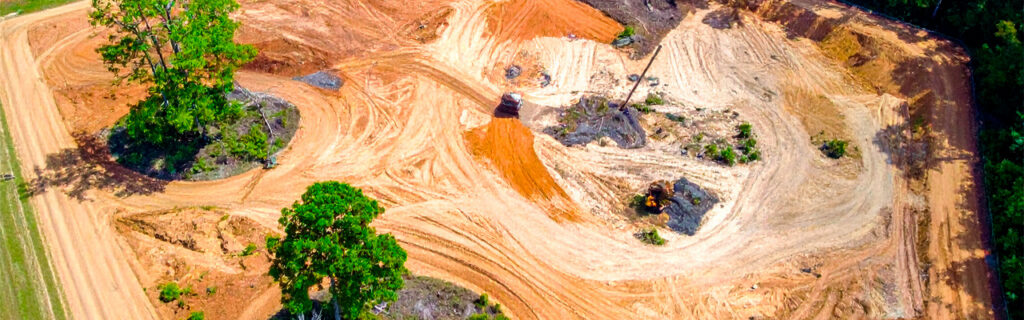
Comprehensive clearing that removes all vegetation from an area creates open space in the sense of unobstructed ground surface without the ecological, aesthetic, and functional character that the cleared area possessed before clearing removed everything from it. The cleared area is accessible, but it is accessible in the way that any cleared ground is accessible: uniformly, without the specific character features that made the space worth accessing in the first place. The mature oak canopy is gone. The native understory species are gone. The natural terrain features that the clearing equipment navigated through rather than around may be disturbed or lost. What remains is cleared ground that requires years of new growth to re-establish any of the character that clearing eliminated, and that during those years presents the appearance of a managed rather than natural landscape that many Cherokee County property owners specifically acquire wooded land to avoid rather than to create.
Selective clearing of the invasive understory beneath preserved native canopy creates open space in the sense of accessible, navigable ground beneath the preserved canopy that was always defining the space’s character but that the invasive understory’s density was preventing from being seen, entered, and used. The cleared area is accessible, and it is accessible with the specific character features that make access to it satisfying: the mature oak canopy overhead, the native understory species beginning to recover from competitive release, the natural terrain features and rock outcrops that clearing revealed rather than disturbed, and the fifty or sixty feet of visibility in all directions through the open woodland floor that replaces the ten-foot visibility that dense privet was limiting every observer to before clearing specifically removed it. This is the open space that most wooded property owners describe when they articulate what they want rather than settling for what comprehensive clearing would produce.
Property Areas Where Selective Clearing Produces the Most Significant Improvements
Selective clearing produces the most significant improvement relative to its investment cost in the specific property area types where the limitation that clearing addresses is the invasive understory rather than the entire vegetation mass, and where the preserved elements above and around the invasive understory are the character and functional elements that make the cleared area more valuable than the same area comprehensively cleared would be.
Wooded Interior Sections for Hunting and Recreation
Wooded interior sections where native canopy exists above dense invasive understory are the highest-value selective clearing application on Cherokee County hunting and recreational properties because the specific habitat type that hunting land management requires, open native woodland with accessible ground beneath preserved canopy, is precisely the habitat that selective understory clearing produces and that comprehensive clearing cannot produce because it eliminates the canopy that defines the habitat type. Deer hunting in open native woodland with adequate sight lines is fundamentally different from deer hunting in the same location after comprehensive clearing has eliminated the canopy structure that woodland hunting depends on for the stand positions, sight line distances, and natural movement corridor characteristics that make native woodland hunting habitat productive. Selective clearing that removes the invasive understory while preserving the oak canopy above converts the impenetrable privet-dominated section into the open native woodland hunting habitat that the property was intended to provide without the habitat destruction that comprehensive clearing of the same area would create in place of the habitat the hunting property needed.
Trail Corridors Through Wooded Sections
Trail corridors through wooded sections that connect accessible starting points to interior destinations are applications where selective clearing of the corridor width through the dense vegetation while preserving the woodland character on both sides of the corridor produces the trail experience that makes walking, ATV riding, and equipment navigation through wooded property feel like movement through natural woodland rather than through a utility corridor created for access efficiency. A trail established through selective clearing that processes only the corridor width of invasive vegetation while the trees and native vegetation outside the corridor remain intact creates a path through the woods rather than a clearcut through the woods, producing the navigation experience that property owners who value the natural character of their wooded land want from the trail infrastructure that connects the property’s sections rather than the clearcut corridor experience that comprehensive clearing would create from the same trail alignment.
Food Plot Margins and Adjacent Woodland Edge
Food plot margins where invasive vegetation is advancing from the adjacent woodland edge into the productive area require the selective clearing approach that removes the advancing invasive vegetation from the food plot margin while preserving the woodland edge trees and native species at the boundary between the food plot and the adjacent woodland. This selective margin clearing produces the restored food plot productive area and restored sunlight access that the advancing invasive vegetation was reducing, without eliminating the woodland edge structure that the food plot’s adjacent hunting and wildlife management value specifically benefits from having intact rather than cleared to the same open ground condition as the food plot itself. The woodland edge that selective clearing preserves at the food plot boundary is the transition habitat that deer and other wildlife use intensively at the interface between the open food plot and the adjacent cover woodland, making its preservation through selective rather than comprehensive clearing a habitat management decision as well as a character preservation decision.
Residential Property Surroundings
Residential rural properties where invasive vegetation has advanced toward the residence, driveway, and outdoor living areas from adjacent wooded sections benefit from selective clearing of the invasive encroachment while preserving the significant native trees and natural features in the immediate residential surroundings that make the rural residential setting distinctive from suburban alternatives. Comprehensive clearing that removes all vegetation from the residential property’s wooded sections to address the invasive encroachment problem also removes the mature native trees that give the rural residential property its setting character, creating the cleared residential appearance that the rural property owner specifically chose rural land to avoid. Selective clearing that removes only the invasive encroachment while specifically preserving the significant native trees that create the wooded residential setting addresses the invasive problem without eliminating the setting character that the rural residential property provides as its fundamental advantage over alternative residential choices in more developed settings.
What Selective Clearing Planning Specifically Requires
Selective clearing that produces the preservation-accurate outcomes that distinguish it from comprehensive clearing requires planning specificity in three components that together translate the property owner’s preservation intent into the field instructions that clearing execution can specifically follow rather than requiring the clearing operator to make preservation decisions in the field without the property owner’s specific direction at each preservation target’s location during active operation.
The Preservation Walk and Physical Marking
The preservation walk that physically enters the treatment area before clearing equipment arrives and identifies each preservation target at its specific location in the field is the planning component whose omission most directly compromises the preservation accuracy that selective clearing is intended to achieve. This walk must be conducted by the person who knows which specific trees, native species, and natural features should be preserved, which is the property owner or their specific designee rather than the clearing contractor who has not been given the property owner’s specific preservation priorities about the individual plants within the treatment area. Every preservation candidate identified during the walk must receive bright flagging tape at approximately five to six feet of height on every stem and trunk at the candidate’s specific location, providing the unambiguous field instruction at each preservation target that the clearing operator can observe from the equipment cab during active operation to navigate around rather than process with the surrounding invasive vegetation. Without this physical marking, the clearing operator’s preservation accuracy depends on general instructions and personal judgment at each encountered element, which produces inconsistent preservation outcomes that specific marking eliminates by removing the judgment uncertainty at each preservation target during the active operation that cannot pause for the property owner consultation that pre-clearing marking replaces with specific field instructions at each position.
Clearing Boundary Definition
Selective clearing boundaries that define where the treatment area ends and the adjacent preserved vegetation begins should be specifically marked in the field before clearing begins using boundary flagging, marking paint, or physical stakes that provide the boundary guidance the clearing operator needs to end the treatment at the intended position rather than the operator’s judgment of where the boundary falls relative to the general boundary description that verbal instruction alone provides without the field marking that positions the boundary accurately in the terrain where clearing equipment will be operating. Clearing boundaries that are not specifically marked in the field consistently result in boundary imprecision during active operation that in some cases overclears beyond the intended boundary into the preserved area and in other cases underclears within the intended treatment area because the operator’s conservative interpretation of an unmarked boundary stops short of the treatment area extent that the property owner intended.
Contractor Walkthrough Before Equipment Arrival
A walkthrough of the marked treatment area with the clearing contractor before clearing equipment arrives converts the preservation marking and boundary marking from the property owner’s solo field preparation into a shared understanding between the property owner and the contractor about what the treatment should achieve, what it should specifically avoid, and what approach the contractor will use to achieve the selective outcome within the marked treatment area and boundaries. This pre-clearing walkthrough allows the contractor to identify any operational challenges that the selective clearing approach creates for the specific equipment at the specific site, to confirm that the preservation marking is sufficient and appropriately positioned for the operator’s visibility from the equipment cab, and to discuss any specific approach modifications that the terrain, vegetation density, or preservation target positions require for the operator to navigate around the marked elements during the active clearing operation. The walkthrough’s shared understanding produces clearing execution that specifically serves the selective clearing outcome rather than the comprehensive outcome that clearing without shared understanding of the selective intent occasionally produces when the selective intent was communicated in general terms rather than confirmed through the specific field walkthrough that aligns the contractor’s execution approach with the property owner’s preservation intent before the execution begins.
How to Identify Areas of Your Property That Would Benefit Most From Selective Clearing
Identifying the areas of a specific property that would benefit most from selective clearing investment requires evaluating each candidate area against two questions: how significantly does the area’s current invasive vegetation condition limit the specific use the area is intended for or would be intended for if the vegetation limitation were addressed, and what preserved elements above or around the invasive vegetation make selective clearing more appropriate than comprehensive clearing because those elements’ preservation creates more total value from the clearing investment than comprehensive clearing would achieve at the same cost.
Areas with mature native canopy above dense invasive understory consistently score highly on both questions: the invasive understory significantly limits the area’s use for hunting, recreation, and habitat management, and the preserved canopy creates substantially more value from selective clearing than comprehensive clearing would from the same area because the habitat type, character, and ecological function the canopy provides cannot be replaced within any practical timeframe after comprehensive clearing eliminates it. Areas without significant preserved elements above or around the invasive vegetation score highly on the first question, invasive limitation is significant, but less clearly on the second question, because if nothing is worth specifically preserving through the selective approach’s additional planning complexity, comprehensive clearing may produce equivalent outcomes at lower planning overhead. The areas that benefit most from selective clearing are those that combine the significant invasive limitation that clearing should address with the significant preserved elements that selective clearing specifically protects while comprehensive clearing would eliminate alongside the invasive vegetation that both approaches address.
Frequently Asked Questions
Does selective clearing cost more than comprehensive clearing for the same treatment area?
Selective clearing through forestry mulching typically costs less than comprehensive clearing with stump removal, debris piling, and debris management for the same treatment area because selective clearing’s in-place processing eliminates the debris hauling and stump removal costs that comprehensive clearing adds to the primary clearing treatment cost. The treatment itself may require slightly more operating time per acre when the selective navigation around preservation targets reduces the clearing equipment’s processing efficiency relative to the uniform processing that comprehensive clearing allows, but this modest efficiency reduction is typically more than offset by the debris management cost elimination that in-place selective processing provides relative to the pile-and-burn or pile-and-haul debris management that comprehensive clearing generates. When the total project cost comparison accounts for all scope components that each approach requires rather than only the primary clearing treatment, selective forestry mulching consistently produces comparable or lower total project costs than comprehensive clearing with debris management for most Cherokee County understory clearing applications where the debris management cost represents a significant fraction of the comprehensive clearing total scope.
How much of a property’s wooded area needs selective clearing to achieve meaningful improvement in usability and character?
The fraction of a property’s wooded area that selective clearing should address to achieve meaningful improvement in usability and character depends on the property’s intended use, the current invasive vegetation distribution across the wooded area, and the specific functional objectives that the clearing is intended to achieve. Properties whose primary clearing objective is improving hunting land habitat quality through understory opening typically achieve meaningful improvement by selectively clearing thirty to fifty percent of the wooded area in the most strategic habitat positions, specifically the sections adjacent to food plots, travel corridors between bedding and feeding areas, and stand approach routes, while leaving the remaining wooded sections in less managed condition that provides the cover component of the habitat structure that hunting management maintains alongside the opened feeding and movement areas. Properties whose primary clearing objective is improving trail connectivity through dense sections to reach specific interior destinations can achieve their full connectivity objective by clearing only the specific corridor widths that the trail routes require, which as a fraction of the full wooded area is typically quite small even on large properties with extensive trail networks. The general principle is that selective clearing investment is most productive when it is specifically targeted at the areas and corridor widths where invasive vegetation is creating the most significant functional limitations for the highest-priority intended uses rather than distributed across the full wooded area uniformly regardless of each section’s contribution to the priority use objectives that the clearing investment should serve.
How do I identify which native understory species in the treatment area are worth specifically preserving during selective clearing?
Native understory species within the treatment area that are worth specifically preserving during selective clearing include flowering dogwood, serviceberry, native viburnums, native azaleas, pawpaw, and other native shrubs and small trees that provide seasonal flowering, fruiting, and ecological diversity that invasive species like privet do not provide despite occupying the same understory space that native species and invasive species simultaneously compete for. Identifying these species during the preservation walk requires recognizing them in the often-suppressed condition that invasive competition has reduced them to, which may make them look significantly less robust than the same species in an uncrowded native planting, but which does not diminish their recovery potential once the invasive competition that has been suppressing them is removed through selective clearing that releases them to expand into the newly available light and space that the invasive removal creates. Spring clearing timing when native species are producing early foliage while many invasive species are also leafing out can make species-level identification more challenging than late-summer clearing timing when native species are fully leafed and their specific leaf characteristics are most reliably identifiable, or than dormant-season clearing when bark and twig characteristics are the identification features rather than foliage. Property owners who are uncertain about native species identification within the treatment area can request that the contractor specifically avoid any shrubs or small trees that appear to have multiple stems originating from a single root crown during the preservation walk consultation, as this growth form characterizes many native understory species and preserving all multi-stem shrubs from the root crown regardless of species-level identification captures most native understory preservation targets without requiring species-level identification accuracy that the growing-season or dormant-season observation conditions may limit for observers without extensive native plant identification experience.
How quickly do the native understory species released by selective clearing typically recover and contribute to the cleared area’s character and ecology?
Native understory species that were suppressed by invasive competition before selective clearing released them from that competition typically show measurably increased growth rates within the first growing season following clearing, because the root systems that these suppressed native plants developed during their suppressed years are intact and energized rather than diminished, and their response to the competitive release that clearing creates is the immediate growth acceleration that the suddenly available light, water, and nutrient access that invasive competition removal provides. Flowering dogwoods that had been producing sparse foliage and no flowers under invasive competition commonly produce significantly fuller foliage and some flowering within one to two growing seasons following competitive release, with progressive recovery toward the robust flowering and fruiting character that full competition release enables. Native viburnums and serviceberries show similar competitive release responses, expanding their crown extent and increasing their fruiting in the growing seasons following selective clearing that removed the invasive competition their prior seasons of growth had been competing against without the competitive advantage that invasive species’ characteristics provide over native species in unmanaged conditions. The ecological character improvement that these recovering native species contribute to the selectively cleared area is therefore both immediate in the growth acceleration that competitive release triggers and progressive in the flowering, fruiting, and crown expansion that each subsequent growing season’s competition-free growth advances toward the robust character that the species expresses in the absence of invasive competition.
Ready to Create More Open Space Without Losing Your Property’s Natural Character?
Selective clearing that removes the invasive vegetation limiting the usability, accessibility, and visibility of wooded North Georgia property sections while specifically preserving the native canopy, native understory species, and natural features that define those sections’ character and long-term value produces the open space that property owners describe when they articulate what they want rather than the cleared ground that comprehensive clearing substitutes for the specific character and habitat type that selective clearing specifically achieves and preserves. The planning that selective clearing requires, the preservation walk and physical marking that translate preservation intent into field instructions, the clearing boundary marking that positions the treatment area accurately in the terrain, and the contractor walkthrough that aligns execution approach with selective intent, is the planning investment that makes the difference between the selectively cleared outcome that satisfies and the comprehensively cleared outcome that regrets, both achievable from the same treatment area at comparable or lower total project cost depending on the debris management requirements that the two approaches generate differently.
Bardin Outdoors works with property owners across Ball Ground, Canton, Cherokee County, and North Georgia on selective land clearing and forestry mulching projects planned to achieve the specific open space, accessibility, and visibility improvements that each property’s intended use requires while preserving the native canopy, native understory species, and natural features that selective clearing specifically protects from the comprehensive removal that alternative approaches would apply without the preservation accuracy that the selective approach provides. To learn more about how Bardin Outdoors approaches selective clearing for your North Georgia property, contact us.