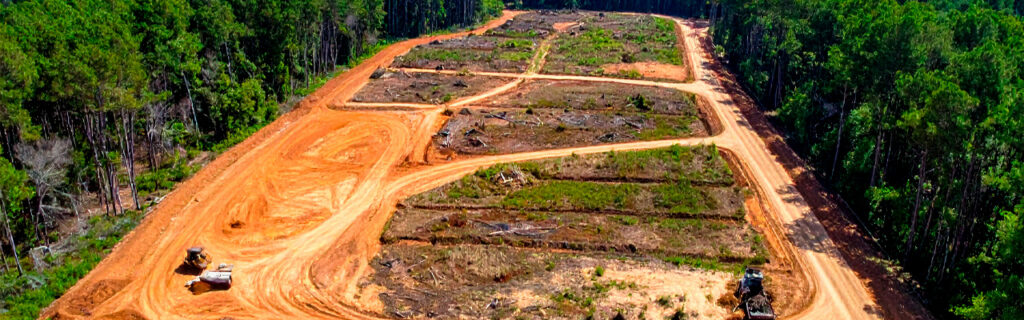
Forestry mulching is the most commonly appropriate first step in reclaiming these unused property sections for two specific reasons that alternative reclamation approaches cannot match simultaneously. It removes the dense above-ground vegetation that defines the unused section’s current inaccessible condition without the extensive soil disturbance that bulldozing and conventional clearing create in the process of accomplishing the same above-ground vegetation removal. And it produces the open, accessible ground condition that the section’s intended subsequent use requires while preserving the topsoil, native seed bank, native plant species, and natural features that make the reclaimed section productive and ecologically valuable rather than simply cleared. For property owners across Cherokee County, Ball Ground, and Canton with unused sections that have accumulated years of invasive advance and that they want to reclaim for hunting, recreation, management access, agricultural production, or simply the satisfaction of owning land that is fully accessible and usable rather than partially inaccessible and underutilized, understanding how forestry mulching specifically accomplishes this reclamation, what the reclaimed section looks and functions like immediately after treatment and in the seasons following, and what the management program that prevents re-accumulation looks like in realistic terms gives the practical knowledge for approaching reclamation as an achievable improvement with realistic expectations rather than an aspirational goal whose practical execution details remain unclear.
What Makes Property Sections Become Unused and Why Reclamation Addresses It
The progression from used to unused in North Georgia rural and residential property sections follows a consistent trajectory driven by invasive species biology that understanding specifically makes the reclamation approach more comprehensible and the realistic reclamation expectations more accurate than they would be without this biological context.
Sections that receive consistent management including mowing, herbicide treatment, or periodic professional clearing maintain the accessible, functional condition that use requires because the management specifically interrupts the biological processes that invasive species use to colonize, expand, and establish the root energy reserves that eventually make them resistant to the management that controlled them at lower density. When management intervals extend beyond the threshold that keeps invasive density within the range that standard management equipment can address, the invasive populations cross the threshold where each growing season’s advance produces stems thicker than mowing equipment can cut, densities deeper than the mowing equipment can penetrate, and root energy reserves larger than the annual management events can deplete, creating the self-reinforcing advance condition where invasive populations grow faster than the management program that was keeping them controllable can keep pace with. The section becomes unused not because its terrain, soil, or ecological conditions changed but because the invasive management balance tipped from the property owner’s favor to the invasive species’ favor as the management intensity that adequate control requires exceeded what the management program was actually delivering.
Reclamation through forestry mulching addresses this condition by resetting the invasive management balance from the advanced establishment condition back to the recent-clearing condition where management equipment can access the section and where the root energy reserves that drive invasive regrowth can be progressively depleted by the herbicide follow-up treatment that mechanical clearing positions the section to receive. The mechanical clearing itself does not permanently resolve the invasive management challenge because it does not address the root systems that drive regrowth. But it restores the accessible, manageable condition from which the management program that addresses the root energy can proceed, converting the currently unmanageable condition back to the manageable condition where consistent combined treatment progressively produces the lasting improvement that the section’s potential always supported.
How Forestry Mulching Specifically Reclaims Unused Property Sections
Forestry mulching reclaims unused property sections through a specific combination of above-ground vegetation processing and post-processing site condition that together produce the accessible, functional starting point from which subsequent management develops the section toward the intended long-term condition.
Processing the Dense Above-Ground Vegetation
The forestry mulching machine’s cutting head processes the dense above-ground vegetation that defines the unused section’s inaccessible condition, cutting stems at the soil surface level and grinding them into the wood chip and organic material mulch that is deposited back onto the cleared surface rather than being pushed along the surface as the bulldozing approach moves vegetation. This processing approach handles the full range of stem sizes from herbaceous growth through the multi-inch diameter woody stems that established privet and other invasive species develop across years of unmanaged growth, producing the cleared surface condition from stem densities that standard mowing equipment cannot penetrate and could not have restored the section from without the larger processing capacity that forestry mulching equipment specifically provides. The accessible, open surface that the machine leaves immediately after completing a pass through the unused section is the transformation that owners of long-unused sections consistently describe as dramatically different from the impenetrable condition that the section presented before treatment, because the difference between ten-foot visibility in dense invasive understory and the fifty or sixty foot visibility that open ground beneath preserved canopy provides after treatment is both immediate and striking in a way that no description fully prepares the property owner for until they physically walk through the section immediately after treatment.
Preserving the Resources Beneath the Cleared Surface
Forestry mulching’s processing approach addresses the above-ground vegetation without the excavation, soil displacement, and topsoil removal that bulldozing and conventional clearing create in accomplishing the same above-ground vegetation removal. The soil surface beneath the processed vegetation remains in its pre-treatment condition with the topsoil intact, the native seed bank present, the native plant species root systems undisturbed, and the soil structure and organic matter content that undisturbed soil profile development produced rather than the compacted, topsoil-depleted, biologically impoverished subsoil surface that bulldozing leaves after removing both the vegetation and the soil surface it was growing in. These preserved resources are the foundation from which the reclaimed section’s subsequent management builds the long-term condition that the property owner intends, and their preservation during reclamation rather than their removal along with the invasive vegetation they were growing within is what makes forestry mulching reclamation produce a higher-quality starting point for subsequent management than bulldozing reclamation provides for the same post-reclamation management investment.
Depositing a Protective Mulch Layer on the Cleared Surface
The wood chip and organic material mulch layer that forestry mulching deposits over the cleared surface immediately after processing provides the erosion protection, moisture retention, and soil temperature moderation that the cleared surface requires during the transition from dense invasive cover to the managed or natural vegetation cover that subsequent management will establish. This mulch layer performs the protective function that the vegetation being cleared was performing at the soil surface level, preventing the erosion and bare soil vulnerability period that conventional clearing creates between the removal of the cleared vegetation and the establishment of the replacement vegetation that the exposed soil requires for protection from North Georgia’s high-intensity rainfall. The mulch layer’s protective function is most practically significant on the slopes and terrain positions where erosion risk is highest following clearing, because the mulch that forestry mulching deposits on cleared slopes provides the direct erosion protection that would require separate erosion control measures on slopes left in bare soil condition by conventional clearing approaches.
What Reclaimed Sections Look and Function Like After Forestry Mulching
The immediate post-treatment condition of a reclaimed section varies with the vegetation conditions treated and the site characteristics at the specific location, but shares several consistent characteristics across most Cherokee County forestry mulching reclamation projects that property owners can realistically expect from the treatment regardless of the specific site conditions that vary among individual properties.
Where the reclaimed section is within a wooded area that retained native canopy above the invasive understory that was treated, the immediate post-treatment condition is the open native woodland character that the canopy above and the cleared ground below together create. The mature canopy is visible from the ground for the first time since the invasive understory grew tall enough to screen it from below, the terrain and any natural features within the section are visible and accessible from positions that the invasive density previously prevented from being reached, and the spatial character of the woodland section changes from the enclosed, visually restricted experience of moving through dense understory to the open, expansive experience of moving through native woodland that the same forest structure produced before the invasive understory filled the space between the canopy and the ground. This transformation is immediate, appearing at treatment completion rather than requiring any establishment period to develop, because the preserved canopy and the cleared ground together produce the condition rather than requiring any new growth to establish the character the treatment reveals.
Where the reclaimed section is more open or lightly canopied, the immediate post-treatment condition is the ground-level mulch surface across the cleared area that replaces the invasive vegetation mass with the accessible, walkable surface that the intended subsequent use requires. This surface reads visually as managed and intentional rather than abandoned, communicating the active stewardship that the reclamation represents rather than the neglect that the pre-treatment invasive mass communicated from the same positions. Equipment can access the reclaimed section for management activities that the invasive density previously prevented. ATV and foot traffic can traverse the section for hunting and recreational use. And the assessment of the section’s terrain, drainage, and soil conditions that the invasive cover was preventing can now be conducted from within the section to inform the subsequent improvement planning that the property owner’s full vision for the section requires.
The Management Program That Keeps Reclaimed Sections Functional
The reclamation treatment that forestry mulching produces is the first step of the management program that keeps the reclaimed section functional rather than a completed project whose results are permanent without further management. The intact root systems of the invasive species that the mechanical clearing processed will produce resprout growth from their intact root energy reserves within four to eight weeks under active growing season conditions, beginning the process that without herbicide follow-up management will return the section toward the invasive density the reclamation was intended to reverse. Setting realistic expectations about this resprout timeline and the herbicide follow-up requirement that addresses it before the reclamation treatment occurs prevents the disappointment that unrealistic one-time-clearing expectations consistently produce when the resprout that mechanical clearing alone does not address appears on schedule and is interpreted as treatment failure rather than the biological response that the management program’s herbicide follow-up component specifically addresses.
Targeted herbicide treatment of the invasive resprout growth when stems reach six to twelve inches of height, conducted four to eight weeks after the mechanical mulching treatment under active growing season conditions, is the management action that most directly prevents the resprout from advancing back toward the density that the mechanical treatment removed. At this resprout height and this seasonal timing when the plant’s vascular transport is most active in moving carbohydrates from the leaves downward to the root reserves, herbicide applied to the actively transporting resprout foliage moves with those carbohydrates into the root energy reserves that sustain the invasive plant’s vigorous regeneration capacity, reducing those reserves in proportion to the herbicide’s effectiveness at this specific treatment timing. Consecutive seasons of mechanical clearing and herbicide treatment progressively deplete these root reserves, extending the interval before professional mechanical treatment is needed again and reducing the density of the resprout that each subsequent season’s management must address, until the management program approaches the sustainable maintenance condition where the reclaimed section requires significantly less intensive management to maintain functional condition than the reclamation treatment required to restore it from the advanced establishment condition it had reached.
Which Unused Property Sections Are Most Suited to Forestry Mulching Reclamation
Forestry mulching reclamation is most suited to unused property sections where the intended subsequent use does not require complete soil surface preparation including organic material removal and structural compaction, where the section contains native trees, native understory species, or natural features worth preserving during reclamation, and where the terrain conditions allow forestry mulching equipment to operate safely and effectively through the full section extent.
Unused wooded sections where the native canopy above the invasive understory is the primary natural asset worth preserving during reclamation are the highest-value application for forestry mulching reclamation because the canopy preservation that forestry mulching specifically enables during selective understory clearing is the characteristic that most directly produces the open native woodland outcome that hunting, wildlife habitat management, and recreational use require from the reclaimed section. Conventional clearing that bulldozes the invasive understory would also remove the canopy that the selective mulching approach preserves, eliminating the most valuable natural asset in the section along with the invasive growth that was the actual reclamation target.
Unused fence line and property boundary corridors where vegetation has accumulated to the density that prevents inspection access and has integrated with fence infrastructure are suited to forestry mulching reclamation because the selective processing capability that forestry mulching provides allows the dense corridor vegetation to be addressed without the equipment contact damage to fence infrastructure that conventional clearing’s bulldozing approach creates when operated in close proximity to fence components that must be preserved rather than replaced as part of the reclamation project. Unused trail corridors on hunting and recreational properties where the intended post-reclamation use requires open passage for ATV and equipment access rather than a completely cleared and replanted surface are suited to forestry mulching reclamation because the in-place processing that mulching accomplishes produces the accessible corridor immediately after treatment without the debris management, soil disturbance, and vegetative reestablishment sequence that conventional clearing requires before the same corridor use can begin.
Frequently Asked Questions
How long does a forestry mulching reclamation treatment take for a typical unused property section?
The time required for a forestry mulching reclamation treatment on a typical unused Cherokee County property section depends primarily on the current vegetation density and stem development, the terrain conditions in the section that affect equipment operating speed, and the total area being reclaimed in the treatment session. Established privet at significant stem diameters requires more machine time per acre than lighter vegetation at smaller stem diameters, because the greater stem density and larger individual stem dimensions require more cutting force and more grinding time per unit of treated area than lighter vegetation presents. Typical unused section reclamation treating established privet and mixed invasive vegetation at representative Cherokee County densities and stem sizes covers one to three acres per operating day depending on site-specific vegetation and terrain conditions, making a five-acre unused section a two to three day reclamation project rather than a single day treatment for most Cherokee County site conditions. Property owners scheduling reclamation treatments should ask contractors for their site-specific production rate estimate based on the actual vegetation conditions at the proposed treatment area rather than applying generic per-acre production rates that may significantly over or underestimate the actual production rate that site-specific conditions will produce.
Can forestry mulching reclamation be done in sections over multiple seasons or does the full area need to be treated at once?
Forestry mulching reclamation can absolutely be executed in sections over multiple seasons, and this phased approach is often the most practical and budget-appropriate way to address larger unused sections that exceed any single season’s available reclamation budget. Phasing the reclamation by priority section, treating the sections most important for the property’s intended use first and extending the treatment to additional sections in subsequent seasons as budget allows, produces meaningful improvement in each treatment season while advancing toward the full reclamation the property’s potential supports. The sequencing of phased reclamation should specifically address the sections that enable the most important subsequent uses first, such as trail corridors that provide access to other reclamation areas before those areas are themselves treated, or the sections adjacent to existing managed areas where invasive advance from the unreclaimed sections is most actively reducing the managed areas’ functional condition. Each reclamation treatment session should be followed by the herbicide management that addresses resprout from that session’s cleared area before the subsequent session treats the next section, so that each treated section is advancing toward root energy depletion through the combined treatment program while the subsequent sections are awaiting their mechanical clearing treatment in subsequent seasons.
How do I know if the unused section on my property needs forestry mulching reclamation or conventional clearing?
The determination of whether forestry mulching or conventional clearing is the appropriate reclamation approach for a specific unused property section depends primarily on what the intended subsequent use requires from the reclaimed section’s soil and surface conditions, and whether the section contains native trees, native understory species, or natural features worth preserving during reclamation. If the intended subsequent use requires complete organic material removal and structural subgrade preparation, such as building site development or pasture establishment where stump-free mowing operations require complete root removal, conventional clearing with stump grinding or root removal is the appropriate approach because forestry mulching’s in-place processing leaves root systems intact in ways that these subsequent uses cannot accommodate. If the intended subsequent use can proceed from the soil conditions that forestry mulching preserves, including hunting land understory management, trail and access restoration, fence line reclamation, and recreational use, and if the section contains preserved native trees or other natural features worth protecting during reclamation, forestry mulching is the appropriate approach because it accomplishes the above-ground vegetation removal that reclamation requires while specifically preserving the resources and features that conventional clearing would remove along with the invasive vegetation it was intended to address. Sections where the intended subsequent use does not specifically require the natural feature preservation that forestry mulching enables can be effectively reclaimed by either method, with cost and site condition considerations determining which approach is more appropriate for each specific situation.
What should I realistically expect from reclaimed sections in the first year after treatment?
In the first year after forestry mulching reclamation, realistic expectations include the immediate accessibility improvement and visibility improvement that the treatment produces at completion, the resprout growth from intact invasive root systems that begins appearing four to eight weeks after treatment under active growing season conditions, and the native plant recovery from preserved root systems and the existing soil seed bank that the competitive release from invasive dominance initiates across the first growing season following treatment. The resprout that appears within weeks of treatment is the biological response that herbicide follow-up management specifically addresses, not an indication that the treatment failed or that the invasive vegetation returned at its pre-treatment density. The resprout stems at four to eight weeks after treatment are much smaller and much lower in density than the pre-treatment invasive vegetation, representing the early resprout stage where herbicide treatment is most effective for root energy depletion rather than the advanced density that the pre-treatment condition represented. With herbicide follow-up treatment of the first season’s resprout conducted at the appropriate stem height and seasonal timing, the reclaimed section ends its first post-treatment year in a condition that is dramatically more open, more accessible, and more manageable than the pre-reclamation condition that prompted the treatment, with the invasive species root energy beginning the progressive depletion that consistent subsequent seasons of combined treatment will advance toward the sustainable maintenance condition the reclamation investment was intended to initiate.
Ready to Reclaim Unused Areas on Your North Georgia Property?
Unused property sections on Cherokee County rural and residential properties represent the accumulated gap between the land’s full potential and the portion of that potential that management has kept accessible and productive through the seasons when invasive advance was outpacing the management that would have kept those sections functional. Forestry mulching reclamation closes this gap by restoring the accessible, open condition that management requires to be effective at the section level, preserving the natural assets that make the restored section worth managing, and initiating the combined mechanical and chemical management program that produces progressive improvement toward the sustainable maintenance condition where the full reclaimed section contributes to the property’s function and enjoyment rather than sitting unused within the property boundary as land the owner pays for but cannot access or use. The investment in reclamation is not the investment that permanently resolves the invasive management challenge. It is the investment that restores the management-accessible condition from which the program that does progressively resolve the challenge can proceed, which is the correct understanding of what reclamation accomplishes and the realistic expectation for what the combined investment of reclamation treatment and subsequent management produces across the ownership period that follows it.
Bardin Outdoors works with property owners across Ball Ground, Canton, Cherokee County, and North Georgia on forestry mulching reclamation projects that restore unused, overgrown sections to the accessible, functional condition that their terrain, soil, and ecological conditions have always supported, preserving the native trees, native understory species, and natural features that the invasive vegetation was concealing rather than eliminating. To learn more about how Bardin Outdoors can help reclaim unused areas on your property, contact us.