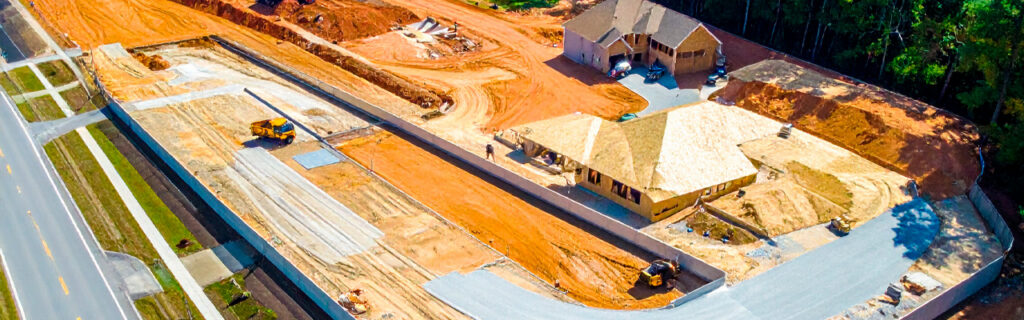
For landowners across Cherokee County, Ball Ground, and Canton managing large residential and rural properties with multi-phase improvement programs that span multiple seasons and multiple improvement categories, understanding why planning ahead specifically makes large property improvements more successful than reactive season-by-season improvement decision-making, what planning activities produce the most significant improvement program efficiency gains, and how to structure planning at the scale that large improvement programs require without the premature specificity that early-stage planning often cannot accurately provide gives the practical framework for approaching large property improvement as the coordinated program that its scale and complexity demand rather than as the accumulation of individually decided projects that may collectively advance the property less efficiently and less satisfactorily than deliberate program planning would produce from the same total investment.
How Large Improvements Differ From Single-Phase Projects
The distinction between a large multi-phase improvement program and a series of independently decided single-phase projects is not simply the scale of the work involved. It is the presence or absence of the coordinating framework that makes each individual project decision serve the full program’s objectives rather than only its immediate scope. A single-phase project can be planned effectively in isolation from other projects because it has no predecessor conditions to account for and no successor requirements to prepare for. A phase in a multi-phase improvement program cannot be planned effectively in isolation because its design must account for what the prior phase produced and what the subsequent phase will need from the conditions this phase creates. The planning framework that makes this multi-phase coordination possible is what distinguishes a large improvement program from a series of independently decided projects executed on the same property, and it is what makes advance planning valuable for large improvements in ways that are not equally applicable to smaller single-phase improvements.
The practical consequences of executing large improvement programs without this coordinating framework appear most clearly at the transitions between phases, where each new phase discovers that the prior phase’s design did not account for what this phase requires and must either accept the resulting constraint or invest in correcting the prior phase’s condition before the current phase can proceed at the quality and efficiency that adequate prior phase design would have provided. The drainage infrastructure from the first phase that is positioned where the second phase’s building footprint needs to go. The access route from the second phase that was sized for the equipment that second phase used but that cannot support the heavier equipment the third phase requires. The cleared area from the third phase that produced a debris condition the fourth phase’s seeding equipment cannot navigate without preliminary debris management that the clearing scope did not include. Each of these transition complications is a planning failure that advance program planning specifically prevents by designing each phase for both its immediate objectives and the subsequent phase requirements that its conditions must serve.
The Planning Activities That Produce the Most Program Efficiency Gains
Several specific planning activities produce efficiency gains in large improvement programs that are disproportionately large relative to the planning effort they require, because they prevent the most common and most costly phase transition complications that unplanned programs regularly encounter. Investing planning effort in these specific activities produces more program efficiency improvement per hour of planning time than equivalent effort distributed evenly across all planning activities regardless of their specific impact on program execution efficiency.
Destination Definition Before Phase Sequencing
Defining the intended eventual condition that the full improvement program will produce before sequencing the phases that will produce it is the planning activity that all subsequent phase sequencing and design decisions depend on for their coherence. Without a defined destination, phase sequencing defaults to addressing the most pressing current conditions rather than establishing the sequence that most efficiently advances the property toward the intended final condition, and individual phase designs default to optimizing for immediate phase objectives rather than for the subsequent phase requirements that the final condition specification would reveal as the higher design standard each phase should meet. A destination definition that describes the intended eventual property condition in terms specific enough to evaluate any proposed phase against, including the major features the fully improved property will have, the land uses it will support, and the natural features it will preserve, provides the reference point that makes every subsequent phase planning decision answerable to the same question: does this design serve the destination or compromise it?
Dependency Mapping Before Phase Commitment
Mapping the dependency relationships among all improvements the destination requires, specifically identifying which improvements must be completed before others can effectively proceed, produces the logical sequence that each phase should follow rather than the preference-ordered sequence that planning without dependency awareness produces. The dependency sequence places clearing before grading on wooded sites because grading requires access to the actual ground surface that clearing reveals. It places primary access development before interior improvements that require heavy equipment access because those improvements cannot proceed at adequate quality without the access that allows their equipment to reach the work area. It places drainage infrastructure before surface treatment because drainage infrastructure must be installed before the surface that would cover its installation positions is placed. Each of these dependency relationships creates a required sequence that the program plan must honor regardless of how the improvements rank against each other on other priority dimensions, and mapping them before phase commitment ensures that the program sequence is organized around physical feasibility requirements rather than preference that physical requirements may override.
Phase Design for Both Immediate and Future Objectives
Designing each phase specifically to serve both its immediate objectives and the subsequent phase requirements that the destination specification identifies as depending on this phase’s conditions produces phases that enable subsequent phases to proceed efficiently rather than requiring modification before subsequent phases can begin. A primary driveway phase designed for both current residential vehicle use and the future construction equipment access that later-phase building projects will require, specifically including the corridor width, load-bearing standard, turnaround dimensions, and utility sleeve conduits that future construction access needs, serves both the immediate residential use objective and the future construction access requirement without the driveway upgrade that designing for current use alone would eventually require before the construction phases that need more capable access than residential-only design provides. This dual-objective phase design requires the program context that single-phase planning without the program framework cannot provide, which is why advance program planning that establishes the destination and dependency sequence before phase design begins is the prerequisite for the dual-objective phase designs that eliminate the inter-phase modification costs that single-objective phase designs consistently generate.
How Advance Planning Reduces Total Program Cost
The total cost reduction that advance planning produces for large improvement programs comes from three sources that each independently reduce program cost relative to the unplanned alternative and that together produce a total savings substantially exceeding the planning investment that generated them.
The first cost reduction source is the elimination of inter-phase modification costs. Every modification that a phase requires to an established prior phase before the current phase can proceed at the quality the program requires is a cost that adequate prior phase design for the current phase’s requirements would have prevented. Each of these inter-phase modifications represents the combined cost of accessing the prior phase’s installed work, making the modification, and restoring the installed work’s condition after the modification, which in almost every case exceeds the incremental cost of designing the prior phase for the current phase’s requirements when the prior phase was being designed and installed. Advance program planning that designs each phase for subsequent phase requirements eliminates these inter-phase modification costs from the program budget by addressing each subsequent phase requirement at the most cost-efficient point in the program timeline: the original installation of the phase that the requirement applies to.
The second cost reduction source is the mobilization efficiency that program-coordinated contractor scheduling achieves relative to the individually scheduled contractor mobilizations that unplanned programs generate at each phase. Contractors mobilizing to a property for a scheduled phase of a known program scope can plan their equipment deployment, crew scheduling, and material procurement for the full phase scope rather than discovering the scope requirements for each subsequent phase only at the phase’s initiation. Program-coordinated scheduling that allows contractors to plan multiple phases in sequence, combining mobilization events and coordinating equipment deployment across related scope items, consistently reduces per-acre and per-unit treatment costs below the individually scheduled mobilization costs that each independently decided phase generates when each mobilization occurs without the program context that would allow it to be combined with adjacent scope or coordinated with other mobilizations occurring at the same property within the same seasonal window.
The third cost reduction source is the quality improvement that adequate prior phase conditions provide to subsequent phase execution. A subsequent phase executed on adequately prepared prior phase conditions requires less preliminary work, encounters fewer scope additions from prior phase deficiencies that the current phase must work around, and produces better quality outcomes per unit of current phase investment than the same phase executed on inadequately prepared prior phase conditions that create preliminary work requirements and execution complications that the current phase budget did not include. The quality improvement from adequate prior phase preparation is not simply an aesthetic improvement to the outcome. It is a cost reduction in the subsequent phase execution that the adequate prior phase conditions enable by eliminating the preliminary work and scope complications that inadequate prior phase conditions impose on subsequent phase execution.
How Cherokee County’s Specific Conditions Amplify the Value of Advance Planning
Cherokee County’s specific combination of rolling terrain, clay soil, invasive species pressure, and seasonal weather patterns creates improvement program planning challenges that amplify the value of advance planning relative to simpler property types in other regions, because the site-specific knowledge that accurate phase design requires takes longer to develop on Cherokee County properties and the consequences of planning without that knowledge are more severe when local conditions diverge from generic assumptions more dramatically than on property types where terrain, soil, and vegetation conditions are more predictable from regional averages.
The earthwork volume underestimation that Cherokee County’s rolling terrain consistently produces for improvement programs planned without physical terrain walking produces budget overruns that are larger and more consequential for program sequencing than equivalent underestimations on flatter terrain where earthwork volume variation among candidate improvement locations is smaller. Planning that includes physical terrain walking of all improvement locations before phase commitment produces earthwork volume estimates that accurately reflect what the specific terrain requires rather than what regional averages assume, eliminating the earthwork overrun that terrain-assessment-based planning prevents from becoming a mid-program budget revision that affects subsequent phase timing and scope.
The invasive species root energy that makes clearing program planning on Cherokee County properties specifically require the combined mechanical and chemical treatment sequence that produces lasting improvement rather than temporary clearing requires advance program planning that schedules herbicide follow-up treatment as an integral component of each clearing phase rather than an optional supplemental activity. Programs planned with this combined treatment sequence from the beginning execute each clearing phase in the context of the follow-up treatment that makes the clearing produce lasting improvement, rather than discovering that the clearing produced temporary improvement when the resprout that follow-up treatment would have addressed recovers the density that necessitates re-clearing without the root energy depletion that each combined treatment season would have progressed toward.
Structuring Advance Planning for Large Improvement Programs
Advance planning for large improvement programs on Cherokee County rural and residential properties is most productively structured in three sequential planning activities that together produce the coordinating framework that multi-phase program execution requires, without demanding the premature specificity that early-stage planning often cannot accurately provide for phases that are multiple seasons away from execution.
The first planning activity is site observation across the full property before any phase commitment, including the physical terrain walking, soil probing, post-rain drainage observation, and systematic vegetation assessment that reveals the specific site conditions that phase designs must account for. This observation activity is most productive when conducted across all improvement locations before any specific phase is designed, because the site knowledge it develops informs phase designs across the full program rather than only the immediate phase that prompted the observation. The site observation investment before program commitment consistently prevents the mid-program site condition discoveries that generate the most expensive and most disruptive scope revisions in unplanned programs, because the conditions that adequate pre-commitment observation would have revealed before commitment appear instead during active phase execution when addressing them requires revising committed designs rather than incorporating them into designs not yet committed.
The second planning activity is the destination definition and dependency mapping session that produces the program’s phase sequence from the site observation findings and the intended eventual property condition description. This session should specifically identify the major improvement features the destination requires, the logical dependencies among those features that determine which must precede which, the safety conditions that unconditionally belong in early phases, and the access infrastructure that enables all subsequent phases and therefore belongs in the earliest executable phases regardless of how it ranks against other improvements on preference-based priority dimensions. The sequence that results from this activity is the program plan’s most durable component, because the physical dependencies it reflects are determined by the terrain and improvement types rather than by preferences that may change with seasons and circumstances.
The third planning activity is the phase-specific design and budget development for the upcoming one or two phases, conducted with the program destination and dependency sequence established in the second activity as the design context that each phase’s specific design must serve. This activity produces the actionable scope definitions and realistic cost estimates that contractor scheduling and budget commitment require for each upcoming phase, while deferring the phase-specific design of later phases to the planning cycles that precede those phases and that will have the benefit of what the intervening phases revealed about conditions for the later phases that the current planning cycle cannot fully anticipate. This rolling phase-specific design approach maintains the program’s advance planning advantage while avoiding the premature specificity commitment that designing all phases in equal detail before any phases are executed consistently produces when early-phase execution reveals that later-phase designs assumed conditions the early phases produced differently than planning anticipated.
Frequently Asked Questions
How far ahead should advance planning extend for a large North Georgia property improvement program?
Advance planning for a large North Georgia property improvement program should extend far enough to establish the program’s destination definition and phase dependency sequence for the full program scope, while maintaining phase-specific design detail only for the upcoming one to two phases that are within the planning horizon where site conditions and cost estimates can be assessed with the accuracy that specific phase design and budget commitment require. The program-level destination definition and dependency sequence can be established in a single planning session before any phases are executed and should remain stable across the full program unless the destination fundamentally changes. The phase-specific design and budget should be updated at each annual program review with the site condition information that completed phases revealed and with current cost estimates from contractor input that reflects current material and labor costs rather than estimates made in prior seasons. This combination of stable program-level planning and updated phase-specific planning captures the full advance planning advantage while maintaining the planning accuracy that rolling updates provide for the specific phases approaching execution.
How should advance planning account for unexpected conditions that active phase execution reveals?
Advance planning for large improvement programs should specifically include a post-phase review step after each completed phase that updates the subsequent phase designs based on what the completed phase revealed about conditions for those subsequent phases. This review step is the mechanism that keeps the advance plan accurate to actual conditions rather than maintaining the conditions that pre-execution assessment estimated. When a completed phase reveals that subsequent phase conditions are meaningfully different from what pre-execution planning estimated, the post-phase review that updates subsequent phase designs prevents the subsequent phases from proceeding on designs developed from the pre-execution estimates that the completed phase revealed as inaccurate. The advance plan that includes this review and update step is not a static document that must be followed exactly as initially written despite what program execution reveals. It is a living framework whose program-level destination and dependency sequence remain stable while its phase-specific designs are progressively refined as each phase execution provides the site condition information that pre-execution planning could only estimate.
Should contractor input be sought during the advance planning phase or only when specific phases are ready to be executed?
Contractor input during the advance planning phase, before any phases are executed, produces specific planning quality improvements that waiting until each phase is ready to execute cannot provide as effectively. Experienced local contractors who have executed multiple improvement projects on Cherokee County rural properties bring the regional knowledge about how local terrain, soil, and vegetation conditions affect specific improvement types in ways that advance planning from property owner observation alone cannot fully capture. A contractor who understands from prior local project experience that a specific type of terrain position on Cherokee County clay presents rock probability indicators that should inform contingency planning, or that a specific invasive species composition requires a longer herbicide follow-up program than the average Cherokee County clearing project, provides the regional knowledge input that improves advance program planning accuracy in ways that planning from regional averages alone does not achieve. This input is most valuable during the advance planning phase when it can inform the full program’s phase sequence and phase design standards rather than only the specific phase the contractor is being considered for executing.
What is the most common advance planning failure on large North Georgia property improvement programs?
The most common advance planning failure on large North Georgia property improvement programs is committing to specific improvement designs before conducting the site observation that reveals the actual conditions those designs must address, which produces the phase execution surprises that result from designing phases for assumed conditions that actual conditions contradict when active execution encounters them. Property owners who develop detailed improvement programs from aerial imagery, edge observation, and general regional knowledge without the physical terrain walking, post-rain drainage observation, and soil probing that reveal actual site conditions consistently encounter the earthwork volume, drainage infrastructure, and organic stripping scope surprises that pre-commitment site observation would have incorporated into accurate phase designs rather than discovering as reactive additions during active phase execution. The planning investment that most directly prevents this failure, physical interior site observation at all improvement locations before any phase designs are committed, is the advance planning activity that produces the largest improvement in phase design accuracy relative to the planning effort it requires, and it is the planning activity most commonly omitted in the advance programs that subsequently encounter the site condition surprises that adequate pre-commitment observation would have revealed before commitment rather than during execution.
Ready to Plan Your Large Property Improvement Program?
Large property improvement programs on Cherokee County rural and residential properties produce their best outcomes when they are approached as coordinated programs with defined destinations, dependency-organized phase sequences, and phase designs that serve both immediate objectives and subsequent phase requirements rather than as accumulated individually decided projects executed without the coordinating framework that makes each phase’s investment compound toward the program’s intended destination rather than simply advancing the immediate phase’s scope without reference to what the program requires from each phase’s conditions. The advance planning that produces this coordinating framework is the investment that most consistently distinguishes the large improvement programs that achieve their intended destinations efficiently from those that spend equivalent total investment across phases that encounter the inter-phase complications, scope revisions, and performance shortfalls that planning without this framework regularly produces when phases are designed without reference to what the program’s full scope and sequence specifically requires from each individual phase.
Bardin Outdoors works with landowners across Ball Ground, Canton, Cherokee County, and North Georgia on clearing, forestry mulching, and grading and excavation projects planned as coordinated phases of larger improvement programs, bringing the regional experience that translates site-specific conditions into accurate phase designs and realistic cost estimates at each planning stage. To learn more about how Bardin Outdoors can help plan and execute a large property improvement program on your North Georgia property, contact us.