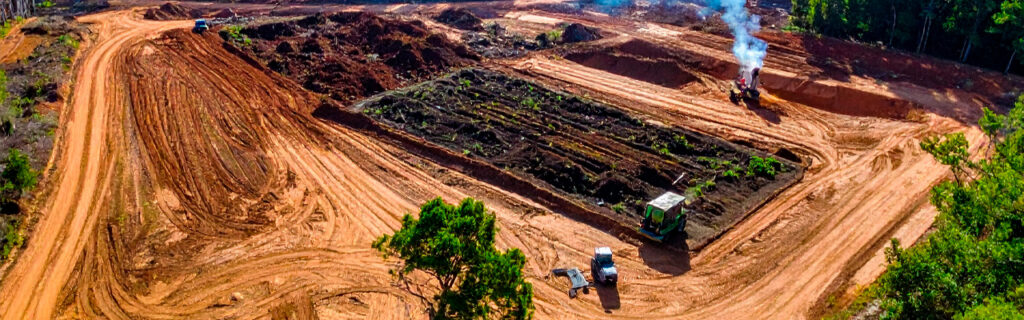
Forestry mulching is the restoration method that most specifically minimizes the ground disturbance to the surrounding landscape, the topsoil, and the native plant community during the removal of the neglected section’s above-ground accumulation, because its processing approach addresses what is above the ground surface without the soil excavation, pushing, and surface disruption that bulldozing and conventional clearing create in the process of removing the same above-ground vegetation. For property owners across Cherokee County, Ball Ground, and Canton with neglected property sections that need restoration without the extensive ground disturbance that would further compromise the ecological and soil conditions that functional productive use requires, understanding how forestry mulching specifically accomplishes this minimal-disturbance restoration and where its specific approach produces the most significant improvement over alternative restoration methods gives the practical knowledge for choosing a restoration approach that serves the neglected section’s long-term productivity rather than simply its immediate cleared appearance.
Why Ground Disturbance During Restoration Matters for Long-Term Outcomes
The ground disturbance that clearing and restoration methods create affects the restored section’s long-term productivity through two mechanisms that each independently compromise the site’s ability to support productive vegetation recovery and its intended subsequent use, and that together produce a post-restoration site condition that requires additional investment to remediate before the intended use can be effectively established.
The first mechanism is topsoil loss and displacement. Bulldozing and conventional clearing that pushes vegetation along the ground surface removes topsoil with the vegetation it is displacing, because the blade or push plate that moves the vegetation also moves the soil surface that the vegetation was rooted in. The topsoil that is displaced with the vegetation represents the accumulated organic matter, biological activity, and soil structure that years of undisturbed site development produced, and its removal exposes the less fertile, less biologically active subsoil beneath it as the surface that post-restoration vegetation must establish in. Vegetation establishment in exposed subsoil is less successful, slower, and requires more fertility amendment investment than establishment in the topsoil that disturbance-free or minimal-disturbance restoration preserves in place.
The second mechanism is soil compaction from heavy equipment operating on the restoration site. Bulldozing and heavy grading equipment that operates across the full restoration area imposes compaction pressure on the soil surface beneath every pass, reducing the soil’s pore space and water infiltration rate in ways that affect plant root penetration, water drainage, and biological activity across the equipment’s full operating area. Compacted soil from restoration equipment operation creates the establishment challenges that subsequent vegetation must overcome rather than the uncompacted soil structure that minimally-disturbing restoration preserves and that plant root systems can penetrate, colonize, and develop within without the mechanical resistance that compaction imposes. On Cherokee County clay that is particularly susceptible to compaction damage from equipment operation at elevated moisture content, these compaction effects are more persistent and more consequential for plant establishment than equivalent compaction on more permeable or more resilient soil types.
How Forestry Mulching Specifically Minimizes Ground Disturbance During Restoration
Forestry mulching minimizes ground disturbance during neglected area restoration through the specific combination of how it removes above-ground vegetation and what it leaves at the ground surface after processing that vegetation, which together address both disturbance mechanisms that bulldozing and conventional clearing create.
Forestry mulching processes above-ground vegetation by cutting and grinding it at the soil surface level, converting the stems, leaves, and branches of the processed vegetation into the wood chip and organic material mulch layer that is deposited back onto the soil surface rather than pushed along the soil surface and removed with the vegetation it displaces. This processing approach removes the above-ground vegetation that defines the neglected area’s condition without disturbing the soil surface below the processing level, preserving the topsoil that the vegetation was growing in, the root systems of preserved species, and the native seed bank that the undisturbed topsoil contains. The topsoil that remains in place after forestry mulching retains its organic matter content, biological activity, and physical structure rather than being removed or buried by the equipment operation that conventional clearing uses to accomplish the same above-ground vegetation removal.
The mulch layer that forestry mulching deposits over the processed area immediately after processing provides the soil surface protection that prevents the erosion, moisture loss, and surface crusting that bare disturbed soil would experience during the period between restoration treatment and vegetative cover re-establishment. This mulch layer performs the same protective function that the vegetation being removed was performing, allowing the soil surface transition from dense invasive cover to managed open ground to occur without the vulnerability period that bare soil exposure creates between conventional clearing and the vegetative cover establishment that eventually protects the exposed soil from the erosion and moisture stress that bare soil experiences.
What Types of Neglected Areas Forestry Mulching Restores Most Effectively
Forestry mulching’s minimal-disturbance restoration approach is most specifically advantageous relative to alternative restoration methods in the neglected area types where the ecological and soil conditions beneath the overgrowth are worth preserving during restoration and where the intended use of the restored area does not require the complete soil surface preparation that conventional clearing and grading would provide.
Wooded Sections With Invasive Understory Dominance
Wooded sections where privet and other invasive species have dominated the understory beneath a preserved native canopy are the neglected area type where forestry mulching’s minimal-disturbance approach produces the most transformative restoration with the least ecological cost. The native canopy above the invasive understory is the ecological asset that the neglected section retains despite the understory dominance that defines its current neglected condition, and restoring the section requires removing the invasive understory while preserving the canopy that gives the restored section its value and character. Forestry mulching that processes the invasive understory at the soil surface level while specifically preserving the canopy trees above accomplishes this targeted restoration without the soil surface disturbance that would compromise the native seed bank beneath the invasive understory and without the canopy damage that conventional clearing methods would create in the process of removing the invasive understory that the mulching equipment can address selectively without affecting the preserved canopy above it.
Overgrown Slopes and Erosion-Sensitive Areas
Slopes and other erosion-sensitive areas where invasive vegetation has accumulated to the point of limiting usability or access present a specific restoration challenge because conventional clearing that removes all vegetation from slopes exposes the bare soil to the high-intensity rainfall events that initiate significant erosion before revegetation can establish the protective cover that prevents it. Forestry mulching that removes the invasive above-ground growth while leaving the root systems of cleared vegetation in place maintains the root network that provides slope stabilization during the transition period between clearing and re-establishment of vegetative cover, and deposits the mulch layer that directly reduces the erosion energy of rainfall on the cleared slope surface. These two soil protection mechanisms that forestry mulching preserves during restoration, root system slope stabilization and mulch layer erosion protection, are specifically absent from conventional clearing approaches that remove both the above-ground vegetation and the root systems that stabilize the slope, leaving bare mineral soil as the only surface condition during the period between clearing and revegetation when erosion risk is highest.
Fence Lines and Boundary Corridors With Vegetation Integration
Neglected fence line and property boundary corridors where invasive vegetation has integrated with fence infrastructure represent restoration situations where the ground disturbance from conventional clearing could damage the fence infrastructure that the restoration is intended to make accessible and inspectable rather than simply creating the open corridor that access requires. Forestry mulching equipment operated selectively along fence line corridors can process the invasive vegetation that has accumulated in and around fence infrastructure while navigating with sufficient precision to avoid direct equipment contact with the fence components, minimizing the risk of fence damage during restoration that the less precise pushing and grading approach of conventional clearing creates when operated in close proximity to fence infrastructure that must be preserved rather than replaced during the restoration process.
Areas Adjacent to Preserved Native Vegetation
Neglected areas whose restoration boundaries are adjacent to native vegetation communities that should be preserved from disturbance during the restoration benefit from forestry mulching’s selective processing capability and ground-level processing approach rather than conventional clearing’s broader disturbance footprint. The selective processing that forestry mulching allows at boundary positions between restoration treatment areas and preserved native vegetation areas reduces the boundary disturbance that restoration creates in the adjacent preserved areas, allowing the restoration to end precisely at the intended boundary rather than extending disturbance into the preserved area beyond the boundary through the momentum and ground disturbance spread that conventional clearing equipment creates at its treatment boundaries.
What Forestry Mulching Restoration Produces That Subsequent Management Builds On
Forestry mulching restoration of neglected areas produces a specific post-treatment site condition that subsequent management builds on toward the functional, productive, and ecologically improving condition that the restoration investment was intended to initiate. Understanding what this post-treatment condition includes and how subsequent management develops it toward the intended long-term outcome allows the restoration investment to be followed by the management program that captures its full value rather than treating the restoration as a completed project whose management implications are not specifically planned.
The post-treatment site condition that forestry mulching produces includes the open accessible ground surface that defines the visual and functional restoration improvement, the preserved topsoil and native seed bank that provide the biological foundation for native vegetation recovery, the root systems of preserved native species that were released from invasive competition during the treatment and that will recover and expand as the competitive pressure that invasive dominance applied is removed, and the intact root systems of processed invasive species that will produce resprout growth in the weeks following treatment at the vigor that the intact root energy reserves fuel. Each of these post-treatment conditions requires specific subsequent management response to develop the intended long-term outcome rather than allowing the neglect to reconstitute from the intact invasive root systems without the herbicide follow-up that depletes those reserves before they can re-establish the dominance that the restoration treatment removed.
Targeted herbicide treatment of invasive resprout growth at six to twelve inches of stem height, conducted four to eight weeks after the forestry mulching restoration treatment, is the management action that most directly determines whether the restoration investment produces lasting improvement or temporary clearing followed by rapid reversion. The herbicide treatment at this resprout height and timing captures the root energy depletion that moves herbicide through the active vascular transport from resprout foliage to root reserves during the period when that transport is most active and most efficient for root energy reduction. Without this follow-up, the intact root systems that mechanical mulching clearing did not address will regenerate the invasive dominance that defined the neglected section’s condition within one to two growing seasons, requiring restoration again at the same scale that adequate follow-up management would have prevented from recurring.
How to Prepare a Neglected Area for Forestry Mulching Restoration
Preparing a neglected area for forestry mulching restoration involves the pre-treatment activities that ensure the restoration produces the intended outcome rather than the uniform clearing that an inadequately prepared treatment produces when the operator lacks the specific preservation and boundary guidance that the restoration should follow. These preparation activities are the property owner’s contribution to the restoration outcome quality that equipment capability and operator skill alone cannot produce without the site-specific guidance that pre-treatment preparation provides.
Walk the neglected area before the treatment, specifically looking for native trees, native understory species, and natural features that should be preserved during the restoration rather than processed with the invasive vegetation that the treatment is intended to address. Every preservation candidate identified during this walk should receive physical flagging tape at approximately five to six feet of height before the treatment equipment begins operating, providing the unambiguous field marking that the operator can observe from the equipment cab during active treatment to navigate around preservation targets rather than processing them with the adjacent invasive vegetation. Native dogwoods, native viburnums, serviceberry, and other native understory species present within the neglected area in suppressed condition are often among the most valuable restoration assets the treatment releases from invasive competition, and their preservation during treatment allows them to recover and expand into the restored space rather than requiring supplemental planting to establish the native species diversity that preservation and competitive release produces from existing populations at no additional cost.
Conduct the pre-treatment preservation walk with the restoration contractor before equipment arrives so that the contractor can observe the marked preservation targets, understand the treatment boundaries, and identify any operational considerations that the property owner should be aware of before treatment begins. This pre-treatment walkthrough converts the preservation marking from a physical marking system into a shared understanding between the property owner and operator that guides every treatment decision during active operation rather than leaving boundary and preservation decisions to the operator’s judgment without the property owner’s specific input about which elements of the neglected area should be treated and which should be specifically protected.
Frequently Asked Questions
How long after forestry mulching restoration will a neglected area show visible improvement in ecological condition?
The visible ecological improvement from forestry mulching restoration of a neglected area begins immediately with the open accessible condition and revealed native canopy that the treatment produces, and progresses across the first one to three growing seasons as the native vegetation recovery from the released native species and the existing soil seed bank develops the ground layer species diversity and coverage that the open restored space supports. Native species that were present in suppressed condition before treatment typically show measurably increased growth rates and in some cases flowering and fruiting within the first growing season following competitive release from invasive dominance. Native seed bank establishment in the open restored space begins during the first growing season following treatment and produces progressively more diverse and more complete native ground coverage through the second and third seasons as the seed bank’s full species complement establishes at the densities that reduced invasive competition now allows. The specific rate of native community recovery depends on the diversity of the native seed bank present at the specific restoration site, the degree of competitive release the treatment achieved, and the consistency of the herbicide follow-up management that prevents invasive resprout from suppressing the native recovery before it establishes sufficient coverage to compete effectively with the invasive regrowth that the intact root systems continue trying to produce.
Can forestry mulching restoration address kudzu-dominated neglected areas effectively?
Forestry mulching can address kudzu-dominated neglected areas by processing the current season’s above-ground vine mass and any woody stems that have established within the kudzu coverage, restoring accessibility and visual openness to the treated area immediately after treatment. The specific limitation of mechanical forestry mulching treatment on kudzu is the same limitation it has on all invasive species, which is that the intact root system after mechanical clearing produces vigorous resprout at a rate and density that can return the treated area to substantial kudzu coverage within a single growing season without herbicide follow-up that depletes the deep root energy reserves that kudzu’s particularly vigorous resprout capability draws from. For kudzu-dominated neglected areas, the forestry mulching restoration treatment should be specifically planned as the first step of a combined mechanical and chemical management program rather than as a standalone restoration treatment, with herbicide treatment of resprout growth at the appropriate height and timing specifically scheduled as the follow-up that the mechanical clearing positions the site for. With consistent combined treatment over successive seasons, kudzu populations in previously neglected areas progressively lose the root energy that makes their resprout vigor so challenging, extending the interval before professional mechanical treatment is needed again and reducing the density of the resprout that each treatment cycle must address.
How does the ground disturbance from forestry mulching compare to what heavy foot traffic creates during restoration work?
Forestry mulching equipment’s ground disturbance on the native soil surface during restoration is primarily from the equipment’s track or tire contact with the soil surface during operation, which produces compaction concentrated in the equipment’s contact zone rather than the full-surface compaction and soil displacement that bulldozing produces across the treatment area. On soils at appropriate moisture content for equipment operation, this track or tire compaction is modest relative to the bulldozing compaction and is substantially less extensive than the full-surface disturbance that conventional clearing creates. Operating forestry mulching equipment on soils at elevated moisture content increases the compaction impact relative to dry-condition operation, which is the scheduling consideration that aligns forestry mulching restoration with the drier seasonal conditions or post-rain drying periods that minimize soil compaction from equipment operation. Heavy foot traffic during hand-clearing or manual restoration work creates minimal compaction relative to equipment operation, but the pace of work per hour that hand clearing achieves on dense neglected vegetation is dramatically lower than equipment treatment rate per hour, making equipment treatment the practical approach for any neglected area restoration at scales beyond what hand tools can address within the labor time that the restoration budget supports.
Should I clear debris or remove specific elements from a neglected area before forestry mulching treatment begins?
Pre-treatment debris removal from neglected areas before forestry mulching should specifically address items that could damage the forestry mulching equipment during operation, including metal fence posts, wire, concrete debris, large rocks, and any buried or partially buried metal material that the equipment’s cutting head would contact during treatment. These hard material encounters can damage cutting teeth and other equipment components, creating treatment interruptions and equipment repair costs that pre-treatment debris identification and removal specifically prevents. Organic debris including fallen logs, dead stumps, and brush piles within the treatment area does not need to be removed before forestry mulching because the equipment is designed to process this material along with the living vegetation, though informing the operator of any particularly large fallen logs or stumps within the treatment area allows the operator to approach these items with the appropriate technique rather than encountering them unexpectedly during otherwise routine operation. Pre-treatment communication with the contractor about any known debris conditions within the treatment area, regardless of whether pre-treatment removal is practical, allows the operator to plan the treatment approach around those conditions rather than discovering them during active treatment when the treatment sequence has already been committed.
Ready to Restore Neglected Areas on Your North Georgia Property?
Neglected sections of Cherokee County rural and residential properties can be restored to functional, accessible, and ecologically productive condition through forestry mulching treatment that removes the invasive overgrowth that defines their current neglected state while preserving the topsoil, native seed bank, native species, and natural features that productive future use and ecological recovery depend on. The minimal ground disturbance that forestry mulching achieves relative to conventional clearing methods is not simply an aesthetic advantage of a cleaner restoration process. It is the practical preservation of the biological and physical resources that every subsequent management activity and ecological recovery process at the restored site depends on for its productivity and success. Combined with the targeted herbicide follow-up that converts the mechanical restoration into the progressive root energy depletion program that produces lasting improvement rather than temporary clearing, forestry mulching restoration initiates the trajectory toward the functional, managed property condition that the neglected section’s potential has always supported but that the accumulated neglect has been preventing from being expressed and enjoyed.
Bardin Outdoors works with property owners across Ball Ground, Canton, Cherokee County, and North Georgia on forestry mulching restoration projects that reclaim neglected wooded sections, overgrown slopes, fence line corridors, and invasive-dominated property areas with the minimal ground disturbance approach that preserves the ecological and soil conditions that the restored areas’ productive future requires. To learn more about how Bardin Outdoors can help restore neglected areas on your property, contact us.