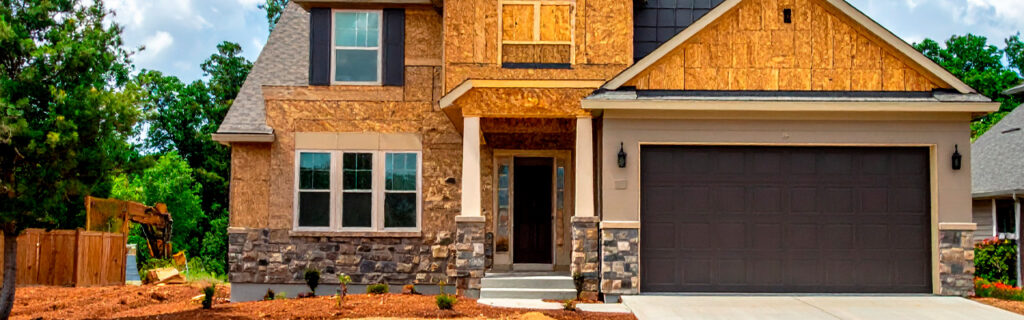
For property owners across Cherokee County, Ball Ground, and Canton managing residential and rural properties with improvement ambitions that span multiple seasons and multiple improvement categories, understanding why long-term goal setting produces better individual improvement decisions, what the process of defining a useful long-term property goal looks like in practice, and how a clearly defined property goal changes the specific decisions made in any single improvement season gives the practical foundation for approaching property improvement as the cumulative, coordinated program that produces meaningful property advancement rather than the reactive, season-by-season activity that consumes improvement budget without building consistently toward a defined destination.
How Long-Term Goals Change Individual Improvement Decisions
The most direct mechanism through which long-term property goals improve individual improvement decisions is that the goal provides an evaluation criterion that each proposed improvement can be tested against before it is committed. Without a long-term goal, improvement proposals are evaluated against the immediate condition they address, the cost they require, and the preference of the moment they are considered. With a clearly defined long-term goal, each proposed improvement is additionally evaluated against whether it advances the property toward the intended destination, whether it creates conditions that subsequent improvements the goal requires will need to work around or through, and whether the investment it represents produces compound returns in the form of enabling subsequent improvements or simple returns in the form of addressing an immediate condition without consequence for what follows.
This additional evaluation criterion changes specific decisions in ways that consistently produce better long-term outcomes. A driveway improvement evaluated only against the immediate condition it addresses might be built to residential vehicle standards because that is what current use requires. The same driveway improvement evaluated against a long-term property goal that includes future barn and workshop construction would be built to the heavier-use standard adequate for the construction equipment those future projects will require, at modest additional cost during the original construction rather than the substantially higher cost of upgrading an established driveway when the future construction eventually begins. A clearing project evaluated only against the immediate overgrowth condition it addresses might remove trees that are simply in the current clearing path. The same clearing project evaluated against a long-term property goal would specifically preserve the significant mature trees that contribute to the property’s intended eventual character while removing the invasive growth that limits current function, because the goal defines which trees are assets to be protected and which vegetation is an obstacle to be removed.
What a Useful Long-Term Property Goal Looks Like
A useful long-term property goal is specific enough to distinguish between the property it describes and significantly different properties that different improvement choices would produce, while remaining general enough to accommodate the inevitable variations in timing, sequence, and specific design that multi-season improvement programs encounter as they progress and as site conditions reveal the actual requirements for each improvement phase. A goal that simply says the property should be improved is not useful because it provides no criterion for evaluating whether any specific improvement is moving toward the intended destination or away from it. A goal that specifies every design detail of every improvement is not useful because it cannot accommodate the design adjustments that each improvement phase’s site-specific discoveries require.
A useful long-term property goal for a rural hunting and recreation property might describe the intended condition as: reliable all-season vehicle access to every stand location and food plot, open woodland character with navigable sight lines throughout the primary hunting areas, productive food plots totaling approximately eight acres in the most suitable sunlight and soil positions, maintained boundary fence lines on all four sides, a managed pond in the drainage valley on the east side of the property, and a simple equipment storage building near the primary entrance for hunting and property management equipment. This description is specific enough to evaluate any proposed improvement against it and to identify whether the improvement advances or conflicts with the intended destination, while remaining general enough to accommodate the specific design and sequencing decisions that implementation will require as each improvement phase proceeds.
A useful long-term property goal for a rural residential property might describe the intended condition as: a primary residence on the best-positioned building site with positive drainage on all sides and reliable driveway access from the road, a barn or equipment building accessible from both the driveway and the back section of the property, fenced pasture in the flattest open area for the horses or livestock the family intends to keep, maintained access to all boundary fence lines, and managed wooded sections on the north and east sides of the property that preserve the natural character while providing trail access for recreational walking and wildlife observation. Again, specific enough to evaluate any proposed improvement against it, general enough to accommodate implementation variation as site-specific conditions are revealed through the improvement program’s progress.
How Long-Term Goals Prevent Common Planning Mistakes
The most consequential planning mistakes that long-term property goals prevent are those where individually reasonable improvement decisions create conditions that subsequent improvements must address at greater cost than the original decisions would have required if they had been made with the full improvement program in mind. Understanding the specific planning mistakes that goal setting prevents helps property owners recognize when a proposed immediate improvement should be modified, delayed, or reconsidered in light of what the long-term goal requires from the same land area and infrastructure.
Drainage Infrastructure Positioned Where Future Improvements Will Need to Go
Drainage swales, culverts, and drainage outlets positioned without reference to where future improvements will be located frequently end up occupying space that subsequent improvements need. A drainage swale positioned across the path where a future driveway extension will eventually need to go must either be converted to a culverted crossing at the driveway installation cost or rerouted entirely before the driveway can proceed, adding a cost to the driveway project that adequate drainage positioning during the original drainage project would have avoided entirely. A drainage outlet positioned in the footprint of a future outbuilding forces a choice between relocating the outlet before building construction and designing around the outlet’s existing position, neither of which the original drainage project required if the outlet had been positioned with the future building location in mind. Long-term property goals that identify the locations of planned future improvements allow drainage infrastructure in the current improvement project to be positioned outside those locations, avoiding the conflicts that goal-unaware positioning creates for subsequent phases.
Access Infrastructure Built to Insufficient Standards for Future Use
Access infrastructure including driveways, interior roads, and turnaround areas built to the standards adequate for current use without reference to the future use that the long-term goal requires must be upgraded before the future projects that require more capable access can proceed. A driveway built to light-vehicle standards for a property whose long-term goal includes a barn construction project requiring heavy equipment delivery must be upgraded to support that equipment before the barn project can be executed. The upgrade cost added to the original construction cost exceeds what adequate initial construction would have cost, and the disruption of upgrading an established driveway with adjacent landscaping and improvements to protect adds complexity that initial construction without those adjacent improvements would not have encountered. Long-term property goals that identify the heaviest future use the access infrastructure must eventually support allow that standard to be built initially rather than reached through upgrade that costs more and disrupts more than initial adequate construction would have required.
Clearing Boundaries That Eliminate Features the Goal Would Have Preserved
Clearing boundaries established without reference to the long-term property goal may remove significant trees, eliminate natural screening, or convert areas that the goal intended to remain wooded, creating a cleared condition that the goal did not intend and that subsequent improvement phases must now work from rather than from the wooded condition that adequate goal-informed clearing boundary setting would have maintained. A clearing project that removes a line of mature oaks along a property boundary because the clearing equipment was running to the property line rather than stopping at a boundary that preserved the oaks eliminates screening and canopy that the long-term property goal would have specifically protected, and no subsequent action short of waiting decades for new plantings to mature can restore what the clearing eliminated. Long-term property goals that specifically define which portions of the property should remain wooded, which should become open, and where the boundary between those conditions should fall allow clearing boundaries to be set at positions that serve the intended long-term condition rather than at positions determined by equipment routing convenience or the extent of the most immediately problematic overgrowth.
How Long-Term Goals Improve Contractor Communication and Project Outcomes
Property owners who communicate a clearly defined long-term property goal to the contractors they engage for individual improvement projects receive different and generally better advice about those individual projects than property owners who discuss only the immediate project without providing the long-term context that the immediate project exists within. A contractor who understands that a current clearing project is the first phase of a multi-year improvement program that will eventually include a building site, a pond, and a comprehensive trail network can advise on clearing boundaries, access corridor widths, and tree preservation decisions that serve the full program rather than only the immediate clearing project. The same contractor advising only on the immediate clearing project without this context will optimize the clearing for the current project alone, potentially making decisions that are efficient for the immediate project but that create complications for the subsequent phases the property owner has not communicated.
This communication improvement applies to every contractor engaged at every phase of a multi-season improvement program. The grading contractor who knows that a current building pad preparation project will eventually be joined by a second outbuilding on the adjacent slope can design the drainage infrastructure for the current pad to accommodate the drainage from the future building rather than discovering when the second building is eventually built that the drainage from the first building’s system must be extended or modified to serve both. The forestry mulching contractor who knows that a current understory clearing project will be followed by a trail network establishment project can establish the initial clearing boundaries in ways that facilitate the trail network’s connectivity rather than requiring re-clearing to connect the trail segments that the initial clearing’s boundaries left isolated. In each case, the long-term property goal communicated to the contractor produces better advice and better execution decisions than the immediate project described in isolation.
How to Use Long-Term Goals to Prioritize Among Competing Improvement Needs
One of the most practically useful functions that a clearly defined long-term property goal serves is providing the evaluation framework for prioritizing among the multiple competing improvement needs that any property of meaningful size consistently presents. Without a long-term goal, prioritization defaults to the urgency of the most immediately pressing conditions, the visibility of the most obvious problems, or the appeal of the most exciting improvement possibilities, none of which reliably identifies which improvement would most advance the property toward its intended destination.
With a clearly defined long-term goal, prioritization can be based on which available improvement most directly enables the next improvement the goal requires, which available improvement prevents the most significant deviation from the intended destination if deferred, and which available improvement produces compound returns in the form of enabling subsequent improvements rather than only simple returns in the form of addressing an immediate condition. The improvement that establishes reliable access to the property section where the most important future improvements will be located consistently ranks higher in a goal-informed prioritization than the improvement that makes an already-accessible section marginally more functional, even when the access improvement is less visually dramatic or less immediately satisfying than the functional improvement would be. Long-term goals make this counterintuitive prioritization decision apparent rather than requiring the property owner to intuit which improvement has the highest long-term return without the goal context that makes the return calculation possible.
How Long-Term Goals Help Manage the Relationship Between Budget and Ambition
Most property owners have improvement ambitions that exceed what any single budget cycle can fully realize, which creates the management challenge of making annual improvement investment decisions that collectively advance toward the full ambition rather than producing a series of partially realized improvements that each fell short of what was needed because the full scope was begun without adequate resources to complete it adequately. Long-term property goals address this challenge by allowing the full ambition to be organized into a phased program where each phase is sized for the resources available to complete it adequately rather than for the full scope that the ambition describes but the current budget cannot accommodate.
A long-term goal that describes a comprehensive property development vision that will take five to seven seasons to fully realize can be organized into annual phases that each produce a complete, adequate improvement rather than a partial one. The first season’s phase might establish reliable primary driveway access and address the most critical safety conditions. The second season’s phase might establish interior access to the sections that the primary driveway now reliably serves, enabling management and subsequent improvements in those sections. The third season’s phase might begin the vegetation management and food plot development that the established access makes efficiently executable. Each phase produces a complete improvement rather than a partial one, and each phase is sized to what the available budget can complete adequately rather than what the full ambition requires regardless of available resources. This phased approach to ambitious long-term goals produces genuine property advancement within realistic budget constraints rather than the ambitious beginnings and inadequate completions that attempting too much at once consistently produces.
Frequently Asked Questions
How specific does a long-term property goal need to be to improve improvement decisions?
A long-term property goal needs to be specific enough to answer two questions for any proposed improvement: does this improvement advance the property toward the intended destination, and does this improvement create conditions that conflict with other improvements the destination requires? These two questions can typically be answered from a goal that describes the major features the fully improved property will have, the land uses it will support, and the general character it will maintain, without requiring detailed design specifications for every improvement. If a proposed improvement can be evaluated against the goal and neither advances it nor conflicts with it, the goal may need to be more specific about the property aspects that the improvement would affect. If a proposed improvement can be clearly evaluated as advancing or conflicting with the goal, the goal is adequately specific for improvement decision guidance at that level of detail.
Should a long-term property goal change over time as conditions and priorities evolve?
Yes, and the goal should be revisited and updated when the property owner’s intended use for the property changes significantly, when earlier improvement phases reveal site conditions that change what subsequent phases require, or when major life circumstances change the timeline or character of the improvement program that the goal organizes. The goal is a planning tool rather than a commitment that cannot be revised without admitting planning failure. Revising the goal when circumstances change and updating the improvement program accordingly is better long-term planning than adhering to a goal that no longer reflects current intentions simply because it was the original plan. The value of the goal is in providing a reference point for current decisions rather than in maintaining consistency with prior decisions that the current circumstances have made less relevant.
How does a long-term property goal interact with the property’s regulatory constraints and approval requirements?
A long-term property goal that includes improvements subject to regulatory review, including building permits, septic system approvals, land disturbance permits for projects exceeding one acre of disturbance, and any improvements near regulated stream buffers or potential wetland areas, should be developed with awareness of those regulatory constraints so that the goal describes improvements that are achievable within the applicable regulatory framework rather than improvements that the regulatory context would prevent or require significant modification to accommodate. Researching the regulatory requirements applicable to the major improvements the goal includes before the goal is finalized, and adjusting the goal’s descriptions to reflect regulatory realities, produces a goal that is genuinely achievable rather than one that encounters regulatory obstacles as each improvement phase advances to the implementation stage where regulatory compliance becomes relevant.
How do I communicate a long-term property goal to contractors who will be engaged for individual improvement projects?
The most effective way to communicate a long-term property goal to contractors engaged for individual improvement projects is through a brief written description of the intended eventual property condition combined with a simple map or sketch that shows the positions of the major features the goal describes relative to the current property condition. This combination of written description and spatial reference gives the contractor the essential information for understanding both what the property is intended to become and where each major feature of that intended condition will be located, which is the context needed to make individual project decisions that serve the full program rather than only the immediate project. Sharing this goal description at the beginning of each contractor engagement, before scope is discussed rather than after, ensures that the contractor’s scope recommendations and design advice are informed by the full program context from the start of the conversation rather than introduced as a late revision to advice already given without that context.
Ready to Set Long-Term Goals and Improve Your North Georgia Property More Effectively?
The improvement decisions that produce the most satisfying and most valuable long-term property outcomes on North Georgia residential and rural lots are decisions made with a clear view of where each improvement fits in the full program that is advancing the property toward its intended eventual condition. Long-term property goals provide that view, converting individual improvement decisions from reactive responses to current conditions into deliberate advances toward a defined destination. The goal itself does not require sophisticated planning expertise to develop. It requires the honest description of what the property owner intends the land to become, the spatial specificity to identify where each major feature of that intended condition will be located, and the commitment to evaluate each proposed improvement against both the immediate condition it addresses and the long-term program it either advances or complicates. Properties managed with this goal-informed approach consistently reach better conditions at lower total improvement cost than those managed without it, because every dollar spent on improvement in a goal-informed program compounds toward a defined destination rather than addressing conditions independently without building toward anything specific.
Bardin Outdoors works with homeowners and landowners across Ball Ground, Canton, Cherokee County, and North Georgia on clearing, forestry mulching, and grading and excavation projects planned with the full property vision in mind, ensuring that each improvement phase serves both its immediate objectives and the long-term program it belongs to. To learn more about how Bardin Outdoors approaches goal-informed property improvement planning, contact us.