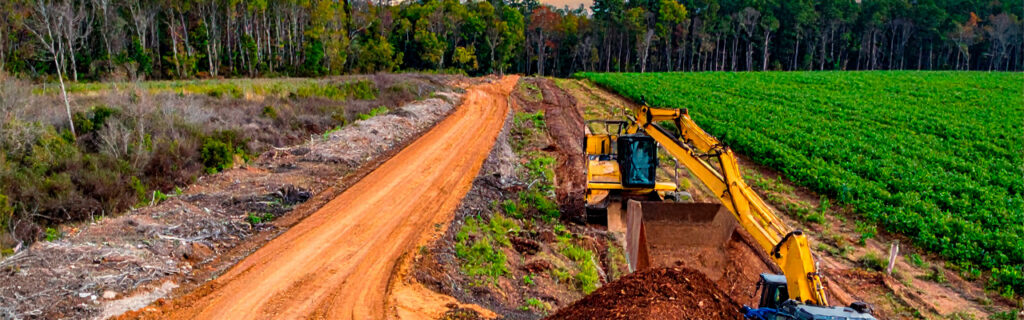
Forestry mulching is not inherently a low-maintenance solution for every situation where it is applied. It is a clearing method that, when applied in the right situations and followed by the right management approach, produces cleared areas that are genuinely easier to maintain over successive seasons than the alternatives would have been, because of the specific site conditions it creates after clearing and the root energy depletion that follows when mechanical mulching is consistently combined with targeted herbicide treatment of the resprout growth it enables subsequent management to address at manageable scale. For property owners across Cherokee County, Ball Ground, and Canton who want to create cleared areas that deliver long-term usability without continuously escalating management demands, understanding where forestry mulching most effectively supports low-maintenance outcomes, what management practices translate the initial clearing investment into genuinely reduced ongoing management burden, and what realistic maintenance expectations look like for mulched areas in North Georgia’s growing conditions gives the practical foundation for planning open space creation that becomes progressively easier to maintain rather than progressively more demanding with each season that passes.
Why the Initial Clearing Approach Affects Long-Term Maintenance Intensity
The maintenance intensity that a cleared area requires over its service life is substantially influenced by the clearing method that was used to establish it, because different clearing methods leave the site in different conditions that affect how aggressively invasive species recolonize the cleared area between management events. Understanding these condition differences explains why forestry mulching specifically supports lower long-term maintenance intensity than some alternative clearing approaches in applications where the cleared area must be maintained against invasive species pressure from the surrounding landscape.
Bulldozing and scraping that removes both vegetation and topsoil exposes bare mineral subsoil that is highly susceptible to immediate invasive species colonization because the fertile topsoil and native seed bank that would support competitive native ground cover establishment have been removed with the vegetation. The bare mineral subsoil that bulldozing leaves is among the most invasion-vulnerable conditions available to invasive species, which are specifically adapted to colonize disturbed bare ground more quickly and more completely than native species that require more established soil conditions for productive germination and early growth. Areas cleared by bulldozing and left in bare subsoil condition consistently require more intensive ongoing management against invasive recolonization than areas cleared by methods that preserve the topsoil and deposit a protective surface mulch layer that moderates the early establishment conditions for both invasive and native vegetation.
Forestry mulching leaves the topsoil intact and deposits a ground-level mulch layer over it that moderates the soil conditions invasive species prefer for rapid colonization, provides a seedbed for native species establishment from the existing native seed bank, and physically slows the early growth of resprout vegetation from root systems that the mechanical clearing did not address. This post-clearing site condition is not an impenetrable barrier to invasive recolonization, but it is meaningfully less hospitable to rapid invasive colonization than bare disturbed mineral subsoil, which gives the subsequent management program more time and more manageable resprout densities to address than bulldozed sites typically present in their first growing seasons after treatment.
Where Forestry Mulching Most Effectively Supports Low-Maintenance Open Space Creation
Forestry mulching’s contribution to low-maintenance open space creation is strongest in specific application contexts where the clearing objectives, the vegetation conditions, and the intended subsequent use combine to make mulching’s specific characteristics most advantageous relative to alternative clearing approaches. Understanding which application contexts produce the strongest low-maintenance outcomes helps property owners identify where forestry mulching investment will produce the most significant long-term maintenance reduction rather than simply the same maintenance demand from a different clearing starting condition.
Understory Clearing Beneath Preserved Canopy
Wooded sections where invasive privet and other understory invasives have dominated the ground and shrub layers beneath a preserved native canopy are among the most consistent contexts where forestry mulching produces genuinely lower long-term maintenance requirements than alternative clearing approaches. The preserved native canopy that remains after understory mulching provides the canopy shading that specifically suppresses the most aggressively sun-demanding invasive species in the cleared understory, creating a site condition where invasive resprout encounters not only the reduced topsoil fertility that the mulch layer moderates but also the reduced light availability that canopy shade creates for the sun-demanding invasive species that would otherwise be among the most aggressive recolonizers.
Open woodland with canopy shade and a mulch layer at the forest floor from selective understory clearing is a significantly more difficult establishment environment for sun-demanding invasive species than open cleared ground under full sun. This combination of canopy shading and mulch surface creates the conditions where native shade-tolerant ground cover species from the existing soil seed bank can establish and compete with invasive resprout more effectively than they could on the fully open ground that comprehensive clearing would produce. Over successive seasons with appropriate herbicide follow-up for invasive resprout, the canopy-shaded mulched understory consistently develops the native ground layer that provides both ecological improvement and reduced invasive management burden compared to the aggressive recolonization that fully open cleared ground under full sun with no native canopy competition supports.
Food Plot Establishment and Margin Management
Food plot establishment from previously overgrown or wooded land, and ongoing management of food plot margins against advancing invasive species from adjacent woodland edges, are application contexts where forestry mulching supports lower long-term maintenance requirements than alternative approaches through specific mechanisms that accumulate maintenance benefit across successive treatment seasons. Initial food plot establishment by mulching rather than bulldozing preserves the topsoil fertility and soil structure that productive food plot planting requires, eliminating the fertility supplementation investment that topsoil removal by bulldozing requires before planted species can establish productively in the subsoil conditions that bulldozing leaves.
Food plot margin management that uses periodic mulching of the advancing woodland edge vegetation to maintain the intended plot boundaries, combined with targeted herbicide treatment of resprout growth between mechanical treatment cycles, produces progressively lower management intensity at the plot margins as root energy reserves of the advancing invasive species are depleted across successive combined treatment seasons. Plot margins that required professional clearing equipment annually in the first seasons after establishment typically require that intensive treatment less frequently after several seasons of consistent combined treatment have depleted the root energy driving the advance, transitioning to mowing-scale maintenance for the resprout that the depleted root systems produce rather than the full clearing equipment that the undepleted root systems’ vigorous resprout required initially.
Trail Network and Recreation Area Maintenance
Trail corridors and recreational areas that are periodically maintained through forestry mulching combined with between-cycle herbicide treatment of invasive resprout develop progressively lower maintenance demands as the root energy reserves driving corridor encroachment are depleted across successive combined treatment seasons. A trail corridor that required professional mulching annually to maintain functional width in its first seasons of existence will typically require that professional treatment less frequently after several seasons of consistent combined treatment have reduced the root energy reserves that were driving the aggressive encroachment that made annual treatment necessary. This trajectory toward reduced maintenance intensity is the specific low-maintenance outcome that consistent combined treatment produces and that mechanical treatment alone without herbicide follow-up does not achieve, because mechanical treatment without root energy depletion essentially resets the resprout vigor to the same level that the prior season’s mechanical treatment encountered rather than progressively reducing it.
The Combined Treatment Program That Produces Low-Maintenance Outcomes
The low-maintenance open space outcomes that forestry mulching can support are not produced by the mechanical mulching treatment alone. They result from the combination of the mechanical clearing that forestry mulching provides and the herbicide follow-up treatment of invasive resprout growth that the cleared site enables subsequent management to address at a scale and stage where herbicide treatment is most effective for root energy depletion. Understanding this combined treatment dependency is essential for property owners whose expectation is that forestry mulching alone will produce progressively lower maintenance demands, because mechanical treatment without herbicide follow-up consistently produces flat or increasing maintenance demands rather than declining ones as the undepleted root systems reproduce the same above-ground density season after season.
Herbicide Follow-Up Treatment of Invasive Resprout
Targeted herbicide application to invasive species resprout stems when they reach six to twelve inches of height, typically four to eight weeks after mechanical clearing under active growing season conditions, is the management action that produces the root energy depletion that progressively reduces resprout vigor over successive combined treatment seasons. At this application timing, the invasive plant’s active transport system is moving carbohydrates from the leaves downward to the roots during root energy replenishment, and herbicide applied to the actively transporting resprout foliage moves downward with those carbohydrates to the root reserves that sustain the plant’s vigorous regeneration capacity. This timing specificity makes the post-clearing herbicide application most effective for root energy depletion when it occurs during active growing season conditions rather than during dormancy or early spring before transport is fully active.
Property owners who execute this herbicide follow-up treatment themselves with a backpack sprayer in the weeks following each professional mechanical clearing event are performing the management action that has the highest impact on long-term maintenance reduction per hour of management time invested. The professional mechanical clearing event creates the accessible, manageable resprout condition that the herbicide treatment is most effective at addressing. The owner-applied herbicide treatment depletes the root energy that the professional treatment did not address, progressively building toward the reduced vigor resprout that eventually requires less intensive professional mechanical treatment at longer intervals than the undepleted root systems’ vigorous regeneration was requiring when the management program began.
Owner-Operated Mowing of Manageable Interval Growth
As root energy depletion from successive combined mechanical and chemical treatment seasons reduces the vigor and density of invasive resprout, the interval growth between professional mechanical clearing events progressively transitions from woody invasive growth that exceeds standard mowing equipment capacity to manageable herbaceous and lightly woody growth that owner-operated tractor-mounted brush mowing equipment can address. This transition, which occurs gradually over the three to five seasons that consistent combined treatment typically requires to produce measurably reduced resprout vigor on Cherokee County privet and other invasive populations, represents the specific maintenance reduction that the combined treatment program was working toward. When the interval growth between professional mechanical clearing events can be managed with owner-operated equipment rather than requiring professional clearing equipment mobilization, the effective annual management cost for maintaining the cleared area’s functional condition declines substantially relative to what the initial seasons of the management program required before root energy depletion had progressed to the point of reducing resprout vigor to mowing-manageable levels.
What Realistic Low-Maintenance Outcomes Look Like Over Time
Setting realistic expectations for how forestry mulching combined with consistent follow-up management produces progressively lower maintenance demands prevents the frustration of expecting dramatic maintenance reduction in the first season after initial clearing and discovering that the root systems that drove the original invasive dominance are still present and active. The progression toward genuinely lower maintenance demands is real and measurable, but it develops across multiple seasons rather than appearing immediately after the initial mechanical clearing treatment.
In the first growing season after initial mechanical mulching clearing combined with herbicide follow-up treatment of resprout, the treated area will produce resprout growth from the existing root systems at vigor levels comparable to what the root systems would have produced without the herbicide treatment, because the initial herbicide treatment depletes only the energy that had accumulated in the roots up to the treatment point without eliminating the root systems’ regeneration capacity. The visible difference from the herbicide treatment in the first season is primarily in the resprout density and height achieved at equivalent time intervals after mechanical clearing, which will be somewhat lower than the same root systems would have produced without herbicide treatment, but which remains vigorous enough to require ongoing management attention.
By the second and third growing seasons after the initial treatment, with consistent herbicide treatment of each season’s resprout, the root energy depletion accumulates to levels where measurable resprout vigor reduction is apparent in both the density and height of the resprout that the same root systems produce at equivalent time intervals after each mechanical treatment cycle. The professional mechanical clearing event that was needed annually in the first seasons may become adequate at eighteen-month intervals by the third season as resprout vigor declines and the growth that was reaching mowing-resistance density within twelve months now takes longer to reach that density under the reduced root energy reserves that successive combined treatments have established. By the fourth and fifth seasons, consistent management programs on Cherokee County rural properties typically show intervals extending to biennial or less frequent professional mechanical treatment for some invasive species populations, with owner-operated mowing handling the interval growth that the depleted root systems’ reduced vigor produces between professional treatment cycles.
How to Design Open Spaces for Long-Term Maintainability
Beyond the clearing method and follow-up management program, the design of the open space itself affects how manageable it will be to maintain over successive seasons. Several design considerations specifically support lower long-term maintenance demands in the North Georgia property context.
Clear, defensible boundaries between the managed open area and the adjacent unmanaged woodland or vegetation areas that are the source of invasive seed rain and root advance pressure make the maintenance task of defending the open area’s boundaries more manageable than irregular or gradational clearing boundaries that create longer perimeter length relative to managed area and that provide more positions from which invasive advance can approach the interior of the managed space. Circular and roughly square clearing shapes with concentrated perimeters require less perimeter management per unit of managed interior area than narrow rectangular clearings where the perimeter-to-area ratio is high and the entire interior is within invasion distance of the perimeter from which invasive advance comes.
Native ground cover establishment through seeding after clearing provides biological competition with invasive resprout that reduces the density of invasive establishment in the opened space relative to what would occur without any competing native vegetation. Native grasses and forbs appropriate for North Georgia growing conditions that are seeded into the mulched cleared surface in the weeks to months following the initial clearing, when the reduced invasive competition from the mechanical clearing creates the establishment window for seeded native species, begin competing with invasive resprout from their first growing season as natives on the site. Over successive seasons, established native ground cover that was deliberately seeded after clearing progressively increases its competitive contribution to invasive management, reducing the invasive density that management must address in proportion to how completely the native cover has established across the cleared area.
Frequently Asked Questions
How long does a forestry mulching treatment maintain functional open space conditions before professional treatment is needed again?
The interval between professional forestry mulching treatments that maintains functional open space conditions depends on the invasive species present, the root energy reserve levels at the time of treatment, whether herbicide follow-up treatment has been applied consistently between professional treatment cycles, and what level of vegetation density the property owner considers acceptable before professional treatment is required. For areas with established privet populations without prior herbicide follow-up treatment, annual professional treatment is typically needed to prevent return to mowing-resistance density within the growing season following treatment. For areas where herbicide follow-up treatment has been applied consistently across several prior treatment seasons, the interval typically extends to eighteen months to two years for privet-dominated areas, and longer for areas where herbicide treatment has been particularly consistent and comprehensive in depleting root energy reserves. Kudzu-dominated areas may require more frequent professional treatment than privet areas regardless of herbicide follow-up consistency, because kudzu’s root energy reserve depth and resprout vigor are more resistant to the depletion timeline that privet responds to within typical combined treatment program durations.
What native ground cover species work best for establishing competitive vegetation after forestry mulching in North Georgia?
For open or partially shaded cleared areas intended for wildlife food plot use, native warm-season grasses including broomsedge and native bluestems establish from seed in Cherokee County soils and provide both competitive native ground cover and wildlife habitat value that invasive ground cover does not. For open areas intended for recreational or aesthetic open space without specific food plot objectives, a mix of native grass and native forb species appropriate for the specific light conditions of the cleared area, either full sun or partial shade under preserved canopy, provides the most competitive and ecologically appropriate establishment option. The University of Georgia Cooperative Extension’s guidance on native plant establishment for North Georgia conditions provides regionally specific species selection and seeding timing recommendations that are more accurate than generic native seed mixes developed for other regional conditions. Consulting this guidance or the local Extension office before seeding establishes the species selection and management expectations that are calibrated to Cherokee County’s specific growing conditions rather than to regional averages that may not match what the specific cleared area will support productively.
Is there a point at which invasive species root systems in a cleared area are depleted enough to eliminate ongoing management requirements?
Complete elimination of the ongoing management requirement for cleared areas on Cherokee County rural properties is practically very difficult to achieve permanently because the regional landscape contains established invasive populations in natural areas, road corridors, and neighboring properties that continuously produce seed dispersed by birds, wind, and water movement. Even if a specific cleared area’s existing root systems were completely depleted through intensive combined treatment, new invasive seedlings would establish from seed arriving at the cleared area from external sources over subsequent growing seasons, requiring management of the seedling populations before they develop to established root systems that would begin the root energy accumulation cycle again. The realistic management objective is not permanent elimination but a sustainable management threshold where invasive populations within the cleared area are maintained at densities that do not significantly compromise the area’s functional use, where the management effort required to maintain that threshold is declining over time as root energy depletion progresses and where new seedling establishment is addressed through periodic management before it develops to established population status.
Can forestry mulching be used to maintain open spaces that were established by other clearing methods?
Yes. Forestry mulching can be used to restore and maintain open spaces that were originally established by any clearing method and that have been partially or substantially reclaimed by invasive resprout or new invasive establishment between clearing events. The mulching machine’s capability to process woody invasive stems of the sizes and densities that develop between clearing events, while leaving preserved trees and native vegetation intact, makes it applicable to maintenance clearing of spaces that were originally established by bulldozing, chainsaw work, or any other clearing approach. When applied to maintenance clearing of previously established open spaces, forestry mulching combined with herbicide follow-up treatment of the resprout it enables subsequent management to address at manageable scale produces the same progressive root energy depletion and maintenance intensity reduction that it produces when applied to initial establishment clearing, transitioning the previously established space toward lower ongoing maintenance demands regardless of what method originally established the clearing.
Ready to Create Low-Maintenance Open Spaces on Your North Georgia Property?
Forestry mulching that is followed by the consistent combined management program that produces progressive root energy depletion creates the trajectory toward genuinely lower long-term maintenance demands that makes clearing investment compound in value across successive ownership seasons rather than requiring the same intensive management investment at each treatment cycle regardless of how many prior cycles have occurred. The initial investment in professional forestry mulching clears the above-ground expression of invasive dominance and establishes the accessible site condition from which subsequent management is most effective. The consistent herbicide follow-up that each mechanical treatment cycle enables depletes the root energy that drives resprout vigor, progressively reducing the management intensity the cleared area requires to maintain functional conditions. And the owner-operated mowing and spot treatment that becomes increasingly adequate for interval maintenance as root depletion progresses represents the specific low-maintenance condition that the combined program was working toward from its first treatment cycle.
Bardin Outdoors works with property owners across Ball Ground, Canton, Cherokee County, and North Georgia on forestry mulching and vegetation management projects planned to establish open spaces that become progressively easier to maintain through the combined mechanical and management approach that root energy depletion requires. To learn more about how Bardin Outdoors can help create low-maintenance open spaces on your property, contact us.