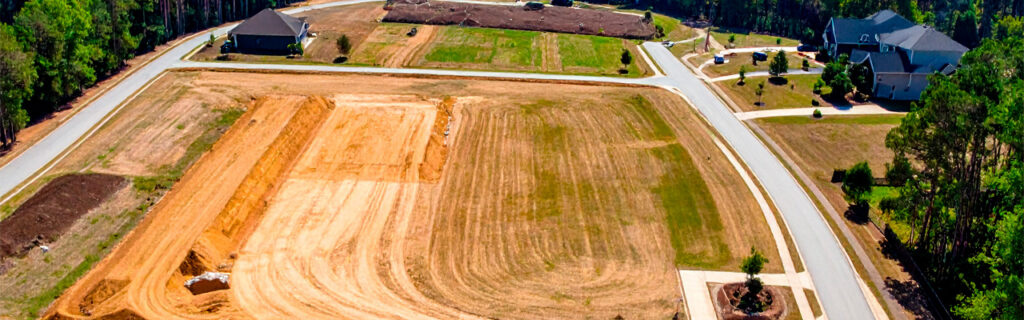
For property owners across Cherokee County, Ball Ground, and Canton planning land improvements on residential and rural properties where the intended future use, whether building, creating access, maintaining large acreage, or reclaiming unused space, should specifically guide every improvement decision from scope to design to sequencing, understanding why future use alignment produces demonstrably better improvement outcomes than reactive project-by-project decision-making, how different intended future uses specifically change the improvement decisions that serve them most effectively, and what the practical process looks like for connecting specific improvement projects to the future use they should serve gives the framework for approaching land improvement as the destination-directed program that produces satisfying long-term outcomes rather than the collection of individually defensible projects that may produce no particular destination at all despite significant accumulated investment.
Why Future Use Alignment Changes Improvement Decisions More Than Most Property Owners Expect
The specific way that intended future use changes improvement decisions is not primarily about the scale or type of improvements that different uses require, which is obvious, but about the design standards, sequencing priorities, and infrastructure specifications that each future use creates for improvements that look similar across different use destinations but that serve those destinations very differently depending on whether their design was calibrated to the specific future use or to a generic standard applicable to no future use in particular.
A driveway is a driveway in the sense that every property has one and every property improvement involving a driveway produces a route that vehicles can navigate from the public road to the property’s primary destinations. But the driveway designed for the property intended to develop a primary residence and eventual outbuildings is a different driveway from the one designed for the property intended to remain in agricultural and recreational use without residential development, and both are different from the driveway designed for the property that will eventually support commercial agricultural operations with the large equipment that commercial farming requires to navigate. These differences are not visible to the observer standing at the road’s edge looking down all three driveways. They are embedded in the route’s weight-bearing standard, the shoulder width and turning radius at destination ends, the culvert sizing at drainage crossings, and the surface material specification, each of which the future use determines and the generic driveway standard inadequately substitutes for because the generic standard serves some future uses adequately and others inadequately depending on how closely the specific future use’s requirements align with the generic standard’s design assumptions. Future use alignment that designs each improvement to the standard that the specific intended use requires rather than the generic standard that any improvement of its type might be held to produces the improvement that serves its intended future use throughout the ownership period rather than the improvement that serves the immediate needs adequately and the future use inconsistently depending on how closely the two coincide.
How Building and Development Intentions Should Shape Improvement Plans
Properties intended for residential or agricultural building development have the most specific and most demanding future use requirements of any land improvement destination because the structural performance standards that buildings impose on the site conditions they are built on cannot be compensated for by superior construction quality above the subgrade that inadequate site preparation created below it. Future use as a residential or agricultural building site should specifically shape improvement plans in the following ways that generic land improvement planning without building destination context consistently fails to address.
Building Site Selection Should Precede All Other Improvements
The building site location should be specifically identified and evaluated before any other improvements are executed on the property, because every other improvement’s design should be oriented toward the building site’s location, access requirements, and drainage relationships rather than being executed without reference to a building site location that has not yet been determined. Driveways should route toward the building site. Drainage corrections should address the watershed conditions that the building site’s foundation will eventually need to manage. Clearing boundaries should preserve the natural features adjacent to the building site that make its setting attractive while opening the access and operational space that site preparation will eventually require. Each of these other improvements is better designed when the building site location is known than when it is not, and executing any of them without building site location knowledge risks producing improvements that must be revised, extended, or worked around when the building site is eventually located at the position whose relationship to the prior improvements requires revisions that building site location before those improvements would have prevented from being necessary.
Access Routes Must Be Designed for Construction Traffic
Properties intended for building development must have access routes designed for the construction traffic that building development generates, specifically including the concrete trucks, material delivery vehicles, and heavy equipment transport trailers that construction phases require to navigate from the public road to the building site. An access route designed for the property owner’s personal vehicles and routine management equipment will not necessarily support the loaded concrete trucks and heavy delivery vehicles that construction requires to navigate without the surface damage, bearing capacity failure, and grade challenges that construction-weight vehicles create on routes designed for lighter loads. Designing access routes for construction traffic weights and dimensions from the beginning, even if the construction phase is years away, produces the access infrastructure that construction will require without the upgrade investment that designing for current use alone would require before construction can proceed on a route that the current design cannot support at construction weights. Future use as a building site makes construction traffic access design not an optional upgrade but a design requirement that adequate planning incorporates from the access route’s initial development rather than as the revision that the construction phase requires before it can proceed.
Utility Infrastructure Should Be Planned and Conduit Installed Early
Properties intended for building development should plan the utility routes that will eventually serve the building, and install the conduit for electrical service, water service, and communication utilities along those routes during the earthwork phases that open the ground for the access route and building site preparation that precede building construction. Conduit installed during the earthwork phases that are already opening the ground for other purposes costs a small fraction of conduit installed in separate trenches excavated specifically for it after the access route and building site preparation that the earthwork phases completed have been finished and the surfaces that the later conduit installation must excavate through have been placed above the utility routes that early installation during open earthwork phases would have reached at essentially no additional excavation cost. Future use as a building site makes utility conduit installation during early earthwork phases not a convenience but a cost management decision whose investment during open earthwork phases recovers many times its cost relative to separate-trench installation after those phases are complete.
How Access Creation Intentions Should Shape Improvement Plans
Properties whose primary improvement objective is creating access to interior sections, remote management areas, and destinations that current vegetation density or terrain conditions have made practically inaccessible have improvement planning requirements that specifically center on the access network design that connects accessible starting points to all intended destinations rather than on any specific improvement within those destinations that the access is intended to enable.
Future use as a property managed for hunting, wildlife management, and recreational use specifically shapes access improvement planning by establishing the trail network connectivity standard that serves these uses rather than the construction traffic weight capacity that building development access requires. Hunting land access routes that connect stands, food plots, and game management areas should be designed for the ATV and occasional tractor traffic that hunting and wildlife management operations generate, with corridor widths adequate for the tractor-mounted mowing equipment that food plot and trail maintenance requires to navigate without preliminary corridor widening before each maintenance event. The food plot locations that wildlife management intends should be specifically identified before access routes are designed so that the routes serve those destinations rather than being established without reference to the destinations that the access network should connect. And the management equipment that food plot maintenance, herbicide application, and periodic professional forestry mulching treatment will require to reach the managed sections through the access network should specifically inform the access route width, surface, and grade standards from the network’s initial development rather than from the width-revision and surface-upgrade events that discovering the management equipment’s access requirements after the access routes have been built at inadequate standards for that equipment would then create.
How Large Acreage Maintenance Intentions Should Shape Improvement Plans
Properties whose primary intended use is maintaining large acreage in functional, managed condition, whether for agricultural production, timber management, wildlife habitat, or the combination of uses that most rural acreage owners pursue simultaneously, have improvement planning requirements that center on the management efficiency that the improvements collectively produce for the ongoing maintenance that large acreage consistently demands rather than on the destination features that building and access creation objectives specifically produce.
Future use as maintained rural acreage specifically shapes improvement planning by prioritizing the improvements that most significantly reduce the recurring management cost and effort that large acreage maintenance requires across the full ownership period rather than the improvements that produce the most impressive immediate visible change without reference to the recurring management cost that the improved and unimproved conditions respectively require to maintain across the seasons that follow the improvement. A drainage correction that makes a chronically wet section manageable with standard mowing equipment reduces the management cost at every subsequent mowing event across the ownership period rather than only at the improvement event itself. An access route improvement that allows professional management equipment to reach interior managed sections through year-round reliable access eliminates the preliminary access clearing cost that inadequate access was imposing before each management event rather than at only the access improvement event. And an invasive species management program that progressively depletes root energy through combined mechanical and herbicide treatment reduces the treatment intensity that each subsequent management season requires rather than maintaining the same high-intensity restoration requirement that mechanical treatment alone without root energy depletion perpetuates indefinitely. These recurring cost reduction improvements should receive priority in large acreage maintenance planning over the cosmetic and immediate-impact improvements whose benefits are concentrated at the improvement event rather than distributed across the recurring management cost reductions that the management-efficiency improvements specifically produce.
How Unused Space Reclamation Intentions Should Shape Improvement Plans
Properties whose primary improvement objective is reclaiming unused sections that invasive vegetation has made functionally inaccessible and unproductive have improvement planning requirements that center on the combined mechanical and chemical treatment program that produces lasting improvement from the mechanical clearing investment rather than on the mechanical clearing alone that temporarily produces the visible change without the root energy depletion program that converts temporary clearing into progressively lasting improvement.
Future use as reclaimed productive land specifically shapes improvement planning by establishing the post-clearing management program as an integral component of the improvement investment that should be planned and budgeted before the mechanical clearing that initiates it rather than as the optional follow-up that property owners without realistic resprout expectations discover they need after the vigorous resprout that intact root energy reserves produce in the weeks following mechanical clearing demonstrates that mechanical clearing alone did not produce the lasting improvement that the property owner hoped the clearing cost would purchase without the herbicide follow-up that root energy depletion requires. Planning the combined program from the beginning, budgeting for the mechanical clearing and the first season’s herbicide follow-up and the subsequent seasons’ combined treatment as a multi-season program investment rather than as a single-event clearing cost, produces the realistic expectations and the committed program that lasting improvement requires rather than the clearing disappointment that single-event expectations consistently encounter when resprout returns the cleared section toward its pre-clearing density without the program response that the property owner had not anticipated needing.
How to Connect Current Improvement Projects to Future Use Destinations
Connecting each specific improvement project to the future use destination it should serve requires the planning discipline that asks, for each proposed improvement, how this improvement’s design, scope, and location specifically serves the intended future use rather than simply accomplishing the immediate visible change that the improvement produces without reference to whether that change serves or fails to serve the future use’s specific requirements.
This connection discipline can be operationalized as a simple test that each proposed improvement design should pass before the design is committed to the scope and cost estimate that the contractor scheduling conversation requires. The test asks whether the proposed improvement’s design, location, and specification would need to be changed if the future use destination were specifically considered rather than generically assumed. If the answer is yes, the design should be changed before commitment rather than after execution reveals that the committed design serves the future use inadequately. If the answer is no, the design has implicitly accounted for the future use and can proceed to commitment with the confidence that future use alignment would explicitly produce.
Communicating the future use destination to contractors during improvement planning discussions converts the contractor’s project-specific expertise into program-informed advice that specifically accounts for the future use’s requirements rather than the immediate project’s scope alone. A contractor who understands that the access route being designed will eventually need to support the construction equipment that a building project will bring to the site can specifically recommend the weight-bearing standard, culvert sizing, and turning radius that building construction access requires rather than the lighter standard that current management vehicle access might justify without the future use context that the building destination creates. This program-informed contractor advice is the practical mechanism through which future use alignment produces better improvement designs than project-by-project contracting without future use context, and it requires only the communication that tells the contractor what the property is intended to eventually become rather than only what the current project is immediately intended to accomplish.
Frequently Asked Questions
What should I do if my intended future property use changes after I have already executed improvements based on a prior use intention?
When intended future property use changes after improvements have been executed for a prior use intention, the productive response is a compatibility assessment that evaluates each completed improvement against the new use intention to determine whether the improvement serves the new use adequately, needs revision to serve it, or can remain in place as a compatible improvement that the new use can incorporate without revision despite its original design intent for the prior use. Improvements that are broadly useful across related use types often serve use intention changes without revision because the access infrastructure, drainage corrections, and vegetation management that prior use intentions required are also valuable for the new use intention that succeeded them. Improvements that were specifically optimized for the prior use and that conflict with specific requirements of the new use should be identified for the revision that the new use requires before additional improvement investment in the new direction proceeds on foundations designed for the old direction. Use intention changes that are evolutionary refinements of the prior intention rather than fundamental redirections typically require minimal revision because the foundational improvements that prior planning executed serve the refined intention as well as the prior one, making the adaptation to the refined intention a scope and focus adjustment rather than a comprehensive revision of improvements that the refinement renders inadequate.
How specific does the intended future use need to be before it can usefully guide improvement planning?
Intended future use needs to be specific enough to distinguish the improvement standards, locations, and sequences that it requires from those that meaningfully different alternative future uses would require, while remaining general enough to accommodate the implementation variations that site conditions and revealed information will require as improvement programs progress. Future use described as hunting and wildlife management on a rural property is specific enough to distinguish the trail network connectivity, food plot system design, and wildlife habitat balance that this use requires from the access route weight capacity, building site drainage design, and utility infrastructure that residential development would require from the same property, and general enough to accommodate the specific food plot location adjustments and trail alignment variations that site conditions will require without treating those adjustments as departures from the future use intention that the general description should accommodate rather than resist. Future use described only as wanting the property to be better or more usable is not specific enough to distinguish any improvement standard, location, or sequence from any other because any improvement could be justified as making the property better in some way, giving the description no useful planning guidance value. Future use described in the detail that specifies the exact dimensions of each food plot, the precise location of each stand, and the specific building footprint dimensions for developments not yet designed is more specific than planning before site conditions are revealed by initial improvements can accurately support, creating the premature commitment to implementation details that site conditions will require to be revised rather than the implementation flexibility that adequate planning preserves for the site-specific decisions that execution context makes most accurately.
How does intended future use affect the prioritization of improvements when multiple improvements compete for the same seasonal budget?
Intended future use provides the prioritization standard that resolves budget competition among multiple improvement candidates by making the question not which improvement is most visibly needed right now but which improvement most directly advances the property toward the intended future use destination when executed in the current season versus deferred to a subsequent season. Improvements whose execution enables subsequent improvements that the future use requires should receive budget priority over improvements that are self-contained without enabling value for subsequent phases, because the enabling improvement’s execution in the current season allows the subsequent phase to proceed in the following season rather than waiting for the enabling improvement to be executed in the following season before the subsequent phase can be initiated. Improvements whose deferral compounds the cost that their eventual execution will require should receive budget priority over improvements whose deferral does not increase their eventual execution cost, because the compounding improvement’s execution in the current season avoids the cost increase that deferral would impose while the non-compounding improvement’s deferral does not impose an equivalent cost penalty. And improvements that specifically serve the highest-priority elements of the intended future use should receive budget priority over improvements that serve lower-priority elements, because the highest-priority future use elements are the ones that the property owner’s satisfaction with the improvement program’s progress most depends on being visibly advancing toward across successive improvement seasons.
Can intended future use guide improvement planning even when the intended use timeline is many years away?
Yes, and improvements executed many years before the future use they serve is realized benefit most from future use alignment because the longer the interval between the improvement’s execution and the future use’s realization, the more consequential the alignment or misalignment between the improvement’s design and the future use’s requirements becomes across the full interval that the improvement serves the property before the future use arrives to either validate the improvement’s design or reveal its misalignment with the use it was supposed to have been preparing for. An access route designed to serve building development construction traffic and executed fifteen years before that construction occurs serves the intervening fifteen years of management use at the construction-capable standard that cost more than a management-only route would have while preserving the full construction-capable value that the building development eventually requires from it. The same route designed for management use only and executed fifteen years before building development occurs serves the intervening fifteen years of management use efficiently before requiring the upgrade investment that building construction will impose on the route that management-only design did not prepare for construction weight. The fifteen-year interval makes the future-use-aligned design’s additional upfront cost look modest relative to the construction-use upgrade cost that misaligned design imposes at the end of the fifteen-year interval when the building development that the alignment should have prepared for arrives at the route that misalignment did not prepare.
Ready to Align Your Land Improvement Plans With Your Property’s Future?
Land improvement investment that is specifically aligned with the intended future use of the property it improves consistently produces more satisfying long-term outcomes from the same total investment than improvement investment distributed across individually responsive projects without the future use alignment that makes each improvement’s design decisions answerable to the destination the accumulated improvements should be advancing toward. The property intended for residential development whose access routes were designed for construction traffic, whose building sites were selected and their drainage established before the building phases, and whose utility conduit was installed during the earthwork phases that preceded construction arrives at construction phases without the upgrade revisions, drainage retrofits, and separate-trench utility installations that misaligned prior improvements impose as prerequisites for the construction that adequate prior alignment would have prepared for. The property intended for managed hunting land whose trail network was connected to all intended food plots and stand destinations, whose food plot sites were prepared for the soil and sunlight conditions productive planting requires, and whose management access accommodated the equipment that maintenance requires arrives at each hunting season with the functional property that aligned prior improvement was specifically building toward rather than the management deficiencies that non-aligned improvements left in the conditions that hunting use specifically requires to be addressed.
Bardin Outdoors works with homeowners and landowners across Ball Ground, Canton, Cherokee County, and North Georgia on clearing, forestry mulching, and grading and excavation projects planned in the context of the intended future use that each property’s improvement program should be advancing toward, bringing the regional experience that translates future use intentions into improvement designs that specifically serve those intentions rather than generic designs that may or may not align with what the specific future use requires from the improvements that should be preparing for it. To learn more about how Bardin Outdoors approaches future-use-aligned improvement planning for North Georgia properties, contact us.