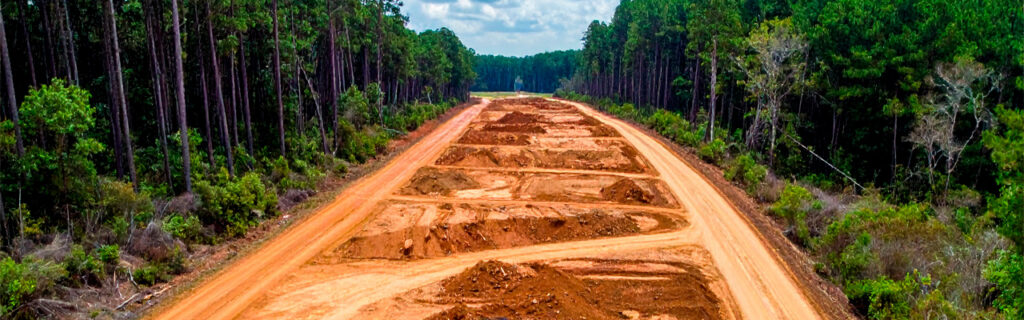
Forestry mulching addresses this access limitation at its root cause rather than at its surface expression, converting the dense vegetative barrier that makes sections hard to reach into the accessible, open ground that allows routine navigation through those sections at the effort level that the property owner’s intended use requires rather than the extraordinary effort that vegetation-pushing navigation demands. For property owners across Cherokee County, Ball Ground, and Canton managing rural and residential properties with remote sections that dense vegetation has made practically inaccessible, understanding how forestry mulching specifically creates access through hard-to-reach areas, what the access conditions look like immediately after treatment and in the seasons following treatment, and how to plan the access improvements that convert currently inaccessible sections into fully participating parts of the property that management and use can reach efficiently and reliably gives the practical foundation for approaching access improvement as the achievable transformation that forestry mulching specifically enables rather than the distant aspiration that the current density makes seem impossibly distant from the accessible conditions the property owner would like the full property to present.
Why Dense Vegetation Creates Access Problems That Other Management Methods Cannot Address
Understanding why dense vegetation in hard-to-reach sections specifically requires forestry mulching equipment to restore access rather than the owner-operated equipment or manual methods that other vegetation management situations allow begins with the specific combination of characteristics that established invasive vegetation on Cherokee County rural properties develops over the years of unchecked growth that most hard-to-reach sections have experienced.
Chinese privet that has been growing without management for three to five or more seasons develops stem diameters in the one to four inch range at significant stem density, producing a combined stem mass per acre that exceeds the processing capacity of owner-operated brush mowing equipment designed for lighter vegetation at smaller stem diameters and lower density. A standard tractor-mounted rotary brush mower that can efficiently maintain areas where vegetation is kept below two inches in stem diameter will stall, blade-damage, or be unable to penetrate the established privet stand where stem diameters above this threshold are present at the densities that multi-season accumulation produces. The equipment that can adequately process this density and stem size combination is professional forestry mulching equipment whose cutting head and processing capacity is specifically designed for the stem sizes and densities that established invasive populations on North Georgia rural properties represent, which is why owner-operated equipment cannot restore access to sections where invasive density has crossed the threshold that owner-operated capacity cannot process and why professional forestry mulching is the access restoration method specifically appropriate for conditions that exceed owner-operated equipment capability.
Manual chainsaw cutting and hand clearing can address the density that hard-to-reach sections present at the individual stem level but cannot address it at the scale and rate that makes the cleared section accessible rather than simply cleared at isolated stem positions while remaining dense between those positions. Manual clearing of an acre of established privet at the density that hard-to-reach Cherokee County sections typically present requires hundreds of hours of hand-clearing labor to process each stem individually, while the same acre of established privet is within a professional forestry mulching machine’s processing capacity at a rate that completes the access restoration within hours rather than weeks of manual labor. The access restoration that manual clearing produces at the labor investment required to match the rate that forestry mulching equipment achieves is not a practical management approach at the scale that hard-to-reach section access restoration requires, which is why forestry mulching equipment’s ability to process at the rate and scale that hard-to-reach sections present is specifically the access restoration method that the density, scale, and practical management timeframe of North Georgia hard-to-reach section access problems requires.
How Forestry Mulching Creates Specific Types of Access
Forestry mulching creates access to hard-to-reach areas through two specific access types that the property owner’s intended use of the newly accessible sections determines which is most appropriate for the specific access improvement being planned.
Trail and Corridor Access
Trail and corridor access treats a defined corridor width through the dense vegetation, establishing a passable route from an accessible starting point to a destination within or beyond the dense section without treating the full section on both sides of the corridor. This corridor access approach is appropriate when the property owner’s primary need is a route through the dense section to reach a destination on the other side, such as a food plot, stand location, or property section that is accessible by other means once the corridor through the dense section is established. Corridor access is also appropriate when the dense section itself is not intended for any specific use that requires clearing the full section, and when only the passage through it rather than the full section’s opening is the access objective.
Trail corridors created through dense sections by forestry mulching should be established at widths appropriate for the intended traffic types from the beginning, because corridor width adequate for foot and ATV traffic may be inadequate for the tractor-mounted mowing equipment that subsequent maintenance or management at the destination requires to navigate through the corridor to reach the work area beyond it. A trail established at eight feet for hunting season foot traffic that must accommodate a tractor with a twelve-foot mowing implement for food plot maintenance on the other side requires the corridor width widening that the mowing equipment’s additional width demand creates before the maintenance use the trail was partly intended to serve can proceed. Establishing the corridor width from the beginning at the standard that the most demanding traffic type the corridor will eventually serve requires eliminates this width revision cost from each subsequent use that requires more width than the initial narrow trail establishment provided.
Full Section Opening
Full section opening treats the dense vegetation across the entire section extent, converting the previously inaccessible section into the fully open, accessible area that intended uses within the section require rather than only through it. This full section opening approach is appropriate when the property owner’s intended use of the section itself, such as food plot establishment, managed open woodland for hunting and wildlife management, or recreational use within the section, requires the full section’s vegetation to be addressed rather than only the corridor through it to a destination beyond. Full section opening through forestry mulching reveals the full section’s terrain, identifies the natural features within it that the dense vegetation was concealing, exposes the native trees and natural structures that selective preservation during the opening can specifically retain, and creates the fully accessible condition from which any intended use of the section can proceed without the remaining dense vegetation that corridor-only opening leaves on both sides of the route through the section.
Full section opening planning should specifically identify the preservation targets within the section that the opening should navigate around rather than treating uniformly with the invasive vegetation that the opening is intended to remove. Native canopy trees, native understory species in suppressed condition, natural rock features, and other site character elements that the dense vegetation has been concealing but that the opening will reveal should be specifically marked before equipment enters the section so that the operator can navigate around them rather than processing them with the surrounding invasive vegetation that the opening is intended to address.
What Hard-to-Reach Sections Look Like After Forestry Mulching Access Treatment
The transformation that forestry mulching access treatment produces in previously hard-to-reach sections is immediate and dramatic, converting the conditions that made those sections effectively inaccessible into the open, navigable conditions that intended use requires, and it is consistently more striking to property owners who see the treated sections for the first time after treatment than any prior description of the transformation’s scale had suggested it would be.
The visual change from the impenetrable density of established privet understory with ten-foot visibility in all directions to the open ground condition beneath the preserved native canopy that forestry mulching exposes represents the spatial transformation that most dramatically illustrates the access improvement the treatment creates. The mature oaks and hickories that have been growing above the invasive understory, invisible from outside the section and effectively from within it because the understory density prevented the stand-back distance that seeing the full canopy above requires, become visible and accessible from the ground level that the treatment clears for the first time since the invasive understory grew tall enough to screen them. The terrain surface with its slopes, drainage channels, rock outcrops, and natural features is accessible for the first time to the direct observation that reveals what the section actually contains in terms of both current condition and future potential, giving the property owner specific information about the section’s characteristics that the dense vegetation had prevented from being accurately known from any prior accessible position.
The functional change in access is equally immediate. Navigation through the treated section at comfortable walking pace without vegetation contact, ATV travel along the established trail corridor without the windshield and body vegetation contact that insufficient corridor width would maintain, and equipment navigation to destinations within or beyond the treated section without the preliminary vegetation-pushing effort that pre-treatment access required all become immediately possible at treatment completion rather than requiring any establishment period to develop. The access the treatment creates exists from the moment the forestry mulching equipment completes the pass through the section, and it is available for whatever immediate use the property owner’s intended purpose requires without the waiting period that other access improvement methods sometimes create between the improvement’s completion and its availability for the use it was intended to serve.
How Forestry Mulching Access Connects Remote Property Sections to Active Management
The most practically consequential effect of forestry mulching access improvement to hard-to-reach sections is not the immediate access restoration that treatment completion creates but the connection of the previously inaccessible sections to the active management program that access enables. Remote property sections that management equipment cannot reach cannot receive the management activities those sections require, and the conditions that accumulate in unmanaged sections compound with each management season that access limitations prevent from reaching them at the intensity and timing that adequate management requires.
Invasive species management in sections that were previously inaccessible to professional forestry mulching equipment becomes possible once the access treatment establishes the corridors and openings that allow subsequent management equipment to reach the sections requiring recurring management through the access routes the initial treatment created. The herbicide application equipment that post-clearing invasive resprout management requires can reach the treated sections through the trail corridors the access treatment established. The subsequent mechanical clearing that maintenance management requires can be executed in the opened sections by the equipment that the established access routes can now deliver to those sections. And the fence line inspection, drainage infrastructure maintenance, and other management activities that the remote sections require can proceed through the access that the forestry mulching treatment specifically restored from the inaccessible condition that prevented those management activities from reaching the sections that needed them.
Connecting remote sections to active management through forestry mulching access restoration also restores the observational access that informed property management requires. Remote sections that cannot be reached cannot be assessed, and conditions developing within them that would warrant management response if observed go undetected and continue advancing without the response that accessible sections’ observable conditions would have triggered at earlier, more manageable stages. Fence damage accumulating in sections that cannot be accessed for inspection advances to more extensive infrastructure damage than prompt detection and repair would have allowed to develop. Tree structural conditions developing in remote sections near infrastructure that the section’s inaccessibility prevents from being assessed advances toward failure risk without the professional assessment and management response that observed conditions would prompt. Invasive species populations in the most remote sections accumulate the greatest root energy without the management that access would enable and whose compounding intensity makes eventual management of the inaccessible sections more intensive than the accessible sections that routine management has kept from reaching the same accumulation level. Restoring access specifically restores the observational connection that informed management of these sections requires, converting the compounding-without-detection trajectory that inaccessibility produces into the observed-and-managed trajectory that access enables and that adequate management requires across the full property extent rather than only in the sections that prior access conditions allowed management to reach.
Planning Forestry Mulching Access Improvements Strategically
Strategic planning for forestry mulching access improvements to hard-to-reach property sections produces better access outcomes at lower total cost than approaching each access improvement independently without reference to the connected access network that multiple individual access improvements can create when planned as coordinated components of a property-wide access program rather than as isolated treatments of the individual sections where access is most immediately limited.
Access network planning that identifies all the destinations on the property that access improvement should eventually connect, maps the route options that link those destinations through the dense sections they must pass through, and sequences the individual access treatments to build the connected network from the accessible starting points toward the most remote destinations in the order that each treatment creates access for the treatment that follows it produces a coordinated access development program whose total investment creates a more comprehensively useful property access network than the same investment distributed across independently decided access treatments without the network planning that makes each treatment’s contribution to the connected network explicit before the treatment sequence is committed.
This network planning should specifically account for the equipment access requirements that each destination’s post-access management will impose on the corridors that reach it, designing those corridors from the beginning at the widths, drainage conditions, and overhead clearance that the management equipment those destinations will require can navigate rather than at the minimum widths that initial foot and ATV traffic alone would establish as adequate before the management equipment that the destination’s ongoing management requires reveals the width inadequacy that adequate initial planning would have prevented.
Frequently Asked Questions
How quickly does vegetation regrow in forestry mulching access corridors and how should that regrowth be managed?
Invasive resprout growth from intact root systems begins appearing in forestry mulching access corridors within four to eight weeks under active growing season conditions, with stem heights reaching the six to twelve inch range during the first post-treatment growing season at vigor and density that reflects the root energy reserves the prior establishment had accumulated rather than the vigorous full-density resprout that the pre-treatment established population represented. This resprout is not the immediate return of the full pre-treatment density but the first-season expression of the root energy reserves that herbicide follow-up treatment specifically targets during this period when the vascular transport from resprout foliage to root reserves is most active and herbicide movement to root energy reserves is most efficient. Targeted herbicide treatment of this resprout at the six to twelve inch height during the first growing season after treatment is the management action that most directly prevents the resprout from advancing toward the density that would eventually require professional mechanical treatment again to restore the access corridor’s functional width. Corridors that receive consistent herbicide follow-up treatment for three to five seasons progressively reduce the resprout vigor and density that each successive growing season produces as root energy depletion accumulates, extending the interval before professional mechanical treatment is needed again and reducing the intensity of both professional and owner-operated maintenance that each subsequent season requires to maintain the corridor’s functional width.
Can forestry mulching access improvements be executed in sections on a budget, or does the full access network need to be established in a single treatment season?
Forestry mulching access improvements can be executed in sections across multiple seasons, and this phased approach is both practical and productive for properties where the full intended access network exceeds any single season’s available access improvement budget. The most productive phasing sequence treats the access improvements that create the most significant immediate access for the highest-priority property uses and that establish the starting points from which subsequent season treatments extend the network further into the property. The initial season’s treatments create the access to the sections most important for the property owner’s hunting, management, and improvement objectives, while subsequent seasons extend the access network from those initial treatments toward the more remote destinations that the initial treatments make more accessible to the subsequent treatments that reach them through the access the prior treatments established. Each season’s treatment investment creates value immediately in the access it restores to the treated sections while simultaneously creating the platform from which the subsequent season’s treatment extends the network rather than requiring each season to begin from scratch at the same accessible starting points that the prior season’s treatment advanced beyond toward the more remote destinations that the growing access network is progressively reaching.
What should I assess in remote sections immediately after forestry mulching treatment to inform subsequent management planning?
The post-treatment assessment of remote sections immediately after forestry mulching access restoration should systematically cover the condition categories that dense vegetation had concealed from prior assessment and that the treatment’s access restoration makes assessable for the first time. The terrain surface and drainage features that the vegetation had concealed, including erosion channels, drainage collection areas, rock outcrops, and terrain irregularities that improvement planning and drainage design should account for, should be specifically observed and documented now that the treatment has made direct observation possible. The fence line and boundary infrastructure within or adjacent to the treated section should be specifically assessed for the damage and vegetation integration that accumulated without detection during the inaccessible period, identifying the infrastructure repair scope that prompt post-access response should address before additional growing seasons advance the damage further. Any trees within or adjacent to the treated section that are in priority fall zones near infrastructure should be specifically assessed for the structural conditions that access now allows to be evaluated at the close-proximity positions that adequate tree assessment requires, identifying any professional tree assessment referrals that the post-access structural observations warrant. And the invasive resprout growth that will begin appearing in the treated section should be specifically scheduled for herbicide treatment at the six to twelve inch height during the growing season following treatment, capturing the root energy depletion timing that active growth enables before the resprout advances past the most efficient herbicide treatment stage toward the density that would require professional mechanical treatment to restore the access that the herbicide follow-up treatment at appropriate timing specifically prevents from being needed again within the treatment program’s early seasons.
How does the size and layout of a property affect how access improvement through forestry mulching should be approached?
Property size and layout affect forestry mulching access improvement planning primarily through the scale of the access network that adequate property coverage requires and the sequencing logic that connects remote destinations to accessible starting points through the intermediate sections that the access network must pass through to reach the most distant destinations. Smaller properties of five to fifteen acres with limited remote sections may have their full access improvement need addressable in a single treatment season that establishes the corridor and opening access the property’s full extent requires without the multi-season phasing that larger properties need for the more extensive networks that comprehensive access to their full extents demands. Larger properties of twenty or more acres with multiple distinct interior sections, extensive trail network requirements, and significant remote destinations warrant the network access planning approach that maps the full intended access network before any treatment season’s scope is committed, ensuring that each season’s treatment advances the network toward the most remote destinations through the intermediate sections that each treatment creates access through rather than treating accessible sections repeatedly while remote sections remain inaccessible because no treatment sequence has specifically connected the accessible starting points to the remote destinations through the dense intermediate sections that the remote destinations require the access network to pass through.
Ready to Open Hard-to-Reach Areas on Your North Georgia Property?
The hard-to-reach sections on Cherokee County rural properties that dense vegetation has made practically inaccessible are not permanently separated from the accessible, manageable property conditions that their terrain, soil, and ecological potential has always supported but that the accumulated invasive density has been preventing from being reached and expressed. Forestry mulching access restoration specifically addresses the vegetation density that creates the access limitation rather than working around it, converting the impenetrable density that hard-to-reach conditions present into the open, navigable conditions that allow the full property to participate in the management program, the improvement planning, and the intended use that the accessible sections have been enjoying while the inaccessible sections accumulated the conditions that management could not reach to address and that the property owner could not reach to enjoy. The access that forestry mulching restoration creates is immediate, transformative, and available from treatment completion for whatever use the property owner’s vision for those sections intends, making the access improvement investment specifically productive from the day the equipment completes the treatment rather than from a future date when establishment, waiting, or additional preparation creates the usable condition that the mulching’s immediate opening already provides.
Bardin Outdoors works with property owners across Ball Ground, Canton, Cherokee County, and North Georgia on forestry mulching access improvement projects that connect remote, hard-to-reach property sections to the accessible conditions that management and intended use require, establishing the trail corridors, section openings, and connected access networks that make the full property functionally available rather than only the portions that prior access conditions happened to allow. To learn more about how Bardin Outdoors can help improve access to hard-to-reach areas on your North Georgia property, contact us.