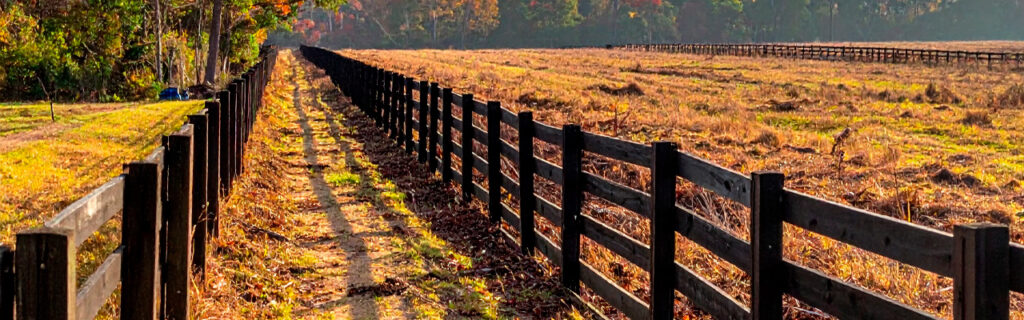
On North Georgia rural properties where Cherokee County’s growing season applies the full invasive species pressure that privet, wisteria, kudzu, and multiflora rose generate against every fence line on every property where these species have established in the surrounding vegetation, fence line corridor management is not a one-time clearing event that permanently resolves the vegetation pressure against the fence infrastructure. It is a recurring management obligation that adequate fence line condition requires to be addressed at the interval that prevents vegetation from advancing from the manageable early-encroachment stage to the established-integration stage where vegetation removal requires extracting stems from fence components rather than simply clearing vegetation from the accessible corridor around them. Forestry mulching is specifically suited to fence line corridor management because its processing approach can address the vegetation densities that established fence line encroachment presents while navigating with the precision that operating in proximity to fence infrastructure requires, and because its selective processing capability allows the vegetation encroaching on the fence corridor to be addressed without the fence infrastructure contact that less precise clearing methods create when operated in the constrained corridor that fence lines create for equipment operating adjacent to the infrastructure they must not damage.
For property owners across Cherokee County, Ball Ground, and Canton managing rural and residential properties with fence lines along boundary perimeters, interior pasture divisions, and property access corridors, understanding how forestry mulching specifically addresses fence line vegetation management challenges, what the clearing scope and approach for fence line corridor restoration involves, and how to structure the ongoing management program that maintains restored fence line accessibility rather than allowing the vegetation that clearing addresses to return to the inaccessibility condition that prompted the clearing gives the practical knowledge for approaching fence line management as the coordinated program that lasting fence line condition requires rather than the periodic emergency restoration that deferred fence line vegetation management consistently creates.
Why Fence Line Vegetation Management Is a Continuous Requirement
The vegetation pressure that Cherokee County’s invasive species population applies against fence line corridors is continuous rather than episodic because the root systems of established invasive populations adjacent to fence lines produce above-ground growth throughout the growing season at rates that consistently exceed the fence line corridor clearance standard if the management that keeps that growth within the corridor clearance standard is not specifically applied at the frequency that the growth rate requires. Understanding this continuous pressure dynamic, specifically that invasive vegetation is always growing toward the fence line from established positions on both sides of it and that management is the only intervention that keeps that growth from progressively occupying the corridor clearance that adequate fence line management requires, helps property owners recognize why the fence line that was accessible last season requires the same management attention this season that produced last season’s accessible condition rather than remaining accessible without ongoing management simply because it was cleared previously.
The specific fence line vegetation management challenge that North Georgia rural properties present is not simply the growth rate of invasive species against the fence corridor but the biological persistence that their root energy reserves provide for the regrowth that mechanical clearing without herbicide follow-up consistently encounters within four to eight weeks of treatment. Privet roots that have been accumulating energy across multiple growing seasons of unmanaged establishment drive regrowth from the root systems that mechanical clearing alone does not address, producing resprout at vigor and density that reflects the full root energy reserve available rather than the diminished reserve that consistent combined mechanical and chemical treatment produces progressively across successive treatment seasons. The fence line management program that produces lasting improvement rather than temporary clearance followed by vigorous resprout must account for this root energy persistence from the beginning, planning herbicide follow-up treatment of resprout as an integral component of the fence line management program rather than discovering it as a necessary addition when resprout returns on schedule after mechanical clearing that was expected to permanently address the condition it temporarily improved.
How Forestry Mulching Specifically Addresses Fence Line Vegetation
Forestry mulching addresses fence line vegetation through the specific combination of processing capability and operational precision that established fence line encroachment requires from the clearing method that will address it without creating the fence infrastructure damage that less precise clearing methods generate when operated in the constrained corridor position that fence lines create for adjacent equipment.
Processing Capability for Established Invasive Density
Fence lines on Cherokee County rural properties where fence line corridor vegetation management has been deferred for multiple seasons present the established invasive density and stem diameter that exceeds owner-operated brush mowing equipment’s processing capacity, requiring professional forestry mulching equipment’s cutting head and processing drum to address the density that owner-operated equipment cannot penetrate without the stalling, blade contact, and equipment stress that dense established vegetation creates for equipment designed for lighter vegetation at smaller stem diameters. Forestry mulching equipment processes the multi-inch diameter privet stems and the dense multiflora rose and wisteria tangles that established fence line encroachment produces within its designed processing capacity, restoring the corridor clearance that owner-operated equipment cannot restore from the established density that deferral has allowed to develop. This processing capability at the vegetation density that deferred fence line management creates is specifically why professional forestry mulching equipment is the appropriate clearing method for fence line corridors where encroachment has advanced past the owner-operated equipment threshold rather than the threshold at which owner-operated maintenance remains adequate to address the vegetation without the professional equipment mobilization that established density requires.
Operational Precision Adjacent to Fence Infrastructure
The operational precision that forestry mulching equipment provides through its cutting head’s directional processing and the operator’s ability to direct the processing toward the vegetation while navigating around the fence infrastructure allows the corridor vegetation to be addressed without the fence component contact that bulldozing and conventional clearing approaches create when operated in the constrained corridor position that proximity to fence lines requires. A skilled forestry mulching operator navigating along a fence line can process the vegetation growing against and adjacent to the fence while maintaining the clearance from wire mesh, posts, and other infrastructure components that prevents the equipment contact that would otherwise bend, cut, or displace fence components during clearing. This operational precision is the characteristic that makes forestry mulching specifically appropriate for fence line clearing rather than the broader clearing applications where precision is valuable but not as specifically constraining as the fence infrastructure proximity that fence line clearing creates as a constant precision requirement throughout the treatment operation.
In-Place Processing and Its Fence Line Management Benefits
Forestry mulching’s in-place processing that converts fence line corridor vegetation to the mulch layer deposited back onto the cleared corridor rather than pushing the vegetation along the fence to pile it for burning or hauling provides specific benefits for fence line management that alternative clearing approaches that push or pile vegetation do not provide. In-place processing eliminates the debris piles that pushed vegetation creates against fence components when conventional clearing equipment pushes fence line vegetation to a pile position that the fence line itself stops, creating the compressed debris mass against the fence that must be subsequently removed before the fence line is accessible for inspection and that in the meantime applies the loading of the debris pile to the fence components it contacts. In-place processing also eliminates the equipment path that hauling or burning debris management requires through the fence line corridor, which for long fence line corridors would add the hauling traffic to the corridor soil that in-place processing avoids by completing the processing without the material removal that hauling requires to clear the corridor of the processed material that in-place mulching deposits in place as the protective mulch layer rather than the debris pile that hauling management must remove before the corridor is usable.
What Fence Line Forestry Mulching Restoration Produces
Fence line forestry mulching restoration that addresses established encroachment produces the accessible, inspectable, manageable corridor condition that adequate fence line management requires, creating the functional corridor from which the inspection and repair activities that fence condition management depends on can proceed efficiently rather than requiring the preliminary vegetation management that inaccessible corridor conditions impose before inspection can reach the fence infrastructure that the vegetation had been preventing from being observed.
The immediately accessible corridor that restoration creates allows the post-restoration fence line walk that specifically assesses the current infrastructure condition that the vegetation concealment had prevented from being accurately known. This post-restoration inspection commonly reveals damage conditions that the vegetation was concealing, including wire deformation from vegetation integration pressure, post loading from vegetation mass attachment, mesh penetration where vine stems grew through wire openings and the growing stems’ increasing diameter expanded the openings beyond their original dimensions, and height loss where vegetation loading pulled fence sections below their intended height. Each of these damage conditions is assessable and repairable from the restored accessible corridor in ways that the corridor’s prior inaccessibility specifically prevented from occurring before restoration, and the repair costs that the post-restoration inspection identifies are the fence infrastructure repair costs that prompt inspection and repair enabled by corridor accessibility would have kept modest if corridor accessibility had been maintained throughout rather than being restored after multiple seasons of inaccessibility allowed the damage to compound to the more extensive condition that the restored inspection reveals.
What Fence Line Mulching Scope Should Include
The clearing scope for fence line forestry mulching restoration that produces a genuinely accessible, manageable corridor rather than the minimally cleared strip that vegetation immediately adjacent to the fence receives while vegetation outside the immediate strip continues advancing toward the corridor should include the full corridor width that fence line management activities require to function efficiently rather than only the minimum width that the fence’s immediate clearance demands.
The corridor width that adequate fence line management requires accommodates the property owner walking the fence line at a comfortable inspection pace without vegetation contact at body height or above, the occasional vehicle or ATV access that repair material transport to specific fence sections may require, and the equipment operating clearance that post-setting, wire tensioning, and fence repair operations need to work efficiently without vegetation interference with the tools and equipment that those operations use. This functional corridor width is consistently wider than the minimum strip that only the fence components themselves require for clearance, and establishing the corridor at the functional management width from the restoration treatment rather than at the minimum infrastructure clearance that seems more immediately necessary creates the corridor that fence line management activities can actually use efficiently throughout the restoration’s service life rather than the corridor that vegetation growing back from the minimally cleared edges progressively closes to below management-functional width within the first growing season after the minimum-clearance restoration.
The clearing scope should also specifically address both sides of the fence line rather than only the property owner’s side, because vegetation advancing from adjacent properties or from the fence line’s opposite side creates the same encroachment pressure on the fence infrastructure and the same corridor accessibility reduction that vegetation from the property owner’s side creates. Clearing both sides of the fence line to the functional management corridor width produces the complete corridor clearance that the fence infrastructure’s management requires rather than the half-clearance that vegetation immediately returning from the uncleared opposite side reduces to below functional management width within the first growing season after single-side restoration.
The Management Program That Sustains Fence Line Accessibility After Restoration
Fence line accessibility restored through forestry mulching treatment requires the management program that prevents vegetation resprout from returning the corridor to inaccessible condition within the growing seasons that follow the restoration, specifically the herbicide follow-up that depletes root energy reserves progressively across successive treatment seasons and the owner-operated mowing that addresses resprout during the interval between professional treatment events at the height and density that owner-operated equipment can process without the professional equipment mobilization that each restoration-scale event would otherwise require.
Targeted herbicide treatment of invasive resprout in the restored fence line corridor, applied at six to twelve inch stem height during active growing season conditions when vascular transport moves herbicide to root reserves most efficiently, is the management action most directly responsible for determining whether the restoration investment produces progressive lasting improvement toward the sustainable maintenance condition or temporary clearance followed by vigorous resprout from the intact root energy reserves that the herbicide follow-up specifically targets. The resprout that appears in the restored corridor four to eight weeks after treatment under active growing season conditions is the biological response that the management program’s herbicide component addresses at the treatment timing that makes herbicide application most effective for root energy depletion, and scheduling this treatment as the restoration’s planned follow-up rather than as the reactive response to the resprout’s appearance that inadequate planning would make it produces the root energy depletion that the restoration investment deserves to initiate rather than the deferred treatment that allows the resprout to advance past the most efficient treatment height before the scheduling process that adequate planning would have already completed before the resprout reached that height.
Owner-operated mowing of the restored corridor at the frequency that keeps resprout within the owner-operated equipment’s processing capacity between professional treatment events maintains the corridor at functional management width without requiring professional equipment mobilization at the frequency that unmanaged resprout advancing toward the professional treatment threshold would eventually demand. The corridor maintained at the owner-operated management threshold never reaches the established density that professional equipment restoration addresses because the owner-operated maintenance keeps the resprout from advancing to the professional treatment threshold, making the combined program of professional restoration followed by owner-operated maintenance followed by herbicide treatment the most cost-efficient approach to fence line corridor management available for the established invasive density conditions that Cherokee County fence line vegetation consistently presents after seasons of unmanaged advance.
Frequently Asked Questions
How close to fence wire and posts can forestry mulching equipment safely operate without creating infrastructure contact risk?
The minimum clearance that forestry mulching equipment should maintain from fence wire and posts during corridor clearing operations depends on the specific equipment model’s cutting head design and the operator’s skill and experience with fence line clearing specifically rather than on a universal minimum that applies to all equipment and all operators equally. Experienced operators familiar with their specific equipment’s cutting head geometry and debris discharge pattern can typically process vegetation within twelve to eighteen inches of fence wire and posts without creating infrastructure contact risk through the controlled operation that this experience enables. Less experienced operators should maintain larger clearances that account for the uncertainty in cut material discharge trajectory that equipment-specific experience resolves for experienced operators through their specific knowledge of how the debris from each stem position discharges during processing. The practical approach for fence line corridor clearing that minimizes infrastructure contact risk while maximizing corridor clearance is to discuss the specific equipment and the operator’s fence line clearing experience with the contractor before scheduling, confirming that the operator has specific fence line clearing experience and understanding the clearance standard that the specific equipment and operator combination will maintain during the clearing operation.
How should vine integration with fence wire be addressed before or during forestry mulching treatment?
Vine stems that have grown through wire mesh openings and integrated with fence components should be addressed before forestry mulching equipment processes the adjacent vegetation rather than relying on the equipment to sever the integrated stems at the fence level without the equipment contact with fence components that severing integrated stems from the equipment clearance distance requires. The most effective pre-treatment approach for vine integration with fence wire is hand-cutting the vine stems at the ground level on both sides of the fence at each integrated vine position, severing the vine’s living connection to its root system and allowing the vine’s integrated stems to die in place before the equipment processes the surrounding vegetation at its operational clearance distance from the fence components. The dead integrated stems that remain woven through the wire mesh after hand-cutting will gradually lose flexibility and loosen from the mesh over the seasons following treatment, eventually separating from the mesh without the mechanical extraction that removing living pliable vine from mesh during the treatment event would require and that risks deforming the mesh in the extraction process. Pre-treatment hand-cutting of integrated vines is the most fence-infrastructure-protective approach to vine integration management, and it should be specifically identified as a pre-treatment scope component when fence line clearing is planned for corridors where vine integration with fence components is known or suspected from prior inspection or from the visible vine presence in the fence line corridor.
What fence line infrastructure conditions are most commonly discovered during the post-restoration inspection that vegetation had been concealing?
Post-restoration fence line inspection of corridors where vegetation had made inspection impractical for multiple seasons most commonly reveals wire deformation at positions where vegetation integration had applied progressive mechanical loading to mesh openings, stretching the wire from its original profile toward the void that the integrated stem’s growing diameter had been expanding; post leaning or displacement at positions where vine mass attachment had accumulated the leverage that the vine mass’s weight applied to the post at the attachment height, gradually pulling the post from its original plumb position toward the lean that the accumulated leverage produced; mesh height loss at sections where vegetation loading had pulled the entire fence height downward from its original installation height, reducing the effective barrier height that the fence was intended to maintain; and splice failure at positions where the accumulation of vine mass loading and the corrosion that moisture retention from the adjacent dense vegetation accelerated had compromised the splice integrity at fence section connections that the original installation had made at manageable corrosion exposure rather than the sustained moisture contact that dense vegetation against the fence created. Each of these infrastructure conditions is most efficiently repaired from the accessible corridor that restoration creates immediately after restoration, because the repair operations require corridor access for the tools, materials, and personnel that prompt repair from the accessible corridor provides while deferred repair after the vegetation has begun growing back toward the corridor reduces the access quality that prompt repair from the fully restored corridor specifically enables.
How does the fence line’s terrain affect the forestry mulching approach and the corridor maintenance program?
Fence line terrain affects both the forestry mulching approach during corridor restoration and the ongoing maintenance program in ways that rolling Cherokee County terrain specifically creates for fence lines that follow property boundaries across the terrain’s elevation changes. Steep terrain sections along the fence line require the operator to navigate the equipment on slopes that approach the safe operating gradient for the specific equipment model, potentially requiring the operator to process steep sections from the downhill side rather than the uphill side to maintain the equipment’s center of gravity within the stable operating envelope that slope operation requires. Terrain transitions along the fence line where the corridor passes through drainage swales and low areas require specific attention to equipment ground clearance and bearing capacity at wet soil positions that slope drainage concentrates toward the low corridor positions. The ongoing maintenance program must account for the erosion that cleared fence line corridors on slopes experience from the concentrated surface flow that Cherokee County’s steep terrain creates during storm events, specifically including the reestablishment of ground cover in cleared corridors on significant slopes as a maintenance priority that prevents erosion from developing the channel incision that unchecked concentrated flow on bare cleared clay initiates and that becomes progressively more difficult to manage with each storm season that passes without the ground cover establishment that the cleared slope specifically requires to prevent it.
Ready to Restore and Maintain Your Fence Line Corridors?
Fence line corridors on Cherokee County rural properties that have advanced beyond the owner-operated management threshold through seasons of vegetation pressure that routine mowing could not keep pace with are fence line corridors that forestry mulching is specifically equipped to restore to the accessible, inspectable, manageable condition that adequate fence line management requires to catch damage while it is modest, make repair while it is straightforward, and maintain the fence infrastructure’s functional integrity before the inaccessibility that overgrown corridors create allows damage to compound across the undetected seasons into the more extensive and more expensive condition that eventual discovery reveals when accessibility is finally restored. The restoration that forestry mulching provides, followed by the herbicide treatment that root energy depletion requires and the owner-operated mowing that maintains the restored corridor at manageable density between professional treatment events, produces the sustainable fence line management program that gradually reduces the treatment intensity required to maintain corridor accessibility as root energy depletion advances through successive combined treatment seasons toward the low-maintenance condition that the early restoration investment’s herbicide complement specifically initiates toward.
Bardin Outdoors works with property owners across Ball Ground, Canton, Cherokee County, and North Georgia on forestry mulching fence line corridor restoration projects that establish the accessible, inspectable corridor conditions that ongoing fence line management requires, with the operational precision adjacent to fence infrastructure that experienced fence line clearing specifically provides. To learn more about how Bardin Outdoors can help restore and maintain your fence line corridors, contact us.