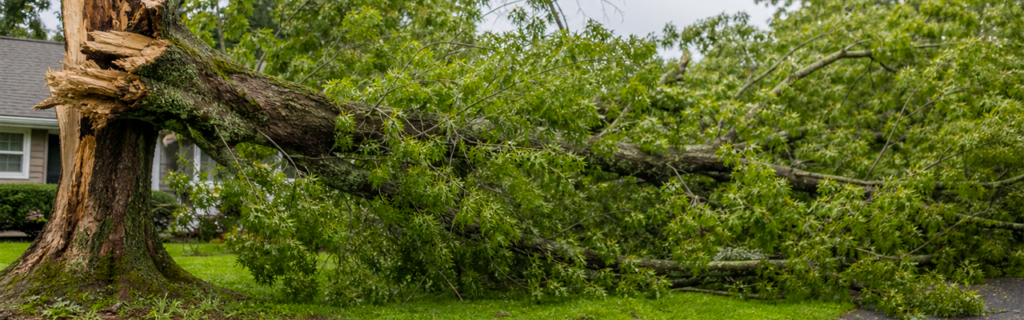
For property owners in Ball Ground, Canton, Cherokee County, and surrounding areas, knowing what to inspect after a storm can help identify hazardous trees before they cause additional damage.
Why Storm-Damaged Trees Become Dangerous
High winds, saturated soil, and lightning can weaken a tree’s structure even if the damage is not immediately obvious.Trees with compromised trunks, roots, or major limbs are more likely to fail during future storms or strong winds.
Common Signs a Tree May Need Removal
1. Cracked or Split Trunk
Large cracks or vertical splits in the trunk can indicate major structural weakness.A damaged trunk may no longer safely support the tree’s weight.
2. Hanging or Broken Limbs
Broken branches hanging in the canopy can fall unexpectedly and create serious hazards.Large damaged limbs are especially dangerous near homes, roads, or driveways.
3. Exposed or Lifted Roots
Storms can loosen the soil and expose root systems around the base of the tree.If roots are lifting or the ground appears raised on one side, the tree may be unstable.
4. Leaning After the Storm
A tree that suddenly begins leaning after severe weather may have sustained root or trunk damage.Sudden leaning is often a warning sign of instability.
5. Hollow or Decaying Sections
Storm damage may expose existing decay inside the tree.Trees with extensive internal decay are more likely to fail under stress.
What Property Owners Should Do After a Storm
Inspect trees carefully from a safe distance and look for visible structural changes.Avoid standing under damaged limbs or attempting removal without proper equipment and training.
In some cases, nearby ground conditions may also need attention through grading and excavation if erosion or drainage issues contributed to instability.
When Tree Removal Is Often Recommended
Professional tree removal may be necessary when a tree poses an immediate safety risk or has severe structural damage.Removing hazardous trees early can help reduce the chance of future property damage or injury.
Frequently Asked Questions
Can a cracked tree survive after a storm?
Some minor damage may be manageable, but major trunk cracks often indicate serious structural weakness.Why are hanging limbs dangerous?
Broken limbs can fall unexpectedly, especially during future wind or rain events.Does leaning always mean a tree should be removed?
Not always, but sudden leaning after a storm should be professionally evaluated as soon as possible.Can storm damage affect tree roots?
Yes. Saturated soil and strong winds can weaken or expose root systems.Need Help After Storm Damage?
Addressing hazardous trees quickly can help protect your home, driveway, and surrounding property from future risks.To learn more about how Bardin Outdoors can help your property with storm-damaged tree removal and site cleanup, contact us.