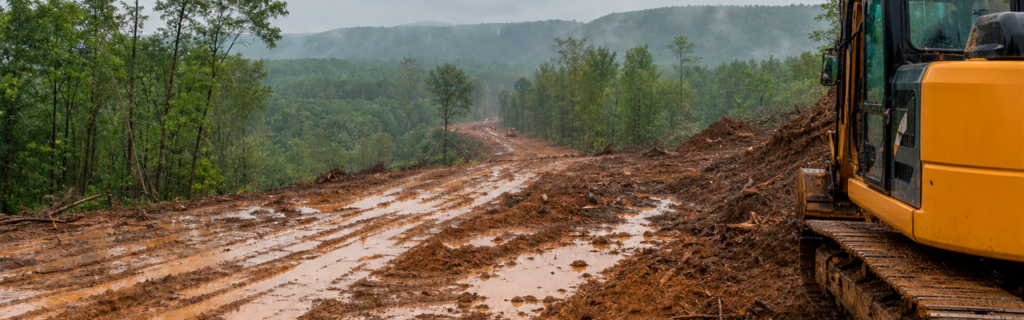
For property owners in Ball Ground, Canton, Cherokee County, and surrounding areas, understanding how rainfall impacts clearing projects can help improve planning and reduce delays during site preparation.
Why Rainfall Affects Land Clearing Projects
Rain changes soil stability and ground conditions, especially on wooded or sloped properties common throughout North Georgia.Wet conditions can make equipment access more difficult and increase the risk of erosion or ground disturbance during clearing work.
Common Ways Rain Impacts Land Clearing
1. Soft and Unstable Soil
Heavy rainfall can saturate the ground and reduce soil stability.Soft soil conditions may make it harder for clearing equipment to operate safely and efficiently.
2. Increased Erosion Risks
Removing vegetation exposes soil that may wash away during strong storms.Proper grading and excavation planning helps reduce runoff and erosion concerns after clearing work.
3. Limited Equipment Access
Mud, standing water, and slippery terrain can limit access to remote or sloped areas of the property.This may slow project timelines or require adjustments to work schedules.
4. Drainage Problems
Poor drainage becomes more noticeable during wet conditions.Rainfall often reveals low spots, runoff channels, or unstable ground that may need correction before additional improvements begin.
5. Delays in Follow-Up Construction
If clearing is completed during extended wet periods, additional site work may need to wait until soil conditions improve.This can affect grading, driveway installation, utility work, and building preparation.
Why Timing Matters in North Georgia
North Georgia terrain often includes slopes, clay soils, and wooded acreage, which can become more difficult to manage after repeated rainfall.Planning projects during more favorable weather conditions may help reduce delays and improve site stability during land clearing operations.
How Property Owners Can Prepare
- Monitor seasonal rainfall patterns before scheduling work
- Plan for drainage improvements early in the project
- Allow flexibility for weather-related delays
- Evaluate access routes for heavy equipment
- Address erosion concerns before large storms occur
Frequently Asked Questions
Can rain delay land clearing projects?
Yes. Saturated soil and poor site access can slow or temporarily stop clearing work.Why does wet soil affect equipment?
Soft ground reduces traction and may create unsafe working conditions for heavy machinery.Does rainfall increase erosion after clearing?
Yes. Exposed soil is more vulnerable to runoff and washouts during storms.Is drainage planning important before clearing?
Absolutely. Proper drainage planning helps reduce future water and erosion problems.Planning a Land Clearing Project?
Understanding how North Georgia rainfall affects soil and site conditions can help your project move more efficiently and safely.To learn more about how Bardin Outdoors can help your property with land clearing, grading, and drainage preparation, contact us.