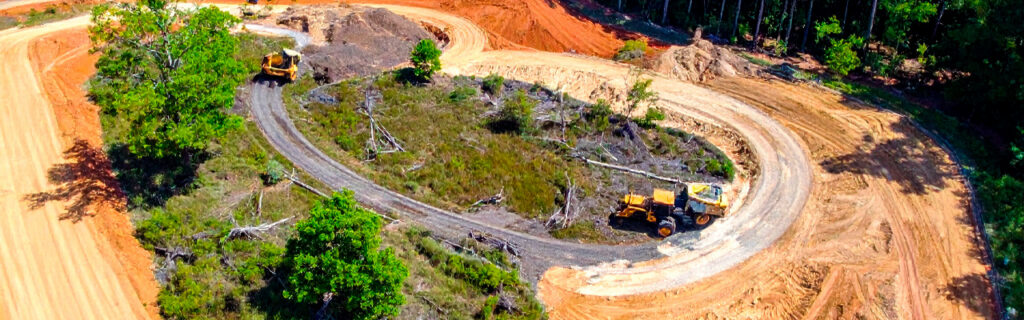
Selective land clearing is the practice of identifying which vegetation on a property is creating the specific functional limitations, access barriers, or maintenance problems that clearing should address, and removing specifically that vegetation while specifically preserving the vegetation that contributes to the property’s character, ecology, and long-term value rather than treating the clearing boundary as a uniform removal zone where everything within it is addressed regardless of each plant’s role in either creating the problem or contributing to the property’s value. For property owners across Cherokee County, Ball Ground, and Canton managing residential and rural lots where the distinction between the invasive species creating the problem and the native trees and natural features worth preserving within the same clearing area represents the entire difference between the clearing outcome that satisfies and the clearing outcome that eliminates what should have been the improvement’s foundation, understanding how selective land clearing specifically works, when it makes more sense than comprehensive clearing, and what it requires in pre-clearing planning to produce the preservation-accurate outcomes that distinguish it from comprehensive clearing gives the complete guide for approaching clearing decisions on North Georgia properties as the vegetation-specific practice that selective clearing makes possible rather than the boundary-uniform removal that comprehensive clearing applies.
What Selective Land Clearing Is and How It Differs From Comprehensive Clearing
Selective land clearing is defined not by the equipment it uses or the acreage it treats but by the planning discipline it requires and the outcome it produces: a cleared area where specific problem vegetation has been removed and specific valued vegetation has been specifically preserved through the pre-clearing identification, marking, and operator instruction that translates the preservation intent into the equipment navigation decisions that preserve what should be preserved while processing what should be addressed. This planning discipline distinguishes selective clearing from comprehensive clearing not only in outcome but in process, because the preservation accuracy that selective clearing achieves requires the pre-clearing preservation walk, the physical marking at each preservation target, and the contractor walkthrough that aligns operator execution with preservation intent before the clearing begins rather than during it when active processing speed makes deliberate individual plant decisions impractical without the prior marking that places the decision before the processing rather than within it.
Comprehensive clearing removes all vegetation within the clearing boundary regardless of each plant’s contribution to the property’s character and ecology, producing the uniform cleared ground that building site preparation requiring organic-free subgrade and agricultural production requiring stump-free surface each specifically need from the clearing approach that removes everything rather than selecting among what to remove and what to keep. Selective clearing removes the specific problem vegetation identified during the pre-clearing planning while navigating around the specific preserved elements that physical marking at each preservation target instructs the operator to avoid during active processing, producing the outcome where the invasive problem is addressed and the native character is preserved rather than the outcome where both are uniformly eliminated within the clearing boundary.
When Selective Clearing Makes More Sense Than Comprehensive Clearing
Selective clearing makes more sense than comprehensive clearing in the situations where the clearing area contains significant elements worth preserving that comprehensive clearing would eliminate along with the problem vegetation, and where the intended use of the cleared area benefits from or requires the preserved elements’ presence rather than their absence. Understanding the specific situations that these criteria describe allows property owners to evaluate whether their specific clearing situation calls for selective or comprehensive clearing rather than defaulting to one approach without the situational evaluation that distinguishes them as the appropriate choice for different circumstances.
Native Canopy Above Dense Invasive Understory
The clearest situation for selective clearing over comprehensive clearing is the wooded Cherokee County property section where mature native canopy trees have been growing above the dense invasive understory that has made the section impenetrable without producing the canopy that the invasive species cannot replicate because the invasive species that created the problem are understory species whose biological characteristics do not produce the mature canopy that the native oaks, hickories, and tulip poplars have been developing for decades above the invasive occupation of the understory space. Selective clearing that removes the invasive understory while preserving the native canopy above it produces the open native woodland condition that the preserved canopy creates above the cleared understory floor, giving the property its most valuable improvement outcome from the clearing investment. Comprehensive clearing that removes both the invasive understory and the native canopy above it produces the cleared field that the section’s terrain and soil could have supported without decades of native canopy growth, replacing the irreplaceable canopy asset with the clearing outcome that any cleared ground provides regardless of the natural capital that the clearing eliminated from the wooded section’s character to produce it.
Properties Where Woodland Character Defines the Property’s Primary Value
Residential rural properties where the woodland character that native canopy and the natural setting it creates is specifically why the property was chosen over alternatives with equivalent acreage but without the woodland character that the native canopy provides are properties where comprehensive clearing of the overgrown sections that need management attention would eliminate the primary value distinction that makes the property worth the management investment in the first place. The property owner who chose Cherokee County wooded acreage over equivalent cleared acreage specifically because of the mature native canopy, the natural terrain features, and the wooded setting that the wooded acreage provides has specifically paid for those assets and should specifically preserve them through the selective clearing that addresses the invasive overgrowth problem without the canopy elimination that the property’s primary value specifically depends on retaining rather than sacrificing to the simpler comprehensive approach that treats the clearing boundary as a uniform removal zone rather than the selective management zone that the property’s character value specifically requires.
Hunting and Wildlife Management Uses Requiring Specific Habitat Structure
Hunting properties and wildlife management areas require the specific habitat structure that selective clearing produces from wooded sections rather than the uniform cleared field that comprehensive clearing produces from the same sections, because the hunting effectiveness and wildlife habitat quality that these uses depend on require the open native woodland habitat type with preserved mature canopy overhead and accessible navigable ground below that selective understory clearing specifically creates. The sight lines that deer hunting effectiveness requires are the sight lines that open woodland floor beneath mature canopy creates rather than either the impenetrable sight-line limitation of the dense invasive understory that selective clearing removes or the flat-field visibility without canopy structure that comprehensive clearing produces. Neither the pre-clearing invasive understory condition nor the comprehensive clearing field condition serves the hunting habitat requirement that only the selective clearing’s open native woodland outcome provides, making selective clearing not merely preferable but specifically required for the hunting habitat improvement that the wooded section’s intended use as hunting land demands from the clearing that should create rather than eliminate the habitat type the hunting use requires.
Access Route Development Through Wooded Sections
Trail corridors and access routes through wooded sections that need the passable width for foot traffic, ATV access, or equipment navigation that the current overgrown condition prevents are access improvement situations where selective clearing of only the corridor width the access requires, while leaving the woodland character on both sides of the corridor intact, produces the access improvement at the corridor development cost rather than the full section clearing cost that removing all vegetation between the accessible starting point and the corridor’s destination would require. The trail through the woods that selective corridor clearing creates maintains the woodland setting on both sides of the navigable corridor width, providing the access the corridor was intended to enable while preserving the natural experience that walking, riding, or driving through wooded property with preserved woodland character on both sides creates relative to the experience of navigating through a clearcut corridor that comprehensive clearing substitutes for the selective corridor that preserves the woodland character on both sides of the passable width that the access objective specifically required without requiring the beyond-corridor clearing that it did not need.
When Comprehensive Clearing Is More Appropriate Than Selective Clearing
Understanding when selective clearing is most appropriate requires equal understanding of when comprehensive clearing is more appropriate, because the situations where comprehensive clearing specifically serves the intended outcome better than selective clearing are the situations where selective clearing’s preservation of organic material and native elements in place would compromise the performance requirement that the intended use specifically demands from the cleared site conditions.
Building site preparation that requires organic-free structural subgrade throughout the fill zone specifically requires comprehensive clearing with stump grinding and root raking rather than selective clearing’s in-place preservation of root systems and native trees within the building footprint, because the root systems and organic material that selective clearing would preserve in place within the structural fill zone would decompose beneath the structural fill placed above them and create the settlement voids that foundation performance requires to be absent from the structural zone. Agricultural production areas that require stump-free surface for the hay mowing and tillage equipment that agricultural use operates across the cleared area require comprehensive clearing with stump grinding rather than selective clearing that leaves stumps at soil surface height where agricultural equipment contact creates the equipment damage and operational interruption that stump-free clearing would have prevented. These use-specific requirements for comprehensive clearing should be identified through the future use evaluation that distinguishes when comprehensive clearing’s removal of everything is specifically required versus when selective clearing’s targeted removal is specifically appropriate.
What Selective Clearing Specifically Removes and What It Specifically Preserves
Selective clearing’s definition as the targeted removal of specific problem vegetation while preserving specific valued vegetation requires the specific identification of what belongs in each category at the specific clearing area before the clearing is executed rather than a general understanding of the distinction that leaves the category assignment of each individual plant to the operator’s judgment during active processing without the property owner’s specific direction at each plant’s position during the active treatment that cannot pause for the consultation that pre-clearing identification and marking provides before treatment begins.
Selective clearing specifically removes the invasive and nuisance vegetation that creates the functional limitations, access barriers, and maintenance problems the clearing is intended to address. On Cherokee County properties this removal target is typically Chinese privet at the multi-inch diameter and high density that multi-season unmanaged establishment produces, kudzu and wisteria where their presence in the clearing area represents the vine mass and climbing growth that smothers native plants and structures, multiflora rose where its cane density creates the impenetrable barrier that makes sections inaccessible and trails impassable, and the volunteer trees of unwanted species at specific positions where their growth is creating the limitation that the clearing is intended to eliminate at those specific positions rather than throughout the clearing area regardless of species identity.
Selective clearing specifically preserves the mature native canopy trees that have been growing above the invasive understory, the native understory species in suppressed condition beneath the invasive competition that competitive release from the clearing will allow to recover toward their species’ full character, natural terrain features including rock outcrops and drainage channels that the clearing should reveal and make accessible rather than disturb, and any other site elements that the property owner’s preservation assessment identifies as worth specifically retaining through the clearing rather than treating uniformly with the surrounding vegetation that the clearing is addressing.
What Selective Clearing Requires in Pre-Clearing Planning
Selective clearing’s preservation accuracy depends entirely on the pre-clearing planning that translates the preservation intent into the specific field instructions that equipment operators can follow during active processing rather than the general preference that verbal instruction without field marking cannot reliably translate into the specific navigation decisions at each preservation target’s location during active treatment at the processing speed that efficient equipment operation maintains without the per-plant deliberation that active speed prevents from being practical without prior field marking at each preservation target.
The Preservation Walk and Physical Marking
The preservation walk that physically enters the clearing area before equipment arrives, identifies every native tree, native understory species, and natural feature that the clearing should navigate around rather than process with the surrounding problem vegetation, and marks each preservation target with bright flagging tape at approximately five to six feet of height on every stem and trunk at the target’s specific location is the single most important pre-clearing planning activity for preservation-accurate selective clearing outcomes. The physical marking at each preservation target converts the preservation intent into the unambiguous field instruction that the operator’s equipment navigation specifically follows during active processing rather than the interpreted judgment that clearing without marking requires from the operator at each encountered element during processing at the speed that active equipment operation maintains without the per-element deliberation that marked versus unmarked distinction makes unnecessary by providing the clearance-required signal at each preservation target’s position before the processing pass that would otherwise reach it without the prior marking that signals the navigation-around-rather-than-through response that the marked target requires.
The preservation walk should be conducted by the property owner or their specific designee who has the property-specific knowledge of which plants are worth preserving, during the growing season when full leaf development makes native species identification most accurate, and before any contractor site visit that might be used to conduct the walk jointly rather than prior to it. Every stem and trunk of every preservation candidate at every position within the clearing area where a preservation candidate exists should receive the flagging tape that makes the preservation instruction field-present at the preservation target’s location during active processing rather than referenced only in the verbal instruction that the operator received before processing began without the field presence at each target’s location that the flagging tape provides during active processing when the operator is navigating decisions at processing speed.
Clearing Boundary Marking
Clearing boundaries that define where the selective treatment ends and the adjacent preserved areas begin must be physically marked in the field before clearing begins using boundary flagging, marking paint, or physical stakes at the boundary positions that the operator must recognize and stop at during active processing rather than at the verbal boundary description that the operator received before processing began without the field presence that physical boundary marking provides at the boundary positions during active processing when the operator must decide where to stop. Boundaries that are physically marked in the field produce the treatment extent accuracy that the clearing plan specifies. Boundaries that are communicated only verbally produce the boundary imprecision that the operator’s interpretation of the verbal description during active processing at unfamiliar terrain positions creates without the field reference that physical marking provides at each boundary position where the operator’s stop-decision must be accurate for the cleared extent to match the clearing plan’s intended extent.
Contractor Walkthrough Before Equipment Arrival
A walkthrough of the marked clearing area with the contractor before clearing equipment arrives converts the preservation marking and boundary marking from the property owner’s solo field preparation into the shared operational understanding that aligns the contractor’s execution approach with the property owner’s preservation intent before the execution begins. The walkthrough allows the contractor to identify any operational challenges that the selective clearing approach creates at specific positions within the clearing area, to confirm that the preservation marking is adequately visible and positioned for operator recognition during active processing from the equipment cab, and to discuss the approach adjustments that specific terrain conditions, vegetation density variations, or preservation target positions at particular clearing area positions require for the operator to navigate around marked elements at those positions during active processing. The shared understanding that the walkthrough creates before clearing begins is the operational alignment that makes the active clearing’s navigation decisions consistent with the property owner’s preservation intent throughout the treatment rather than consistent only at the positions where the operator’s independent judgment happens to coincide with the preservation intent that the walkthrough would have specifically communicated and confirmed at every position where the two might otherwise diverge.
How the Cleared Area Looks and Functions After Selective Clearing
The cleared area that selective clearing produces differs fundamentally in character from the cleared area that comprehensive clearing produces from the same space, and this character difference is the distinguishing outcome that selective clearing specifically creates and that comprehensive clearing specifically eliminates in the same treatment scope from the same vegetation area that the two approaches treat differently to produce the different outcomes that their different approaches create.
Selective clearing of dense invasive understory beneath preserved native canopy creates the open native woodland condition where the preserved canopy trees are visible and accessible from the ground level that the cleared understory floor provides, where the sight lines extend fifty or sixty feet in all directions through the open floor beneath the canopy rather than the ten or twelve feet that the dense invasive understory limited visibility to before clearing, where the natural terrain features that the overgrowth concealed are revealed as the site character elements that the clearing exposes rather than disturbs, and where the suppressed native understory species that were competing unsuccessfully against the invasive dominance before clearing are released to the growing conditions that their competitive release allows them to recover toward in the growing seasons following clearing. This open native woodland character is the clearing outcome that wooded property owners most consistently describe as what they wanted when they articulate what they were hoping the clearing would produce, and it is the clearing outcome that selective clearing specifically creates and that comprehensive clearing specifically cannot produce from the same wooded area because the canopy preservation that defines it requires the selective approach that comprehensive clearing does not apply.
Frequently Asked Questions
How does the cost of selective clearing compare to comprehensive clearing for the same treatment area?
Selective clearing through forestry mulching typically costs less than comprehensive clearing with debris removal for the same treatment area when the total project cost across all scope components is compared rather than only the primary clearing treatment that each approach involves as its primary scope. Selective forestry mulching’s in-place processing eliminates the debris hauling, burning, or on-site management cost that comprehensive clearing with debris removal generates as an additional scope component beyond the primary clearing, and for established invasive vegetation at the density that multi-season Cherokee County acreage produces, this debris management cost can represent a significant fraction of the comprehensive clearing’s total project cost. The primary clearing treatment cost per acre for selective forestry mulching and comprehensive clearing are in similar ranges for equivalent vegetation densities, making the debris management elimination that forestry mulching’s in-place processing provides the primary source of the total cost advantage that selective forestry mulching provides relative to comprehensive clearing with debris management for overgrown acreage where the debris volume from comprehensive clearing would be substantial. The pre-clearing planning activities that selective clearing requires beyond what comprehensive clearing involves, specifically the preservation walk, physical marking, and contractor walkthrough, add planning time that the property owner invests but do not add significant contractor cost that the property owner pays, making the total cost comparison consistently favorable to selective forestry mulching relative to comprehensive clearing with debris management for the clearing situations where selective clearing is the appropriate approach.
Can selective and comprehensive clearing be used on different sections of the same property in the same clearing project?
Selective and comprehensive clearing can effectively be applied to different sections of the same property within the same clearing project where different sections have different clearing requirements based on their intended uses and their preservation characteristics. A property with a building site section requiring organic-free structural subgrade, a wooded hunting habitat section requiring selective understory clearing, and a food plot section requiring clearing with adequate surface preparation for planting can most appropriately be cleared by applying comprehensive clearing with organic removal at the building site, selective forestry mulching at the hunting habitat section, and the approach most appropriate for the food plot section based on its specific conditions and intended use. This section-specific approach requires the pre-clearing planning that identifies each section’s clearing requirement and the approach that most specifically serves it, communicates the approach-to-section assignments clearly to the contractor who will execute them, and marks the boundaries between sections where different clearing approaches apply so that the active execution knows where each approach ends and the other begins. The combined project that applies selective clearing where preservation is warranted and comprehensive clearing where complete removal is required produces the best total outcome from the full property’s clearing investment by applying each approach to the sections that each specifically serves rather than one approach to all sections regardless of which sections’ requirements each approach meets and which it fails to meet at the standard the intended use requires.
How do I identify which plants within a proposed clearing area are worth preserving for a selective clearing project?
Identifying preservation candidates within a proposed clearing area for selective clearing requires physical entry into the clearing area at the growing season timing when full leaf development makes species identification most accurate and before any clearing has begun. The preservation candidates most universally worth identifying and marking on Cherokee County wooded properties include all mature native canopy trees at any position within or adjacent to the clearing area whose canopy would be preserved by selective clearing while the invasive understory below them is addressed, specifically including oaks, hickories, tulip poplars, native maples, and other native canopy species whose decades of growth cannot be replaced on any practical timeframe after clearing eliminates them. Native understory species worth specifically identifying and marking include flowering dogwood, serviceberry, native viburnums, native azaleas, pawpaw, and other native shrubs and small trees that are recognizable in their suppressed condition beneath the invasive competition and that competitive release from the clearing will allow to recover toward their species’ full ecological and aesthetic character in the growing seasons following clearing. Property owners who are uncertain about native species identification within the clearing area can preserve all multi-stemmed shrubs originating from a single root crown during the preservation walk regardless of whether the specific species is identifiable with certainty, because this growth form characterizes many native understory species while being less characteristic of the single-stemmed invasive privet that is the primary clearing target, allowing the preservation of likely native understory species without requiring species-level identification certainty that unfamiliar growing-season conditions may not support for observers without extensive native plant identification experience.
How does selective clearing affect the long-term management requirements of the treated areas compared to comprehensive clearing?
Selective clearing and comprehensive clearing both require the post-clearing management program that invasive root energy persistence makes necessary for preventing vigorous resprout from returning the treated areas toward the pre-clearing density that intact root systems drive from the accumulated root energy that the root systems retained when mechanical clearing removed their above-ground expression without removing the below-ground energy stores that drive resprout. This post-clearing management requirement is equivalent between selective and comprehensive clearing for the invasive species populations that both approaches address through mechanical clearing rather than root removal, because the root energy that drives resprout is present in both cases after mechanical treatment regardless of whether the treatment was selective or comprehensive above ground. The long-term management difference that selective clearing creates relative to comprehensive clearing is in the ecological trajectory of the treated areas as the post-clearing management progressively depletes invasive root energy. Selectively cleared areas where native canopy was preserved release the suppressed native understory that competitive release allows to recover, producing the progressive ecological diversity increase that native species recovery from competitive release generates in the growing seasons following clearing as those species expand toward their species’ full vitality in the growing conditions that the invasive competition removal created. Comprehensively cleared areas without preserved canopy experience the same invasive resprout management requirement without the native species recovery trajectory that preserved canopy areas experience, because the cleared field condition without canopy does not support the native understory recovery that preserved native canopy creates as the ecological framework that native understory species recover toward in selectively cleared areas with intact canopy above the cleared understory floor.
Ready to Explore Selective Clearing for Your North Georgia Property?
Selective land clearing that removes the specific invasive vegetation creating functional limitations, access barriers, and maintenance problems on North Georgia wooded residential and rural properties while specifically preserving the native canopy, native understory species, and natural features that make those properties worth improving produces the clearing outcome that most closely matches what wooded property owners describe when they articulate what they want their clearing investment to produce. The open native woodland beneath preserved canopy, the accessible trail corridor through the woods that maintains the woodland character on both sides of the passable width, and the habitat improvement that open understory beneath preserved canopy creates for hunting and wildlife management are all outcomes that selective clearing specifically produces and that comprehensive clearing cannot produce from the same wooded areas because the canopy and character preservation that defines these outcomes requires the selective approach that comprehensive clearing does not apply. The pre-clearing planning that selective clearing requires to produce these preservation-accurate outcomes, specifically the preservation walk, the physical marking at each preservation target, and the contractor walkthrough that aligns execution with intent, is the planning investment that converts the clearing budget into the specific clearing outcome the property owner intended rather than the clearing outcome that clearing without this planning happens to produce from the unguided treatment of the vegetation that the clearing boundary contained.
Bardin Outdoors works with property owners across Ball Ground, Canton, Cherokee County, and North Georgia on selective land clearing and forestry mulching projects planned with the pre-clearing preservation assessment, field marking, and contractor communication that selective clearing’s preservation-accurate execution requires, applying the regional experience that distinguishes the preservation-worthy native species from the problem invasive vegetation that the clearing addresses within the same treatment areas where both coexist in the condition that selective clearing specifically resolves by addressing one while preserving the other. To learn more about how selective clearing could improve your North Georgia property without removing everything, contact us.