For property owners across Cherokee County, Ball Ground, and Canton managing residential and rural lots where invasive species and overgrowth limit usability without eliminating the natural features that make the land appealing, understanding when selective clearing is the appropriate approach, what it specifically accomplishes that full clearing and no clearing cannot, and how to plan a selective clearing project that achieves both functional improvement and character preservation gives the practical framework for making clearing decisions that serve the property’s long-term interests rather than only its immediate management needs. The property that is selectively cleared effectively is consistently more valuable, more enjoyable, and more ecologically productive than either the uncleared property struggling with invasive dominance or the completely cleared property that achieved management objectives at the cost of the natural features that the owner most valued about the land.
What Selective Clearing Is and What Makes It Different
Selective clearing is the deliberate removal of specific vegetation categories, primarily invasive species, hazardous trees, and vegetation directly conflicting with improvement objectives, while specifically preserving other vegetation categories including mature native canopy trees, ecologically valuable understory species, natural drainage corridors, and distinctive individual specimens that contribute irreplaceable character to the property. It is distinguished from comprehensive clearing by what it leaves rather than by what it removes, and the planning of a selective clearing project is as much about defining what should be preserved as it is about defining what should be removed.
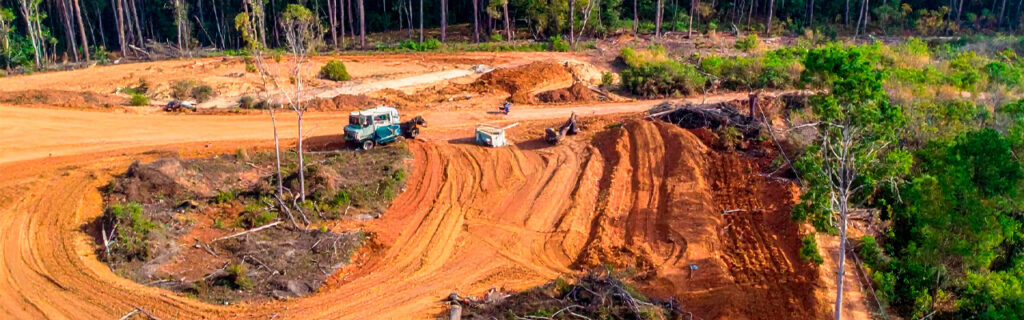
The practical difference between selective clearing and comprehensive clearing is most apparent in the outcome each produces. Comprehensive clearing produces a clean, open site where the full land area is available for development or management without the constraints that preserved vegetation would impose. Selective clearing produces an improved site where the specific vegetation that was limiting function has been removed, the specific vegetation that was providing character and value has been preserved, and the combination of removed and retained vegetation creates a site condition that is simultaneously more functional and more characterful than either the pre-clearing overgrown condition or the post-comprehensive-clearing cleared condition would have been.
The equipment and methods appropriate for selective clearing must match the precision that preserving specific vegetation within a treatment area requires. Forestry mulching equipment operated by experienced operators provides the combination of processing capability for dense woody invasive vegetation and directional control that allows the operator to process invasive species while navigating around preserved trees, native shrubs, and natural features that should remain. This combination of processing power and precision is what makes forestry mulching the most appropriate clearing method for most selective clearing applications, replacing the choices between comprehensive clearing that removes everything efficiently and hand-cutting that is precise but impractically slow for larger areas with a method that is both efficient and adequately precise for selective clearing objectives.
When Selective Clearing Is the Right Approach
Selective clearing is not the right approach for every clearing application on Cherokee County rural and residential properties, and understanding which situations call for it versus which genuinely require comprehensive clearing or a different approach helps property owners choose the method that best serves each specific improvement objective.
Wooded Sections With Invasive Understory Domination
The application where selective clearing produces the most transformative and most clearly beneficial outcome is the wooded section where invasive species, primarily Chinese privet on most Cherokee County rural properties, have dominated the understory to the point where the section is functionally impenetrable and ecologically degraded despite containing mature native canopy trees that have significant timber, habitat, and landscape value. The privet is limiting the section’s usability and ecological productivity. The mature canopy above the privet is providing the value that makes the section worth investing in rather than simply abandoning. Selective clearing that removes the privet while preserving the canopy converts the section from a dense, dark, inaccessible thicket into the open, navigable, ecologically productive woodland that the canopy trees always had the potential to create but that the privet domination was preventing.
The outcome that selective clearing produces in these sections, open woodland with mature canopy and native ground cover recovery beginning, is the outcome that most North Georgia rural property owners describe when they explain what they want their wooded sections to look and function like. It is not achievable through comprehensive clearing that would remove both the privet and the canopy trees, and it is not achievable without any clearing that leaves the privet dominating the understory. It is specifically achievable through the selective approach that treats the privet as the problem and the canopy as the asset worth preserving.
Boundary Zones Adjacent to Roads and Neighboring Properties
Boundary zones along roads and adjacent to neighboring properties where wooded character, privacy screening, and visual buffering provide value that open cleared ground would eliminate are applications where selective clearing that removes invasive species from within the boundary zone while preserving the native trees and shrubs that provide the screening and visual buffering serves both the management improvement and the privacy and character preservation objectives that comprehensive clearing would sacrifice. A roadside boundary that has native dogwood, native viburnums, and mature oaks within a dense privet understory can have the privet removed while the native species are preserved, improving the boundary’s ecological quality and the property owner’s ability to access and maintain the boundary without eliminating the vegetated screening that makes the roadside boundary a genuine privacy and character asset rather than an open edge visible from the road in all directions.
Food Plot Margins and Habitat Edge Management
Food plot margin management that maintains the intended plot size against invasive encroachment from the surrounding woodland edge while preserving the mature native trees and mast-producing shrubs that provide the habitat edge value immediately adjacent to the food plot is a selective clearing application where the distinction between what to remove and what to preserve is ecologically and functionally significant. Privet advancing from the woodland edge into the food plot margin should be removed to restore the plot’s intended size and sunlight access. The native oaks, hickories, and native shrubs at the woodland edge immediately adjacent to the cleared plot margin should be preserved because their mast and fruit production, their shade and cover provision, and their ecological role in the habitat edge that food plots depend on for wildlife attraction are all assets that the plot’s management objectives support rather than conflict with.
Areas Where Comprehensive Clearing Is Actually Required
Selective clearing is not the right approach when the intended improvement requires complete vegetation removal from the site to function correctly. Building site preparation that requires the removal of all organic material including root systems from the building footprint for structural subgrade preparation cannot be accomplished through selective clearing that leaves roots in the ground. Full-sun food plot development that requires complete canopy removal for adequate light at ground level throughout the plot area cannot be accomplished through selective clearing that preserves canopy trees within the plot footprint. Pasture development from wooded land that requires both canopy removal and root system removal for seedbed preparation and consistent mowing access cannot use the selective approach that leaves preserved trees within the managed area. These applications genuinely require comprehensive clearing, and applying a selective approach to them would produce functionally inadequate outcomes that would then require additional comprehensive treatment to correct.
How to Identify What Should Be Preserved Before Selective Clearing Begins
The preservation inventory that guides a selective clearing project must be developed before any equipment begins operating in the treatment area, because decisions made during active clearing under equipment operating conditions are less deliberate and less thoroughly considered than decisions made during a systematic pre-clearing property walk with specific attention to identifying every element that should be preserved. This pre-clearing preservation walk should cover the full treatment area and specifically evaluate each tree, shrub, and natural feature within the area against the preservation criteria that the project’s objectives support.
Native Canopy Trees of Significant Size and Quality
Every native canopy tree of significant diameter and structural quality within the treatment area is a preservation candidate in selective clearing applications where the canopy is an asset rather than an obstacle. Walk through the treatment area looking upward through the invasive understory to identify canopy trees above that would be worth preserving even when seeing them requires navigating through the invasive growth that the clearing will remove. Note their species, their approximate diameter, and their canopy quality as preservation candidates before any equipment begins work that could inadvertently remove them if they are not specifically identified and marked for preservation.
Native Understory Species With Ecological Value
Native understory species including flowering dogwood, native azalea, serviceberry, native viburnums, native hollies, and other species with flowering, fruiting, or structural habitat value should be specifically identified during the preservation walk and marked for preservation before clearing begins. These native species are often present in low numbers within invasive-dominated treatment areas because invasive competition has suppressed their populations, and their preservation during clearing releases them to recover and expand into the cleared understory space in ways that improve the treated area’s ecological quality and visual interest without requiring additional planting investment. The specific identification of each native species worth preserving within the treatment area is the planning step that ensures the selective clearing specifically avoids them rather than inadvertently processing them along with the invasive species they are growing among.
Natural Features That Contribute to Property Character
Rock outcrops, distinctive terrain features, natural water features, and any physical features of the landscape that contribute to the property’s distinctive character should be specifically noted during the preservation walk and protected from equipment contact during the clearing operation. These features are often partially concealed by the invasive vegetation that selective clearing will remove, and their exposure after clearing adds to the transformation that selective clearing produces by revealing natural character features that the invasive growth was concealing rather than simply removing the vegetation that was limiting function.
How to Mark Preservation Targets Before Equipment Begins Work
Physical marking of preservation targets before equipment arrives is the practice that most reliably translates the preservation intent from planning into execution results. The equipment operator working efficiently through dense vegetation has no way to know which specific trees and shrubs should be preserved based on the property owner’s values and objectives unless those specific elements are physically marked in a way that is clearly visible during equipment operation. Verbal communication of preservation intent, even when detailed and specific, consistently produces less reliable preservation outcomes than the physical marking that gives the operator unambiguous field guidance at each specific preservation target during active clearing work.
The most effective physical marking for selective clearing preservation uses brightly colored flagging tape in a consistent color dedicated exclusively to preservation marking, tied at approximately five to six feet of height on every trunk and stem that should be preserved during the clearing operation. This height places the marking in the range of visibility that equipment operators in their cab can observe while working, above the level where ground-level growth would obscure the marking and below the level where only the canopy above the working zone is visible. Every specific preservation target, every native canopy tree, every identified native understory species, and every natural feature that should not be contacted by clearing equipment should receive flagging before the equipment arrives, without assuming that any specific element will be recognized and avoided as an obvious preservation candidate without marking.
The Role of the Pre-Work Walkthrough With the Operator
A walkthrough of the treatment area with the clearing operator before any equipment begins work adds the shared contextual understanding that physical marking alone cannot provide. During this walkthrough, the property owner can explain what the selective clearing is intended to accomplish, point out the specific preservation targets that are marked and explain why each is worth preserving, identify any sections of the treatment area where the treatment intensity should differ from the standard approach, and ask the operator about any operational considerations that the property owner should be aware of before clearing begins. The operator can ask clarifying questions about specific situations where marking and clearing objectives create ambiguity, can identify any preservation targets that appear to be in positions where equipment access to adjacent invasive vegetation would be challenging without risking contact with the preserved element, and can confirm that both parties share the same understanding of what the clearing should accomplish and what it should leave intact.
This walkthrough investment before clearing begins consistently produces better selective clearing outcomes than clearing conducted without it, because it converts the property owner’s preservation priorities from intentions that the property owner holds into shared understanding that guides the operator’s specific decisions during active clearing work. The time required for the walkthrough is modest relative to the value of the preservation outcomes it produces and the irreversibility of the losses that insufficient communication about preservation priorities creates when clearing removes what the property owner intended to keep.
How Selective Clearing Changes Property Character and Long-Term Value
The transformation that selective clearing produces on a North Georgia rural property that has been losing ground to invasive species dominance is among the most dramatic and most immediately satisfying outcomes available from any single improvement investment. The property section that was impenetrable, ecologically degraded, and effectively absent from the property’s usable area becomes immediately accessible, visually open, and ecologically active from the moment the clearing is complete. The mature canopy that was concealed above the privet thicket becomes visible and appreciated from below for the first time in years. The terrain features and natural character that the invasive growth was obscuring become accessible for observation and enjoyment. The wildlife that was avoiding the invasive-dominated section for the lack of foraging access and movement routes begins using it for mast foraging, travel, and brood-rearing as the open woodland floor that clearing created provides the conditions that wildlife use of wooded sections requires.
These transformative outcomes also affect the property’s long-term market value in ways that selective clearing supports more effectively than comprehensive clearing would. The mature native canopy that selective clearing preserved is the feature that most distinguishes a valuable North Georgia rural property from developed land that has lost its natural character, and buyers who specifically seek the mature woodland character that the region’s residential and rural land market values pay premiums for properties that retain that character through thoughtful management rather than sacrificing it for management convenience. A property with open, accessible, selectively managed woodland that retains its mature canopy presents the combination of functional usability and natural character that commands the best prices in the Cherokee County rural land market, consistently outperforming both unmanaged properties where invasive dominance has made the land functionally unusable and comprehensively cleared properties where management has been achieved at the cost of the natural character that motivated the land’s acquisition.
Frequently Asked Questions
How do I determine whether a specific tree within a proposed clearing area should be preserved or removed?
The determination of whether a specific tree within a selective clearing area should be preserved or removed should be based on three questions evaluated in sequence. First, does the tree’s species identity make it a preservation candidate? Native hardwoods, mast-producing species, and native understory trees with ecological and habitat value are preservation candidates. Invasive non-native species and volunteer trees in positions that directly conflict with the clearing’s functional objectives are removal candidates regardless of their individual size or appearance. Second, does the tree’s position within the clearing area allow preservation without compromising the clearing’s functional objectives? A native oak in the center of a food plot footprint that requires full sun for planting is in a position where its preservation prevents the clearing from achieving its objective, making removal necessary despite its species preservation candidacy. The same native oak at the margin of the food plot where it can be preserved without shading the planting interior is a preservation candidate whose position allows the clearing’s objective to be achieved while the tree is retained. Third, does the individual tree’s condition and health make it worth preserving in its specific position? A structurally compromised tree near a high-use area whose hazard condition warrants removal regardless of its species identity and position may be a removal candidate for safety reasons despite otherwise qualifying for preservation on species and position criteria.
How does selective clearing affect the spread of invasive species within the cleared area?
Selective clearing that removes invasive above-ground growth while leaving root systems intact does not eliminate invasive species from the treated area. It removes the current above-ground expression of those species while the intact root systems produce resprout growth in the weeks following mechanical treatment. Without follow-up herbicide treatment of resprout growth that depletes root energy reserves, the treated area will return to invasive density within one to two growing seasons as the intact root systems regenerate the same above-ground coverage that the clearing removed. Selective clearing is therefore most effective for long-term invasive species reduction when it is combined with targeted herbicide treatment of resprout growth, which depletes root energy reserves progressively over successive combined treatment seasons and reduces the vigor and density of resprout growth in each subsequent season. This combined mechanical and chemical management approach is the treatment program that converts selective clearing from temporary clearing to progressive long-term reduction of invasive species pressure on the cleared area.
Can selective clearing be conducted on steep slopes where full clearing would create erosion risk?
Yes, and selective clearing on steep slopes is specifically appropriate as an alternative to comprehensive clearing that would create erosion risk by removing the root systems that provide slope stabilization along with the above-ground vegetation that the clearing objectives require to be removed. Selective clearing that removes invasive above-ground growth while leaving the root systems of both invasive and native species in the slope maintains the root network that provides slope stability, protects the topsoil from the raindrop impact and surface flow erosion that the cleared slope would experience without root and surface cover protection, and allows the natural and managed vegetation recovery that selective clearing’s preserved native species and intact native seed bank provide to progressively develop the slope cover that replaces the invasive dominance without the erosion vulnerability that comprehensive clearing on steep slopes consistently creates in the interval before adequate vegetative cover can be reestablished from seed or transplanting.
Is there a time of year when selective clearing is most effective for both clearing quality and preservation outcomes on North Georgia properties?
Late fall and winter is the most effective window for selective clearing on Cherokee County rural properties for both clearing quality and preservation outcomes. From a clearing quality standpoint, dormant vegetation has lower above-ground biomass than summer vegetation, allowing the clearing equipment to process more area per operating hour at lower cost than summer treatment at peak growing season density. From a preservation outcome standpoint, leafless deciduous trees during the dormant season allow the operator to see through the invasive understory to the canopy trees above that should be preserved, making preservation target identification and avoidance more accurate than summer treatment when foliage on both invasive and native species creates the visual screen that conceals the canopy structure within the treatment area. Late winter clearing also positions the treated area for the spring herbicide application timing that is most effective for invasive resprout management, capturing same-season root energy depletion from the combined mechanical and chemical treatment within a single management cycle that maximizes the long-term selective clearing investment value.
Ready to Improve Your Property While Preserving What Makes It Special?
Selective clearing that achieves meaningful functional improvement on North Georgia rural and residential properties while specifically preserving the mature native canopy, native understory species, and natural character features that define the property’s long-term value and appeal produces the outcomes that most property owners describe when they explain what they want their land to become. The open, accessible woodland that allows hunting, recreation, and management activities that the invasive dominance was preventing, while retaining the natural character that makes the land worth owning and improving, is the specific outcome that selective clearing achieves and that neither comprehensive clearing nor no management can produce. Planning that outcome deliberately before equipment begins work, through the preservation inventory, preservation marking, and pre-work walkthrough that translate preservation intent into execution results, is what determines whether the selective clearing investment produces the character-preserving functional improvement it is capable of or the inadvertent comprehensive clearing that insufficient preservation planning produces when equipment operates without adequate guidance about what to protect.
Bardin Outdoors works with property owners across Ball Ground, Canton, Cherokee County, and North Georgia on selective clearing and forestry mulching projects planned to achieve functional improvement objectives while specifically preserving the native trees, native understory species, and natural character features that make North Georgia rural properties distinctive and valuable. To learn more about how Bardin Outdoors approaches selective land clearing for character-preserving property improvement, contact us.