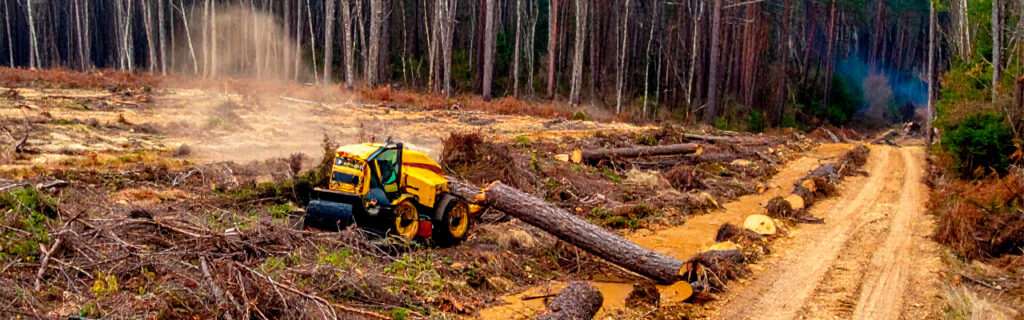
This hesitation is understandable, but it is based on a misunderstanding of what forestry mulching actually does when it is applied selectively. Forestry mulching as a selective clearing tool removes the invasive species, dense brush, and problematic vegetation that are occupying the understory without touching the canopy trees, the native plants, and the natural features that give the property its character. The result is not a cleared property. It is the same property with the same mature trees, the same canopy, and the same natural setting, but with the dense impenetrable understory replaced by open, navigable woodland that enhances the natural character rather than eliminating it. For property owners across Cherokee County, Ball Ground, and Canton who have been deferring necessary vegetation management because they fear what clearing will do to the property they value, understanding how selective mulching works and what it actually produces changes the conversation from a choice between maintaining character and addressing overgrowth to a recognition that the right approach achieves both simultaneously.
What Gives a North Georgia Property Its Natural Character
Understanding what actually produces the natural character that rural property owners value is the first step in understanding why selective mulching preserves rather than threatens it. The elements that create the sense of a mature, natural woodland property on a Cherokee County rural lot are primarily the canopy trees, the topographic features, the natural drainage corridors, and any native understory plants that have established within the property over its decades of development. These are the elements that take decades to produce and that cannot be replaced at any price once they are removed.
The invasive species that typically fill the understory of a Cherokee County property after several seasons without management, including Chinese privet, kudzu, wisteria, multiflora rose, and autumn olive, are not part of the property’s natural character. They are relatively recent colonizers whose establishment disrupted the native plant community that would otherwise occupy the understory space beneath the canopy. A privet thicket occupying the understory beneath mature oaks is not natural woodland. It is invaded woodland where a single non-native invasive species has displaced the diverse native plant community that the woodland actually supports when the invasive pressure is managed. Removing the privet does not reduce the natural character of the property. It restores the conditions that allow the natural character to express itself more fully, with accessible canopy trees, native understory plants with growing space to reestablish, and the open woodland floor that characterizes a healthy mature hardwood forest rather than the impenetrable wall of a privet monoculture.
How Selective Forestry Mulching Differs From General Clearing
Forestry mulching as a selective treatment is not the same as general land clearing, and the distinction between these approaches is what makes selective mulching appropriate for properties where natural character preservation is a primary goal. General clearing removes all vegetation within a defined boundary, producing bare or mulch-covered ground across the full treatment area. Selective mulching removes specific target vegetation, primarily invasive species and problematic growth, while preserving canopy trees, native plants, and natural features within the same treatment area.
The selectivity is achieved through the combination of operator skill and pre-work planning that defines what should be removed and what should remain before the machine begins work. Preservation targets including canopy trees, desirable native understory species, specimen trees with distinctive character, and any specific natural features the property owner wants to retain are physically marked with flagging tape or paint before the clearing operator begins. The operator then processes the target vegetation, the invasive species and unwanted growth, while navigating around the marked preservation targets with the precision that modern forestry mulching equipment operated by experienced contractors can achieve.
The result of this selective approach is a treatment area where the structural framework of the natural property, its canopy trees, its natural drainage features, its topographic character, remains intact and unchanged while the invasive species layer that was obscuring that framework has been removed. The property does not look like cleared land after selective mulching. It looks like what it always was beneath the invasive cover: mature wooded land with the open, navigable character that established hardwood forest has when invasive species are not occupying the understory.
What Selective Mulching Removes Without Changing the Property’s Character
Understanding specifically what selective mulching targets and removes, versus what it preserves, helps property owners visualize what the treated area will look like after the work is complete and evaluate whether the approach aligns with their goals for the property’s appearance and function.
Invasive Understory Species
Chinese privet is the most consistently dominant invasive species in Cherokee County wooded understory sections, and its removal through selective mulching produces some of the most dramatic character-enhancing transformations available on rural properties in the region. A section of woods that appears from the outside as an impenetrable green wall is revealed after selective privet removal to contain the mature hardwood canopy that was visible from above but invisible from the ground through the privet screen. The same canopy that defined the property’s wooded character from a distance becomes visible and appreciated from within the property once the privet that was obscuring it at ground level has been removed. The woods do not change. The access and visibility of what the woods actually contain change dramatically.
Kudzu, wisteria, and other aggressive climbing vines that overtop and damage canopy trees are removal targets that actually protect the preserved canopy trees rather than threatening them. Kudzu smothering a tree’s canopy with its broad leaves prevents that tree from producing adequate photosynthesis and progressively weakens the tree over multiple seasons. Removing the kudzu through selective mulching relieves the photosynthetic stress on the canopy tree, extending its productive life and preserving the canopy character the property owner values.
Non-Native Volunteer Trees and Nuisance Woody Growth
Volunteer trees of non-native or invasive species including tree-of-heaven, mimosa, and autumn olive that have established in the understory can be selectively removed through mulching without affecting the desirable canopy species alongside which they have grown. These volunteer invasive trees do not contribute to the natural woodland character the property owner values and in some cases actively undermine it by competing with and displacing native species of greater ecological and aesthetic value. Their selective removal simplifies the species composition of the understory toward the native-dominated condition that represents the property’s genuine natural character rather than the invasive-colonized condition that years of insufficient management have produced.
Accumulated Brush and Debris
Brush accumulations from storm debris, self-thinning of the woodland, and the progressive accumulation of fallen material over seasons without management can be processed through selective mulching and converted to the ground-level mulch layer that decomposes into organic matter benefiting the woodland soil. Removing this accumulated brush improves the navigability and visual openness of the woodland floor without affecting any living woody vegetation that has been designated for preservation, producing a cleaner, more accessible woodland floor character that most property owners associate with well-managed mature timber land.
What Selective Mulching Preserves That Defines the Property’s Character
The preservation component of selective mulching is as important as the removal component, and the decisions about what to preserve determine the character of the post-treatment property as much as the decisions about what to remove.
- Mature canopy hardwoods of all species: Every mature hardwood in the treatment area that the property owner values is marked and preserved regardless of its position relative to the invasive species being removed. The operator navigates around marked canopy trees with the precision needed to process the surrounding invasive growth without causing damage to the preserved tree’s trunk, root flare, or lower branch structure.
- Native understory plants: Native azalea, native viburnum, native ferns, native wildflowers, and other native understory species that have managed to persist within the invasive-dominated understory can be marked for preservation and left standing when the surrounding invasive species are removed. Their survival after invasive removal and the growing space that removal provides allows them to expand and fill the understory with the native plant community that the woodland supports naturally, progressively improving the ecological quality of the understory over the seasons following the initial treatment.
- Young native trees representing future canopy: Young oaks, hickories, tulip poplars, and other native species establishing themselves in the understory represent the next generation of the property’s canopy and should be marked and preserved during selective mulching of the surrounding invasive growth. Their liberation from invasive competition through selective removal of the surrounding species accelerates their growth toward the canopy position they will eventually occupy, improving the long-term canopy succession of the property’s woodland.
- Specimen trees with distinctive character: Trees of any species that have distinctive size, form, or individual character that the property owner values are preservation targets regardless of their species or their position within the treatment area. A large native dogwood in its prime flowering condition, a particularly large and well-formed white oak, or any other individual tree that contributes something the property owner specifically appreciates about the property’s character receives its own flagging and specific preservation attention during the clearing operation.
- Natural topographic and drainage features: Rock outcrops, natural seeps, drainage channels, and topographic features that contribute to the property’s natural character are not disturbed by selective mulching that is focused on vegetation management rather than terrain alteration. These features remain intact and become more visible and more appreciable after the invasive vegetation that was obscuring them has been removed from the surrounding areas.
How the Mulch Layer Supports the Property’s Natural Recovery
The mulch layer that selective forestry mulching deposits over the treated ground as it processes invasive vegetation serves the natural recovery of the woodland in ways that make it a better outcome for character preservation than bare-ground clearing would produce in the same treatment area. The mulch protects the soil from raindrop impact and surface erosion during the period between invasive species removal and native vegetation reestablishment, maintaining the soil conditions that support native plant establishment from the existing soil seed bank beneath the treatment area.
As the mulch layer decomposes over the six to eighteen months following treatment, it returns organic carbon and nutrients to the soil profile and improves the soil structure and moisture retention characteristics that support native plant establishment and growth. The woodland floor that emerges from beneath the decomposing mulch layer over subsequent seasons is progressively populated by the native species from the soil seed bank that the years of invasive dominance suppressed but did not eliminate. This natural reestablishment of native ground cover and understory plants is the biological component of character recovery that the mechanical removal of invasive species enables by creating the growing space that native species need to compete and establish.
What a Selectively Mulched Property Looks Like After Treatment
Property owners who have not seen selective forestry mulching applied to wooded understory sections sometimes expect the treated area to look bare and disturbed after the work is complete. The actual appearance is consistently different from and more natural than that expectation because the treatment preserves the canopy that gives the woodland its defining character and leaves a natural-appearing mulch layer on the forest floor rather than exposed bare soil.
Immediately after selective treatment, the treated woodland section has its full canopy intact above and a uniform layer of processed mulch on the ground below, with the preserved trees and any marked native understory plants standing within the mulched surface. The sight lines that the invasive understory was blocking are now open at ground level in every direction the canopy allows. A section of woods that felt claustrophobic and opaque at ground level through the invasive understory is revealed as the same spacious mature woodland that was visible from above the invasive layer, now accessible and enjoyable from within the property rather than only appreciable from outside looking in.
Over the following seasons, the mulch layer decomposes and native ground cover establishes from the soil seed bank beneath it, progressively replacing the uniform mulch surface with the diverse, naturalistic woodland floor that characterizes mature native hardwood woodland in North Georgia. The character of the treated section becomes progressively more naturalistic as native plants fill the ground layer that the invasive species previously occupied, producing a woodland floor that looks genuinely natural rather than artificially maintained.
How Selective Mulching Compares to Alternative Approaches for Character-Sensitive Properties
Property owners evaluating how to address understory overgrowth while preserving natural character have several alternatives to selective forestry mulching, and understanding how those alternatives compare in their character impact helps confirm whether selective mulching is the right tool for their specific goals or whether a different approach would better serve their objectives.
Manual clearing using hand tools and chainsaws achieves selective removal with precise control but is practical only for small areas and does not scale to the understory clearing scope that most overgrown Cherokee County properties require to make a meaningful functional improvement. It is appropriate for fine-detail preservation work in small, sensitive areas but not as the primary management tool for wooded sections covering meaningful acreage.
Herbicide-only treatment of invasive understory without mechanical clearing kills the invasive vegetation but leaves the standing dead material in place until it falls, which can take years and produces an intermediate condition of standing dead invasive material that is neither natural in appearance nor functional from an access and visibility standpoint. Herbicide treatment is most effective as a follow-up to mechanical clearing rather than as a standalone primary treatment for dense established invasive populations, and selective mulching combined with subsequent herbicide treatment of resprouts consistently produces better long-term character and functional outcomes than either approach used alone.
Full clearing that removes everything in the treatment area, including canopy trees and native plants, eliminates the character that the property owner wanted to preserve and is appropriate only for areas where the intended post-clearing use requires complete vegetation removal for functional reasons. It is not an appropriate approach for character-sensitive woodland sections where the intended outcome is open, navigable woodland rather than cleared open ground.
Frequently Asked Questions
How do I communicate what I want preserved to the mulching operator before work begins?
Physical marking of every tree and plant you want preserved is the most reliable communication method available. Walking the treatment area with the operator before work begins and confirming each marked preservation target in person adds the shared direct understanding that reduces the risk of any ambiguity about what was marked and why. For areas with a consistent pattern of preservation, such as preserving every tree above a specific trunk diameter threshold, describing that pattern clearly in pre-work conversation and confirming that the operator understands and will apply it consistently reduces the marking burden while still communicating the preservation criteria accurately. For specific individual trees or plants of particular importance, physical marking with bright flagging tape at a height visible from the equipment cab is the most reliable individual target communication regardless of any conversational description.
Will selective mulching damage the root systems of preserved canopy trees?
Forestry mulching equipment operated carefully around preserved trees processes vegetation at the soil surface level without significant soil disturbance beyond the mulch layer it deposits, which means root system impact on preserved trees is minimal when the operator maintains adequate clearance from the trunk and root flare. The primary risk to preserved tree root systems from mulching equipment is compaction if the machine travels repeatedly across the root zone at close range, which experienced operators managing preservation-sensitive work avoid by planning their machine paths to minimize root zone traffic. The mulch layer deposited by the machine over the root zone actually benefits the root environment by moderating soil moisture and temperature and by contributing organic matter as it decomposes, which is a positive outcome for the long-term health of preserved canopy trees rather than a concern.
How long does it take for the treated area to look naturally established rather than freshly cleared?
The transition from freshly treated to naturally established appearance progresses most noticeably through the first and second growing seasons following the initial treatment. By the end of the first growing season after spring or summer treatment, native ground cover species from the soil seed bank will have begun establishing across much of the mulch surface and the mulch layer will have begun decomposing into a less visually uniform surface. By the end of the second growing season, the ground layer in most treated areas will show meaningful native plant coverage that integrates with the preserved canopy and native understory plants to produce an appearance that feels genuinely naturalistic rather than recently managed. The rate of this transition depends on the existing native seed bank in the soil, the moisture and light conditions of the specific treatment area, and whether any supplemental seeding of native species was done to accelerate establishment in areas where the seed bank alone may not provide adequate coverage quickly.
Can selective mulching be used to improve visibility in specific areas without treating the full wooded section?
Yes, and targeted selective mulching of specific view corridors, stand locations, or access paths within a larger wooded section is one of the most cost-effective applications of the tool for property owners who want specific functional improvements in the wooded character of their property without committing to full-section treatment. A specific view corridor from a residence toward a natural feature on the property, a defined zone around a hunting stand location to improve sight lines, or a specific trail connection through a wooded section can each be addressed through targeted selective mulching that achieves the functional improvement in that specific location without disturbing the surrounding wooded character that the property owner values and wants to maintain.
Does selective mulching require follow-up maintenance to keep the treated area from returning to its previous overgrown condition?
Yes. The invasive species root systems that remain in the soil after mechanical clearing of their above-ground growth will produce resprout growth within four to eight weeks under active growing conditions, and without follow-up management those resprouts will return the treated area to its pre-clearing invasive density within one to two growing seasons. Targeted herbicide treatment of resprout stems when they reach six to twelve inches of height in the weeks following mechanical clearing is the most efficient follow-up management action available, and consistent resprout treatment across successive growing seasons progressively depletes root energy reserves in ways that reduce resprout vigor over time. Without this follow-up, the investment in selective clearing must be repeated at comparable intensity each cycle without accumulating the progressive root energy depletion that makes each successive cycle lighter than the last.
Ready to Improve Your Property Without Changing What You Love About It?
The natural character that makes a Cherokee County rural property worth owning, its mature canopy, its wooded depth, its sense of a place that has been developing for decades, is preserved and often enhanced rather than threatened by selective forestry mulching that removes the invasive species and problematic growth without touching the trees and features that define it. The overgrowth that has been accumulating in the understory is not part of the natural character. It is what is obscuring it. Removing it through selective mulching reveals the property’s actual character more fully than it has been visible since the invasive species established themselves in the understory years ago.
Bardin Outdoors works with property owners across Ball Ground, Canton, Cherokee County, and North Georgia on selective forestry mulching projects that address overgrowth while preserving the mature trees, native plants, and natural character that make each property distinctive. To learn more about how Bardin Outdoors can help your property manage vegetation while preserving what you value most about it, contact us.