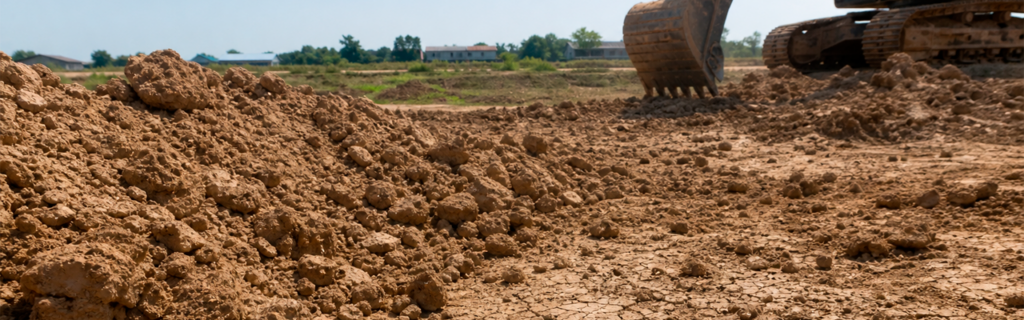
For property owners in Ball Ground, Canton, Cherokee County, and North Georgia, understanding how summer heat affects soil conditions can help you plan projects more effectively and avoid delays.
How Does Summer Heat Change Soil Conditions?
Summer heat causes moisture to evaporate from the soil, leading to drier and more compacted ground.As the soil loses moisture, it becomes harder to break apart and may require more effort and specialized equipment during excavation.
Key Effects of Dry and Compacted Soil
1. Increased Digging Difficulty
Dry soil becomes dense and resistant, making it harder to dig and move.This can slow down excavation and increase the time required to complete a project.
2. Reduced Flexibility in Soil Movement
Moist soil is easier to shape and grade, while dry soil tends to break apart unevenly.This can affect the precision of grading work and surface finishing.
3. Increased Dust and Surface Instability
Dry conditions can create dust during excavation, which may reduce visibility and require additional management.Loose dry particles can also shift more easily before proper compaction is completed.
4. Impact on Compaction and Finishing
Proper compaction often requires some moisture in the soil.Extremely dry conditions may require adjustments to achieve a stable and durable finished surface.
How Contractors Adapt to Summer Conditions
Professional crews adjust their approach based on soil conditions to maintain efficiency and quality.This may include modifying equipment use, adjusting work timing, or preparing the soil differently before grading and excavation begins.
When Summer Is Still a Good Time for Excavation
Despite the challenges, summer can still be a productive season for many projects.Dry conditions can reduce issues with mud, site access, and water-related delays compared to wetter times of the year.
Tips for Property Owners Planning Summer Projects
- Plan ahead to avoid peak heat delays
- Ensure clear access for equipment
- Discuss soil conditions with your contractor
- Be flexible with scheduling if conditions change
- Prepare for dust management if needed
Frequently Asked Questions
Is it harder to excavate in summer?
Yes. Dry, compacted soil can be more difficult to dig compared to moist conditions.Does dry soil affect grading quality?
It can. Dry soil may require adjustments to achieve smooth and stable grading results.Can excavation still be done in hot weather?
Yes. With proper planning and techniques, projects can still be completed effectively.Why is moisture important for soil work?
Moisture helps soil hold together and allows for better compaction and shaping.Planning a Summer Excavation Project?
Understanding seasonal soil conditions can help you plan your project more effectively and avoid unnecessary delays.To learn more about how Bardin Outdoors can help your property with excavation and grading during summer conditions, contact us.