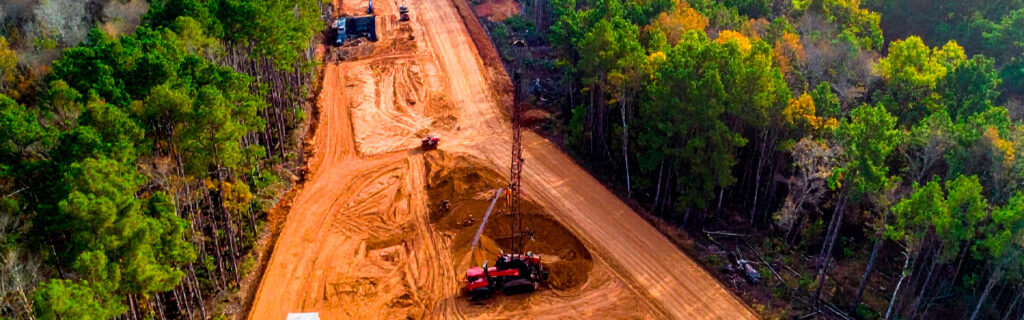
For property owners across Cherokee County, Ball Ground, and Canton evaluating whether clearing investment makes sense for their specific situation, understanding the full range of ways that clearing affects property value and usability, from the immediate functional improvements to the long-term structural benefits that enable other improvements, gives the complete picture that a decision about clearing deserves. The return on a clearing investment is not limited to what the property looks like after the work is done. It extends through every subsequent season of use that clearing enables, every improvement project that the cleared site makes possible, and every aspect of the property’s function that vegetation was limiting before the clearing addressed it.
How Clearing Directly Improves Access
Access to and within a property determines what of the owned land is practically usable on any given day. Vegetation that narrows driveways below the width that contractor and delivery vehicles need, that reduces trail corridors below the passable width for the equipment and vehicles that need to use them, and that limits interior access to walking or worse creates a gap between owned acreage and usable acreage that clears directly and measurably when vegetation is removed.
The sections of a large rural property that receive consistent management attention are almost always the sections most easily reached from the primary entrance. Sections requiring navigation of narrowed driveways, soft crossings, or overgrown corridors receive proportionally less attention and less management regardless of what those sections contain. Clearing that restores adequate driveway width, opens interior corridors, and establishes connections to previously unreachable property sections converts theoretical acreage into functional acreage, which is the practical form of value that a property owner experiences as access improvement every time they use the property rather than only during the clearing project itself.
For properties with planned improvement projects including building construction, drainage work, or road development, clearing that enables equipment access is the prerequisite investment that makes those subsequent projects possible. A building pad cannot be graded by equipment that cannot reach the building site. A drainage correction cannot be executed by equipment that cannot navigate to the drainage problem location. Clearing that establishes equipment access is not simply removing vegetation for appearance. It is enabling the full range of improvements that depend on equipment being able to reach their intended work areas.
How Clearing Improves Visibility Across the Property
Visibility is a dimension of property value that owners of heavily wooded or overgrown properties often underestimate until clearing reveals what the property actually contains beneath its vegetation. Dense understory growth, overgrown fence lines, and vegetation-obscured terrain features all limit what a property owner can observe from any position on the property, which limits their ability to know what their land contains, to monitor its condition, and to make informed decisions about its management.
Clearing that opens wooded understory sections reveals the mature canopy that the understory was obscuring, the natural topographic features that vegetation was hiding, and the spatial relationships between different sections of the property that were invisible through dense growth. Landowners who have had understory clearing done on sections of their property consistently describe discovering features they did not know existed within their own ownership, including natural drainage features, notable individual trees, topographic prominences, and rock formations that were completely concealed beneath the vegetation layer before clearing exposed them.
For hunting properties specifically, visibility improvement through land clearing of understory growth beneath preserved canopy timber is one of the most direct and most measurable value-adding improvements available. The sight lines needed for productive hunting from established stand positions depend on visibility across meaningful distances through the wooded sections of the property, and invasive understory growth that limits sight lines to a few feet converts potentially productive hunting areas into sections where wildlife movement cannot be observed regardless of how good the habitat conditions are above the understory level where the obstruction is occurring.
How Clearing Improves the Functionality of Specific Property Features
The functional value of specific property features including food plots, fence lines, trails, and open areas depends on those features being maintained at a condition that serves their intended use. Vegetation encroachment that progressively limits each feature’s functional condition reduces its productive value in direct proportion to how far the condition has been allowed to deteriorate from the state that makes the feature work as intended.
Food Plots and Open Areas
Food plots that have contracted from their intended size as surrounding vegetation has advanced into their margins are producing less than their potential because both their physical area and the sunlight reaching their interior have been reduced by the encroachment. Clearing that restores food plot margins to their intended extent restores both the physical area available for planting and the sunlight access that productive food plot species require, improving the plot’s yield and wildlife attraction value in direct proportion to how fully the clearing restores the plot’s intended condition. This is not appearance improvement. It is functional improvement that produces measurable results in what the food plot delivers through each subsequent season after the clearing restores its productive capacity.
Fence Lines and Property Boundaries
Fence lines buried in overgrowth cannot be inspected, cannot be maintained, and are experiencing ongoing physical damage from the vegetation growing through and over their structure that will require repair proportional to how long the vegetation has been allowed to integrate with the fence before clearing addresses it. Clearing that restores fence line corridors to accessible, inspectable condition converts fence infrastructure from a maintenance liability into a functional boundary feature, prevents the damage accumulation that deferred clearing allows to develop, and makes the ongoing fence maintenance that keeps the fence functional across its service life practical rather than requiring extraordinary effort before each inspection can even begin.
Trail Networks and Interior Connections
Trails that have been reclaimed by overgrowth to the point where they cannot be walked or ridden without fighting through vegetation at every step are not delivering the recreational access and management utility they were established to provide. Clearing that restores trail corridors to their intended passable width converts them back into functional connections that make the interior sections of the property they serve practically accessible rather than nominally so. The value this delivers is measured in every subsequent use of those trails, in every management activity that the restored access enables, and in every season of property enjoyment that interior access makes possible for the property owner and their guests.
How Clearing Enables Future Improvements
The most significant long-term value that clearing creates on many properties is not what it delivers directly but what it enables subsequently. Cleared, accessible land that can support equipment access, that has had its terrain and drainage conditions revealed for design purposes, and that has been prepared for the specific requirements of subsequent improvement phases is the prerequisite for every outdoor improvement project that will follow the clearing.
A building site cannot be graded, excavated, and prepared for construction while vegetation and root systems occupy the footprint and access corridor. A driveway cannot be crowned and graveled over a vegetated subgrade that has not been stripped and prepared for the drainage base that proper driveway construction requires. A drainage swale cannot be positioned accurately on terrain that clearing has not yet exposed for the design assessment that accurate swale positioning requires. In each case, clearing is not the improvement itself but the preparation that makes the improvement possible, and the value it delivers extends through every subsequent improvement project that the clearing enabled at a cost that would have been substantially higher or entirely impractical without prior clearing.
For properties with planned multi-phase improvement programs, clearing is the investment that initiates the program and whose quality affects every subsequent phase. Clearing done with the full program context in mind, with appropriate method selection for what each cleared area will eventually become, with correct debris management that leaves the site in condition for subsequent work, and with adequate erosion control that protects the cleared site through the interval before the next project phase proceeds, produces a cleared property that subsequent improvement projects can build on directly rather than one that requires additional preparation before those projects can begin in earnest.
How Clearing Affects Drainage and Reduces Ongoing Maintenance
Vegetation that has accumulated in drainage corridors, along ditches, and across drainage swales degrades the drainage function of those features by reducing their effective capacity and in some cases by redirecting drainage patterns that the features were designed to manage. Clearing that restores drainage corridor capacity, removes vegetation accumulation from drainage infrastructure, and opens the drainage pathways that overgrowth has progressively restricted improves drainage function in ways that reduce the chronic wet conditions, erosion, and infrastructure damage that inadequate drainage generates continuously without correction.
The reduced ongoing maintenance that results from clearing-restored drainage function is a form of value that compounds across every subsequent season. Driveways that drain correctly because clearing has restored the ditch capacity alongside them require less gravel to replace material that drainage failures would otherwise displace. Fence lines cleared of vegetation are not accumulating the structural damage that vegetation integration was causing, reducing the fence repair costs that continuing vegetation encroachment would have generated. Food plots restored to their intended size are not requiring replanting of the marginal areas that encroaching vegetation was progressively eliminating from productive use. Each of these maintenance reductions is a direct financial return on the clearing investment that produced it, measured not in a single event but across the seasons of reduced maintenance cost that the clearing enables.
How Clearing Affects Market Value for Rural Properties
Rural property buyers in Cherokee County evaluate properties on what they can practically do with them, not on what the survey plat describes as the total acreage. A property with fifty acres of wooded and overgrown land where forty of those acres are inaccessible, invisible, and functionally unusable will be evaluated by buyers as a property with roughly ten accessible acres and forty acres of theoretical ownership rather than as a property with fifty productive acres. Clearing that converts the inaccessible forty acres into accessible, functional land with established trail networks, visible timber, and confirmed drainage conditions changes the buyer’s practical assessment of the property in ways that directly affect what they will pay for it.
Properties that show buyers a well-maintained primary driveway, functional interior road networks connecting the major features, cleared and productive food plots, accessible and visible timber sections, and maintained fence lines present the full acreage as productive land rather than theoretical ownership. Buyers can see, walk, and evaluate every section of the property during a showing, rather than being told about back sections they cannot reach and asked to take their productive value on faith. This difference in buyer experience translates directly into buyer confidence and willingness to pay at the level that the property’s actual characteristics support rather than at a discount for the uncertainty that inaccessibility would otherwise create.
What Types of Clearing Deliver the Most Value
Not all clearing delivers value with equal efficiency. Clearing that addresses the specific conditions limiting a property’s access, visibility, functionality, or improvement potential delivers its return in the form of those limitations being resolved. Clearing done without regard for those specific conditions may remove vegetation without addressing the actual barriers to the value improvement the property owner was seeking.
Understory clearing beneath preserved canopy timber through forestry mulching delivers high value on wooded properties where the mature canopy is a primary asset and the invasive understory is the limiting factor for access and usability. This approach preserves what the property owner values while removing what is limiting the property’s function, producing a more valuable result than full clearing that would remove both the valued canopy and the limiting understory together.
Corridor clearing that establishes specific trail networks and access connections through wooded sections delivers high value on properties where the interior sections are the primary attraction and where access to them is the limiting factor for both use and management. This targeted approach creates access to specific high-value destinations within the property without requiring full clearing of the wooded sections through which the corridors pass, achieving the access improvement at lower cost and with lower impact to the wooded character than full clearing would produce.
Full clearing that converts wooded sections to open use areas delivers value where the intended use of the cleared area requires the full sun, open ground, and structural subgrade preparation that only complete vegetation removal and ground treatment can produce. Building sites, food plots requiring full sun, and pasture development all require this level of clearing, and attempting to achieve these outcomes through lighter clearing methods that preserve canopy or leave significant ground cover produces sites that cannot support the intended use without the additional preparation that complete clearing would have accomplished in a single operation.
Frequently Asked Questions
How do I evaluate whether a clearing investment makes financial sense for my specific property?
The most direct evaluation compares the cost of the clearing to the value of what the clearing would enable. If clearing would make a planned building site accessible and developable, the relevant comparison is between the clearing cost and the value of the building project it enables. If clearing would restore food plot productivity, the comparison is between the clearing cost and the value of the improved hunting season outcomes that restored food plot function produces. If clearing would open interior acreage to buyer evaluation during a planned property sale, the comparison is between the clearing cost and the increase in sale price that accessible, visible acreage commands compared to the discounted price that inaccessible acreage receives from buyers who cannot evaluate what it contains. Each of these comparisons typically favors the clearing investment when the full scope of what the clearing enables is included in the analysis rather than only the direct clearing outcome.
Does clearing a property reduce its privacy or natural character?
Selective clearing that removes invasive understory growth while preserving canopy trees and screening vegetation along property boundaries typically improves the navigability and usability of a property without reducing its privacy or natural character in ways the owner finds objectionable. The impenetrable invasive understory that makes a property feel closed and oppressive is not the same as the mature canopy and boundary screening that provide genuine privacy and natural character. Removing the former while preserving the latter produces a property that is simultaneously more usable and more enjoyable than one where invasive growth was allowed to conflate the desirable and undesirable vegetation into a single undifferentiated mass. Properties where privacy screening along boundaries is specifically preserved during clearing decisions typically retain their privacy characteristics while gaining the interior openness and access that selective clearing provides.
How long after clearing does a property begin delivering the value improvements that clearing was intended to produce?
Access and visibility improvements are immediate from the moment clearing is complete. Trail corridors cleared to passable width are usable the day the clearing equipment leaves. Food plot margins restored to their intended extent are available for replanting within the same season as the clearing if timing aligns with the appropriate planting window. Sight lines opened through cleared understory are functional from the moment the clearing is done. Infrastructure improvements including building sites and road bases require the subsequent project phases that clearing has enabled before they deliver their value, but clearing moves each of those subsequent phases from not-yet-possible to ready-to-schedule, which is the practical form of immediate value that clearing delivers for properties with active improvement programs.
What happens to property value if clearing is done but the cleared areas are not subsequently maintained?
North Georgia’s aggressive growing conditions mean that cleared areas without subsequent management return to overgrown conditions over one to two growing seasons as invasive species resprout from established root systems and as adjacent vegetation advances into the cleared space. Clearing that is not followed by adequate maintenance of the cleared conditions produces a temporary improvement that progressively reverts rather than a sustained improvement that delivers its value across multiple seasons. The value that clearing creates is most fully realized when the cleared conditions are maintained through the follow-up vegetation management that prevents reversion, making maintenance planning an integral part of any clearing investment decision rather than an optional afterthought that can be deferred without consequence.
Is clearing more valuable before or after other property improvements are made?
Clearing that enables other improvements is most valuable before those improvements are made because it creates the access, site conditions, and subgrade preparation that the subsequent improvements depend on. Clearing done after other improvements that depend on it have been attempted typically means those improvements were either impossible to complete correctly without the clearing that should have preceded them or were completed with workarounds that compromised their quality relative to what clearing-first would have produced. In most multi-phase improvement programs, clearing is among the first phases precisely because its output, accessible, visible, improvable land, is the prerequisite for every subsequent phase rather than a supplemental addition that can be done in any order relative to the improvements it enables.
Ready to Improve the Value and Usability of Your Property?
Land clearing improves property value and usability through access that makes the full acreage practically reachable, visibility that reveals what the property actually contains, functionality restored to specific features that overgrowth was compromising, and site preparation that makes subsequent improvement projects possible at realistic cost and quality. These improvements are measurable, durable when maintained, and compound in value across every season of subsequent use that the clearing enabled. Understanding their full scope gives property owners the complete picture for evaluating clearing as the investment it actually is rather than as an expense whose return is limited to how the property looks immediately after the work is done.
Bardin Outdoors works with homeowners and landowners across Ball Ground, Canton, Cherokee County, and North Georgia on land clearing projects planned to deliver specific access, visibility, functionality, and site preparation improvements on properties where overgrowth has been limiting what the land can provide to its owner. To learn more about how Bardin Outdoors can help your property through land clearing that improves its value and usability, contact us.