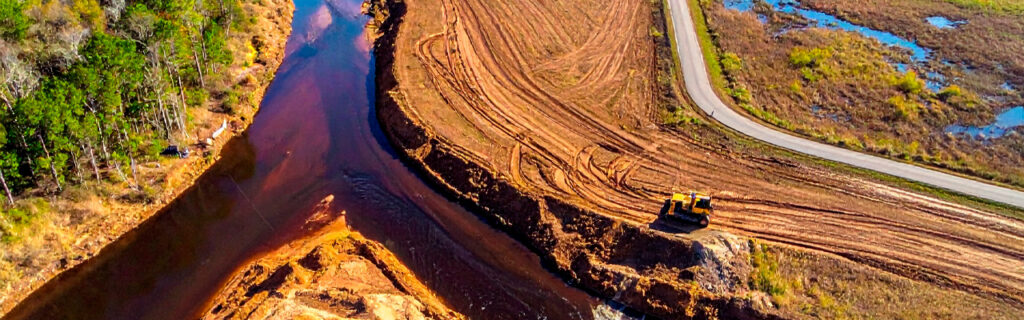
For property owners across Cherokee County, Ball Ground, and Canton managing residential and rural acreage where the trail networks, driveway systems, and interior access routes that connect the accessible public road to the managed areas, improvement sites, and remote property sections together determine how efficiently and how cost-effectively the full property can be managed and improved across the ownership period, understanding what makes access routes practical for larger North Georgia properties rather than merely passable for favorable conditions, how improving specific access route characteristics translates into specific management efficiency gains that accumulate across the recurring management events the access serves, and how to evaluate which access improvements the specific property’s management requirements most need gives the practical framework for approaching access development as the management efficiency investment it represents rather than the infrastructure cost without direct management value that treating access improvements as overhead rather than improvement consistently leads property owners to underinvest in and undersatisfaction with the management efficiency their properties actually provide.
What Distinguishes a Practical Access Route From a Merely Passable One
The distinction between a practical access route and a merely passable one is the difference between an access route that supports the management activities it serves through the full range of seasonal conditions and equipment requirements those activities generate and an access route that can be navigated under favorable conditions by vehicles smaller than the management activities occasionally require, delivering the occasional access that does not create scheduling flexibility or management efficiency for the recurring activities that adequate access would support at full efficiency through all conditions.
A practical access route provides year-round reliable bearing capacity through Cherokee County’s full seasonal moisture range, adequate corridor width for the widest equipment that any management activity the route serves will require to navigate it, overhead clearance that prevents vehicle and equipment contact at the route’s maximum traffic height, and adequate turning radius and staging space at the work areas the route serves for the equipment that performs the work at those destinations. An access route that provides any subset of these characteristics without all of them is practically limited for the management activities that the missing characteristics affect, and the practical limitation that any missing characteristic creates accumulates as a management cost addition at every management event that the limitation constrains rather than a one-time inconvenience that adequate improvement of the limiting characteristic would eliminate from every subsequent management event through the full ownership period.
Year-Round Bearing Capacity as the Most Consequential Access Characteristic
Year-round reliable bearing capacity is the most consequential single access route characteristic for management efficiency on Cherokee County larger properties because it determines whether management activities can be executed when the management schedule requires them or only when the access conditions happen to support the equipment the activities require, which on Cherokee County clay without adequate drainage design means only during the dry-season windows that clay bearing capacity is not moisture-reduced to the impassable condition that wet-season elevated moisture consistently produces on routes without drainage-adequate design.
How Cherokee County Clay Creates Seasonal Bearing Capacity Variation
Cherokee County clay’s bearing capacity is highly moisture-dependent, providing firm, stable support for heavy equipment at the low moisture content that summer dry conditions produce in well-drained profiles and providing soft, rutting, impassable conditions at the elevated moisture content that wet seasonal conditions deliver to routes without the drainage design that maintains subgrade moisture below the bearing capacity reduction threshold that clay saturation reaches. An access route that management equipment can navigate without difficulty in August may be completely impassable in November because the clay at the route’s soft sections has absorbed enough autumn rainfall to reach the moisture content that reduces its bearing capacity below what the equipment’s ground pressure requires for navigation without the ground deformation that soft saturated clay produces under load. The management activities most productively executed during fall and early winter, specifically forestry mulching with dormant-season efficiency advantages, equipment mobilization for clearing and grading projects, and herbicide application follow-up for late-season root energy depletion, are exactly the activities that wet-season access route bearing capacity failure prevents from being executed at their most productive timing on properties whose access routes have not been developed with the drainage design that maintains year-round bearing capacity through the wet seasonal conditions that fall management productivity requires.
What Drainage-Adequate Access Route Design Requires
Grading and excavation that establishes the crowned subgrade profile, functional side ditches, and correctly sized culverts at drainage crossings that together prevent elevated subgrade moisture from reaching the bearing capacity reduction threshold that saturated Cherokee County clay produces are the drainage design components that year-round bearing capacity specifically requires. The crowned subgrade profile that sheds surface water to both sides prevents surface rainfall from penetrating the subgrade before the ditch lines carry it away from the route corridor. The side ditches that carry the shed surface water away from the route corridor rather than allowing it to re-enter the subgrade from the side prevent the lateral moisture infiltration that inadequate drainage allows to elevate subgrade moisture beyond what surface runoff management alone would produce. The correctly sized culverts at drainage crossings that convey the full contributing watershed above each crossing through the culvert rather than backing water up against the route embankment prevent the saturation that inadequately sized or blocked culverts create in the route subgrade adjacent to the backed-up crossing when the drainage load exceeds the culvert’s conveyance capacity. Each of these drainage components must be present and functional for year-round bearing capacity to be maintained through Cherokee County’s wet seasons, which is why improving access routes to year-round practical standard on larger properties typically requires the clearing, grading, culvert installation, and drainage ditch development that together achieve the drainage design adequacy that any single component alone cannot provide.
Corridor Width as the Second Most Consequential Access Characteristic
Corridor width is the second most consequential access route characteristic for management efficiency because it determines which management equipment can navigate to the work areas the route serves, and the management equipment that cannot navigate a narrow corridor because its operational width exceeds the corridor’s passable width must be substituted with smaller equipment that may be less effective for the management activity or supplemented with preliminary corridor clearing at each management event before the primary management activity can proceed through the widened corridor that the preliminary clearing temporarily provides.
The practical corridor width that serves the management activities larger Cherokee County properties typically require ranges from ten to twelve feet for secondary trails serving foot, ATV, and small tractor access to sixteen to eighteen feet for primary routes that professional forestry mulching equipment, forestry mulching machines on transport trailers, and agricultural equipment must navigate. Establishing corridors at the width that the most demanding equipment any management activity they serve will require from the beginning eliminates the width revision cost at each subsequent management event that discovers the corridor is too narrow for the equipment the current management activity needs. The corridor width established at the most demanding equipment’s requirement serves all lighter equipment without excess, while the corridor width established at a lighter equipment’s requirement must be addressed at every management event when the heavier equipment appears that the narrower standard cannot accommodate.
Cherokee County’s invasive vegetation creates a specific corridor width maintenance challenge that flat terrain without invasive species pressure does not generate at the same intensity: the continuous lateral encroachment from established invasive populations on both corridor edges that each growing season’s unmanaged growth adds to the corridor’s narrowing progression. A corridor established at twelve feet of clear width gradually narrows toward the management equipment minimum as each growing season adds the lateral stem extension that the invasive root systems on both edges drive toward the corridor center from their established positions outside it. Maintaining established corridors at their designed width requires the annual or biennial mowing passes that remove the current season’s lateral extension before it advances the corridor width narrowing that unchecked extension produces across successive growing seasons of accumulation.
How Access Improvements Create Specific Management Efficiency Gains
Access improvements that achieve year-round bearing capacity and adequate corridor width create specific management efficiency gains at every management event those access improvements serve, producing the recurring cost savings and scheduling flexibility improvements that compound across the ownership period into the total management efficiency return that makes access improvement investment one of the highest-return property improvements available on larger North Georgia properties.
Eliminated Preliminary Access Preparation at Each Management Event
The most directly measurable management efficiency gain from access improvements is the elimination of the preliminary access preparation that inadequate access conditions impose at each management event before the primary management activity can begin at the work area that the preliminary preparation was needed to reach. Preliminary corridor clearing that must precede each professional forestry mulching visit because the access trail has narrowed below equipment width between management events adds the preliminary clearing time and cost to every professional management event rather than only to the initial access development event that adequate initial width would have made the only clearing investment needed for the corridor’s full service as access rather than a recurrent cost at every management event. Professional equipment mobilization costs that include the initial access preparation during each mobilization because the route is not in adequate condition for immediate equipment navigation produce mobilization costs that include this preparation premium at every visit rather than the standard mobilization cost that adequate standing access eliminates the preparation component from at every subsequent visit after the initial access development investment.
Expanded Management Scheduling Flexibility
Year-round reliable access expands the management scheduling flexibility that weather and seasonal conditions would otherwise constrain to the dry-season windows that wet-season impassable access routes provide as the only available scheduling windows for management activities requiring equipment that the wet-season route conditions prevent from reaching the work areas during the non-dry-season months when the management calendar might otherwise have productive management windows available. This scheduling flexibility is not simply a convenience benefit without management cost implications. The inability to schedule herbicide treatment follow-up for invasive resprout during the fall active-growing-season window when herbicide root energy depletion efficiency is highest because access route wet-season conditions prevent the herbicide applicator from reaching the treatment areas forces scheduling into the dormant-season window when herbicide efficiency is lower, requiring more treatment events or higher product rates to achieve equivalent root energy depletion than the fall active-growing-season treatment at adequate access would have achieved at lower cost and greater depletion efficiency. The management cost difference between fall treatment at optimal timing with year-round access and dormant-season treatment at suboptimal timing without year-round access accumulates across the multi-season combined treatment program that invasive management requires, compounding the access investment return across the treatment program’s full duration.
Planning Access Improvements for Specific Management Needs
Access improvements on larger North Georgia properties produce the most management efficiency return when they are specifically planned to serve the management activities the property requires rather than developed to general access standards without the management-activity-specific evaluation that determines what each access improvement’s performance characteristics must be to serve the specific management activities the improved access enables.
Planning access improvements for specific management needs begins with identifying every management activity the property requires and specifically identifying the access limitations that prevent each activity from being executed at full efficiency and appropriate timing. This management-activity-specific inventory reveals the access improvement priorities that produce the most significant management efficiency gains relative to their development cost, which are the improvements that eliminate access limitations preventing the highest-frequency and highest-value management activities rather than those that address limitations affecting lower-frequency or lower-value activities at equivalent development cost. A food plot system that requires three professional forestry mulching management events per year that inadequate access currently adds preliminary clearing costs to at each event is a higher-priority access improvement target than an infrequently accessed timber section that requires professional access once every several years at equivalent access improvement development cost per linear foot of improved route.
Communicating the full management activity inventory that the access improvement should serve to the contractor developing the improvement allows the contractor’s regional expertise to be applied to matching the route’s performance characteristics to the full management activity portfolio the route must support rather than the immediate management activity that prompted the access improvement discussion. A contractor who understands that the access route being developed will serve annual forestry mulching, quarterly herbicide application, seasonal food plot management equipment, and occasional grading equipment for drainage corrections can design the route to the performance standards that this complete management activity portfolio requires across its full seasonal scheduling and equipment weight range rather than the performance standards that only the immediately apparent management need would specify without the full portfolio context that the contractor’s complete management activity information provides for the complete performance specification the route requires.
Frequently Asked Questions
How do I determine which access routes on my larger property most need improvement relative to which can continue serving management activities without improvement?
Determining which access routes most need improvement requires evaluating each existing route against the management activities it serves for the specific access limitations it creates at the management scheduling and equipment requirements those activities generate, producing the route-specific limitation assessment that prioritizes improvements by the management efficiency gains they would create rather than the access route conditions in isolation from the management activities the conditions affect. Routes serving high-frequency management activities with significant equipment requirements that the current route conditions compromise at the highest-value seasonal timing warrant improvement priority over routes serving lower-frequency activities with less demanding equipment requirements that the current conditions compromise less severely. The practical assessment approach is to walk each existing route specifically under the wet-season conditions that reveal bearing capacity limitations rather than the dry-season conditions that conceal them, noting the specific positions where wet-season bearing capacity is inadequate for the management equipment the route serves, then comparing the management efficiency cost of the bearing capacity limitations at each route position against the improvement cost of correcting those limitations, identifying the improvements whose management efficiency gains exceed their development costs most significantly as the priority improvements that the available improvement budget should address first.
What is the most cost-effective approach for improving access to remote areas of a larger property that currently have no developed access?
The most cost-effective approach for improving access to remote property areas without developed access is the phased route development that establishes the minimum adequate corridor and drainage design for the initial management equipment the area requires and extends the route toward progressively more remote destinations as each route extension creates the access platform that the subsequent extension builds from rather than requiring each subsequent extension to begin from the same fixed starting points that the prior extension advanced beyond. This phased network building approach minimizes the total access development investment required to reach the most remote destinations by accumulating each season’s investment toward the network extent rather than distributing the investment across isolated routes that each begin from the road rather than from the network that prior investment has extended. The route standard for each extension should be sized for the most demanding management equipment any activity at the extended route’s destination will require rather than the immediately apparent management equipment, preventing the route upgrade cost at each extension’s destination that narrower initial standards would generate before the management equipment that the fuller management portfolio eventually requires can navigate to the work areas the extensions serve.
How should access route improvements be sequenced relative to other property improvement priorities?
Access route improvements that enable subsequent improvements to reach work areas belong in the earliest improvement positions in any multi-phase property improvement program because every subsequent improvement’s execution efficiency and cost is affected by whether adequate access exists to the work areas those subsequent improvements must reach. Deferring access development until after other improvements have been executed forces those other improvements to address their access requirements as part of their primary scope rather than as pre-existing infrastructure the access development would have provided before the primary scope needed it, which adds the access component cost to the primary scope costs that the subsequent improvements incur without pre-existing adequate access. The primary access route that enables professional equipment to reach the property should be addressed before any interior improvement that requires professional equipment access. The interior access trails that enable management equipment to reach food plots, fence lines, and managed sections should be addressed before the food plot establishment, fence line management, and vegetation management that those management equipment routes serve. This access-first sequencing ensures that each subsequent improvement benefits from the access infrastructure the earlier access development established rather than requiring each subsequent improvement to address its own access requirements as a component of its primary scope that adequate prior access development would have pre-provided.
What maintenance does an improved access route require to sustain its performance characteristics over time?
Maintaining an improved access route’s year-round bearing capacity and adequate corridor width requires the recurring maintenance activities that prevent the conditions causing performance degradation from accumulating to the restoration scale that allowing them to advance unchecked would require. Corridor width maintenance through annual or biennial mowing of the lateral invasion that invasive species drive toward the corridor from established positions on both edges prevents the progressive narrowing that unmaintained corridor edges experience and maintains the passable width the development established rather than requiring the corridor clearing restoration that allowing the narrowing to reach below minimum functional width would necessitate. Culvert inlet clearing through annual pre-wet-season removal of the debris and vegetation that accumulates at inlet openings maintains the conveyance capacity the culverts were sized to provide rather than the reduced capacity that partially blocked inlets deliver during the storm events that test the drainage design against the drainage loads the watershed delivers. Crown profile maintenance through periodic re-grading of the route surface that heavy traffic and erosion have degraded from the crowned profile that originally shed surface water to the ditch lines maintains the surface drainage that prevents subgrade saturation rather than allowing the flattened or rutted profile that degraded surface drainage creates to progressively undermine the bearing capacity that the drainage design’s surface component provides.
Ready to Improve Access on Your North Georgia Acreage?
Access improvements that achieve the year-round reliable bearing capacity, adequate corridor width, appropriate overhead clearance, and adequate turning and staging space that practical access for larger North Georgia properties requires create the management efficiency gains that accumulate with every management event those improvements serve across the full ownership period. The preliminary access preparation eliminated at each management event, the scheduling flexibility gained for management activities previously constrained to dry-season windows, and the primary management equipment enabled to reach work areas that inadequate access previously excluded from direct equipment service are each specific management efficiency returns on access investment that the recurring management events through the ownership period progressively realize rather than the one-time return that single-event improvements create at the event without the recurring return that access improvements specifically generate at every recurring management event the improved access serves throughout the property’s full management history from the access improvement through the ownership period’s end.
Bardin Outdoors works with property owners across Ball Ground, Canton, Cherokee County, and North Georgia on access route development projects that establish the drainage design, corridor width, surface quality, and management equipment clearance that year-round practical rural property access requires, converting currently inadequate access conditions into the reliable, equipment-capable access infrastructure that makes every subsequent management activity more efficient, more timely, and more cost-effective than the inadequate access it replaces. To learn more about how Bardin Outdoors can help improve access on your North Georgia acreage, contact us.