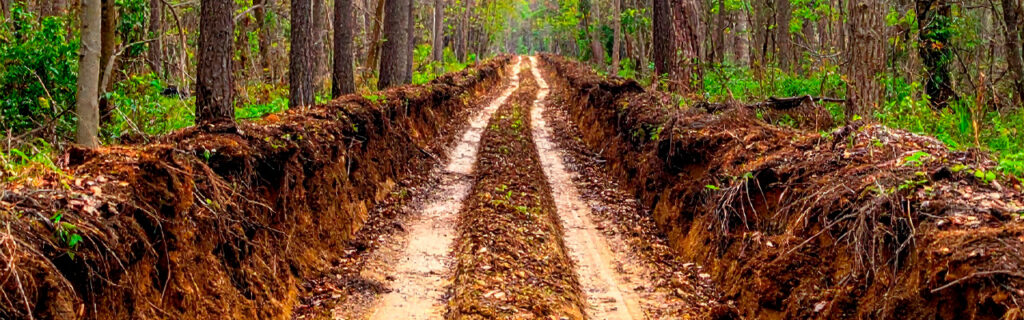
Forestry mulching at property edges and wooded transitions addresses this specific management challenge through the targeted vegetation processing capability that distinguishes the problem vegetation driving the advancing invasive front from the woodland character within the transition zone that the targeted approach preserves while converting the invasive-dominated transition from the difficult-to-manage advancing condition to the accessible, manageable condition that the targeted mulching creates from the established density without the comprehensive clearing that eliminating the entire transition zone’s vegetation would impose on the woodland character the transition contains beyond the invasive vegetation the targeted treatment is specifically addressing. For property owners across Ball Ground, Canton, Cherokee County, and North Georgia managing residential and rural properties where the edges between open areas and wooded sections have accumulated the advancing invasive density that makes the transition zone difficult to access, maintain, and use, understanding when forestry mulching most specifically makes sense for these property edges and wooded transitions, what the targeted mulching approach at these positions achieves that other management approaches cannot achieve as specifically, and what the situations that most commonly make the edge and transition positions the forestry mulching candidates they become gives the practical guide for recognizing the property edge and wooded transition situations that forestry mulching most specifically serves.
Why Property Edges and Wooded Transitions Become Difficult to Maintain
The maintenance difficulty that property edges and wooded transitions consistently develop on Cherokee County properties follows the same biological trajectory that all invasive species management challenges follow in the region, but at the accelerated rate that the edge position’s combined conditions of continuous seed dispersal source proximity, disturbed soil conditions from mowing adjacency, and lower management frequency than the interior managed areas create as the specific edge-position conditions that the invasive species establishment most specifically favors over the interior positions that the same management pressure at higher frequency and the same seed dispersal at greater distance combine to make less favorable for the rapid establishment that the edge conditions specifically enable.
The transition from the manageable early-establishment stage that the edge position presents in the first one to two growing seasons following the last edge management to the middle-establishment stage that the edge presents in the third to fifth growing seasons without management to the established stage that the edge presents in the sixth and subsequent growing seasons without management follows the predictable trajectory that the invasive species’ biology drives regardless of the property owner’s intention for the edge position. Each additional growing season without specific edge management adds the current season’s growth to the prior seasons’ accumulated establishment, advancing the edge vegetation from the owner-operated management capacity toward the professional forestry mulching capacity that the established stage specifically requires rather than the owner-operated brush mowing that the middle stage still allows at the stem diameters and densities that the middle stage presents before the sixth and subsequent growing seasons advance the establishment toward the multi-inch diameter and high density that professional equipment specifically addresses.
Situations Where Forestry Mulching Makes Sense at Property Edges
The specific situations where forestry mulching makes sense at property edges and wooded transitions are distinguishable from the situations where alternative management approaches more specifically serve the edge management need, and understanding the distinguishing characteristics that make the specific situation the forestry mulching candidate rather than the owner-operated mowing, conventional clearing, or no-treatment candidate allows the property owner to recognize the situations that specifically warrant the professional forestry mulching investment.
Established Invasive Density Beyond Owner-Operated Capacity
The clearest situation where forestry mulching makes sense at a property edge is when the edge’s invasive vegetation has advanced past the established density threshold that owner-operated brush mowing equipment can adequately process to the multi-inch diameter and high density that professional forestry mulching equipment specifically addresses. The owner who attempts to address the edge vegetation with the owner-operated brush mowing equipment that adequately processes the early and middle-stage edge vegetation and finds that the established edge vegetation’s stem diameters and density exceeds the owner-operated equipment’s processing capacity has identified the established-density forestry mulching situation from the processing attempt’s result rather than the visual estimation that the established density requires from the professional equipment’s capacity rather than the owner-operated equipment’s. This established-density situation where the owner-operated equipment’s processing attempt specifically reveals the capacity exceedance is the most unambiguous forestry mulching situation because the processing attempt’s inadequate result specifically identifies the professional clearing threshold the edge vegetation has reached without the professional equipment’s capacity that the processing attempt has revealed as necessary for the density that the attempt found inadequate for the owner-operated equipment that the earlier-stage density allowed to adequately process at the lower stem diameters and densities the earlier stages presented.
Wooded Transition With Preserved Native Elements Worth Retaining
The situation where the property edge or wooded transition contains established invasive density that requires professional clearing but also contains native canopy trees, native understory species, and natural character elements that the property owner specifically wants to preserve within the transition zone is the situation where forestry mulching’s selective processing capability most specifically distinguishes it from the comprehensive clearing alternative that would address the established invasive density without the selective preservation capability that specifically navigates around the native canopy, native understory species, and natural character elements within the transition zone. The wooded transition that contains the suppressed native dogwood, native azalea, and native viburnum beneath the invasive privet that has dominated the transition zone’s understory is the situation where the selective forestry mulching that removes the invasive privet while specifically preserving the suppressed native understory species creates the competitively released native transition zone condition that the selective approach enables rather than the invasive-free but natively bare condition that comprehensive clearing without selective preservation would create from the transition zone that both approaches address but that only the selective approach addresses without eliminating the native understory species that the competitive release enables toward the full character recovery that the transition zone’s post-treatment ecological trajectory provides from the released growing conditions the selective clearing creates.
Edges Adjacent to Infrastructure Requiring Precision Treatment
Property edges adjacent to fence lines, structures, utility infrastructure, and other fixed features that the clearing must process the invasive vegetation right up to without contacting the adjacent infrastructure are situations where forestry mulching’s precision treatment capability for experienced boundary-clearing operators makes forestry mulching the appropriate professional clearing approach rather than the conventional clearing that would address the edge vegetation at the greater infrastructure contact risk that conventional equipment’s operating characteristics create at the infrastructure proximity positions that the edge vegetation occupies. Fence line edges where the established invasive density requires professional clearing to restore the fence visibility and maintenance access that the current density prevents, but where the clearing must not contact the fence infrastructure that the clearing is specifically restoring access to, are the infrastructure-adjacent edge situations that experienced forestry mulching operators address through the controlled cutting head approach and debris discharge direction management that the infrastructure proximity specifically requires from the clearing operator’s technique rather than the less-precisely controlled clearing approach that conventional equipment applies at the infrastructure proximity positions where precision specifically matters for the infrastructure protection the clearing must provide while processing the adjacent vegetation that the clearing is addressing at those proximity positions.
Long Established Edge With Debris Management Concern
Property edges where the long-established invasive density would produce substantial debris volumes from conventional clearing that pushes the cleared vegetation to piles requiring hauling, burning, or on-site management as the additional debris management scope that the primary conventional clearing generates from the edge vegetation are situations where forestry mulching’s in-place processing that converts the cleared vegetation to the wood chip mulch deposited on the cleared floor rather than the debris pile that conventional clearing accumulates specifically eliminates the debris management scope that the long-established edge’s density would generate for conventional clearing. The edge that has accumulated five or more growing seasons of invasive establishment at high density represents the vegetation volume that conventional clearing produces as the substantial debris that debris management addresses as additional scope, making the debris management elimination that forestry mulching’s in-place processing provides a significant cost advantage relative to the conventional clearing’s additional debris management scope that the in-place processing specifically eliminates by converting the debris at the cleared position rather than pushing it to the pile that conventional clearing creates as the additional management burden.
What Targeted Forestry Mulching at Edges Achieves
Targeted forestry mulching at property edges and wooded transitions achieves the specific improvements that the established invasive density was preventing from being maintained at those positions, creating the functional conditions that the edge and transition positions’ intended purposes require from the cleared management that the invasive density was specifically preventing through the access limitation, visibility limitation, and usable space limitation that the established density creates at these positions before the targeted treatment specifically addresses them.
Restored Managed Area Boundary Clarity
Targeted forestry mulching at the property edge that has been advancing into the managed open area restores the clear boundary between the managed open area and the wooded section that the invasive advance was progressively obscuring as the advancing front created the intermediate zone between the clearly maintained and the clearly wooded that the advancing density was converting from the managed area’s extent toward the invasive-dominated intermediate that neither the maintained lawn or the ecological woodland represents. The restored boundary clarity that the targeted edge treatment creates from the advancing intermediate zone allows the managed area’s routine management program to maintain the restored boundary at the manageable edge distance from the interior that the cleared boundary creates as the new management starting position, with the annual mowing that the cleared edge now allows the owner-operated equipment to maintain at the manageable density rather than the advancing established density that the owner-operated mowing could not adequately maintain before the professional edge treatment restored the manageable starting position.
Improved Transition Zone Accessibility and Usability
Targeted forestry mulching at the wooded transition zone that has accumulated the density that makes the transition between the open area and the wooded interior impractical to walk, use, or enjoy without the extraordinary navigation effort that pushing through the established transition density requires creates the accessible transition zone that walking, wildlife observation, and recreational use within the transition can proceed through without the extraordinary navigation effort the established density imposed. The transition zone that the targeted mulching converts from the impractical density to the accessible cleared condition becomes the most naturally rich and ecologically interesting zone of the full property because the transition between the managed open area and the wooded interior that the accessible transition creates as the ecotone between the two habitat types provides the habitat diversity that the ecotone position at the edge between open and wooded character specifically creates as the zone that both habitat types contribute to and that the wildlife movement between the open and wooded uses as the accessible transition between the two that the targeted clearing makes available for both the human use and the wildlife use that the transition zone’s ecotone position specifically supports.
Released Native Character in the Transition Zone
The targeted forestry mulching that specifically preserves the native understory species within the transition zone while removing the invasive species that were competitively suppressing them releases the native character that the transition zone contains as the suppressed native understory that the invasive competition was preventing from expressing the flowering, fruiting, and ecological function that the native species’ competitive release enables across the growing seasons following the treatment that removes the competition. The transition zone that contains the suppressed flowering dogwoods, native azaleas, and native viburnums beneath the invasive privet that has been dominating the transition zone’s understory for the growing seasons of management gaps that allowed the privet to dominate produces the most rewarding native character release from the targeted mulching that removes the invasive competition while preserving the suppressed natives as the character that the released growing conditions allow to recover toward the full expression that the species’ biology supports when the competitive suppression the invasive dominance was imposing is specifically removed from the transition zone by the targeted treatment that selectively addresses the invasive competition without eliminating the native character that the competitive release restores to the expression that the suppression was preventing.
Planning Targeted Forestry Mulching at Edges and Transitions
Planning the targeted forestry mulching at property edges and wooded transitions requires the pre-treatment preparation that connects the edge and transition zone’s specific conditions to the treatment approach, preservation targets, treatment boundaries, and post-treatment management program that the targeted mulching and the subsequent edge maintenance specifically require from the planning that precedes rather than follows the treatment commitment.
Edge Treatment Width and Treatment Boundary Definition
The edge treatment width that the targeted mulching should address is specifically the width that the edge management objectives require the treatment to clear rather than the maximum width that extending the treatment further into the wooded section would produce from the equipment mobilization that the property owner might be tempted to use for the maximum treatment extent rather than the objective-specific treatment extent that the edge management goal specifically requires from the targeted approach. The treatment width that restores the managed area’s intended boundary between the open area and the wooded section and creates the manageable edge width that owner-operated annual mowing can maintain is the treatment width that the targeted edge management specifically calls for rather than the comprehensive wooded section clearing that extending beyond the edge management objective would impose on the wooded section that the edge management objective does not require the treatment to address. Physically marking the treatment boundary that defines where the targeted edge treatment ends and the untreated wooded section continues with boundary flagging at the boundary positions before the treatment equipment arrives provides the field-present boundary indication that the operator’s navigation follows during active processing to stop the treatment at the defined boundary rather than the impression-assumed boundary that the operator’s judgment at active processing speed would determine without the physical marking that the defined boundary provides as the field-present stop instruction at the treatment-boundary positions.
Pre-Treatment Preservation Walk at the Edge Zone
The preservation walk that physically enters the edge and transition zone before treatment equipment arrives, identifies the native canopy trees, native understory species, and natural features that the targeted treatment should specifically navigate around rather than process with the surrounding invasive vegetation, and marks each preservation target with bright flagging tape at approximately five to six feet of height on every stem and trunk at each target’s specific location within the edge zone provides the field-present preservation guidance that the operator’s equipment navigation requires at each preservation target’s position during active processing. The edge and transition zone’s preservation walk is particularly important because the suppressed native understory species that the competitive release most specifically benefits are often the least visually obvious elements within the invasive-dominated edge zone, requiring the specifically attentive preservation walk that identifies the suppressed dogwoods, native azaleas, and native viburnums at their current suppressed sizes before the active treatment encounters them at the processing speed that distinguishes the marked native preservation targets from the surrounding unmarked invasive vegetation that the treatment processes without the preserve-instruction that the preservation flagging provides at each marked preservation target’s specific position during the active treatment.
Maintaining the Treated Edge After Forestry Mulching
The targeted forestry mulching treatment of property edges and wooded transitions creates the accessible, manageable starting condition from which the post-treatment maintenance program that prevents the invasive resprout from the intact root systems beneath the cleared edge from returning the edge to the established density the treatment addressed specifically begins as the management program continuation that the root energy persistence from the intact root systems makes specifically necessary for preventing the resprout from recreating the management problem the treatment resolved.
The herbicide follow-up treatment of the invasive resprout that appears within four to eight weeks of the mechanical treatment at the six to twelve inch resprout height that optimal vascular transport efficiency for root energy depletion specifically requires captures the root energy depletion that the mechanical treatment alone cannot achieve from the intact root systems that the mechanical clearing did not remove. Annual owner-operated mowing of the cleared edge between professional treatment events maintains the cleared edge at the width that owner-operated equipment can sustain after the professional treatment has restored the manageable starting position that the established density had prevented the owner-operated management from maintaining before the professional treatment restored the accessible starting condition. The combined professional mechanical treatment, herbicide follow-up at active growing season heights, and annual owner-operated mowing maintenance program progressively depletes the invasive root energy across successive treatment seasons and extends the interval between professional treatments as the root energy depletion that the combined program achieves reduces the resprout vigor that each successive treatment season addresses from the progressively depleted root reserves that the combined program specifically targets for the depletion that sustainable edge management requires from the program that maintains the cleared edge condition without the progressive reestablishment that mechanical treatment alone without root energy depletion consistently fails to prevent from returning the cleared edge to the established density that required the professional treatment the combined program specifically prevents from being repeatedly required at the same intervals that mechanical treatment alone without the combined program’s root energy depletion requires.
Frequently Asked Questions
How wide should the targeted forestry mulching treatment be at a typical property edge to achieve the edge management objectives?
The appropriate treatment width at a typical property edge depends on the edge management objective rather than the equipment’s maximum efficient treatment width that the mobilization cost might tempt the property owner to extend the treatment to without the objective-specific width consideration that distinguishes what the edge management goal requires from what the mobilization cost makes maximally efficient. For the edge management objective of restoring the managed area’s intended boundary and creating the manageable edge width that annual owner-operated mowing can maintain, the appropriate treatment width is the distance from the current invasive front to the intended boundary position plus the additional clearing depth that gives the owner-operated mowing equipment the comfortable access to mow the cleared edge to the boundary rather than the compressed mowing access that treating only to the boundary would provide without the additional mowing depth that comfortable owner-operated mowing at the boundary requires from the cleared treatment width. This objective-specific treatment width is typically five to fifteen feet for most residential and rural property edges, depending on the invasive front’s current distance from the intended boundary and the mowing equipment’s comfortable operating width. For the wooded transition accessibility objective of making the transition zone walkable and usable for recreational and wildlife management purposes, the appropriate treatment width is the full transition zone width that the objective requires to be cleared for the accessible transition experience rather than only the edge boundary restoration width that the managed area boundary objective requires. The objective-specific treatment width determination that the edge management goal specifically produces as the treatment width requirement is the treatment width planning input that prevents the treatment from being either inadequately narrow for the objective the clearing should achieve or unnecessarily wide beyond what the objective requires at the additional clearing cost that the objective-exceeding width would impose without the additional functional improvement the objective has already been achieved at the narrower width.
How does the season of the forestry mulching treatment affect edge and transition zone results?
The season of the forestry mulching treatment at property edges and wooded transitions affects the results through the same seasonal treatment advantages and limitations that apply to all forestry mulching treatment situations but with the specific edge and transition zone considerations that the native understory species identification accuracy and the herbicide follow-up treatment timing most specifically impose on edge and transition zone treatment timing. Native understory species identification accuracy for the preservation walk is most specifically affected by treatment season because the growing season’s full leaf development provides the species identification cues that make the native understory species most accurately distinguishable from the invasive species at the transition zone where both are present and where the preservation walk must make the species-level identification that accurate preservation marking requires. The fall growing season timing that maintains the transitioning leaf development that species identification uses for accuracy while approaching the dormant-season treatment timing that biomass reduction benefits from is the edge and transition zone treatment timing that most productively combines the growing-season identification accuracy the preservation walk requires with the approaching dormant-season biomass reduction that treatment efficiency benefits from. The herbicide follow-up treatment timing that active growing-season vascular transport efficiency most specifically benefits from for root energy depletion places the optimal herbicide timing in the late growing season weeks that fall treatment’s timing most specifically provides as the same-season herbicide follow-up window that active growing-season treatment creates for the resprout that appears within four to eight weeks of the fall treatment at the six to twelve inch height that the remaining active growing season weeks specifically allow the herbicide treatment to address at the root energy depletion efficiency that the active growing-season timing provides.
How do I determine whether the wooded transition zone contains native understory species worth preserving before treatment?
Determining whether the wooded transition zone contains native understory species worth preserving before treatment requires the physical entry into the transition zone at the growing-season timing when full leaf development makes species identification most accurate, specifically looking for the native species that Cherokee County’s wooded transitions most commonly contain in suppressed condition beneath the invasive competition that the treatment will address. The most commonly present native understory species in Cherokee County wooded transitions include flowering dogwood that the opposite paired leaf arrangement and distinctive bark texture identify even in suppressed condition, native azaleas that the non-invasive growth form and the multiple-stem cluster from a single rootstock distinguish from the invasive privet single stems that surround them, native viburnums that the leaf texture and stem arrangement distinguish from the invasive species, serviceberry that the smooth gray bark and alternate leaf arrangement identify at the suppressed sizes that the competitive suppression has limited it to, and pawpaw that the large leaves and the distinctive trunk odor identify in the transition zone positions where it has established and persisted beneath the invasive competition. The growth form that specifically distinguishes many native understory species from the dominant invasive privet is the multiple-stem cluster originating from a single crown base that many native shrubs exhibit rather than the single-stem growth form that privet more characteristically presents, allowing the preservation walk to specifically flag all multi-stemmed shrubs originating from a single crown base as preservation candidates even when the specific species identification is uncertain, because the multi-stem growth form is characteristic of native shrubs and the preservation of the uncertain multi-stem candidates specifically prevents the inadvertent loss of the native species that the treatment would otherwise process along with the surrounding invasive vegetation without the preservation flagging that specifically marks the multi-stem native candidates for the navigation-around treatment that the flagging instructs at each marked candidate’s position during the active treatment.
Is forestry mulching the right approach for all established-density property edges or are there situations where conventional clearing serves better?
Forestry mulching is the most appropriate approach for established-density property edges in the situations where the edge management objective is the selective invasive removal that preserves native elements within the edge, where the adjacent open area requires the in-place debris management that avoids the debris pile that conventional clearing would deposit at the open area adjacent to the cleared edge, and where the targeted treatment width and precision adjacent to infrastructure requires the controlled cutting approach that forestry mulching’s directed cutting head enables at the infrastructure proximity positions. Conventional clearing serves better at established-density property edges in the specific situations where the edge management objective requires the organic material removal from the structural zone at the edge positions where the property development that follows the edge clearing requires organic-free structural subgrade rather than the in-place organic preservation that forestry mulching provides. An edge that is being cleared to allow the construction pad’s structural subgrade preparation to extend to the property boundary specifically requires the organic material removal that conventional clearing with root raking addresses rather than the in-place organic preservation that forestry mulching deposits at the cleared positions where the structural subgrade preparation must subsequently remove the organic material that the forestry mulching’s in-place processing preserved rather than removing at the initial clearing that conventional clearing’s debris removal approach specifically accomplishes. The edge that is being cleared for the agricultural surface that stump-free equipment operation requires specifically needs the stump grinding and surface preparation that comprehensive conventional clearing provides rather than the stump remnants that forestry mulching may leave at the cleared edge positions where agricultural equipment operation requires the stump-free surface that comprehensive conventional clearing creates from the cleared edge that forestry mulching’s in-place processing does not create at the stump-free surface standard that agricultural equipment operation specifically requires from the cleared surface.
Ready to Address the Edges and Wooded Transitions on Your North Georgia Property?
The property edges and wooded transitions on Cherokee County residential and rural properties that have accumulated the established invasive density that makes the boundary between the managed open area and the wooded interior difficult to maintain, access, and use are the positions where targeted forestry mulching most specifically converts the advancing, management-resistant edge condition to the accessible, cleared starting position from which the annual owner-operated mowing and herbicide follow-up program that the post-treatment maintenance program uses can specifically sustain the edge at the manageable condition that the professional treatment restored from the established density. The targeted treatment approach that specifically addresses the edge and transition zone without the comprehensive clearing that extends beyond the edge management objective creates the functional improvement at the objective-appropriate treatment extent while preserving the native character within the transition zone that the targeted selective approach specifically retains from the established-density condition that both targeted and comprehensive approaches address but that only the targeted approach addresses without eliminating the native understory and natural transition character that the selective preservation specifically protects at each marked preservation target’s position during the active treatment.
Bardin Outdoors works with property owners across Ball Ground, Canton, Cherokee County, and North Georgia on targeted forestry mulching at property edges and wooded transitions that converts the established-density advancing edge condition to the accessible, preserved-character, manageable starting condition that the objective-specific treatment extent and the selective preservation planning specifically create from the invasive-dominated edge that the targeted treatment addresses at the edge management objectives the property owner’s functional needs define as the scope the treatment should accomplish. To learn more about how Bardin Outdoors can help manage the edges and wooded transitions on your North Georgia property, contact us.