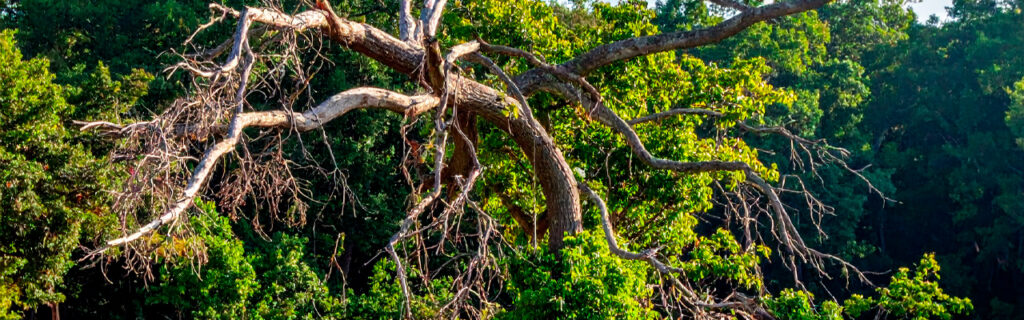
For property owners across Cherokee County, Ball Ground, and Canton with mature trees near their homes, outbuildings, vehicles, and regularly occupied outdoor areas, understanding the specific processes through which dead branches become hazards, why the summer season specifically elevates the urgency of addressing identified dead branches, and what an effective inspection routine for identifying dead branches in priority fall zones looks like gives the practical foundation for managing dead branch hazards proactively rather than reactively. Dead branches that are identified and removed on a planned schedule present a manageable tree safety challenge. Dead branches that are identified and deferred, or that are never specifically looked for and remain unknown until a storm event tests their attachment, represent an ongoing hazard whose consequences range from property damage to personal injury depending on where they fall and what or who happens to be beneath them at the moment of failure.
How Dead Branches Develop and Why They Fall Without Warning
Dead branches develop in tree canopies through several mechanisms, each of which produces a branch that is no longer receiving water and nutrients from the tree’s root system through the vascular tissue that living branches depend on. The resulting structural changes that dead branches undergo after losing their vascular connection are the changes that progressively convert them from dead branches into fall hazards, and understanding those changes explains why dead branches in priority fall zones deserve specific attention and management rather than the passive tolerance that living branches with natural fall risk from structural conditions require.
When a branch loses its vascular connection to the root system, whether through natural self-pruning as the branch becomes shaded below its light compensation point, through disease that blocks the vascular pathway serving the branch, through storm damage that partially severed the branch’s connection at its attachment point, or through root system decline that reduces the tree’s functional capacity below what is needed to support its full canopy, the branch immediately begins the drying process that will progressively change its physical properties from those of living wood to those of dead wood. Living wood is flexible, has significant tensile and compressive strength relative to its diameter, and bends before it breaks under normal wind loading in ways that absorb the energy that storm events apply rather than failing abruptly. Dead wood loses this flexibility as it dries, becoming progressively more brittle with each week of continued drying until it reaches the fully desiccated state where it has essentially no flexibility and will fail by snapping rather than bending when loaded beyond its residual structural capacity.
The attachment point where the dead branch connects to the living tree undergoes its own deterioration process that is separate from and often faster than the branch’s drying and brittleness progression. The wood at the attachment point, which is no longer part of the tree’s active growth and defense response, becomes susceptible to the decay organisms that the living branch’s intact bark and active biological defenses had previously excluded. Decay at the attachment zone progresses from the exterior of the connection inward, reducing the sound wood available to resist the mechanical loading that pulls the branch away from the tree until the residual sound wood at the attachment is insufficient to maintain the connection under any loading beyond the branch’s own weight. When this threshold is reached, the branch is functionally hanging in the canopy rather than structurally connected to the tree, and its failure timing becomes unpredictable from any external observation that cannot directly assess the extent of decay within the attachment zone.
Why Summer Weather Elevates Dead Branch Hazard in North Georgia
North Georgia’s summer weather pattern creates specific conditions that elevate dead branch hazard beyond the baseline level that exists year-round. Understanding why summer specifically raises dead branch risk helps property owners recognize the timing urgency for inspecting and addressing identified dead branches rather than treating summer dead branch concerns as equivalent in urgency to those identified during other seasons.
Summer Thunderstorm Frequency and Intensity
Cherokee County’s summer weather pattern includes the frequent afternoon and evening thunderstorms that characterize the region’s hot, humid months from June through September. These events can develop rapidly, producing significant wind gusts, heavy rain, and occasional hail in short-duration events that apply substantial mechanical loading to canopy trees before dissipating and leaving the landscape with whatever failures the storm produced. Dead branches that were hanging in the canopy before the storm, held by attachment zones of uncertain remaining integrity, experience the same wind and rain loading that the living branches around them experience, but with the significantly lower resistance to that loading that their desiccated wood and compromised attachment zones provide. The summer thunderstorm season tests every dead branch in every canopy in the area multiple times each month, and the branches that do not pass these tests fall during the storms that test them beyond their remaining structural capacity.
Accelerated Drying That Increases Brittleness Through Summer
Dead branches that were identified in spring or early summer have been drying continuously through the summer heat, losing moisture content and the flexibility that moisture provides at a rate that North Georgia’s summer temperatures accelerate relative to the slower drying that cooler seasons produce. A dead branch that still had some flexibility and relatively modest brittleness in May may have dried significantly further by August, and that additional drying makes it more susceptible to the brittle failure mode that fully desiccated wood exhibits under loading that partially dried wood of the same diameter and attachment condition would have survived without failure. Dead branches identified earlier in the season and not yet removed are therefore more hazardous in August than they were at the time of their identification, which is the specific timing reality that makes deferred dead branch removal a progressively worsening risk management decision through the summer season.
Peak Outdoor Use Season Beneath Trees
The summer season when dead branch storm risk is highest is also the season when outdoor use of the areas beneath trees is typically at its peak. Outdoor seating areas, play spaces, garden areas, and the transitions between the residence and outbuildings that pass beneath tree canopies all see their highest occupancy during the summer months when weather conditions encourage outdoor activity. The consequence of a dead branch failure during summer is therefore more likely to affect people or property that would not have been present beneath the same branch during winter, when the same fall risk exists but the outdoor occupancy beneath the tree is substantially lower. This occupancy factor amplifies the summer urgency of dead branch management beyond what the storm loading factor alone would suggest, because the combination of higher storm loading frequency and higher area occupancy simultaneously elevates the probability that a branch failure event will affect people or property rather than occurring in an unoccupied area.
What Dead Branches Look Like and How to Identify Them
Identifying dead branches in a tree’s canopy requires specific observation practices that distinguish dead from living branches in ways that casual canopy glances from ground level do not reliably accomplish. Understanding the specific visual characteristics that distinguish dead branches from living ones gives property owners the practical knowledge to conduct useful canopy inspections of priority trees near their structures rather than relying on the incidental observation that happens during normal property use and that consistently misses the dead branches that targeted inspection would identify.
Absence of Foliage During the Growing Season
The most definitive summer indicator of a dead branch in a deciduous tree’s canopy is the absence of leaves on a branch or branch system while the surrounding branches of the same tree carry full summer foliage. A branch that is dead, or that lost its vascular connection to the root system at some point before the current growing season, will not produce leaves during the growing season because the buds that would have opened into leaves have either failed entirely or developed into leaves that subsequently wilted and dropped as the branch’s lack of water and nutrient supply became apparent during the warming spring temperatures that the current growing season’s full foliage demands revealed. Leafless branches within an otherwise fully leafed crown during summer are dead branches that should be specifically noted, their size and position assessed relative to the structures and areas beneath them, and a response timeline determined based on that assessment.
Bark Loss and Exposed Wood at Branch Surfaces
Dead branches that have been in the canopy for more than one season progressively lose their bark as the bark’s attachment to the wood beneath it fails when the cambium layer that maintains the bark-wood bond ceases functioning after the branch loses its vascular connection. Bark sloughing exposes the bare wood surface beneath, which is visible from the ground on large dead branches as sections of exposed gray or tan wood contrasting with the bark-covered surfaces of living adjacent branches. Bark loss from a branch is a reliable indicator of advanced deadwood condition that includes not only the absence of living function but also the physical changes to the wood surface that the dying process produces over time, and branches showing significant bark loss have been dead long enough that their attachment zones have been subject to extended decay organism activity that compounds the brittleness concern that drying alone creates.
Hanging and Partially Detached Branches
Branches that are hanging at angles inconsistent with normal branch architecture, that are visibly caught in adjacent branches without being attached to the main tree structure, or that show the characteristic sag of detached weight rather than the upward growth angle of normally attached living branches are partially or fully detached branches whose fall is prevented only by their entanglement with the surrounding canopy structure rather than by a structural attachment to the tree. These hanging branches are the highest-urgency dead branch hazard category because their retention in the canopy is dependent on the stability of whatever they are resting on or caught in rather than on any reliable structural connection, and the conditions that shift their resting contact, including wind, additional branch growth, or the failure of the branches supporting them, can release them without any predictable trigger that canopy observation would be able to anticipate.
How to Conduct a Productive Dead Branch Inspection
Productive dead branch inspection requires deliberate, systematic canopy assessment of priority trees rather than the passive observation that occurs during normal property use. The following inspection approach covers the observation conditions, the specific priority areas to assess, and the documentation practice that makes inspections useful for management decisions rather than simply confirming awareness of the trees’ existence.
When to Inspect and How Often
Scheduled inspections of priority trees near structures should occur at least twice per year, with one inspection during the summer growing season when full leaf development and summer storm loading are both at their peak, and one inspection during the winter leafless period when the crown architecture, dead branch presence, and structural conditions of the entire branching system are visible without foliage obstruction. The summer inspection is most productive for canopy health assessment and dead branch identification in the leafed canopy, while the winter inspection is most productive for structural architecture assessment and for identifying dead branches that the summer foliage conceals. Supplemental inspection after any significant wind or storm event captures the structural changes and new dead branch development that storm events produce and that may not be visible during the scheduled inspection cycle that precedes the storm event.
The Priority Tree Inspection Walk
Walk to each priority tree near structures and occupied areas and look upward from multiple positions around the trunk circumference to observe the full canopy rather than only the face of the canopy visible from a single observation point. Dead branches on the back side of a large canopy, visible from the position behind the tree but not from the position facing the structure it overhangs, are the dead branches most commonly missed by canopy inspection conducted from a single observation point. Slowly rotating around the tree while looking upward at the full canopy structure, noting any branches that lack foliage, show bark loss, hang at abnormal angles, or appear to be resting on adjacent branches rather than growing normally from their attachment points, identifies the dead branches that targeted inspection from multiple positions around each tree reveals and that fixed-position observation would miss.
Documenting Findings for Response Planning
Photograph dead branches identified during inspection from the positions that show their size and location most clearly relative to the structure or occupied area beneath them. These photographs support two important subsequent functions: they provide the documentation that a professional contractor needs to assess the scope of dead branch removal work without requiring a separate site visit before scheduling, and they create the inspection record that allows dead branch conditions to be tracked across successive inspection cycles to confirm that identified dead branches have been removed rather than remaining in the canopy through multiple inspection periods as deferred items that accumulate rather than diminish over time. An inspection record that shows the same dead branch present across three successive inspection photographs is a record that demonstrates the deferral pattern that effective dead branch management specifically intends to prevent.
When Dead Branches Require Professional Removal Versus Owner Management
Dead branches identified during property inspection range from small outer crown twigs that property owners can sometimes address with a long-handled pruning pole to large structural branches overhanging the primary residence that require professional climbing or aerial equipment for safe removal. The determination of whether a specific dead branch falls within the range of owner-manageable removal or requires professional involvement should be based on the branch’s size, position, and attachment condition rather than on the property owner’s general willingness to attempt the removal.
Professional tree removal services are specifically indicated for dead branches that exceed the diameter and reach of standard homeowner pruning equipment, that are positioned over structures, vehicles, or occupied areas where their fall during removal would create the same consequence as their uncontrolled storm failure, that are hanging or partially detached and require controlled lowering rather than cut-and-fall removal, and that require climbing or aerial equipment access because their position in the upper canopy makes ground-level removal equipment inadequate for safe completion of the work. The cost of professional dead branch removal for these categories is consistently less than the repair cost of the structure or vehicle damage that an uncontrolled dead branch failure during a storm event would produce, which is the practical cost comparison that makes professional removal the appropriate management choice rather than the excessive expense that deferring removal might frame it as.
How Dead Branch Management Fits Into a Broader Tree Safety Program
Dead branch identification and removal is one component of the broader tree safety program that mature trees near structures on North Georgia residential and rural properties require, and it is the component with the most immediate and most directly actionable hazard condition identification that routine property observation can accomplish without professional assessment. Structural conditions including internal decay, root plate compromise, and co-dominant stem architecture with included bark unions require professional assessment to evaluate accurately and to connect to removal or management decisions appropriately. Dead branches require only the systematic canopy observation that property owners can conduct independently to identify them, and their identification is sufficient to determine that removal is warranted without requiring professional structural assessment before the management decision is made.
Integrating dead branch inspection into a semi-annual tree assessment routine that also covers trunk base conditions, canopy health indicators, and post-storm structural assessment produces the most complete tree safety picture available from property-owner-conducted observation. This integrated routine ensures that dead branch conditions are not addressed in isolation while the structural conditions that may be more consequential for the same trees near structures are not assessed at all, and it produces the inspection record across successive seasons that makes progressive changes in any tree’s condition detectable rather than invisible without the comparative documentation that memory alone cannot provide.
Frequently Asked Questions
How quickly does a newly dead branch become a significant fall hazard?
The rate at which a newly dead branch develops into a significant fall hazard depends on several interacting factors including the branch’s diameter, the mechanism of its death, the moisture content of the wood at the time of death, the climate conditions driving its subsequent drying, and the specific decay organisms that establish at its attachment zone following its death. Large-diameter branches that die from vascular disease or storm damage and that enter the summer drying season at full moisture content may require one to two full summer seasons to dry to the fully brittle condition that represents maximum brittleness risk, while small branches and branches in positions of maximum sun and wind exposure may dry to high brittleness within a single summer. Attachment zone decay progresses at rates determined by the specific organisms involved and the moisture conditions at the attachment, and may produce significant attachment compromise within the first season after death in warm, moist conditions that favor decay organism activity. The practical management approach is to treat any newly identified dead branch in a priority fall zone as warranting removal within the current season rather than scheduling it for a future season based on an assumption that the drying and decay progression will be slow enough to allow safe deferral.
Is it possible to prevent dead branches from developing in trees near structures?
Dead branch development in mature trees is a normal biological process that cannot be entirely prevented because the natural self-pruning of shaded inner crown branches, the progressive die-back that accompanies normal aging, and the crown dieback that disease, pest pressure, and root system stress produce are all processes that affect every mature tree over its service life regardless of how well the tree and its growing conditions are managed. What can be managed is the rate at which potentially hazardous dead branches develop by maintaining the tree’s overall health through adequate drainage and fertility in the root zone, avoiding root zone compaction and grade changes that compromise root function, and promptly addressing disease and pest conditions that accelerate the crown dieback that produces dead branches more rapidly than normal aging would generate. And what can be managed is the deferral of identified dead branches in priority fall zones, by removing them within the current management season rather than allowing them to remain in the canopy through the additional seasons of drying and attachment decay that deferral allows.
Should I be concerned about dead branches on trees that are not directly over my home but are near the property boundary?
Dead branches on boundary trees deserve assessment based on the fall zone consequence at their specific position rather than based on whether the tree is directly over the primary residence. A boundary tree whose dead branches fall within the fall zone of a regularly occupied outdoor area, a driveway that vehicles regularly use, a neighbor’s occupied structure or outdoor area, or any other location where their failure would affect people or property warrants the same assessment and management priority as equivalent dead branches directly over the residence. Property owners are generally responsible for addressing hazardous tree conditions on their own property that present foreseeable risk to adjacent properties, and dead branches on boundary trees whose fall zone reaches the neighbor’s occupied areas create the same liability considerations as dead branches over the property owner’s own structures, which is an additional reason that boundary tree dead branch conditions deserve the same management attention as any other priority fall zone dead branch.
What is the difference between a dead branch and a branch that is simply stressed or dormant?
During the summer growing season when all deciduous species should be carrying full foliage, the distinction between a dead branch and a stressed or dormant one is most clearly made by observing whether the branch has produced any foliage at all during the current season. A stressed but living branch that has lost some foliage to drought stress or early senescence will typically show at least some remaining foliage on portions of its current-season growth. A dead branch that has lost its vascular connection to the root system will show no current-season foliage anywhere on the branch because the buds that would produce that foliage either failed to open in spring or opened and immediately wilted as the lack of water supply became apparent. The scratch test that confirms living status in smaller branches, scratching the outer bark to observe whether the cambium layer beneath shows green living tissue or brown dead tissue, provides a definitive determination when canopy observation leaves ambiguity about whether a branch is dead or severely stressed, and can be conducted on accessible lower branches with a pocket knife without requiring climbing or equipment access to the branch in question.
Concerned About Dead Branches in Trees Near Your Home or Structures?
Dead branches in tree canopies near structures are among the most directly manageable tree safety conditions available to property owners because they are identifiable through systematic visual inspection without professional structural assessment, because the management response they warrant, removal before they fall uncontrolled, is clear without the nuanced professional evaluation that other structural conditions require, and because the window between identification and adequate management is the current season rather than an indefinite monitoring period. Conducting the summer inspection that identifies current-season dead branches in priority fall zones near structures, documenting what is found with photographs, and scheduling professional removal for branches that exceed the scope of safe owner management keeps dead branch risk within the manageable range that inspection and prompt response creates rather than allowing it to accumulate through the deferral that identified but unaddressed dead branches represent.
Bardin Outdoors works with homeowners and landowners across Ball Ground, Canton, Cherokee County, and North Georgia to identify and remove dead branches and hazardous trees before their conditions produce the storm failure events that prompt response to inspected conditions prevents. To learn more about how Bardin Outdoors can help your property address dead branch and tree safety concerns, contact us.