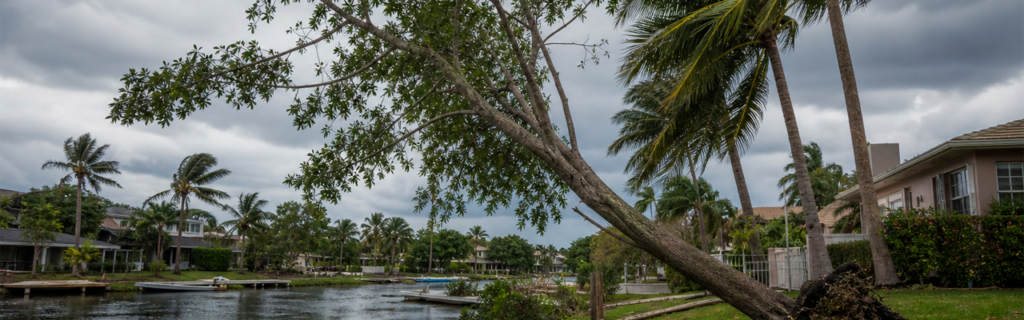
As hurricane season and severe summer storms approach, evaluating leaning trees becomes especially important to help reduce potential risks to homes, driveways, vehicles, and nearby structures.
Why Leaning Trees Can Become Dangerous
A leaning tree may signal that the root system or trunk has weakened over time.Strong winds, saturated soil, and heavy rain during storm season can increase the likelihood of failure, especially if the tree has already been damaged.
Common Causes of Leaning Trees
1. Root Damage
Roots may weaken because of erosion, soil movement, construction activity, or previous storms.A damaged root system often reduces the tree’s ability to remain stable during high winds.
2. Saturated Soil Conditions
Heavy rainfall can soften the ground surrounding the tree.Soft soil may allow unstable trees to shift or lean further during storms.
3. Storm Damage
Previous windstorms may weaken trunks, roots, or major limbs without immediately causing the tree to fall.Over time, hidden damage can become more serious during future storms.
4. Soil Erosion Around the Base
Water runoff and erosion may gradually expose roots or shift the soil supporting the tree.This problem is common on sloped North Georgia properties.
5. Natural Decline or Disease
Aging trees or trees affected by disease may weaken internally over time.Dead sections, hollow trunks, or failing limbs can increase instability risks.
Warning Signs Property Owners Should Watch For
- Sudden leaning after a storm
- Exposed or lifted roots
- Cracks near the base of the trunk
- Soil heaving around the tree
- Dead or hanging limbs
- Movement during strong winds
Why Early Evaluation Matters Before Hurricane Season
Evaluating leaning trees before severe weather arrives can help reduce emergency situations later in the season.In some cases, professional tree removal may become necessary if the tree presents a significant safety hazard.
Removing dangerous trees early may help protect structures, access roads, and nearby utilities during strong storms.
How Site Conditions Can Affect Tree Stability
Poor drainage and erosion can increase instability around trees, especially on sloped properties.Proper grading and excavation may help improve drainage conditions and reduce ongoing soil movement around certain areas of the property.
Frequently Asked Questions
Is every leaning tree dangerous?
Not always. Some trees naturally grow at slight angles, but sudden leaning or visible root movement should be evaluated.Why are leaning trees more dangerous during storm season?
High winds and saturated soil can increase the likelihood of tree failure during severe weather.Can erosion affect tree stability?
Yes. Soil erosion may weaken root support and increase the chance of leaning or falling.When should a leaning tree be removed?
Trees with severe lean, root damage, structural cracks, or storm-related instability may require professional removal.Concerned About Trees on Your Property?
Evaluating potentially unstable trees before hurricane season can help reduce safety risks and prevent storm-related property damage.To learn more about how Bardin Outdoors can help your property with tree evaluation, removal, and site preparation, contact us.