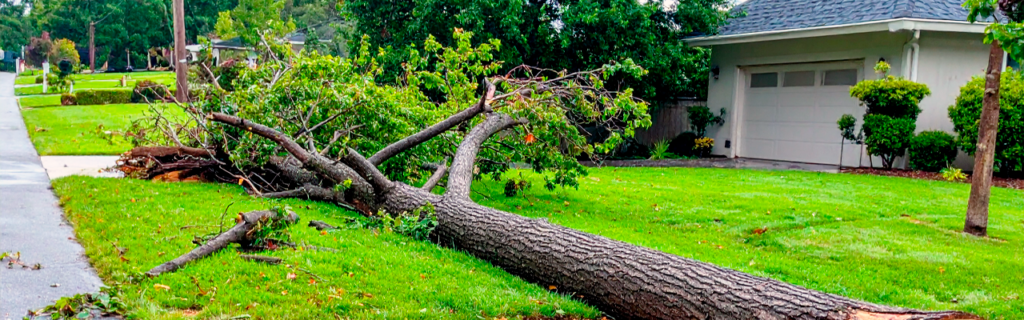
For homeowners in Ball Ground, Canton, Cherokee County, and North Georgia, understanding the risks of dead trees during storm season can help prevent costly damage and dangerous emergencies.
Why Dead Trees Are More Dangerous in Summer
Dead trees lose structural strength over time. Wood becomes brittle, limbs weaken, and root systems begin to fail below the surface.During summer storms, extra stress from wind and wet soil can cause trunks to split, limbs to break, or entire trees to fall unexpectedly.
How Summer Weather Increases Tree Failure Risk
1. Strong Winds
High winds place pressure on trunks, branches, and root systems. A healthy tree may bend and recover, but a dead tree is far more likely to snap or collapse.Even moderate gusts can break brittle limbs over roofs, driveways, or vehicles.
2. Saturated Soil
Heavy summer rain softens the ground and weakens root support. Dead trees with damaged roots may uproot more easily once soil becomes waterlogged.This is especially risky for trees leaning toward homes, garages, or fences.
3. Heat and Decay Acceleration
Warm temperatures and moisture can speed up rot, insect activity, and internal decay.A tree that looked stable earlier in the year may lose more strength as summer progresses.
4. Lightning and Storm Impact
Thunderstorms may bring lightning strikes or sudden wind bursts that further damage already compromised trees.Previously cracked or hollow trees can fail without warning during severe weather.
Warning Signs a Dead Tree Needs Immediate Attention
- Large dead limbs hanging over structures
- No leaves during the growing season
- Cracked trunk or splitting bark
- Mushrooms or visible decay near the base
- Leaning tree with exposed roots
- Dead tree close to your home or driveway
Why Early Removal Can Be the Safer Option
Removing a dead tree before storm season may lower the chance of emergency damage and reduce cleanup costs later.Professional tree removal can also be safer and more controlled before weather creates urgent conditions.
Frequently Asked Questions
Can a dead tree stand for years?
Yes, but stability often decreases over time and failure risk grows with each storm season.Are dead limbs dangerous even if the trunk is standing?
Yes. Falling limbs can damage roofs, vehicles, fences, and injure people below.Should I wait until after storm season?
Waiting may increase risk if the tree is already dead or declining near structures.Can storms uproot dead trees?
Yes. Saturated soil and wind can cause weakened roots to fail suddenly.Need Help With Your Property?
If you have a dead tree near your home, driveway, or power lines, addressing it early can help prevent bigger problems during storm season.To learn more about how Bardin Outdoors can help your property with tree removal, contact us.