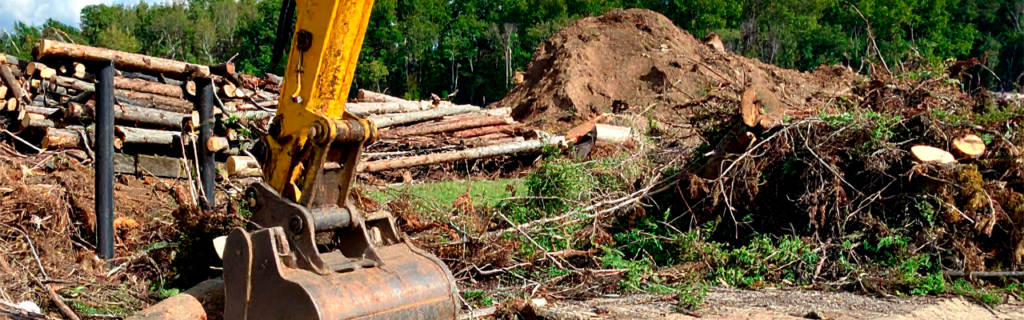
For property owners in Ball Ground, Canton, Cherokee County, and North Georgia, understanding how debris is managed after clearing work can help with project planning and long-term land use decisions.
Why Debris Management Matters
Brush piles, stumps, and leftover organic material can interfere with future grading, construction, drainage, and property access if they are not addressed properly.A clean and organized site also helps prepare the land for building, recreation, farming, or additional improvements.
Common Types of Land Clearing Debris
- Brush and small vegetation
- Tree limbs and branches
- Logs and cut timber
- Stumps and root systems
- Leaves and organic ground cover
Common Debris Handling Methods
1. Forestry Mulching
One of the most efficient methods is forestry mulching, which processes brush and smaller vegetation directly into mulch on site.The mulch layer can help reduce erosion and minimize the need for hauling debris away.
2. Hauling and Removal
Larger logs, stumps, or excess debris may be loaded and hauled off the property.This approach is common when preparing sites for construction or final grading work.
3. Controlled Burning Where Allowed
In some areas and under certain regulations, debris may be burned in a controlled manner.This method depends on local requirements, weather conditions, and project size.
4. Stump Grinding or Removal
Remaining stumps may need to be removed or ground down depending on future property use.This is especially important for areas planned for construction, driveways, or landscaping.
5. Site Preparation and Grading
After debris is removed, the property often requires grading and excavation to smooth surfaces and prepare the land for future use.This helps create stable ground conditions and improve drainage.
Factors That Affect Debris Removal Methods
- Size of the clearing project
- Amount of vegetation removed
- Future plans for the property
- Accessibility of the site
- Local environmental and burning regulations
Frequently Asked Questions
What happens to trees after land clearing?
Trees may be mulched, hauled away, cut into usable timber, or removed depending on the project goals.Is forestry mulching better than hauling debris away?
It depends on the project. Mulching is efficient for brush and smaller vegetation, while hauling may be needed for larger material.Do stumps always need to be removed?
Not always, but removal is often recommended for building areas or future landscaping projects.Can debris affect future grading?
Yes. Remaining debris can create unstable ground conditions and interfere with proper grading work.Preparing Your Property for the Next Step?
Proper debris management helps ensure your land is clean, functional, and ready for future improvements.To learn more about how Bardin Outdoors can help your property with land clearing and debris management, contact us.