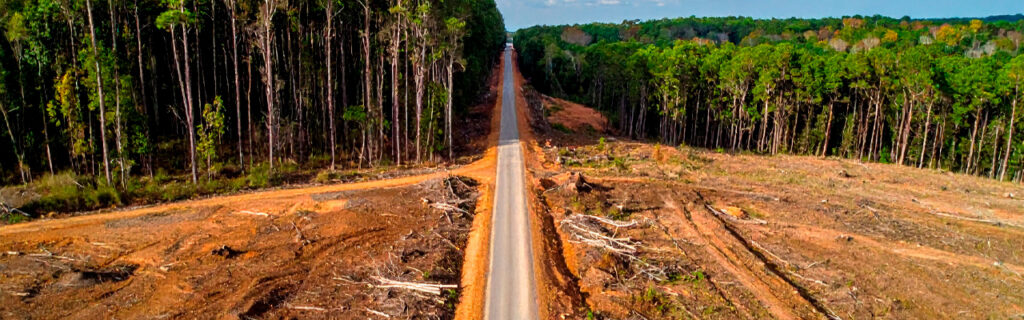
For property owners across Cherokee County, Ball Ground, and Canton planning clearing projects on their residential and rural lots, understanding what criteria should guide individual tree preservation decisions, how to evaluate each tree against those criteria before clearing begins, and how to communicate preservation priorities to clearing contractors in ways that reliably produce the preservation outcomes the planning identified gives the practical framework for approaching clearing projects as the combination of deliberate removal and deliberate preservation that produces the best post-clearing property condition rather than as the uniform removal of everything the equipment can reach without reference to what each element in the clearing area contributes to the property’s long-term character and value.
Why Tree Preservation Decisions Must Be Made Before Clearing Begins
Tree preservation decisions in clearing projects must be made before equipment begins operating in the treatment area for two fundamental reasons that each independently justify the pre-clearing planning investment that preservation decisions require.
The first reason is irreversibility. A tree removed during clearing cannot be restored. Every element of that tree’s contribution to the property’s canopy, its wildlife habitat value, its root system’s slope stabilization, its visual character, and its specific ecological role cannot be replaced within any practical timeframe through any action available after the removal. The pre-clearing planning investment that identifies trees worth preserving and communicates that identification to the clearing operator prevents the irreversible removal that the absence of that planning consistently allows through default removal of everything the equipment reaches without specific preservation guidance. No post-clearing remediation can undo what pre-clearing planning could have prevented.
The second reason is operator practicality during active clearing. A clearing operator working efficiently through dense vegetation makes decisions about what to process and what to navigate around based on what is physically marked or verbally communicated before work begins. The unmarked tree that the property owner mentally intended to preserve but did not physically mark is, from the operator’s practical perspective in the working equipment, indistinguishable from any other tree in the clearing area. Verbal descriptions of preservation intent without physical marking consistently produce lower preservation accuracy than physical flagging that gives the operator unambiguous field guidance at the specific location of each preservation target during the active, efficient work pace that clearing equipment operates at. Physical marking before equipment begins is the practice that most reliably converts preservation planning into preservation outcomes because it places the preservation information at the exact point where the operator needs it in the format that is most accessible during active equipment operation.
The Core Criteria for Tree Preservation Decisions
Four criteria, evaluated in combination for each tree in or adjacent to the clearing area, consistently produce the preservation decisions that serve the property’s long-term interests better than single-criterion evaluation or generic clearing boundaries that do not account for individual tree assessment. These criteria are not meant to be applied as a rigid checklist that produces automatic answers but as the framework for the specific evaluation of each tree’s individual situation that informed preservation decisions require.
Species Identity and Its Ecological Contribution
A tree’s species identity is the first preservation criterion because it determines the ecological category the tree occupies and the type of contribution the tree makes to the property’s character and biological productivity. Native hardwood species including white oak, red oak, hickory, beech, and tulip poplar are preservation candidates because they provide the mast production, canopy character, and native habitat value that define productive North Georgia woodland and that invasive species or non-native species in the same position cannot replicate. Native understory trees including flowering dogwood, serviceberry, and native viburnums are preservation candidates because they provide flowering, fruiting, and habitat structure that the native wildlife community specifically depends on and that cleared or invasive-dominated alternatives do not provide. Non-native invasive trees including tree-of-heaven, princess tree, and Chinese tallow are removal candidates regardless of their size or apparent individual value because their presence sustains the seed source pressure on adjacent managed areas and because their ecological contribution to native wildlife and plant communities is negligible relative to the space they occupy.
Species identity alone is not sufficient for preservation decisions because position and condition may override species identity in specific individual circumstances, but it is the starting criterion that establishes whether a tree is a preservation candidate or a removal candidate before position and condition are evaluated. A tree that is a preservation candidate by species identity may still be a removal candidate by position if its specific location directly conflicts with the clearing’s intended use outcome. But a tree that is a removal candidate by species identity should not be preserved based on position or condition considerations alone, because preserving invasive species within managed areas regardless of their size sustains the seed production and root advance pressure that management must then work against indefinitely.
Position Within the Clearing Area and Its Relationship to Intended Use
A tree’s position within the clearing area relative to the intended subsequent use of the cleared space is the second criterion because the same species at different positions within the clearing area may warrant different disposition based on whether the specific position allows preservation without compromising the clearing’s intended functional objective. A native white oak at the center of a food plot footprint that requires full sun access to ground level throughout the plot area is in a position where its preservation prevents the food plot from achieving its intended purpose, making removal appropriate despite its species preservation candidacy. The same white oak at the margin of the food plot boundary, where it can be preserved without shading the plot interior and where its presence provides the mast production and edge cover that make the adjacent food plot more attractive to the wildlife it is intended to serve, is in a position where preservation serves both the food plot’s function and the property’s wildlife habitat value simultaneously.
Position assessment requires specifically asking whether the tree’s canopy, root system, or trunk occupies space that the clearing’s intended use requires to be clear, or whether the intended use can be fully achieved with the tree preserved in its current position through a modest clearing boundary adjustment that routes the clearing scope around the tree rather than through it. Clearing boundary adjustments that preserve significant trees cost the area within the tree’s drip radius from the clearing’s intended area, which is almost always a modest functional reduction relative to the irreplaceable loss that removing the tree would create. This cost-benefit evaluation of clearing boundary adjustments to preserve specific trees is the position assessment that determines whether preservation is functionally compatible with the intended use at each specific tree location.
Individual Specimen Quality and Character Value
Beyond species identity and position, an individual tree’s specific structural quality, canopy development, and distinctive character contribute to a specimen value assessment that distinguishes among trees of the same species and comparable position by the individual quality characteristics that make some specimens significantly more valuable to the property’s long-term character than others of equivalent species and position. A white oak of exceptional diameter, well-developed canopy, and sound structural condition is a higher preservation priority than a white oak of smaller diameter, suppressed canopy from competition, and poor structural form even in the same position relative to the clearing scope, because the exceptional specimen’s individual character contribution to the property is larger and its replacement impossibility is more significant than the smaller, less well-formed individual’s.
Specimen quality assessment during the pre-clearing preservation walk should specifically note the trees of exceptional diameter, well-developed canopy architecture, and distinctive individual form that would be immediately apparent losses to the property’s character if removed, and that should receive priority preservation attention even when clearing boundary adjustments to retain them are somewhat more significant than the adjustments that preserving more typical specimens of the same species would require. These exceptional individual specimens are the trees that define a property’s character in ways that no subsequent planting at any cost can replicate within any practical ownership period, making their preservation the most irreversibility-weighted decision in the entire preservation evaluation.
Structural Condition and Safety Considerations
A tree’s structural condition is the fourth criterion because it can override the preservation candidacy that species identity, position compatibility, and specimen quality would otherwise establish. A mature native oak with exceptional canopy development and a position compatible with the clearing’s intended use that also presents significant basal decay confirmed by fungal fruiting at the root flare, hollow sounding across a substantial portion of its basal trunk, or severe lean toward a structure or occupied area is a tree whose structural condition makes its continued presence in a priority fall zone a safety concern that preservation does not appropriately resolve. The structural condition assessment that identifies hazardous individual trees within the clearing area should specifically evaluate trees that would otherwise be preservation candidates for the structural defects that make their retention a risk management concern rather than a character preservation opportunity. Professional tree removal of structurally compromised preservation candidates that pose hazard risk is the appropriate response that maintains both the clearing project’s preservation objectives for sound trees and the safety management obligation for structurally deficient ones.
Categories of Trees Most Commonly Preserved During North Georgia Clearing Projects
Applying the four criteria described above to the specific trees present in typical Cherokee County clearing areas produces recognizable preservation priority categories that reflect the region’s specific native species composition and the clearing objectives most commonly pursued on local residential and rural properties.
Large-diameter native hardwood canopy trees are the most consistently and most deliberately preserved category in North Georgia clearing projects because their species identity, specimen quality, and the irreplaceable character they contribute to the property’s landscape all meet the preservation criteria at the highest level that any tree in a typical clearing area presents. White oak, red oak, hickory, and beech of significant diameter should receive preservation consideration in every clearing project where their position does not directly conflict with the clearing’s intended functional objective, and clearing boundary adjustments to protect them should be the default design response rather than the exception that requires specific justification.
Native flowering understory trees including dogwood, serviceberry, and native azalea that have survived in the clearing area despite invasive competition deserve specific identification and marking before clearing, because these native species are typically present in low numbers and suppressed condition within invasive-dominated understory sections, and their preservation during clearing releases them to recover and expand into the cleared understory space in ways that improve the cleared area’s ecological quality and visual interest over subsequent growing seasons without requiring additional planting investment beyond the preservation decision that keeps them in place during the clearing operation.
Trees that provide specific functional value in their current positions regardless of species identity, including boundary screening trees that block road or neighbor visibility into the property, windbreak trees that buffer the property’s primary use areas from prevailing winds, and shade trees that provide thermal benefit to structures or outdoor use areas, deserve preservation consideration based on their functional contribution even when their species identity alone might not establish them as high-priority preservation candidates. The functional contribution criterion is most relevant for trees at the clearing area’s boundary with adjacent preserved land, structures, or roads where the functional role of individual trees in the boundary zone is most clearly defined and most clearly lost if the tree is removed without specific evaluation of the functional consequence.
How to Conduct a Pre-Clearing Preservation Walk
A productive pre-clearing preservation walk that produces the specific preservation target identification and marking that clearing operators need is not the same as a general property observation walk that notices trees in passing without the specific evaluation attention that preservation decisions require. The preservation walk has a specific purpose, a specific evaluation framework, and a specific output that distinguishes it from casual observation and that produces the preservation guidance that clearing operators can reliably follow.
Conduct the preservation walk by entering the clearing area and walking through it with upward observation attention to identify canopy trees above that may not be fully visible from a single entry position, and with ground-level observation attention to identify native understory species that are present within the invasive-dominated understory at the densities that invasive competition has suppressed them to. Both upward canopy observation and ground-level understory observation are necessary because large canopy trees can be visible from above the invasive understory while being partially obscured at trunk level by surrounding invasive growth, and native understory species can be present and worth preserving at ground level without being visible from outside the clearing area. Walking the full clearing area rather than only the accessible edges or the sections most easily reached from the entry point is essential because the trees most worth preserving are often in the interior sections that casual observation from the clearing area’s edges does not reach.
As each preservation candidate is identified during the walk, apply bright flagging tape at approximately five to six feet of height on the trunk, using a consistent color used exclusively for preservation marking rather than for any other marking purpose that might create ambiguity about which flagged trees are preservation targets and which are marked for other reasons. Every tree that should be preserved should receive flagging before the walk is complete, without assuming that any specific tree will be recognized and avoided as an obvious preservation candidate without marking. The walk’s output is the fully marked clearing area where every preservation target is physically identified for the operator before work begins.
How to Communicate Preservation Decisions to Clearing Contractors
Physical flagging of preservation targets, while the most essential preservation communication tool, is most effective when combined with a pre-work walkthrough with the clearing contractor and operator that converts the flagging from a physical marking system into a shared understanding of preservation priorities and their rationale. This walkthrough, conducted before any equipment begins operating in the treatment area, allows the property owner to explain what each category of flagged trees represents and why it is worth preserving, to point out any specific situations where the flagging and the clearing scope create proximity questions that the operator should know how to resolve before encountering them during active work, and to confirm that both parties share the same understanding of where the clearing should stop and where it should not go relative to specific preservation targets.
The contractor’s input during this walkthrough should specifically include any operational considerations that the preservation markings create for the equipment’s working geometry, such as close-proximity situations where the flagged preservation target’s position relative to adjacent invasive growth the operator should process creates a tight working condition that the operator should know to address with hand cutting rather than machine processing rather than attempting machine processing at a proximity that risks contact with the preservation target. Operational knowledge of what the equipment can and cannot safely accomplish in close proximity to standing trees that should be preserved is the contractor’s contribution to the combined preservation planning that the property owner’s preservation priority knowledge and the operator’s equipment capability knowledge together produce most effectively when both are present during the pre-work walkthrough.
Frequently Asked Questions
Should I preserve trees that are leaning toward structures or that have significant dead branch development even if their species identity makes them preservation candidates?
Structural condition concerns including significant lean toward structures and substantial dead branch development in the canopy should override species identity and specimen quality as preservation criteria when those conditions are present at levels that make the tree’s continued presence in the clearing area a safety concern rather than a character asset. A preservation candidate by every other criterion that presents a significant unaddressed structural hazard is a tree whose preservation without structural assessment creates ongoing risk that the character value the preservation was intended to protect does not justify accepting. The appropriate response to trees that are preservation candidates by species, position, and specimen quality but that present structural condition concerns is professional structural assessment that evaluates whether the structural condition is severe enough to make removal the appropriate outcome despite the preservation candidacy, or whether the structural condition can be managed through dead branch removal and ongoing monitoring that allows the tree to be preserved while the identified hazard conditions are addressed. The result of this assessment, rather than the presence of structural concerns alone, should determine the preservation versus removal decision for structurally questionable trees that would otherwise be preservation priorities.
How does preserving trees during clearing affect the subsequent management of the cleared area?
Preserved trees within and at the boundaries of cleared areas affect subsequent management primarily through the canopy shading they provide to the cleared area beneath them and through the root systems they maintain in the cleared area’s soil profile. Canopy shading from preserved trees reduces the sunlight available at ground level in the shaded zones, which affects both the invasive resprout density the cleared area produces in those zones and the potential for sun-demanding uses including food plot planting that may be planned for the cleared area. Preserved trees in positions where their canopy shading is consistent with the cleared area’s intended use should be maintained as the preservation decision intended. Preserved trees whose canopy shading conflicts with the cleared area’s intended use should be evaluated for whether their canopy can be managed through limbing to reduce shading below the level that conflicts with the intended use, or whether the conflict between the tree’s position and the intended use was not fully appreciated during the preservation planning and requires revision of the preservation decision or the intended use boundary. Root systems of preserved trees in the cleared area continue providing soil structure and moisture management in their root zones after clearing, which is generally beneficial for cleared area stability but may affect the depth of herbicide treatment and tillage that can be applied in zones close to preserved tree root systems without damaging those trees.
Is there a minimum size or diameter below which trees should generally not receive preservation priority during clearing?
No single minimum diameter threshold applies universally across all tree species and all clearing contexts as the size below which preservation priority should not apply, because small-diameter trees of high-value native species in positions where they contribute specific functional or ecological value deserve preservation consideration regardless of their current size when their species’ value and their position’s contribution make them worth protecting during a clearing event that could easily damage or remove them. A six-inch diameter native dogwood at the edge of a food plot that provides flowering and fruiting value to the wildlife the food plot is intended to attract is worth specific preservation marking even though its size does not approach the diameter thresholds that typically define significant canopy trees, because its position and ecological contribution make it a genuine preservation asset in that specific context. The preservation criteria of species identity, position, specimen quality, and structural condition should be applied to all trees in the clearing area without a size filter that excludes smaller trees from consideration, allowing each tree to be evaluated on its own combination of these criteria rather than on a size threshold that does not accurately represent each species’ value across its full size range.
What should I do if a clearing project inadvertently removes a tree that I specifically wanted preserved?
When a clearing project inadvertently removes a specifically identified preservation target, the appropriate immediate response is to stop work in the vicinity of the removal, document the removal with photographs and specific location notes, and have a direct conversation with the contractor about what happened relative to the preservation marking and pre-work walkthrough communication that was intended to prevent the removal. The conversation should establish whether the removal resulted from a marking that was missed or obscured during work, from a decision to process the tree despite the marking, or from an ambiguity in the marking or clearing boundary definition that the pre-work walkthrough did not fully resolve. The outcome of this conversation determines whether the removal was a preventable error that the contractor should acknowledge and address, an unavoidable consequence of working conditions that the prevention approach was not fully adequate for, or an ambiguity that the property owner’s preservation communication should address more specifically in future clearing projects to prevent the same situation from recurring. Regardless of the specific cause, the removal’s irreversibility means that the most productive post-removal response is the combination of honest conversation about what produced it and specific improvement to the preservation communication approach that makes recurrence less likely in subsequent clearing work on the same property.
Planning a Clearing Project and Want to Preserve the Trees That Matter?
The clearing project that achieves its functional objectives while specifically preserving the mature native canopy, native understory species, and distinctive individual specimens that define the property’s long-term character produces outcomes that satisfy property owners more completely and more durably than clearing that achieves the same functional objectives while inadvertently eliminating the trees that preservation planning would have protected. Making the preservation decisions before clearing begins, walking the clearing area with specific evaluation attention to the four criteria that guide those decisions, marking every preservation target physically before equipment arrives, and conducting the pre-work walkthrough that converts physical marking into shared operator understanding are the planning steps that consistently produce the preservation outcomes that property owners value most when they reflect on their clearing projects across the seasons following completion and consider which trees they are grateful to still have and which they wish they had specifically protected before the equipment began work.
Bardin Outdoors works with property owners across Ball Ground, Canton, Cherokee County, and North Georgia on land clearing and forestry mulching projects designed to achieve functional clearing objectives while specifically preserving the native trees, native understory species, and natural character features that property owners most value keeping. To learn more about how Bardin Outdoors approaches tree preservation planning in clearing projects, contact us.