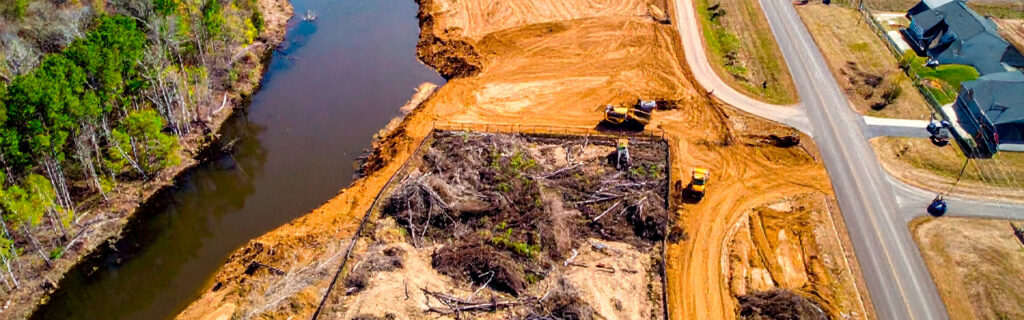
For property owners across Cherokee County, Ball Ground, and Canton managing residential and rural lots where the invasive vegetation, overgrown sections, and functional limitations that need to be addressed exceed any single season’s practical improvement capacity, understanding how phased clearing planning organizes large acreage improvement into the manageable sequential phases that each advance the property toward the full improvement vision at the pace that the available budget and the improvement program’s logical sequencing together determine, what the phase prioritization criteria are that identify which sections and improvements belong in which phase, and how the phases connect to each other as each phase creates the conditions that make the subsequent phase more accessible, more accurately planned, and more efficiently executed gives the practical foundation for approaching large property clearing as the organized multi-season program that phased planning makes manageable rather than the overwhelming single-event scale that full-scope simultaneous treatment would require.
Why Phased Clearing Produces Better Outcomes Than Attempting Full-Scope Single-Season Treatment
Phased clearing on large Cherokee County properties produces better total improvement outcomes than attempting full-scope clearing in a single season not only because of the budget management advantage that phasing provides but because the sequential execution that phasing creates is inherently better for planning accuracy, preservation quality, and subsequent management program effectiveness than the simultaneous full-scope clearing that single-season treatment would require even if the budget were not a constraint.
Planning accuracy improves with phased clearing because each completed phase reveals the terrain, drainage, and native species conditions beneath the cleared vegetation that the subsequent phase’s planning can specifically incorporate rather than assuming from the pre-clearing accessible observation that the vegetation conceals. The building site earthwork that the second-phase grading and development requires is more accurately scoped after the first-phase clearing reveals the actual ground-level terrain than before when the canopy and understory concealed what the cleared site actually presents at the ground level that earthwork must address. The food plot locations that the second-phase establishment selects from the terrain that first-phase clearing reveals are better suited to the actual soil, drainage, and sunlight conditions that the revealed terrain presents than the locations that pre-clearing assessment could only estimate from the accessible observation that vegetation cover limited to the accuracy that revealed terrain specifically improves.
Preservation quality improves with phased clearing because the preservation walk that identifies and marks native trees and native understory species before each phase’s treatment can be conducted with the direct observation access that prior phases have provided to the interior sections that the preservation walk must enter before the subsequent phase treats them. Large-scale single-season clearing of the full property requires preservation decisions across the full extent simultaneously, with the interior sections that the accessible perimeter cannot reach for the close-proximity preservation assessment that specific native species identification requires being assessed at lower quality than the interior sections that prior-phase clearing has made accessible for the close-proximity assessment that phased approach enables for each subsequent phase’s treatment area. Subsequent management program effectiveness improves with phased clearing because the herbicide follow-up that root energy depletion requires from invasive resprout in each phase’s treated area can be specifically targeted and timed for the smaller treated area that each phase produces rather than requiring the simultaneous herbicide management across the full property that single-season clearing of the full extent would demand as a management capacity challenge that may exceed what the property owner’s program can sustain across the full treated acreage simultaneously.
How to Identify Priority Areas for the First Clearing Phase
Identifying which areas of a large Cherokee County property should receive the first clearing phase’s investment requires applying the prioritization criteria that distinguish improvements whose execution in the first phase creates the most significant property function gains and the most productive foundation for subsequent phases from improvements whose execution in later phases does not compound the improvement program’s effectiveness or produce the foundation that the program’s subsequent phases require.
Access Corridor Clearing as the First Priority
The clearing that establishes the access corridors connecting the property’s primary accessible areas to the interior sections that subsequent phases will treat belongs in the first phase before any interior section clearing because the access that first-phase corridor clearing creates specifically enables the subsequent phases’ equipment to reach the interior treatment areas through the corridors the first phase established rather than requiring each subsequent phase to address its own access limitations as a preliminary scope component before the primary treatment can begin. Interior sections that subsequent clearing phases treat cannot be efficiently reached by professional clearing equipment without the access corridors that first-phase development establishes, and the subsequent phases that must address their own equipment access before treating the primary scope generate the preliminary access component cost at each phase that first-phase corridor development would have pre-provided without the per-phase addition that treating access as each phase’s preliminary scope rather than the program’s initial phase creates across the program’s sequential execution. Access corridor clearing also provides the immediate property function gain that walkable, navigable, equipment-accessible routes through the property create from the first phase’s execution, delivering the access improvement that the property owner can use immediately rather than awaiting the later phases’ treatment of the interior sections the corridors connect to.
Highest-Use and Highest-Priority Functional Areas Second
After access corridor clearing establishes the equipment access that subsequent phases require, the clearing that addresses the highest-use and highest-priority functional areas whose overgrown condition most significantly limits the property’s current practical function belongs in the early phases before the lower-use and lower-priority sections that the improvement program will eventually address. For hunting properties, this means the clearing around primary stand locations, along primary game movement corridors, and at the food plot positions that the hunting program most depends on. For recreational properties, this means the clearing that creates the primary use areas and trail network connections that recreational use most requires. For agricultural or mixed-use properties, this means the clearing that creates the most productive available land for the intended agricultural use from the sections most suitable for that use given their terrain, soil, and existing condition. The highest-priority functional area criterion ensures that the early phases’ investments create the most immediately significant functional improvements rather than distributing the early investment across sections that contribute to the full improvement vision but that do not represent the highest-priority functional gains that the property owner’s intended use most depends on receiving first.
Compounding-Consequence Sections Before Stable-Condition Sections
Among sections of equivalent functional priority, those where deferred treatment produces compounding negative consequences with each additional unmanaged season belong in earlier phases than the sections where the treatment cost and required approach are relatively stable across the deferral period that phased sequencing creates between the first phase and the later phases that address the lower-priority sections. Fence line sections where invasive vegetation is actively integrating with fence infrastructure accumulate infrastructure damage with each additional growing week that the integration advances unaddressed, making the combined vegetation management and infrastructure repair scope larger at the deferred treatment timing than at the earlier treatment timing when management addresses only the vegetation before infrastructure damage requires repair as an additional scope component. Food plot sections where advancing invasive margin encroachment progressively reduces productive area with each unmanaged season accumulate the productive area loss that each season’s encroachment adds, making the food plot restoration scope larger at the deferred treatment timing than at the timing when the earlier treatment would have addressed smaller encroachment than the subsequent season’s additional advance has added to the restoration scope. Treating these compounding-consequence sections in earlier phases prevents the scope additions that additional deferral seasons would add to the treatment scope at each compounding-consequence section, producing the total program cost reduction that addressing compounding sections before stable-condition sections of equivalent priority creates across the program’s full sequential execution.
How Each Clearing Phase Creates Value for the Phases That Follow
The value that each clearing phase creates for the phases that follow is the distinguishing characteristic of a well-organized phased clearing program from an arbitrarily divided simultaneous treatment that happens to be distributed across multiple seasons without the planning that connects each phase’s execution to the foundation it specifically creates for the subsequent phases that follow it. Understanding this phase-to-phase value creation is the planning concept that most clearly distinguishes effective phased clearing program design from less effective divisions of the full scope that do not specifically plan for each phase’s contribution to the subsequent phases’ execution quality and cost.
The first phase’s access corridor clearing creates the equipment access value that each subsequent phase realizes as reduced mobilization cost, reduced preliminary access preparation at each subsequent phase’s treatment areas, and expanded options for the equipment types that the established access corridors can deliver to subsequent treatment areas rather than the equipment limitations that inadequate access before the first phase would have imposed on every subsequent phase’s treatment approach. The second phase’s treatment of the highest-priority functional sections creates the terrain revelation value that the revealed terrain’s accurate characterization provides for the subsequent phases’ improvement planning, specifically the building site earthwork planning, food plot location selection, and drainage infrastructure design that the revealed terrain conditions inform with the accuracy that pre-clearing assessment could not achieve at the same accuracy.
The management program that each phase’s treatment initiates creates the root energy depletion value that each subsequent season’s herbicide follow-up in the treated sections accumulates toward the sustainable management condition that the depletion program progressively approaches. Sections treated in the first phase are in their second or third herbicide follow-up treatment season by the time the program reaches the later phases, meaning that the first-phase treated sections’ root energy depletion is progressively advancing toward the sustainable management level while the later-phase sections are beginning their own depletion programs. The total management program across the full property is therefore at different depletion stages simultaneously across the different phase-year treated sections, with the earlier-treated sections progressively reducing their resprout management requirements while later-treated sections begin their own depletion programs, producing the progressively declining overall property management intensity that each season’s depletion advance across all treated sections creates from the sequential accumulation of depletion progress across the phases’ different treatment timings.
Planning the Phase Sequence for a Specific Large Property
Planning the specific phase sequence for a large Cherokee County property’s clearing program requires mapping the full property’s improvement needs against the prioritization criteria, identifying the access corridors that each phase’s treatment areas require the prior phases to have established, and confirming that the sequential execution that the phase plan creates respects the dependency relationships among the phases rather than creating phases that require the access, terrain revelation, or depletion progress that prior phases have not yet provided when the dependent phase is scheduled for execution.
This phase sequence planning begins with a property-wide improvement inventory that identifies every section needing clearing or management treatment, notes each section’s current vegetation conditions, estimates each section’s treatment intensity requirement from the vegetation assessment that physically entering each section provides, identifies each section’s access requirements from the equipment corridor assessment that the accessible starting points and the section’s location within the property together determine, and assesses each section’s priority level from the functional criteria that the property’s intended use and the compounding consequence criteria that each section’s deferral implications together establish. The phase plan that organizes this inventory into the sequential phases that respect access dependencies, terrain revelation dependencies, and priority ordering produces the organized program that the full improvement vision requires rather than the arbitrary seasonal division that distributes the full scope across multiple seasons without the organizational logic that makes each phase specifically productive for the subsequent phases that follow it.
Sharing this phase plan with the professional clearing contractors whose services the program requires allows the contractors’ regional expertise to be applied to the full program context rather than each season’s isolated treatment scope, producing the contractor advice that specifically accounts for the subsequent phases’ requirements when designing each current phase’s treatment approach rather than the project-specific advice without program context that addressing each season’s scope without the full program plan provides. A contractor who understands that the first-phase access corridors will be used by the professional forestry mulching equipment that second-phase interior sections require can specifically design the first-phase corridors at the width that the second-phase equipment requires rather than the lighter width that the first-phase access alone might justify without the second-phase equipment’s width requirement that the program context specifically requires the first-phase corridor to accommodate.
How to Maintain the Progress Between Clearing Phases
The progress that each clearing phase creates in the treated sections must be actively maintained between phases to prevent the resprout from intact invasive root systems from returning the treated sections toward the pre-treatment density that the management program’s herbicide follow-up specifically prevents from developing. Between-phase maintenance is the property management obligation that the phased clearing program creates as a continuous commitment across the program’s full seasonal duration rather than an optional activity between the treatment events that the phases represent.
Herbicide treatment of the first-season resprout that appears in each treated section four to eight weeks after the phase’s mechanical clearing is the most critical between-phase maintenance activity for preventing the resprout from advancing toward the density that would require professional re-treatment before the program’s next phase has been completed. Scheduling this herbicide treatment for the six to twelve inch resprout height during the active growing season following each phase’s mechanical clearing captures the root energy depletion timing that active vascular transport provides for herbicide movement to root reserves, producing the depletion that prevents the resprout from advancing toward professional re-treatment density rather than the deferred treatment that allows the resprout to advance past the most efficient herbicide treatment stage before the treatment that should have been scheduled before the advance occurred.
Owner-operated mowing of the treated sections at the frequency that keeps resprout within the owner-operated equipment’s processing capacity maintains the treated sections at the functional management standard between professional treatment events without requiring professional equipment mobilization at the frequency that unmanaged resprout advancing toward professional treatment density would eventually require. The between-phase maintenance program that combines the scheduled herbicide treatment of first-season resprout at optimal timing with the owner-operated mowing that keeps treated sections within manageable density between professional events ensures that the progress each phase creates is specifically preserved rather than eroded by the resprout that adequate maintenance prevents from returning the treated sections to the conditions that required professional clearing to address in the first place.
Frequently Asked Questions
How many seasons should a phased clearing program for a large Cherokee County property realistically expect to require?
The number of seasons a phased clearing program requires for a large Cherokee County property depends on the total acreage needing treatment, the vegetation density and establishment level that determines the professional clearing cost per acre at each treatment area, the annual budget available for the program, and the priority sequencing that determines which sections the earlier seasons treat relative to the sections that later seasons address. Properties with ten to fifteen acres of overgrown acreage at established density, annual clearing budgets of typical residential improvement scale, and priority-organized phase sequencing commonly require three to five seasons to address the full treatment acreage while maintaining the between-phase management that each treated section requires between its treatment season and the program’s final phase. Properties with larger overgrown acreage, lower annual budgets relative to the per-acre treatment cost, or more complex priority organization may require five to ten or more seasons to address the full scope at the pace that the budget and prioritization together determine. The realistic program duration is best estimated before the program begins by calculating the per-acre treatment cost from contractor quotes for the specific vegetation conditions at the property, dividing the total treatment acreage by the annual acreage that the available annual budget can fund at the per-acre treatment cost, and confirming that the resulting program duration is acceptable to the property owner’s improvement timeline expectations before committing to the phased approach rather than discovering mid-program that the duration exceeds what the property owner’s timeline expects.
Can the phased clearing sequence be adjusted mid-program if conditions in later phases turn out to differ significantly from what pre-program planning assumed?
Yes, and mid-program sequence adjustment based on revealed conditions is one of the specific planning advantages that phased clearing provides over single-season full-scope treatment, because each completed phase’s terrain revelation and condition characterization may produce information that adjusts the subsequent phases’ scope, sequencing, or approach from what the pre-program planning assumed before any clearing had revealed what the vegetation cover was concealing. A second-phase interior section that the first-phase corridor clearing has now made accessible may reveal different terrain, drainage, or preservation conditions than the pre-program assessment characterized from accessible positions before the first-phase clearing provided access for close-proximity assessment. The phase plan’s adjustment to incorporate these revealed conditions before the second-phase treatment commitment is specifically the planning process that phased clearing enables, producing the second-phase scope that accurately reflects the revealed conditions rather than the assumed conditions that the pre-program planning estimated before the first phase revealed what the second phase will actually encounter. Property owners should specifically plan for this mid-program assessment and adjustment rather than treating the pre-program phase plan as the final plan that subsequent phases execute without revision, because the terrain revelation that each phase creates is specifically valuable for the subsequent phases’ scope accuracy and should be used to update the phase plan before each subsequent phase’s commitment rather than ignored in favor of the pre-program estimate that the revealed conditions have now made more accurately characterizable.
How does the phased clearing approach affect the property’s value relative to full-scope single-season clearing?
Phased clearing’s effect on property value relative to full-scope single-season clearing depends on the quality of the between-phase management that prevents resprout from eroding the progress each phase creates and on the functional improvements that each completed phase specifically adds to the property’s accessible and usable area. Properties whose phased clearing programs are supported by the consistent between-phase management that prevents phase progress erosion progressively increase their accessible and functional acreage with each completed phase, adding the per-acre value difference between improved and unimproved condition to the property’s functional value at the rate that each phase’s treatment area converts from unimproved to improved condition. Properties whose phased clearing programs lack the between-phase management that prevents phase progress erosion experience the resprout-driven return toward unimproved condition in the earlier-treated sections while subsequent phases are treating later sections, potentially reducing the net property improvement below what the treatment investment should have produced if between-phase management had sustained the progress that each phase created. The total property value improvement from a well-managed phased program across its full duration is equivalent to or exceeds the value improvement from full-scope single-season clearing because the better planning accuracy, preservation quality, and sequential terrain revelation that phased clearing provides produce improvement outcomes that are specifically suited to the revealed site conditions rather than the assumed conditions that single-season full-scope clearing without the terrain revelation benefit must rely on for the full scope’s planning without the sequential revelation advantage that phasing specifically provides.
Should I try to clear adjacent sections in the same season or spread clearing across different areas of the property in each season?
Treating adjacent sections in the same season generally produces more efficient treatment than spreading the season’s budget across geographically distributed sections, because professional forestry mulching and clearing equipment has a mobilization cost that is fixed per mobilization event regardless of the acreage treated during that event, and consolidating the treatment acreage into a single contiguous or adjacent treatment area per mobilization event maximizes the treatment acreage per mobilization cost rather than distributing the mobilization cost across smaller treatment areas at multiple locations that require separate mobilization events. From the program sequencing perspective, treating adjacent sections in the same season also creates the most efficiently connected access network from each season’s treatment because adjacent section clearing extends the access network from the prior access endpoint into the next adjacent section rather than requiring the access to be re-established from the primary access points to each distributed treatment location without the network extension efficiency that adjacent section sequencing provides. The exception to the adjacent-section preference is when the priority criteria specifically require treating a non-adjacent section in the current season because of its compounding consequence level or functional priority relative to the adjacent sections that the priority criteria rank lower despite their geographic proximity to the current season’s treatment area. In these cases, the priority criteria appropriately override the geographic efficiency preference, and the non-adjacent priority section receives treatment despite the reduced mobilization efficiency that its geographic separation from the adjacent sections creates.
Ready to Plan a Phased Clearing Program for Your Large North Georgia Property?
Large Cherokee County properties with more overgrown acreage than any single season’s clearing budget can address are specifically the properties that phased clearing planning most benefits, because the organized sequential program that phasing creates from the overwhelming full scope is the management approach that makes the full improvement vision achievable across the seasons that the available budget and the improvement program’s logical sequencing together require rather than deferring the full vision to the single season that a budget adequate for simultaneous full-scope treatment would require but that most property improvement programs do not provide. Each phase’s execution advances the program toward the full vision at the pace the budget allows while creating the access, terrain revelation, and management program foundation that the subsequent phases’ more accurate, more efficiently executed, and more productively managed treatment realizes as the compounding improvement that organized phased execution specifically produces from the sequential investment that each season’s phase contributes to the growing program.
Bardin Outdoors works with property owners across Ball Ground, Canton, Cherokee County, and North Georgia on phased land clearing and forestry mulching programs planned from the full property’s improvement vision and organized into the sequential phases that each season’s budget most productively executes while building the foundation that the subsequent phases require for the terrain-specific, priority-organized, access-enabled treatment that the phased approach specifically provides for large acreage improvement programs on North Georgia rural and residential properties. To learn more about how Bardin Outdoors can help plan and execute a phased clearing program for your large North Georgia property, contact us.