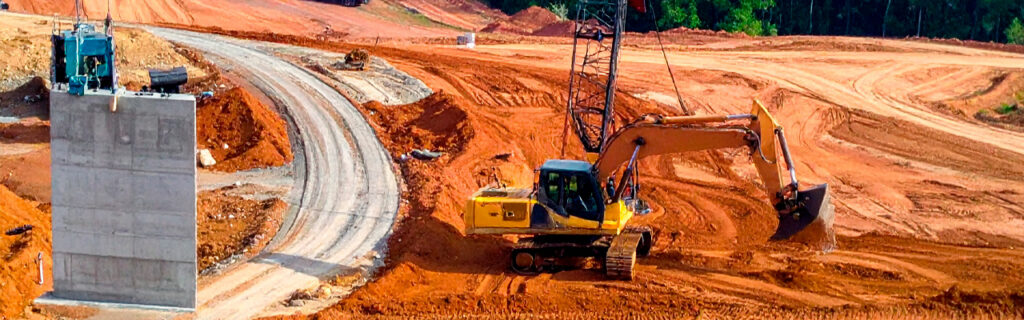
For property owners across Cherokee County, Ball Ground, and Canton preparing to have grading equipment, excavators, bulldozers, forestry mulching machines, or any other heavy equipment work on their residential or rural properties, understanding the specific preparation steps that protect both the property and the project from the disruptions that inadequate preparation produces gives the practical foundation for managing the mobilization planning phase as deliberately as the project execution phase. The preparation that happens before the equipment arrives is invisible in project photographs and does not produce the satisfaction of visible progress, but it is the work that determines whether the project runs smoothly or whether it generates the reactive problem-solving that costs more in time, money, and property damage than the preparation would have required.
Why Heavy Equipment Mobilization Planning Deserves Deliberate Preparation
Heavy equipment has dimensional, load, and access requirements that ordinary residential property infrastructure is not designed to accommodate as a standard capability. Residential driveways are built for passenger vehicle weights and widths. Residential gates are sized for the vehicles the property owner regularly uses. Residential lawn areas and access paths are prepared for foot traffic and light vehicle loads rather than the track or tire loads that excavators, graders, and other heavy equipment generate when traversing them. The gap between what residential infrastructure is designed for and what heavy equipment mobilization requires is the source of most avoidable equipment access problems on residential and small rural properties.
On larger rural properties where dedicated access infrastructure including farm roads and equipment lanes may exist, heavy equipment mobilization planning must still address the specific conditions those routes present in their current state, which may have changed since they were last used for heavy equipment or since the current property owner acquired the property. A farm road that was adequate for equipment in prior years may have developed drainage problems, surface deterioration, or overhead clearance issues from vegetation growth that makes it no longer adequate for the equipment planned for the current project without preliminary preparation. Assuming that existing infrastructure that was adequate in the past is still adequate without current assessment produces mobilization day discoveries that could have been identified and addressed during the preparation phase.
Assessing and Preparing Equipment Access Routes
The access route from the public road to the work area is the first and most fundamental mobilization planning element because no other preparation matters if the equipment cannot reach the work area. Access route assessment should cover every dimensional and load-bearing constraint along the full route that equipment must travel, from the point where the equipment trailer or the equipment itself turns off the public road to the point where the equipment reaches the work area and can begin productive operation.
Gate and Passage Width Measurement
Every gate, gap between structures, or narrow passage along the access route should be physically measured before the equipment is scheduled. Residential gates commonly range from eight to twelve feet wide, and the equipment being brought onto the property may be eight feet or more wide depending on the machine type and configuration. A gate that is slightly wider than the equipment provides barely adequate clearance for straight-through movement but may not provide the turning clearance that allows equipment to navigate an angled approach through the gate. Measuring the actual gate width and any angle between the approaching travel direction and the gate opening gives the contractor the access information needed to determine whether the planned equipment can navigate the access without preliminary gate modification or equipment substitution.
Gates that are not wide enough for the planned equipment must either be temporarily widened by removing one post and panel before the equipment arrives, or the project must be reconsidered for equipment that can navigate the existing gate opening. Discovering this constraint on mobilization day when the equipment is already on the trailer at the property entrance is the most expensive point at which to discover it. Discovering it during the pre-project access route assessment allows the gate modification to be planned and scheduled before the equipment mobilization day rather than requiring field improvisation that may damage the gate or delay the project start while a solution is arranged.
Overhead Clearance Along the Full Route
Tree branches, utility service lines from the road to the house, and any structure spanning the access route create overhead clearance constraints that affect both the transport trailer carrying the equipment to the property and the equipment operating under power once it has been unloaded. Utility service lines including electrical, telephone, and cable that connect the road to the house are typically at heights of twelve to fifteen feet and may be lower where they have sagged from age or vegetation loading, which creates clearance constraints for tall transport trailers and for equipment operating near the entry point. Tree branches overhanging the access route should be identified and their clearance estimated relative to the height of the planned equipment, with any low branches that would contact the equipment flagged for trimming before the mobilization date.
Ground Bearing Capacity Along the Access Route
The ground bearing capacity along the access route determines whether heavy equipment can traverse it without creating the ruts, track marks, and subgrade damage that equipment operating on soft ground produces. Cherokee County clay soil loses bearing capacity significantly when saturated, and any soft or wet sections of the access route between the property entrance and the work area can become equipment access problems during wet seasonal conditions even when those same sections present no challenge during dry conditions. Walking the access route within twenty-four hours of a significant rain event identifies the soft sections that will limit equipment movement under realistic project-season moisture conditions rather than only under the favorable dry conditions that may not represent the access conditions during the actual mobilization.
Soft sections that would be damaged by heavy equipment traversal without preparation can be addressed by installing temporary timber mats or aggregate pads that distribute the equipment load across a larger surface area, reducing the pressure per unit area to levels the soft ground can support without deformation. Including these temporary ground protection measures in the mobilization plan where they are needed converts a soft section that would create access problems and property damage into a managed crossing that the equipment can navigate safely without damaging the ground surface beneath it.
Locating and Marking Underground Utilities and Private Systems
Underground utilities and private buried systems represent the most dangerous and potentially most costly damage risk that heavy equipment operations create on residential and rural properties. Severing a utility line creates safety hazards, service interruptions, and repair costs that can substantially exceed the cost of the precautions that would have prevented the damage. Damaging a septic system component creates a repair and system disruption situation that affects the property’s habitability until the damage is corrected. Breaking a well line creates an immediate loss of water service to the residence. Each of these consequences follows from equipment working in soil without adequate knowledge of what is buried within the work zone, and each is preventable through the utility location steps that should be completed before any equipment begins ground-disturbing work.
Call 811 Before Any Digging
Georgia law requires contacting the 811 utility notification center before any excavation or significant ground disturbance, and the locate request should be submitted at least three business days before the planned work begins to allow adequate time for all utilities to be located and marked. The 811 process contacts public utility operators including electric, gas, telephone, cable, water, and sewer providers who have facilities in the area and triggers their obligation to locate and mark their underground lines within the proposed work zone before the project begins. These marks are the baseline protection against public utility damage during equipment operations and should be confirmed to be present and clearly visible before any equipment begins working in the marked area.
The 811 system locates public utility lines but does not locate private buried systems that exist on the property beyond the utility providers’ infrastructure. Private buried systems including well water lines from the wellhead to the house, septic system components including the tank and drain field, propane service lines from the tank to the house, irrigation system piping, outdoor lighting wiring, and any other buried infrastructure that the property owner installed or that was installed by prior owners are the property owner’s responsibility to identify and locate before equipment works in areas where those systems might be present.
Identifying and Mapping Private Buried Systems
Private buried system location for equipment mobilization planning requires the property owner to identify every buried system on the property, determine its approximate routing and depth, and communicate that information to the contractor before equipment begins working. For systems whose location is known with confidence, visual marking of the system’s route with stakes or flags before the equipment arrives gives the operator field guidance about where to avoid and what areas require extra care during equipment operation. For systems whose location is uncertain, physical investigation including probing along the suspected routing or tracing the system from its known endpoints provides the location information needed before equipment works in the uncertain zone.
Septic systems are the private buried infrastructure most frequently damaged by equipment operations on residential properties because their drain fields can extend across substantial areas of the yard that equipment might need to traverse and because their tank and distribution box locations may not be obvious from surface observation. Locating the septic system components before any equipment accesses the yard allows the equipment routing to avoid septic infrastructure or to approach it with the caution that known component positions make possible. Cherokee County Environmental Health maintains permit records for septic systems installed under permit that may include system layout information useful for locating components whose positions are not otherwise known.
Evaluating Ground Conditions in the Work Area
Ground conditions in the work area at the time of equipment mobilization determine whether the equipment can operate effectively, whether the work quality the project requires can be achieved, and whether the site will be in a condition appropriate for the subsequent project phases that follow the equipment work. Cherokee County clay soil’s significant sensitivity to moisture content makes ground condition evaluation a genuine scheduling consideration rather than a formality, and understanding the specific conditions that indicate adequate versus inadequate ground conditions for heavy equipment operation gives property owners the basis for making scheduling decisions that produce quality work rather than forcing equipment to operate on conditions that will compromise both work quality and site condition.
Moisture Condition Assessment
Cherokee County clay at high moisture content produces deep ruts under equipment loads rather than the clean, stable surface that equipment operating on clay at appropriate moisture content produces. These ruts are not simply cosmetic problems. They reflect bearing capacity failure in the clay that indicates the subgrade is not providing adequate support for the equipment weight, and they create an uneven, disturbed surface that subsequent grading work must address before the site is ready for the structural or surface improvements that follow the initial equipment work. Assessing the soil moisture condition in the work area before scheduling equipment mobilization, specifically by visiting the work area within twenty-four hours of a significant rain event to observe whether the surface is firm or soft, allows the mobilization to be scheduled for conditions that support quality work rather than conditions that will produce the ruts and site damage that wet clay generates under equipment loads.
Soft Zone and Subsurface Condition Assessment
Low-lying areas, areas adjacent to drainage features, and areas that receive concentrated drainage from surrounding terrain may remain soft for days after rain events even when the surrounding ground has dried to adequate bearing condition. Probing these areas with a metal rod before scheduling equipment mobilization identifies soft zones where bearing capacity is inadequate for equipment traversal without ground protection measures. Areas that are consistently soft regardless of recent rainfall due to seasonal high water table conditions or impeded drainage may require drainage improvement before heavy equipment can safely operate in them, and identifying these conditions during pre-project site evaluation allows drainage improvement to be planned and executed before the equipment mobilization rather than discovering during the mobilization that the work area is inaccessible without preliminary drainage work that was not in the project scope.
Protecting Existing Improvements From Equipment Operation
Heavy equipment operating on or adjacent to existing property improvements including lawns, landscaping, pavement, and drainage infrastructure creates damage risks that pre-mobilization protection measures can significantly reduce. Understanding which existing improvements are at risk from equipment mobilization and what protection measures are appropriate for each gives property owners the ability to protect their existing investment from damage that the improvement project is intended to enhance rather than diminish.
Lawn and Landscaping Protection
Equipment traversing established lawn and landscaped areas creates compaction and surface damage that takes multiple growing seasons to fully recover, and in some cases creates ruts that require grading correction before the lawn can be properly reestablished over the damaged surface. Where equipment must travel through established lawn areas to reach the work area, limiting equipment passage to a single defined route rather than allowing general travel across the lawn area concentrates damage to a predictable zone that can be repaired after the project rather than spreading it across the full lawn area that the equipment accesses. Temporary fence or flag marking of the designated equipment travel corridor keeps equipment within the defined route and prevents the inadvertent travel outside that corridor that expands damage beyond what the project actually required.
Existing Pavement and Infrastructure Protection
Equipment tracking across existing concrete or asphalt pavement that is not designed for the equipment’s axle loads can crack, spall, and permanently damage the pavement surface. Where equipment must cross existing pavement to reach the work area, plywood or timber mat protection that distributes the equipment load across the pavement surface can reduce the pressure per unit area to levels the pavement can withstand without damage. Identifying existing pavement sections along the equipment route before mobilization allows these protection measures to be prepared and positioned before the equipment arrives rather than requiring improvised solutions after the equipment is already at the crossing point and needs to proceed.
Communicating Site Conditions and Constraints to the Contractor
The pre-mobilization information that property owners develop through access route assessment, utility location, ground condition evaluation, and existing improvement protection planning has its full value only when it is communicated to the contractor before the equipment arrives rather than being retained by the property owner and presented reactively when the contractor encounters each condition during mobilization. A contractor who arrives with complete pre-mobilization information can develop the equipment routing, the access preparation steps, and the operational approach for the work area conditions before arriving rather than developing those responses reactively on the project day when the equipment is already on site and time pressure creates incentives to proceed on conditions that adequate pre-mobilization assessment would have addressed before mobilization day.
The most effective pre-mobilization communication covers the access route dimensions and any constraints identified during the assessment walk, the locations of all identified underground utilities and private systems with their approximate routing and the source of the location information, the ground condition assessment findings including any soft zones that were identified and their locations relative to the work area, and any existing improvements along the equipment route that will need protection during equipment passage. Photographs of constraint locations taken during the pre-mobilization assessment walk give the contractor visual reference for conditions they have not yet personally observed and allow them to plan their approach to each constraint before arriving at the property rather than developing that plan on site when the project timeline has already begun.
Frequently Asked Questions
How far in advance should I complete pre-mobilization preparation before the equipment arrives?
The 811 utility notification request should be submitted at least three business days before the planned work begins as required by Georgia law, which sets the minimum advance timeline for utility location. The remaining pre-mobilization preparation steps including access route assessment, private system location, ground condition evaluation, and existing improvement protection can typically be completed within the week before the scheduled mobilization for most residential and small rural property projects. However, preparation steps that require preliminary work to resolve identified constraints, such as gate widening, access route grading, or ground protection installation, need to be completed before the equipment arrives, which may require more advance planning depending on how long those preliminary steps take. Completing the full pre-mobilization assessment as early as possible after the project is scheduled allows any identified constraints that require preliminary resolution work to be addressed with adequate lead time rather than being discovered too close to the mobilization date for resolution before the equipment arrives.
What should I do if the 811 locate marks are not placed before the scheduled equipment mobilization?
If utility locates have not been placed within the required response time after a valid 811 notification, the appropriate response is to contact the 811 center and report the non-response before proceeding with any ground-disturbing work. Georgia law generally provides property owners and excavators some protection from liability for damage to utilities that were properly notified but did not respond within the required time, but this protection depends on the notification being valid and properly submitted. Proceeding without locate marks on the assumption that the utility provider’s failure to respond means no facilities are present in the work area is a significant risk because utility providers may have underground facilities in the area that they simply failed to locate and mark. Escalating through the 811 system to ensure locate completion, or obtaining written documentation of the non-response that establishes the notification was properly submitted, is the approach that protects the project from both liability and the safety and repair costs of damaging unmarked utilities.
How do I identify where my septic system components are located if the original installation records are not available?
Several approaches can help identify septic system component locations when original installation records are not available. Cherokee County Environmental Health maintains permit records for septic systems installed under permit that may include system layout drawings useful for component location. The septic tank access riser or lid, if visible at the surface, identifies the tank location directly. If no surface access point is visible, the tank is typically located somewhere between the house and the drain field, and probing the soil with a metal rod at intervals along the likely tank path from the house plumbing outlet can identify the tank when the rod encounters resistance at a consistent depth that suggests a buried concrete structure. The drain field is typically located in the flattest, most open area of the yard with adequate separation from wells, buildings, and property lines. If these approaches do not produce adequate confidence about system component locations, a licensed septic system professional can locate the components using specialized equipment before any ground-disturbing work proceeds near the suspected system area.
Does weather affect whether heavy equipment should proceed with planned work on a specific day?
Yes. Cherokee County clay soil’s bearing capacity sensitivity to moisture content means that equipment working on clay that is significantly above its optimum moisture content produces site damage and suboptimal work quality that adequate soil conditions would not create. Significant rainfall within twenty-four to forty-eight hours before the planned mobilization may produce soil conditions in the work area that are too wet for quality equipment operation, and the decision to proceed or postpone should be based on an assessment of actual soil conditions in the work area rather than on the project schedule’s pressure to begin work on the originally planned date. A brief site visit to assess soil firmness in the work area on the morning of the planned mobilization, or communication with the contractor about whether site conditions look adequate based on recent rainfall, is a reasonable final check before committing equipment to the site for the day. Postponing work by even one to two days after significant rain often produces meaningfully better soil conditions for equipment operation and work quality, at far lower cost than repairing the site damage that proceeding under adverse conditions creates.
Ready to Prepare Your Property for an Upcoming Equipment Project?
The preparation that happens before heavy equipment arrives on a North Georgia property is the work that keeps the project on track, protects the property from avoidable damage, and ensures that the equipment can reach and operate in the work area under conditions that allow the quality of work the project requires. Access route assessment, utility location, ground condition evaluation, and existing improvement protection are all steps that feel like delays compared to the immediacy of beginning visible project work, but they are steps that prevent the much more costly delays and repairs that inadequate preparation consistently produces when unidentified constraints and conditions are discovered during active project execution rather than during the planning phase where they could have been addressed before the equipment was already on site.
Bardin Outdoors works with homeowners and landowners across Ball Ground, Canton, Cherokee County, and North Georgia on outdoor improvement projects that include thorough pre-mobilization planning as a standard component of project preparation, bringing the regional experience needed to identify and address the specific access, utility, and ground condition considerations that North Georgia residential and rural properties present before equipment arrives rather than after. To learn more about how Bardin Outdoors approaches pre-mobilization planning for property improvement projects, contact us.