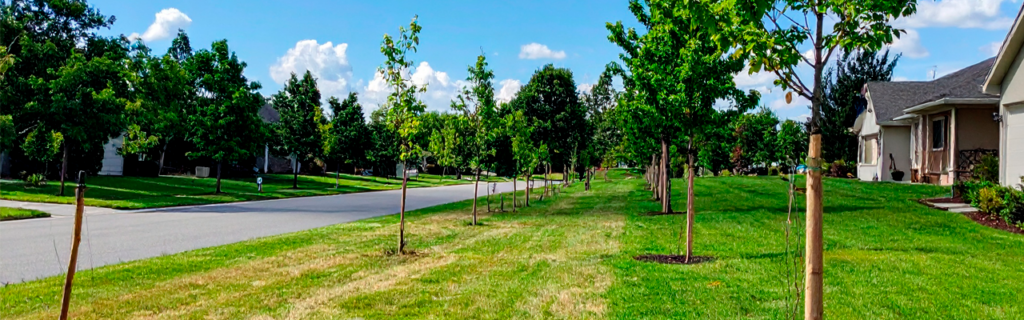
For homeowners in Ball Ground, Canton, Cherokee County, and North Georgia, understanding general tree spacing guidelines can help reduce risks and improve overall property safety.
Why Tree Distance Matters
Trees continue growing for many years after planting. A tree that seems safely positioned today may eventually create problems as roots spread and branches expand.Proper spacing helps protect foundations, roofs, driveways, utilities, and nearby outdoor areas from avoidable damage.
Common Problems Caused by Trees Too Close to Homes
1. Roof and Gutter Damage
Overhanging limbs can scrape roofing materials and drop debris into gutters.During storms, weakened branches may also break and fall onto the structure.
2. Foundation and Driveway Issues
Large root systems can shift soil and affect nearby concrete surfaces or foundations.This may lead to cracks, uneven ground, or drainage problems over time.
3. Increased Moisture Problems
Dense tree coverage near the home may reduce sunlight and slow drying around the structure.This can contribute to moisture buildup and poor drainage conditions.
4. Storm-Related Hazards
Trees located too close to structures face a greater chance of causing damage during high winds or heavy storms.Dead or weakened limbs can become serious safety hazards.
General Tree Distance Guidelines
The ideal spacing depends on the tree species and expected mature size, but larger trees generally require significantly more distance from structures than smaller ornamental varieties.A good rule is to consider the full mature canopy and root spread instead of the tree’s current size.
Property owners should also consider nearby utilities, driveways, septic systems, and drainage patterns when evaluating tree placement.
Signs a Tree May Be Too Close to Your Home
- Branches hanging directly over the roof
- Visible roots near foundations or driveways
- Frequent gutter debris buildup
- Leaning trees toward the structure
- Cracks forming in nearby surfaces
- Excessive moisture or shade near the home
When Tree Removal May Be Necessary
If a tree poses an ongoing structural or safety risk, professional tree removal may be the safest long-term solution.In some cases, selective removal combined with proper grading and excavation improvements can also help correct drainage or stability issues around the home.
Frequently Asked Questions
How close can a tree safely be to a house?
It depends on the tree type and mature size, but larger trees generally require more distance from structures.Can tree roots damage foundations?
Yes. Large root systems can affect soil stability and nearby surfaces over time.Should overhanging branches be removed?
In many cases, trimming or removal helps reduce storm risk and roof damage.When should a tree be professionally evaluated?
Trees showing leaning, root exposure, dead limbs, or structural concerns should be inspected promptly.Need Help Improving Property Safety?
Proper tree placement and maintenance can help protect your home and reduce future property issues.To learn more about how Bardin Outdoors can help your property with tree removal and site improvements, contact us.