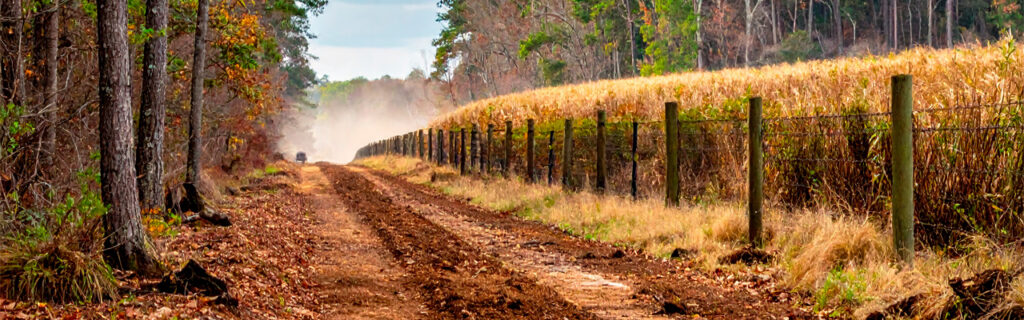
Forestry mulching specifically addresses the overgrown property boundary situation by providing the vegetation processing capability that established invasive density requires, the operational precision adjacent to fence infrastructure that boundary corridor clearing demands, and the in-place processing approach that eliminates the debris management requirement that conventional clearing creates when it pushes the boundary corridor vegetation along the fence line it was growing beside rather than processing it in place at the position where it was growing without moving it against the infrastructure that it surrounded. For property owners across Cherokee County, Ball Ground, and Canton managing residential and rural lots where overgrown vegetation along property boundaries has reduced or eliminated the visibility, access, and infrastructure management capability that clear boundary corridors specifically provide, understanding how forestry mulching improves visibility and access along property boundaries, what the restored corridor condition enables for boundary management and fence infrastructure maintenance, and how to plan the boundary corridor restoration that produces the specific improved conditions the property owner needs from the treatment gives the complete practical guide for approaching property boundary overgrowth as the targeted mulching application that forestry mulching’s capabilities specifically serve.
Why Property Boundary Overgrowth Creates the Management Challenges It Does
Property boundary overgrowth on Cherokee County rural and residential properties creates the visibility and access challenges it does through the same biological mechanism that overgrowth creates on any portion of the property where management has not been specifically applied at the frequency the invasive species’ growth rate requires to keep it within the manageable density that routine maintenance can address without the professional clearing intervention that established density exceeds the owner-operated equipment threshold for.
Property boundaries are specifically vulnerable to management gaps because they are often the most remote and least-frequented areas of the property, accessible only from the property interior without the natural foot traffic and vehicle passage that keeps interior use areas more frequently observed and more consistently managed than the boundary perimeter that most property owners visit infrequently and specifically rather than routinely and incidentally. This management frequency gap at property boundaries allows the invasive species that establish in the boundary zone from seed dispersal from adjacent properties and from the root extension of invasive populations already present within the property to accumulate the establishment and root energy that each growing season without management adds to the overgrown condition that multiple management-gap seasons together produce.
The fence line infrastructure along the property boundary creates a specific overgrowth challenge beyond what fence-absent boundary overgrowth creates, because the fence components provide the attachment and climbing structure that vines including wisteria, kudzu, and climbing euonymus specifically exploit to integrate their stems through fence openings, around fence posts, and across fence wire in ways that the vine’s growing stem achieves over the seasons of unmanaged contact and that the vine’s mature stem makes extractable only with the infrastructure damage that removing an integrated vine from the structure it has grown into consistently creates when extraction rather than pre-integration prevention is the management approach applied to vine-fence integration that prevention at the contact stage would have addressed without the extraction damage that post-integration removal requires.
How Forestry Mulching Restores Visibility Along Property Boundaries
Forestry mulching restores visibility along property boundaries by processing the overgrown vegetation that has accumulated along the boundary corridor to the wood chip mulch layer deposited on the cleared ground surface, creating the open corridor condition that allows the boundary line, the fence infrastructure along it, and the adjacent property on both sides to be specifically observed from within the cleared corridor rather than the impenetrable vegetative mass that the overgrowth had made the boundary zone into before the clearing that restored the visibility that boundary management requires.
Sight Line Restoration for Boundary Identification
Boundary corridor forestry mulching creates the sight lines along the boundary that allow the fence line, the survey monuments, and the boundary’s relationship to the adjacent property features to be specifically observed from positions within the cleared corridor that overgrowth density was preventing from being reached and used for boundary observation before the clearing restored the navigable corridor that observation and management require. The property owner who can walk the cleared boundary corridor after forestry mulching treatment, observe the fence line’s current condition at every position along the corridor’s length, and confirm the boundary’s relationship to the adjacent property features that the survey established as the reference points for boundary identification achieves the practical boundary awareness that the dense overgrowth had been preventing from being established through the routine observation that adequate corridor access specifically enables. Survey monuments that were installed at specific boundary positions and that the overgrowth had buried or obscured become findable and observable after corridor clearing removes the vegetation that was covering them, restoring the physical reference points that the boundary’s precise legal position is established from.
Fence Infrastructure Visibility for Condition Assessment
The fence infrastructure visibility that forestry mulching corridor restoration creates immediately after treatment is the assessment opportunity that the property owner should specifically use during the first post-clearing walk to characterize the fence condition that the overgrowth was concealing from observation and to identify the damage, integration, and deterioration that the vegetation contact and loading accumulated while the inaccessibility that the overgrowth created was preventing the inspection and maintenance that accessible fence line management provides as the routine practice that keeps damage modest rather than allowing it to advance to the more extensive condition that undetected accumulation produces. Post-clearing fence inspection should specifically observe wire deformation at positions where vegetation integration applied progressive mechanical loading to mesh openings, post leaning or displacement at positions where vine mass attachment accumulated leverage that pulled posts from their original plumb positions, mesh height loss where vegetation loading pulled the fence below its intended installation height, and splice failure at connections where moisture retention from adjacent dense vegetation accelerated the corrosion that the sustained moisture contact promoted. Each of these damage conditions is most efficiently repaired from the accessible cleared corridor immediately after clearing provides the access that repair requires, because the repair operations’ tools, materials, and personnel can reach the damaged positions through the cleared corridor that the mulching created rather than through the overgrowth that would have required pushing through or preliminary clearing before each repair position was accessible.
How Forestry Mulching Restores Access Along Property Boundaries
The access that forestry mulching boundary corridor restoration creates is the functional access that boundary management activities require to be conducted routinely and efficiently rather than extraordinarily and with the excessive effort that pushing through established overgrowth imposes on any attempt to reach the boundary through the vegetation density that the clearing specifically converts to the accessible corridor condition.
Walking Access for Inspection and Maintenance
Walking access for boundary inspection and fence maintenance requires the corridor width that allows inspection and maintenance personnel to walk the full boundary corridor length at the comfortable pace that routine management sustains without the physical effort that pushing through dense overgrowth imposes as the extraordinary effort that prevents routine management from being sustainably conducted at the frequency that adequate boundary management requires. Forestry mulching corridor width that provides the comfortable walking width that routine inspection pace requires, without the vegetation contact at body height and above that inadequate corridor width would continue imposing after clearing restored navigation at the constrained width that the overgrowth still occupies outside the narrow cleared path, creates the access standard that routine boundary management can sustainably use at the frequency the property owner’s boundary management schedule requires rather than the infrequent access that the extraordinary effort of pushing through overgrowth produces as the actual management frequency that the access difficulty limits.
Equipment Access for Maintenance Operations
Equipment access for the fence repair, post-setting, wire tensioning, and herbicide application equipment that boundary infrastructure maintenance requires needs the corridor width that the equipment dimensions demand for navigation along the boundary corridor without the vegetation contact that constrains equipment operation below the efficiency and precision that the maintenance activities require when equipment contacts vegetation that the corridor has not been established at the width to accommodate. Forestry mulching corridor establishment at the width that the most demanding maintenance equipment the boundary will require can navigate establishes the equipment access standard from the initial treatment that subsequent maintenance equipment can use without the preliminary clearing that inadequate corridor width would impose before the maintenance equipment could navigate the boundary corridor to reach the maintenance positions along it. Fence repair that requires post-setting equipment’s width clearance, wire tensioning equipment’s lateral reach, and material transport vehicle’s navigation along the corridor are all equipment access requirements that adequate corridor width from the initial forestry mulching treatment accommodates without the preliminary clearing that each maintenance event’s equipment access would otherwise require before the maintenance could proceed at the positions that the equipment must reach through the corridor that serves the boundary’s full maintenance program.
Planning Boundary Corridor Forestry Mulching for Effective Results
Planning boundary corridor forestry mulching for the specific improved visibility and access conditions the property owner needs from the treatment requires the pre-treatment decisions about corridor width, treatment extent, vine integration management, and post-treatment management program that together determine whether the treatment produces the specific functional improvements the property boundary needs rather than the undirected treatment that achieves clearing without the specific functional improvements that planning-informed treatment specifically creates.
Corridor Width Appropriate for All Intended Uses
The boundary corridor width that forestry mulching establishes should be specifically sized for the most demanding use the corridor will serve rather than for the minimum clearing that the fence’s immediate structural clearance would require without the management and equipment access width that the corridor must provide for all the boundary management activities it serves. A corridor established at the minimum width to clear the fence’s immediate perimeter but insufficient for comfortable walking inspection, equipment navigation, or repair operations will require the further clearing for each management use that exceeds the minimum corridor’s width before that use can proceed through the corridor that adequate initial width would have served without the per-use-event preliminary clearing that inadequate corridor width imposes. Establishing the corridor from the initial forestry mulching treatment at the width that comfortable walking inspection, equipment navigation, and material transport require eliminates this per-use-event preliminary clearing by creating the standing access condition that all intended management uses can directly access without preliminary widening at each management event’s specific equipment or personnel width requirement.
Both Sides of the Fence Line
Boundary corridor clearing should address the vegetation on both sides of the fence line rather than only the property owner’s side, because vegetation from the adjacent property side creates the same encroachment pressure on the fence infrastructure and the same corridor access reduction that vegetation from the property owner’s side creates, and because a corridor cleared only on the property owner’s side while the adjacent property side remains at overgrown density narrows back to below functional management width within the first growing season when the adjacent side’s vegetation advances into the corridor space that property-owner-side clearing created without addressing the adjacent-side source that immediately refills the corridor from the other direction. Addressing both sides of the fence line within the initial forestry mulching treatment creates the complete corridor that the vegetation pressure from both sides cannot immediately close because the clearing has addressed both of the sources that refill the corridor from opposite directions rather than allowing the unaddressed adjacent side to immediately begin reducing the corridor that only the property-owner side clearing had created.
Pre-Treatment Vine Integration Management
Vine stems that have grown through fence mesh openings, wound around fence wire, and integrated with fence posts and other structural components should be specifically addressed before forestry mulching equipment processes the adjacent vegetation rather than relying on the equipment to sever the integrated stems at the fence level without infrastructure contact. The most effective pre-treatment approach is hand-cutting the integrated vine stems at ground level on both sides of the fence at each integration position, severing the vine’s living connection to its root system and allowing the severed vine to die in place and gradually loosen from the infrastructure it is integrated with over the growing seasons following treatment as the dead vine loses the flexibility and turgor that made it pliable and difficult to separate from the infrastructure it grew through and around. Pre-treatment hand-cutting specifically prevents the infrastructure damage that attempting to extract integrated vine from fence components during or after mechanical clearing creates when the integrated stems resist extraction and deform the mesh, posts, and wire they have grown into during the growing seasons of unmanaged integration that preceded the clearing. Communicating the vine integration positions identified during the pre-treatment assessment to the clearing contractor before equipment arrives allows the contractor to provide guidance on whether additional pre-treatment vine management at specific integration positions is warranted before equipment operates adjacent to those positions.
The Post-Treatment Management Program That Sustains Boundary Corridor Visibility
Boundary corridor visibility and access restored by forestry mulching treatment requires the post-treatment management program that prevents invasive resprout from the intact root systems beneath the cleared corridor from returning the visibility and access condition to the overgrown density that the treatment addressed. The resprout that appears in the cleared boundary corridor within four to eight weeks of treatment under active growing season conditions is the biological response that the management program’s herbicide component specifically targets at the six to twelve inch resprout height when vascular transport efficiency for herbicide movement to root reserves is highest, depleting the root energy that vigorous resprout draws from and progressively reducing the resprout vigor and density that each successive growing season produces as root energy depletion accumulates across the seasons of consistent combined treatment.
Scheduling herbicide treatment of boundary corridor resprout at the six to twelve inch treatment height during the active growing season following the mechanical clearing rather than allowing the resprout to advance past this optimal treatment height before reactive scheduling addresses it captures the root energy depletion efficiency that active-growth vascular transport provides for herbicide movement to root reserves, producing the depletion that prevents the resprout from advancing to the professional re-clearing density that the herbicide follow-up at appropriate timing specifically prevents from developing. Owner-operated mowing of the boundary corridor between professional treatment events maintains the corridor at the width that direct navigation requires without the professional equipment mobilization that unmanaged resprout advancing toward the professional clearing threshold would eventually require if the owner-operated maintenance between professional events did not specifically prevent the resprout from reaching the density that professional clearing is required to address.
Frequently Asked Questions
How close to fence wire and posts can forestry mulching equipment safely operate without creating infrastructure contact risk?
The minimum clearance that forestry mulching equipment should maintain from fence wire and posts during boundary corridor treatment depends on the specific equipment model’s cutting head geometry, the debris discharge pattern that the operator’s experience with the specific equipment has characterized, and the operator’s boundary clearing experience that proficiency in navigating adjacent to infrastructure specifically requires relative to the general forestry mulching proficiency that processing away from infrastructure develops. Experienced operators with specific boundary clearing experience and knowledge of their specific equipment’s cutting head geometry and debris discharge pattern can typically process vegetation within twelve to eighteen inches of fence wire and posts without creating the infrastructure contact risk that less experienced operators create at equivalent clearances because the experience-informed operational judgment reduces the debris discharge trajectory uncertainty that inexperienced operators cannot reduce through the controlled operation that experience with the specific equipment’s debris discharge characteristics enables. Confirming with the contractor before scheduling that the specific operator has specific boundary clearing experience and that the specific equipment model has characteristics suitable for close-infrastructure operation provides the pre-treatment quality assurance that boundary clearing’s infrastructure proximity demands rather than the general forestry mulching capability that contractors may offer without the boundary-clearing-specific operational experience that infrastructure proximity specifically requires.
What should the immediate post-clearing boundary walk specifically assess beyond fence condition?
The immediate post-clearing boundary walk should assess the fence condition that the clearing has made accessible for the first time since the overgrowth obscured it, and should also specifically assess the terrain conditions, drainage features, and boundary marker positions that the cleared corridor has revealed for the first time since the vegetation covering them grew tall enough to conceal them from accessible observation. The terrain surface with its natural drainage channels, slope patterns, and terrain irregularities should be specifically observed now that the clearing has exposed the ground surface that the overgrown vegetation was covering, identifying any terrain conditions that the boundary’s improvement planning should account for when scheduling the fence repair and vegetation management that the cleared corridor’s assessment reveals as needed. Any survey monuments or boundary markers that the clearing has revealed by removing the vegetation covering their positions should be specifically located and documented with dated photographs that establish their post-clearing observable position as the reference that subsequent vegetation management can confirm the markers remain accessible within rather than discovering them re-obscured by resprout growth in subsequent assessment cycles. Any drainage features visible in the cleared corridor should be specifically assessed for their potential regulatory status as regulated watercourses whose buffer zones the adjacent property management should avoid disturbing, with the post-rain observation that reveals drainage flow at these features providing the assessment most accurately rather than the dry-condition vegetation-free terrain observation that clearing makes possible but that drainage flow reveals more definitively than terrain shape assessment without observed flow.
How does boundary corridor forestry mulching interact with neighbor relations when the overgrowth extends across the property line?
Boundary corridor forestry mulching that involves clearing vegetation on both sides of the fence line requires awareness of the property boundary’s precise location to confirm that the clearing on the adjacent property side remains within the reasonable boundary corridor that both parties benefit from keeping clear rather than extending the clearing onto the adjacent property beyond the corridor that adequate fence line visibility and maintenance access justifies. The shared benefit that clear boundary corridors provide to both adjacent property owners, including improved fence condition awareness for both parties, reduced risk of encroachment disputes that unclear boundaries create, and improved property security that visible boundaries enable, creates the reasonable basis for brief neighbor conversations before boundary corridor clearing begins to inform the adjacent property owner of the planned clearing scope and the shared benefit rationale for clearing on both sides of the fence line. These neighbor conversations before clearing begins prevent the boundary clearing from being perceived as encroachment by adjacent property owners who were not informed of the planned treatment and who discover the clearing on their side of the fence after it has been completed without the prior communication that would have framed it as the shared-benefit fence line maintenance that it specifically is rather than the unauthorized land clearing on their property that it would appear to be without the context that informed prior communication provides. Keeping the cleared corridor on the adjacent property side modest in width, specifically the minimum adequate for the fence inspection and maintenance access that justifies clearing on the adjacent side rather than an expansive clearing that suggests uses beyond the fence line maintenance rationale, maintains the reasonable proportionality between the clearing’s stated purpose and its actual scope that neighbor conversations can most credibly establish as the basis for the adjacent-side clearing that both parties benefit from rather than resent as an imposition.
How frequently does boundary corridor forestry mulching need to be repeated to maintain the visibility and access the initial treatment established?
The frequency at which professional forestry mulching boundary corridor treatment needs to be repeated depends on the consistency of the between-treatment management program that herbicide follow-up and owner-operated mowing provides during the growing seasons between professional treatment events, and on the root energy depletion level that successive combined treatment seasons have accumulated in the invasive root systems beneath the cleared corridor. Boundary corridors that receive consistent herbicide follow-up treatment of resprout at the six to twelve inch treatment height during the first three to five growing seasons following the initial professional clearing, combined with owner-operated mowing that keeps resprout within the owner-operated equipment’s processing capacity between herbicide applications, progressively reduce the resprout vigor and density that each successive growing season produces as the accumulated root energy depletion reduces the root systems’ capacity to drive the vigorous resprout that the first post-clearing season produced from the full root energy reserves that the initial mechanical clearing did not deplete. This progressive depletion trajectory extends the interval before professional mechanical treatment is again required because the owner-operated mowing and herbicide program maintains the corridor at adequate visibility and access width for progressively longer periods between professional treatment events as the root energy depletion that the combined program accumulates reduces the resprout intensity that requires professional treatment to manage. Boundary corridors without the consistent between-treatment combined program return toward professional re-clearing density faster than corridors with consistent combined treatment, requiring more frequent professional treatment repetition and higher total management investment than the corridor that sustained combined treatment progressively deploys toward the lower-treatment-intensity sustainable condition that adequate root energy depletion specifically achieves.
Ready to Restore Visibility and Access Along Your Property Boundaries?
Property boundary corridors on Cherokee County rural and residential properties that overgrown vegetation has made impossible to walk, impossible to observe the fence infrastructure along, and impossible to assess for the damage and infrastructure deterioration that the inaccessibility allowed to accumulate undetected are corridors that forestry mulching restoration is specifically equipped to convert from the currently inaccessible, unobservable condition to the accessible, visible, inspectable, and maintainable condition that adequate boundary management requires. The restoration that forestry mulching provides is immediate in the accessible corridor and visible fence line that treatment completion creates, functional in the walking, equipment, and material transport access the established corridor width provides, and initiatory of the combined management program that root energy persistence from the intact invasive root systems beneath the cleared corridor requires to sustain the restored condition against the resprout that adequate management specifically prevents from returning the corridor to the density the initial clearing addressed.
Bardin Outdoors works with property owners across Ball Ground, Canton, Cherokee County, and North Georgia on forestry mulching boundary corridor restoration projects that convert overgrown property boundary zones into the accessible, visible, and maintainable corridors that adequate fence line management and property boundary awareness specifically requires, with the operational precision adjacent to fence infrastructure and the pre-treatment vine integration management planning that boundary clearing’s infrastructure proximity demands. To learn more about how Bardin Outdoors can improve visibility and access along your North Georgia property boundaries, contact us.