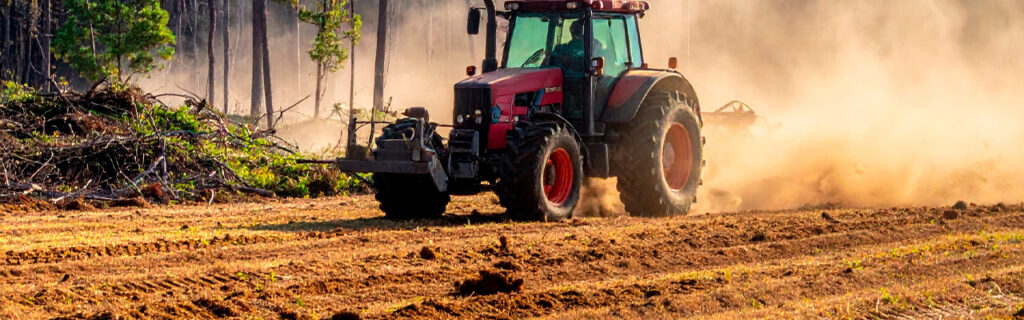
Forestry mulching is increasingly the preferred first step in land-to-agriculture conversion on Cherokee County rural properties for applications including pasture development, food plot establishment, hay field creation, and managed open area development because it addresses the vegetation clearing requirement while preserving the soil conditions, organic matter, and topographic integrity that agricultural productivity depends on in ways that alternative clearing approaches including bulldozing and conventional grubbing do not. For property owners across Ball Ground, Canton, and Cherokee County planning any agricultural conversion project on vegetated land, understanding how forestry mulching specifically prepares land for agricultural use, what it produces that subsequent agricultural preparation phases require, and where its limitations require supplemental preparation gives the complete picture for making clearing method decisions that serve the agricultural conversion’s long-term success rather than only its immediate cost.
Why Clearing Method Matters for Agricultural Conversion Success
The clearing method used to convert vegetated land to agricultural production creates site conditions that persist and affect agricultural productivity through multiple growing seasons following the clearing. A clearing method that leaves the site with intact soil structure, adequate organic matter, and protected topsoil creates a foundation for productive establishment of whatever agricultural use follows the clearing. A clearing method that compacts the soil through heavy equipment loading on wet clay, removes topsoil with the vegetation it strips, or leaves bare disturbed soil vulnerable to North Georgia’s erosive summer rainfall creates a degraded soil foundation that reduces establishment success and requires remediation investment before the agricultural use can perform at its potential.
Cherokee County’s red piedmont clay is particularly sensitive to the soil management decisions made during clearing because its physical properties, including its moisture-sensitive bearing capacity, its low organic matter content in undisturbed profiles, and its structural fragility under compaction pressure, make it both the soil resource that agricultural productivity depends on and the soil type most easily damaged by clearing approaches that do not account for those properties. Clearing approaches designed for soil types with higher organic matter, better structural stability under compaction, or faster drainage recovery after disturbance produce worse outcomes on Cherokee County clay than on the soil types they were originally optimized for, which is the practical reason that clearing method selection for agricultural conversion on North Georgia properties should be informed by Cherokee County’s specific soil characteristics rather than by generic land clearing cost comparisons that do not account for soil type differences in clearing method performance.
What Forestry Mulching Produces That Agricultural Preparation Requires
Forestry mulching of vegetated land intended for agricultural conversion produces several specific site conditions that subsequent agricultural preparation phases require and that alternative clearing methods do not provide as consistently or as completely.
Vegetation Removal Without Topsoil Loss
Forestry mulching removes above-ground vegetation by processing it at the soil surface level rather than by pushing, pulling, or scraping it along with the soil surface it grows in. This surface-level processing preserves the topsoil layer that the vegetation was growing in rather than removing it along with the vegetation the way bulldozing and scraping approaches do when they push vegetation along the ground surface and pile it for burning or disposal. The topsoil that remains in place after forestry mulching retains the organic matter, soil microbiological activity, and physical structure that years of undisturbed wooded cover developed, which is the agricultural productivity resource that any subsequent agricultural use will depend on for establishment success, fertility response, and long-term yield.
Agricultural uses that are established in a topsoil layer that has been retained through mulching clearing consistently show better germination rates, faster establishment, and more uniform stand development than the same uses established on the degraded, compacted, organic-depleted soil surface that bulldozing and scraping clearing leaves behind. The establishment advantage from topsoil retention reduces the seeding rate, fertilizer input, and remediation investment required to achieve productive agricultural stand establishment on mulched sites compared to conventionally cleared sites on the same soil type.
Ground-Level Mulch Layer That Protects Soil Through the Transition Period
The processed vegetation mulch layer that forestry mulching deposits over the cleared surface immediately after clearing provides the soil protection that prevents the erosion, moisture loss, and soil surface crusting that bare disturbed soil would experience through the interval between clearing and successful establishment of the agricultural vegetation cover. This transition period protection is particularly important on North Georgia properties where summer rain events of high intensity can initiate significant erosion on unprotected disturbed soil surfaces within a single storm event, removing the topsoil layer that the clearing preserved and that the agricultural establishment depends on before that establishment can develop the root system that would protect the soil through subsequent rain events.
The mulch layer also moderates soil temperature and moisture in the cleared surface, slowing the rapid drying cycles that bare soil experiences between rain events on exposed slopes and reducing the soil surface temperature extremes that can inhibit germination and early seedling establishment during summer and early fall seeding windows. These moderating effects improve seeding success rates on mulched sites relative to bare soil sites under the same weather conditions, which is a practical establishment advantage that the mulch layer provides without any additional input cost beyond the mulching treatment that created it.
Accessible Terrain for Subsequent Preparation Equipment
After forestry mulching, the treated area is immediately accessible for the subsequent preparation equipment including soil testing tools, lime and fertilizer spreaders, tillage equipment for seedbed preparation where tillage is appropriate, and seeding equipment that agricultural establishment requires. The mulched surface provides consistent, navigable terrain for this equipment without the debris piles, stumps, windrows, and irregular surface features that alternative clearing methods leave and that make subsequent equipment operation across the full cleared area difficult, incomplete, or damaging to the preparation equipment. This accessibility advantage of mulching over alternative clearing methods is most practically significant when the agricultural establishment timeline is compressed by the need to seed within a specific planting window, because the time required to manage debris from alternative clearing methods before preparation equipment can operate across the full cleared area may push the seeding timing outside the optimal planting window that the mulched site would have been ready to accommodate.
How Forestry Mulching Prepares Pasture Development Sites
Pasture development from wooded or brush-covered land is one of the most common agricultural conversion applications on Cherokee County rural properties, and one where forestry mulching’s specific capabilities align particularly well with the conversion requirements. Pasture establishment requires clearing of the existing woody vegetation, preparation of a seeding medium that allows grass seed germination and establishment, and management of the cleared area through the establishment period before the grass cover is adequate to protect the soil and withstand grazing pressure.
Forestry mulching of the existing woody vegetation removes the above-ground biomass that would prevent grass seeding equipment from operating uniformly across the cleared area and that would shade the grass seedlings to the point of establishment failure if left in place. The mulch layer deposited after clearing provides the seedbed medium that grass seeding requires, with adequate moisture retention and soil contact opportunity for the seed to germinate and establish root contact with the mineral soil beneath the mulch. Where mulch depth is adequate, grass seeding into the mulch layer without tillage can produce successful stands that do not require the disturbance of the soil structure that conventional seedbed tillage creates in the clay soils that tillage on inappropriate moisture conditions particularly damages.
The specific pasture grass species being established affect the seeding approach appropriate for mulched sites. Cool-season grasses including tall fescue, orchardgrass, and annual ryegrass that are seeded into the mulch layer in late summer or early fall establishment windows take advantage of the mulch layer’s moisture retention during the dry late-summer period before fall rains improve establishment conditions. Warm-season grasses including bermudagrass and bahiagrass that are established during spring and summer may require tillage that incorporates the mulch layer into the soil profile to achieve the firm seedbed contact that warm-season grass establishment from seed requires, adding a tillage phase to the preparation sequence after the mulching clearing establishes accessibility to the cleared area.
How Forestry Mulching Prepares Food Plot Sites
Food plot development on wooded or overgrown land is among the agricultural conversion applications where forestry mulching is most specifically advantageous because food plot establishment objectives typically include both the productive planting that the food plot will provide and the preservation of the wooded character and wildlife habitat that makes the surrounding area a productive hunting and wildlife management environment. Forestry mulching’s ability to clear the food plot footprint while preserving the wooded boundaries of the plot, the canopy edge trees that provide shade and cover at the plot perimeter, and the structural integrity of the surrounding woodland achieves both of these objectives simultaneously in a way that conventional clearing approaches that push vegetation and disturb the soil across a broader area cannot.
The food plot seeding requirements that follow forestry mulching clearing depend on the specific species mix being planted and the timing of the seeding relative to the clearing. Brassica plots including turnips, radishes, and rape that are seeded in late summer for fall and winter use can often be successfully established with minimal tillage into the mulch layer if the mulch depth is not excessive, taking advantage of the moisture retention and soil temperature moderation that the mulch provides during the critical establishment period. Clover and chicory plots that are intended as perennial plantings may benefit from light disking that incorporates the surface mulch and creates more consistent seed-to-soil contact across the full plot area. And annual small grain plots including oats, wheat, and rye that are seeded in fall for winter and spring use may require conventional seedbed preparation that incorporates the mulch into the soil profile to achieve the firm seedbed and seed depth that small grain germination and establishment require for reliable stand development.
How Forestry Mulching Prepares Hay Field Development Sites
Hay field development from wooded or overgrown land requires the complete removal of the woody vegetation that would interfere with hay harvest equipment and that would reduce stand density of the hay species by competing for light and root zone resources. Forestry mulching accomplishes this woody vegetation removal while leaving the terrain in the accessible, equipment-navigable condition that hay field preparation and hay harvest equipment require for efficient operation across the full field area.
The stump management consideration that distinguishes hay field preparation from most other agricultural conversion applications is that hay harvest equipment including mowers, conditioners, and tedders requires a stump-free operating surface at the harvest equipment’s operating height above the soil surface. Forestry mulching that grinds stumps to below the harvest equipment’s operating height or that processes small-diameter stumps to soil level during the mulching pass addresses this requirement for the stem sizes within the machine’s processing capacity. Larger stumps from trees at the upper end of the mulching machine’s diameter capacity may require supplemental stump grinding to reduce them below the hay equipment’s operating clearance after the main mulching pass has processed the surrounding vegetation.
The Role of Soil Testing After Forestry Mulching and Before Agricultural Seeding
Soil testing of the mulched area before agricultural seeding is the preparation step that most directly determines whether the lime and fertilizer inputs required for successful establishment are adequate for the specific soil conditions revealed by the test rather than estimated from general recommendations that may not match the specific nutrient status and pH conditions at the specific field location. Cherokee County clay soils under long-term wooded cover are frequently low in pH, low in phosphorus, and low in potassium relative to the fertility requirements of the productive agricultural species being established, and lime and fertilizer applications sized from general recommendations rather than specific soil test results consistently produce suboptimal establishment compared to applications sized from the actual soil conditions at the specific field.
Soil test samples collected from multiple points across the mulched area, submitted to the University of Georgia Cooperative Extension soil testing laboratory or a comparable commercial laboratory, and interpreted with the specific agricultural use in mind produce the lime and fertilizer recommendations that are calibrated to the specific field conditions rather than to general regional averages. The lime application timing is particularly important for most cool-season grass and legume establishments because lime requires several months to raise soil pH to the target range, making lime application immediately after mulching the appropriate timing for fall seeding schedules that need pH correction to be in effect by the seeding date.
Where Forestry Mulching Requires Supplemental Preparation Before Agricultural Use
Forestry mulching is the most appropriate clearing method for most agricultural conversion applications on Cherokee County properties, but it is not a complete preparation for agricultural use by itself in every application context. Understanding where supplemental preparation is needed after mulching and before agricultural seeding or planting allows the full preparation sequence to be planned and budgeted accurately rather than discovering additional preparation requirements after the mulching clearing is complete.
Grading and excavation work to correct significant terrain irregularities, improve drainage, or establish the uniform surface that hay harvest equipment requires may be needed on sites with pronounced terrain variation or with drainage conditions that would limit agricultural productivity or harvest efficiency without correction. Mulching clearing that reveals the terrain accurately by removing the vegetation that was obscuring ground-level slope and low-point positions makes this grading scope assessable from the actual cleared terrain rather than from estimated terrain that the vegetation was concealing. This sequencing, mulching first to reveal the terrain, then grading to address the terrain conditions that the cleared site reveals, produces more accurate grading scope and more effectively targeted grading work than attempting terrain correction before clearing has revealed what the terrain actually requires.
Invasive species root systems that survived the mechanical mulching clearing will produce resprout growth within four to eight weeks under active growing conditions and will compete with agricultural establishment if not addressed before resprout density becomes competitive with the establishing agricultural species. Targeted herbicide treatment of invasive resprout growth when stems reach six to twelve inches of height is the management action that prevents this competition during the critical agricultural establishment period, and planning this treatment as a scheduled preparation step rather than a reactive response to resprout that is already competing with the seeded species keeps the establishment timeline on track and reduces the stand density impacts that unmanaged invasive resprout competition creates during the establishment period.
Frequently Asked Questions
How long after forestry mulching can agricultural seeding or planting begin?
The interval between forestry mulching completion and agricultural seeding depends primarily on whether any supplemental preparation phases including grading, lime application, and fertilizer application are needed before seeding, and on the seasonal planting window requirements of the specific agricultural species being established. Where no grading is needed and lime has been applied with adequate lead time before the seeding date, direct seeding into the mulched surface can proceed as soon as the mulching is complete on sites where the mulch depth and uniformity are adequate for the seeding method and species requirements. Where grading is needed to correct terrain conditions revealed by the clearing, or where lime application lead time is required before seeding, the interval extends to accommodate these preparation phases. Planning the full preparation sequence, including all supplemental phases and their timing requirements, before the mulching clearing is scheduled allows the mulching date to be set in a way that accommodates the full preparation sequence before the optimal planting window for the target species.
Will the wood chip mulch layer left by forestry mulching interfere with agricultural seeding success?
The mulch layer’s effect on seeding success depends on the mulch depth, uniformity, and particle size, on the seeding method used, and on the specific agricultural species being established. Light to moderate mulch layers of one to three inches decompose relatively quickly in Cherokee County’s warm, moist climate and provide beneficial moisture retention and soil temperature moderation that improves rather than reduces seeding success for most species when seeding is accomplished by broadcast or drilling through the mulch into the mineral soil. Heavier mulch layers from dense vegetation or from areas where multiple passes concentrated mulch material may require light disking or harrowing to incorporate the surface mulch into the soil profile before seeding to achieve adequate seed-to-soil contact across the full seeded area. Communicating the intended seeding method and species requirements to the mulching contractor before work begins allows the mulching operation to be calibrated for the appropriate mulch depth and uniformity that the seeding phase requires rather than producing mulch depths that complicate the seeding phase that follows.
What are the cost differences between forestry mulching and conventional clearing for agricultural conversion?
Comparing forestry mulching and conventional clearing costs for agricultural conversion requires accounting for the full preparation sequence cost rather than only the initial clearing cost, because the supplemental preparation steps that conventional clearing’s site conditions require add costs that mulching’s better post-clearing site conditions reduce or eliminate. Conventional clearing that involves bulldozing, stacking, and burning the cleared vegetation produces lower initial clearing cost per acre in many cases but requires debris burning management, stump grinding on areas that will be hay harvested, and in some cases topsoil remediation where scraping removed topsoil with the vegetation. These supplemental costs after conventional clearing frequently exceed the additional initial cost of forestry mulching, making the full preparation sequence cost comparison between the two approaches more favorable to mulching than the initial clearing cost comparison alone suggests. The soil quality advantage of mulching over conventional clearing also produces establishment success rate and long-term productivity differences that compound across the agricultural use seasons following establishment, making the total cost of production per unit of agricultural output lower on mulched and adequately prepared sites than on comparably priced conventionally cleared sites with degraded soil conditions.
Can forestry mulching address stumps adequately for agricultural use, or is separate stump grinding always needed?
Forestry mulching addresses stumps at or below the soil surface level for small-diameter trees within the machine’s processing capacity, which covers the majority of the stumps present in most Cherokee County brush and small-tree clearing applications. Larger stumps from trees at the upper end of the machine’s diameter capacity are typically cut close to the soil surface during the mulching pass but may remain as low stumps that do not present a problem for most agricultural uses. The agricultural uses most sensitive to residual stump height are hay field applications where mowing equipment height requirements make any stump above the cutting height a potential equipment contact hazard. For these applications, post-mulching assessment of residual stump heights against the harvest equipment’s operating clearance, and separate stump grinding of any stumps exceeding that clearance, is the supplemental preparation that ensures the hay field surface is safe for equipment operation from the first cutting forward. For pasture and food plot applications where the equipment used for management and harvest operates at greater height clearance than hay mowing equipment, residual low stumps from the mulching pass typically do not create operational problems and separate stump grinding is not required.
Ready to Prepare Your Land for Agricultural Use?
Converting wooded or overgrown land to pasture, food plot, hay field, or managed open area production is an investment in the agricultural and wildlife management potential of North Georgia rural properties that the land’s terrain, soil, and climate conditions genuinely support. Forestry mulching as the clearing first step in that conversion produces the site conditions that subsequent preparation phases and agricultural establishment require more consistently and with lower long-term productivity impact than alternative clearing approaches that achieve vegetation removal at the cost of the soil health, topsoil integrity, and organic matter content that agricultural productivity depends on through the establishment period and across the productive seasons that follow it. Planning the full preparation sequence from mulching clearing through soil testing, lime and fertilizer application, supplemental grading where needed, and invasive resprout management before seeding positions the agricultural conversion to succeed from its first season rather than requiring remediation investment that adequate initial preparation would have made unnecessary.
Bardin Outdoors works with property owners across Ball Ground, Canton, Cherokee County, and North Georgia on forestry mulching and land clearing projects that prepare wooded and overgrown acreage for pasture, food plot, and agricultural use while preserving the soil health and topographic integrity that productive agricultural establishment and long-term yield depend on. To learn more about how Bardin Outdoors can help prepare your land for agricultural use, contact us.