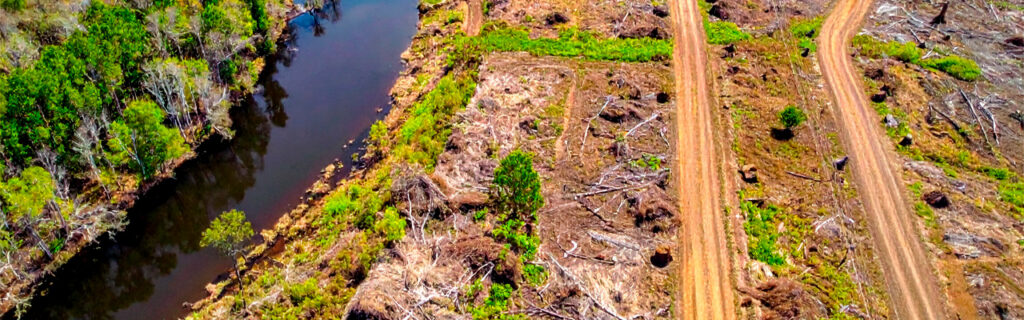
Forestry mulching is the specific process that converts overgrown sections from their current inaccessible, unusable condition into the accessible, functional property that the land’s terrain, soil, and ecological characteristics have always been capable of supporting but that the accumulated overgrowth has been preventing from being reached, used, and enjoyed. For property owners across Cherokee County, Ball Ground, and Canton whose rural and residential properties include overgrown sections that have accumulated over seasons of management gaps into the dense, inaccessible conditions that make those sections functionally absent from the usable property despite being physically present within the property boundary, understanding how forestry mulching specifically converts overgrown conditions into usable property, what the converted condition looks and functions like immediately after treatment and in the seasons following, and what the realistic management program looks like that sustains the converted condition rather than allowing the overgrowth to reconstitute gives the complete picture that property owners need to approach forestry mulching reclamation with accurate expectations and the management program commitment that lasting reclamation requires.
What Forestry Mulching Does That Other Approaches Cannot
Forestry mulching’s specific value for converting overgrown property sections to usable condition is not simply that it clears vegetation, which other approaches also accomplish, but that it clears vegetation at the specific density and stem diameter range that established invasive species on Cherokee County rural properties present after multiple seasons of unmanaged growth while simultaneously preserving the soil conditions, native species, and natural features beneath and within the overgrowth that alternative clearing approaches eliminate alongside the invasive vegetation they were intended to address.
Owner-operated brush mowing equipment that is adequate for maintaining areas where invasive growth is kept below two inches in stem diameter and at moderate densities cannot penetrate the multi-inch diameter privet stands and dense multiflora rose tangles that established overgrown sections present after three or more seasons of unmanaged growth, because the stem mass and density at the established overgrown condition exceeds the processing capacity that brush mowing equipment is designed for and produces the blade damage, equipment stalling, and inability to penetrate that the operator encounters when attempting to use light management equipment on the heavy vegetation conditions that it is not sized to process. Professional forestry mulching equipment processes these established stem sizes and densities within its designed operating parameters, converting the impenetrable thicket that standard equipment cannot enter into the open, accessible ground condition that the mulching machine’s cutting head and processing drum accomplish in a single pass through the overgrown section.
Conventional clearing by bulldozing that can also process the overgrown condition’s stem density and sizes accomplishes the above-ground vegetation removal that forestry mulching accomplishes but simultaneously removes the topsoil that the vegetation was growing in, compacts the soil surface across the full cleared area under the equipment’s operational footprint, and produces the debris piles or haul-away requirement that in-place mulching processing eliminates by converting the cleared vegetation to the mulch layer deposited on the cleared surface rather than the debris pile or haul load that conventional clearing’s pushing and removal approach creates. The topsoil that conventional clearing removes with the vegetation it pushes, the soil compaction it creates across the cleared area, and the debris management it requires are each conditions that forestry mulching’s in-place processing avoids by processing the vegetation to the mulch at the soil surface level rather than pushing it along the soil surface to remove it with the topsoil and create the compaction and debris management requirements that pushing produces.
How Forestry Mulching Converts Overgrown Sections Into Specific Usable Conditions
The usable condition that forestry mulching converts overgrown sections into varies with the overgrown section’s vegetation character and the intended subsequent use that the reclamation serves, producing distinct usable conditions for the specific overgrown section types and intended uses that Cherokee County rural properties most commonly present.
Overgrown Wooded Sections With Native Canopy Above Dense Understory
Overgrown wooded sections where mature native canopy exists above the dense invasive understory that has made the section impenetrable represent the highest-value forestry mulching reclamation opportunity on Cherokee County properties because the open native woodland condition that reclamation produces by removing the invasive understory while preserving the native canopy above is specifically the habitat type that hunting, wildlife management, and recreational use of wooded property require and that the invasive understory’s density was specifically preventing from being experienced or used. Immediately after mulching that removes the invasive understory beneath the preserved native canopy, the section reveals the mature oaks, hickories, and other native canopy trees that have been growing above the impenetrable understory, visible for the first time since the understory grew tall enough to screen them from observation at the ground level that entering the section requires. The fifty or sixty feet of clear sight lines that the open woodland floor beneath the preserved canopy provides replace the ten feet of visibility that the dense invasive understory was limiting every observer to, and the terrain, natural features, and ground-level characteristics of the section that the invasive cover had been concealing become accessible for observation and use for the first time since the invasive accumulation made entry impractical.
Overgrown Open Areas and Former Food Plots
Former food plots and managed open areas that invasive vegetation has progressively reclaimed from their managed condition to the dense brushy condition that abandonment and management gaps have produced require forestry mulching to restore the accessible, plantable surface that food plot productivity depends on having available for seed bed preparation and planting establishment. Mulching of reclaimed food plot areas removes the invasive vegetation that has occupied the productive area and the advancing woodland edge that has reduced the plot’s effective open area, restoring the open ground surface that food plot management can work with for liming, fertilizing, tilling, and planting without the invasive vegetation obstruction that reclamation’s mechanical clearing eliminates from the productive area’s extent. The reclaimed food plot area immediately after mulching provides the open accessible surface that soil testing, lime and fertilizer application, and seed bed preparation for the cool-season planting that fall food plot management typically follows reclamation with can proceed on without the preliminary clearing that the invasive condition would have required before any management activity at the plot could begin.
Overgrown Trail Corridors and Access Routes
Trail corridors that have closed from the accessible walking and ATV width that routine management maintained to the impenetrable wall of invasive regrowth that management gaps allowed to develop across the corridor from both edges can be restored to navigable corridor width by forestry mulching that processes the vegetation that has filled the corridor while preserving the woodland character on both sides of the corridor that the reclamation should maintain rather than eliminate as comprehensive clearing of the same area would produce. The restored trail corridor that mulching creates within the overgrown trail provides the immediate ATV and foot traffic access to the interior property sections the trail serves, converting the impenetrable barrier that the overgrown corridor had become into the navigable path through the woods that the corridor was established to provide and that the management gaps allowed the invasive regrowth to close before the reclamation treatment restored it.
What the Reclaimed Condition Looks Like After Treatment
The immediately visible transformation that forestry mulching reclamation produces in an overgrown Cherokee County property section is consistently more dramatic than property owners who have not seen the before and after of a major reclamation treatment expect from descriptions of the process, because the spatial, visual, and functional transformation from impenetrable dense overgrowth to the open accessible condition that mulching creates is the kind of change that photographs and descriptions represent incompletely relative to the in-person experience of entering the reclaimed section for the first time after treatment.
The wood chip and organic material mulch layer that forestry mulching deposits over the cleared surface immediately after processing is the surface that the reclaimed section presents underfoot, providing the cushioned, biodegradable surface cover that the in-place processing approach deposits rather than the bare clay that bulldozing would expose by pushing the organic surface material with the vegetation it removes. This mulch layer provides immediate erosion protection for the cleared soil surface against the raindrop impact energy and surface runoff that bare clay would experience without cover during the weeks between treatment and the vegetative cover reestablishment that the native seed bank and released native species begin providing from the first growing season following reclamation. The mulch layer’s presence on the cleared surface is not a permanent condition that prevents vegetative reestablishment but a transitional surface cover that provides the erosion protection the cleared surface needs during the establishment period while the vegetation that will eventually replace it develops the root systems and coverage that replace the mulch layer’s protective function as the mulch decomposes and the vegetative cover establishes above it.
The Management Program That Sustains the Reclaimed Condition
The reclaimed condition that forestry mulching produces in an overgrown section is not a permanent condition that requires no further management to sustain. It is the starting condition from which the combined management program that prevents invasive root energy from driving resprout back to the overgrown density must proceed to produce the lasting improvement that the reclamation investment deserves to initiate rather than the temporary clearance that mechanical clearing alone without herbicide follow-up consistently produces before vigorous resprout returns the cleared area toward its pre-reclamation density within the growing seasons that the intact root systems’ energy reserves fuel without the depletion that herbicide treatment of resprout specifically initiates.
The resprout growth that appears in the reclaimed section four to eight weeks after treatment under active growing season conditions is the biological response that the intact invasive root systems produce from their energy reserves when the above-ground expression of those roots’ energy has been removed by mechanical clearing. This resprout is not a treatment failure or a return of the overgrown condition. It is the first-season expression of the root energy that the management program’s herbicide component specifically targets at the six to twelve inch resprout height when the plant’s vascular transport is most actively moving carbohydrates from the resprout foliage downward to the root reserves, making herbicide applied to the actively transporting resprout foliage most effective for moving chemical to the root reserves that sustain the vigorous resprout and that progressive depletion through consistent herbicide treatment reduces across successive treatment seasons. Scheduling herbicide treatment of the first-season resprout before its appearance triggers reactive scheduling that misses the optimal treatment timing is the management program discipline that most consistently determines whether the reclamation investment produces progressive lasting improvement toward the sustainable maintenance condition or temporary clearance followed by the vigorous reversion that herbicide follow-up specifically prevents.
How to Plan a Forestry Mulching Reclamation Project
Planning a forestry mulching reclamation project for an overgrown Cherokee County property section requires the pre-treatment activities that ensure the reclamation produces the specific condition the property owner intends rather than the undirected result that treatment without the property owner’s specific preservation and boundary guidance produces when the operator lacks the field instructions that distinguish what the treatment should address from what it should specifically avoid.
The preservation walk that physically enters the overgrown section before treatment equipment arrives, identifies every native tree, native understory species, and natural feature that the treatment should navigate around rather than process with the surrounding invasive vegetation, and marks each preservation target with bright flagging tape at approximately five to six feet of height is the planning activity whose omission most directly compromises the reclamation’s preservation accuracy. Native trees and native understory species that have persisted in suppressed condition beneath the invasive overgrowth are specifically the elements that reclamation should reveal and release rather than eliminate, because their recovery from competitive release following reclamation provides the ecological diversity and seasonal character that the reclaimed section will express from these existing but suppressed populations without the establishment investment that planting native species in the reclaimed area would require if reclamation had eliminated the native populations that the competitive release approach specifically preserves and releases.
The treatment boundary marking that identifies where the reclamation area ends and the adjacent preserved vegetation begins should be physically marked in the field before treatment begins with boundary flagging, paint, or stakes that position the boundary accurately in the terrain where the treatment operator will need to recognize and honor it during active processing at the efficient operating speed that equipment treatment requires. Treatment boundaries that are not physically marked in the field consistently result in the boundary imprecision that verbal boundary description without field marking produces during active equipment operation, sometimes overclearing beyond the intended boundary into adjacent areas the reclamation was not intended to address.
Frequently Asked Questions
How much of a property’s overgrown acreage can realistically be reclaimed in a single season’s treatment?
The acreage that can realistically be reclaimed in a single season’s forestry mulching treatment depends on the vegetation density and stem development of the overgrown sections, the terrain conditions in those sections that affect equipment operating speed, and the total budget available for the treatment season’s reclamation scope. Forestry mulching of established overgrown sections with multi-inch diameter privet stems at high density on typical Cherokee County terrain typically processes at rates that allow professional equipment to cover one to three acres per operating day, making a five-acre overgrown reclamation a two to four day project at typical Cherokee County established overgrowth densities rather than a single day that lighter vegetation at smaller stem sizes would allow at higher per-day production rates. Properties with more extensive overgrown acreage than a single season’s budget can address through complete reclamation should approach reclamation as a phased program that prioritizes the sections whose reclamation produces the most significant usable property expansion for the highest-priority intended uses, treating those sections in the first season and extending the reclamation to additional sections in subsequent seasons as the budget and the management program established in prior-season reclaimed sections allow the sequential program to proceed.
What time of year is best for forestry mulching reclamation on Cherokee County overgrown property sections?
Late fall and winter dormancy from November through February provides the most operationally efficient conditions for forestry mulching reclamation on Cherokee County overgrown properties because dormant vegetation presents lower above-ground biomass per acre at smaller stem volumes than the same vegetation at peak growing-season biomass, allowing equipment to process more acres per operating hour at lower per-acre cost than summer reclamation of the same vegetation at peak biomass requires. Dormant-season reclamation also provides the clearest conditions for identifying and marking native trees and native understory species for preservation because leafless deciduous species are visible through the understory that growing-season foliage would obscure, allowing the preservation walk to more accurately identify the native species worth specifically marking before the reclamation treatment processes the surrounding invasive vegetation. The timing tradeoff for dormant-season reclamation is the herbicide follow-up timing opportunity that late-summer reclamation followed by fall herbicide treatment provides for same-season root energy depletion, while dormant-season reclamation positions the first herbicide treatment opportunity for the following spring’s active growing season rather than the same season as the mechanical treatment that late-summer timing would provide. For overgrown sections with very high root energy accumulation from long establishment duration, the herbicide timing advantage of late-summer reclamation may outweigh the operational efficiency advantage of dormant-season reclamation, making the timing decision specific to the individual reclamation section’s root energy accumulation level and the property owner’s management program priorities.
Does forestry mulching reclamation leave the soil surface in better or worse condition than conventional clearing for subsequent planting or seeding?
For the planting and seeding applications that food plot establishment, native species planting, and pasture establishment represent, forestry mulching reclamation leaves the soil surface in significantly better condition than conventional clearing because it preserves the topsoil, organic matter, and soil biological activity that support successful planting establishment rather than removing the topsoil with the vegetation it pushes, compacting the soil across the full cleared area under equipment weight, and leaving the compacted bare clay subsoil as the establishment medium that planting must succeed in despite its reduced fertility, biological activity, and physical structure relative to the intact topsoil that forestry mulching preserves in place. Native species seedings and food plot plantings in the preserved topsoil that forestry mulching reclamation maintains in place consistently establish more successfully and produce more uniform coverage than equivalent plantings in the disturbed, compacted subsoil that conventional clearing’s topsoil removal and compaction create as the establishment medium. The mulch layer that forestry mulching deposits over the preserved topsoil additionally provides the moisture retention and seed protection that direct-seeded plantings benefit from during the germination period, and it decomposes progressively to add organic matter to the soil surface below it as the established vegetative cover develops the root systems that will hold the soil surface without the mulch layer’s contribution once vegetative establishment is sufficient to provide the surface protection that the mulch layer initially provides during the establishment period.
How long after forestry mulching reclamation should I expect to wait before the reclaimed section looks like the open managed condition I envisioned rather than the recently cleared condition treatment produces?
The progression from the recently treated condition that reclamation produces immediately after treatment to the open managed condition that the property owner envisioned for the reclaimed section follows a timeline that depends on the intended condition type and the management program’s consistency in the growing seasons following reclamation. For wooded sections reclaimed through invasive understory removal beneath preserved native canopy, the open native woodland character that hunting land and wildlife management properties typically envision as the reclaimed condition is essentially immediate: the preserved native canopy is revealed by the treatment, the open ground beneath it is accessible from the treatment’s completion, and the sight lines that the open woodland provides develop immediately rather than requiring any establishment period to create the spatial character that the treatment’s removal of the understory and the canopy’s pre-existing presence together produce at treatment completion. For reclaimed open areas intended for food plot use, the productive planting condition that the reclamation enables requires the lime application, soil test-based fertilization, seed bed preparation, and planting establishment that food plot production typically involves before the productive planted condition the property owner envisioned is established from the cleared surface that reclamation has created as the starting point for those management activities. For reclaimed trail corridors, the navigable trail condition is immediate at treatment completion, with the trail character that bark chip mulch underfoot and the surrounding woodland character on both sides of the corridor provides available from the first use after treatment rather than from any establishment period that developing the navigable trail character requires before the trail can be used for its intended navigation purpose.
Ready to Reclaim Overgrown Areas on Your North Georgia Property?
The overgrown sections of Cherokee County rural and residential properties that thick brush, advancing invasive understory, and closing trail corridors have progressively withdrawn from the usable property inventory over the seasons of management gaps that allowed the accumulation to reach the density that makes those sections inaccessible and unusable today are sections that forestry mulching reclamation is specifically equipped to convert from their current unusable condition to the accessible, functional property that the land’s terrain, soil, and ecological characteristics support but that the overgrowth has been preventing from being expressed. The reclamation that forestry mulching provides is immediate in the accessible, open condition that treatment creates at completion, and it is progressive in the lasting improvement that the combined mechanical and herbicide management program initiated by the reclamation treatment produces across the successive growing seasons that consistent combined treatment advances toward the sustainable management condition that the reclamation investment specifically initiates toward rather than permanently resolves in a single treatment event that mechanical clearing without the management program that addresses root energy persistence cannot sustain.
Bardin Outdoors works with property owners across Ball Ground, Canton, Cherokee County, and North Georgia on forestry mulching reclamation projects that convert overgrown sections to the accessible, functional property conditions that the land’s potential supports, preserving the native trees, native understory species, and natural features that the invasive overgrowth was concealing while removing the accumulated invasive density that was preventing the usable property that the reclaimed sections can now provide. To learn more about how Bardin Outdoors can help reclaim overgrown areas on your North Georgia property, contact us.